
Quick Answer: Which 50cm Cushion Fill Should You Choose?
When selecting a 50cm cushion for your home, the choice of filling material is the single most important factor determining its comfort, shape, and longevity. A standard 50cm cushion, measuring approximately 50x50cm, is arguably the most popular size for home decor. It is large enough to showcase beautiful textile patterns and textures, yet compact enough to fit comfortably on almost any seating surface without overwhelming the space. Because of this versatility, manufacturers offer a vast array of fills, each tailored to distinct preferences. Selecting the wrong fill can lead to a cushion that either feels like a brick or sags within weeks, completely undermining both comfort and your home’s aesthetic.
To make an immediate decision, you can evaluate your needs using these clear guidelines:
- Choose Memory Foam if you require firm, structured, and highly consistent lumbar or neck support. It is the best choice for anyone who experiences discomfort while sitting and wants a cushion that holds its ergonomic shape without needing to be fluffed or adjusted.
- Choose Polyester Fibre if you want an affordable, lightweight, and bouncy cushion for casual everyday use. This material is highly resilient, easy to wash, and offers a balanced level of softness suitable for busy family spaces.
- Choose Down and Feather if you prefer a luxurious, ultra-soft "sink-in" feel and appreciate high-end interior styling. Down is highly malleable, allowing you to easily achieve the classic "karate-chop" look on your sofa, though it requires regular upkeep to maintain its loft.
Ultimately, the best fill depends on how you use the space and your willingness to maintain the cushion over time.
Products mentioned in this guide
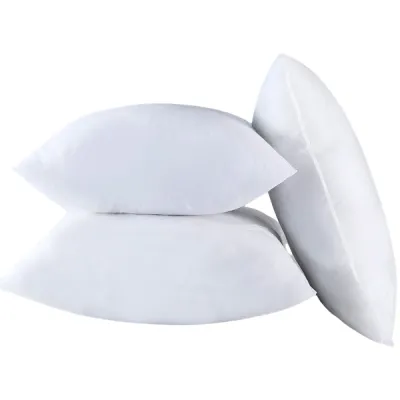
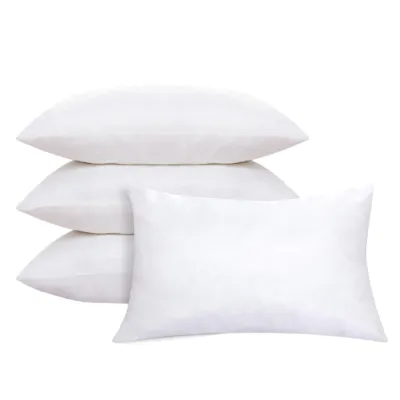
Prices are valid at publication and may change. Please refer to the product page for the latest price.
Comfort and Support: How Each Fill Feels
The tactile experience of leaning against a 50cm cushion varies dramatically depending on what is packed inside. Understanding these physical sensations helps you visualize how the cushion will perform during daily use.

Memory Foam: Contouring and Firm Support
Memory foam is a dense, viscoelastic material that reacts to pressure and body heat. When you lean against a memory foam insert, it does not instantly collapse; instead, it slowly yields to your body weight, contouring precisely to the curves of your spine. This provides highly stable, firm, and uniform support that relieves pressure points in the lower back or neck. Because it is solid or shredded dense foam, it does not compress flat under heavy use, nor does it require manual fluffing. Keep in mind that solid memory foam inserts are noticeably heavier than other options, meaning they stay securely anchored in place on a deep sofa or office chair rather than sliding around.
Polyester Fibre: Softness and Everyday Plumpness
Polyester fibre, often referred to as poly-fill, is a synthetic material engineered to mimic the loft of natural fillings at a fraction of the cost. It offers a bouncy, springy, and medium-soft feel that is exceptionally comfortable for hugging, resting your head, or leaning against during casual lounging. Unlike memory foam, which molds slowly, polyester compresses immediately under weight and springs back when you stand up. It provides a comfortable middle ground—softer than foam but more supportive than down. Over time, however, the synthetic strands can slide past one another, meaning you will need to give the cushion an occasional shake to redistribute the fill and keep it looking plump.
Down and Feather: The Luxurious Sink-In Feel
Natural down and feather blends represent the peak of traditional comfort, offering a lightweight, airy, and luxurious “sink-in” quality that synthetic materials struggle to replicate. Down consists of the fluffy undercoating of waterfowl, while feathers provide structured loft. When you lean against a down-filled cushion, there is very little resistance; you sink deep into its plush core. This makes it incredibly comfortable for resting your head or using as a soft armrest. Furthermore, down is highly malleable, meaning you can shape, flatten, or mold the cushion to your liking. This flexibility is what allows decorators to perform the “karate-chop” styling technique, creating a crisp crease along the top edge of the cushion for a relaxed yet sophisticated designer look. However, because it lacks rigid structural support, it will not provide firm ergonomic relief for those seeking back pain prevention.
Durability, Care, and Tropical Climate Considerations
In a warm and highly humid environment like Singapore, cushion maintenance requires special attention. Moisture, dust mites, and heat retention can quickly ruin a high-quality insert if you do not choose the right material or care for it correctly. Singapore’s year-round tropical climate, characterized by high temperatures and relative humidity levels often exceeding 80 percent, presents a unique challenge for home textiles. Cushions are highly susceptible to absorbing ambient moisture, which can degrade certain materials much faster than they would in cooler, drier climates. Therefore, evaluating durability and ease of care is not just a matter of convenience; it is essential for protecting your investment and maintaining a hygienic living environment.
Memory Foam Solid memory foam is highly durable and naturally resistant to dust mites, making it an excellent option for allergy sufferers. However, it has a dense structure that tends to retain body heat. In non-air-conditioned rooms, a memory foam cushion can feel uncomfortably warm against your back over extended periods. Cleaning memory foam requires caution: the foam core itself must never be machine washed or submerged in water, as this can degrade the polymer structure and trap moisture permanently inside. Instead, you should spot-clean the removable outer cover and occasionally air out the foam insert in a shaded, well-ventilated area away from direct sunlight, which can cause the foam to crumble.
Polyester Fibre Polyester is highly practical for humid climates because it does not absorb moisture easily and dries relatively quickly. Most polyester inserts are fully machine washable, making them the easiest to maintain in households with children or pets. However, frequent washing or high-heat drying can cause the synthetic fibres to melt, clump, or mat together permanently, leaving you with a lumpy cushion. To extend its lifespan, wash polyester inserts on a gentle, cool cycle and allow them to dry completely.
Down and Feather Natural down and feather fills require the most meticulous care, especially in tropical humidity. Feathers easily trap moisture from the air or sweat. If a down cushion is left damp, it can quickly develop a musty odour, mildew, or mould. While down can occasionally be washed, it must be dried completely on a low-heat setting—often requiring several hours in a dryer with clean tennis balls to break up clumps. Regular daily fluffing is also mandatory to keep air circulating through the feathers. Additionally, sensitive individuals should note that natural feathers can sometimes trigger allergies or trap dust mites more readily than synthetic alternatives.
Safety & Care Boundary Before attempting to wash or dry any cushion insert or its cover, always read the manufacturer’s care label carefully. Improper washing temperatures can shrink a delicate 50cm cover, while excessive dryer heat can melt synthetic polyester fibres or ruin the loft of natural down. If the care instructions are missing, unclear, or if you are dealing with a highly delicate silk or velvet cover, consult a professional dry cleaner to avoid irreversible damage.
Quick Reference: Comparing the Three Fills
To help you compare these materials at a glance, the following matrix outlines how each fill performs across essential categories:
| Cushion Fill Type | Support Level | Softness | Weight | Washability | Best Use Case | Humidity & Heat Considerations |
|---|---|---|---|---|---|---|
| Memory Foam | Firm & Structured | Low (Contours to body) | Heavy | Spot clean cover only; do not wash foam | Lumbar support, office chairs, floor seating | Retains heat; keep in air-conditioned spaces |
| Polyester Fibre | Medium | Medium-Soft | Light | Machine washable (Gentle/Cool) | Everyday family sofas, high-traffic areas | Highly breathable; dries quickly in humid air |
| Down / Feather | Low (Sinks in) | High (Very plush) | Very Light | Professional clean or dry on low heat | Decorative styling, formal living rooms | Traps moisture; requires regular airing & fluffing |
When selecting your insert, remember to match the weight and loft of the fill to the fabric weight of your 50cm cushion cover. For instance, a heavy, tightly woven canvas or leather cover pairs beautifully with a substantial memory foam or dense polyester insert. Conversely, a delicate, lightweight linen or silk cover is best suited for a soft, airy down-and-feather fill that won’t strain the seams or make the delicate fabric look awkwardly stiff.
Matching the 50cm Cushion Fill to Your Space and Usage
Choosing the right fill is not just about physical comfort; it is also about understanding how the cushion will be used in different areas of your home and how to size it correctly.
Sizing Nuance for 50cm Covers A common mistake when buying a 50cm cushion is pairing a 50x50cm cover with an identical 50x50cm soft insert. Because polyester and down compress easily, using an insert of the exact same size often results in a limp, saggy cushion with empty, droopy corners. To achieve a plump, professional look, the general rule of thumb is to size up your insert by 5cm to 10cm for soft fills. For a 50x50cm cover, you should purchase a 55x55cm polyester or down insert. This sizing discrepancy is due to the physics of soft fills. When a down or polyester insert is stuffed into a cover of the exact same size, the fill naturally migrates toward the center where there is the least resistance, leaving the corners flat and empty. By choosing an insert that is 5cm larger, you force the excess filling into those stubborn corners, creating a beautifully rounded, plump silhouette. For memory foam, however, the material is solid or highly structured, meaning it maintains its exact dimensions. Attempting to squeeze a 55cm memory foam insert into a 50cm cover will result in an overstuffed, rock-hard cushion that puts immense pressure on the zipper, likely causing it to split.
Living Room Sofa For the main living room sofa, versatility is key. If your family uses the living room for active lounging, movie nights, and casual play, polyester inserts are highly recommended. They are resilient, bounce back quickly, and can handle being tossed around. If your living room is a formal sitting area designed to impress guests, down-and-feather inserts are the premier choice. They allow you to style the space with elegant, soft shapes and classic “karate-chop” creases that exude luxury.
Bed and Reading Nook In a reading nook or on a bed, cushions serve both decorative and functional roles. If you love sitting up in bed to read or work on a laptop, a memory foam cushion placed behind your lower back provides the firm, non-slip lumbar support you need to maintain proper posture. For the decorative pillows (such as Euro shams) that lean against the headboard, down-and-feather fills offer a soft, inviting backdrop that makes the bed look incredibly cozy and high-end.
Dining Chairs or Floor Seating If you are using cushions for dining room chairs or as casual floor seating on hard tile or timber floors, sinking all the way to the ground is highly impractical. For these scenarios, memory foam or high-density polyester inserts are superior. They distribute your weight evenly, prevent you from feeling the hard surface underneath, and maintain their supportive height even during long dinners or extended floor-level conversations.
Frequently Asked Questions (FAQ)
Can I mix different fills in the same room?
Yes, mixing different cushion fills within the same room is an excellent way to balance functional comfort and aesthetic appeal. For example, on a single deep sofa, you can place a firm memory foam cushion at the back to support your lumbar spine, while layering soft down-and-feather cushions near the armrests for cozy lounging and styling. However, if you are aiming for a highly symmetrical, uniform look across matching armchairs or a formal sofa set, using the same fill type ensures that all cushions plump up, compress, and age at an identical rate.
How do I stop my polyester cushion from going flat?
To prevent your polyester cushion from flattening permanently, establish a routine of regular manual fluffing. You can do this by grabbing opposite corners of the cushion and firmly pushing them toward each other, then repeating the motion with the other two corners. If the manufacturer’s care label permits, you can also place the polyester insert into a clothes dryer on a cool, air-fluff, or low-heat setting for 10 to 15 minutes with a couple of clean dryer balls or clean tennis balls. This process helps break up clumping synthetic fibres and restores the cushion’s loft. Once the internal fibres have completely matted or clumped into hard balls, the insert has reached the end of its lifespan and should be replaced.
Is down fill suitable for households with pets?
While down cushions offer unmatched luxury, they are generally not recommended for households with active pets unless you take specific precautions. Pet claws can easily puncture standard down-proof inner tickings, leading to sharp feather quills poking through or loose down escaping into your living space. Furthermore, natural down can trap pet dander and moisture, which may worsen allergies or create unpleasant odors. If you have pets, polyester or memory foam inserts are much more practical choices, as they do not leak fill when punctured. If you absolutely prefer down, ensure you protect the insert with a highly durable, tightly woven, and heavy-duty outer cover, such as thick canvas or denim, and wash the cover regularly.
Community discussion
Share your experience or ask a question. Comments are reviewed before publication.