
Selecting a trusted altar cabinet brand or maker in Singapore requires looking beyond surface aesthetics to evaluate material durability, structural integrity, and cultural alignment. Because an altar cabinet serves as a sacred focal point in the home, choosing a reputable manufacturer involves verifying their craftsmanship standards, understanding their material sourcing, and assessing their ability to customize pieces for specific religious traditions. By focusing on established local specialists who offer transparent material specifications and robust after-sales support, you can secure a piece that honors your spiritual practices while fitting seamlessly into your living space.
Defining Your Worship Tradition and Spatial Needs
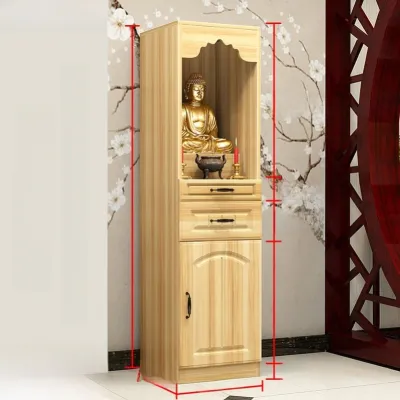
Before exploring different brands and showrooms, you must clearly define the structural and layout requirements dictated by your specific religious practices. Buddhist, Taoist, and ancestor veneration setups each demand distinct design configurations to accommodate their respective ritual items. For instance, Buddhist altars often prioritize clean, minimalist lines with elevated central platforms to place the Buddha statue prominently, alongside dedicated space for offering bowls, water cups, and incense burners.
In contrast, Taoist altars frequently require multi-tiered configurations to accommodate a hierarchy of multiple deities, along with ample clearance for larger, heavier incense pots and ceremonial offerings. Ancestor veneration setups often feature dual-compartment designs or separate pull-out shelves to keep ancestral tablets physically distinct from deity statues, respecting traditional spatial hierarchies. Understanding these nuances ensures you select a brand that specializes in the specific layout your tradition requires.
Products mentioned in this guide
![[HOMIEST] ORATE 2FT Altar Cabinet Prayer Cabinet Religious Worship Natural/Walnut](https://img.lazcdn.com/g/p/cfaa0a6f73682165358fbd07edf06f9b.jpg_400x400q80.jpg_.webp)
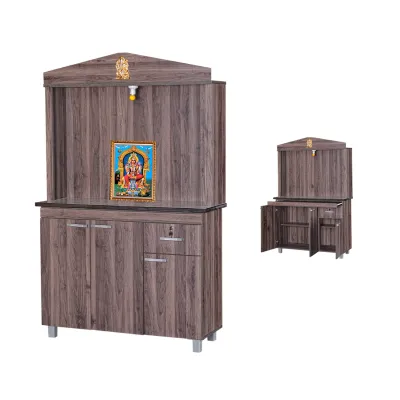
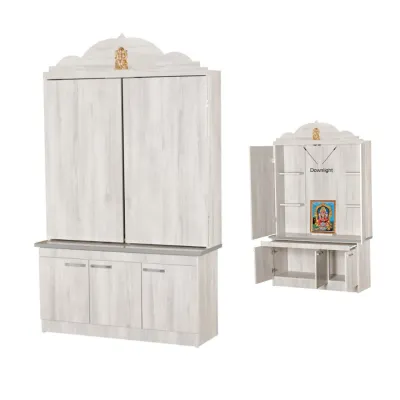
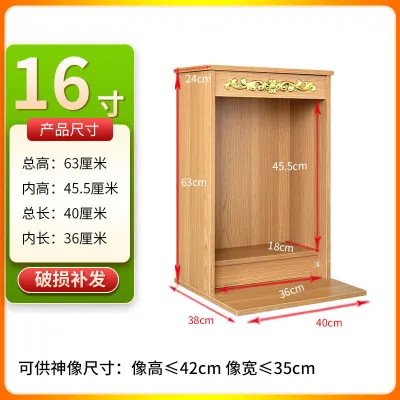
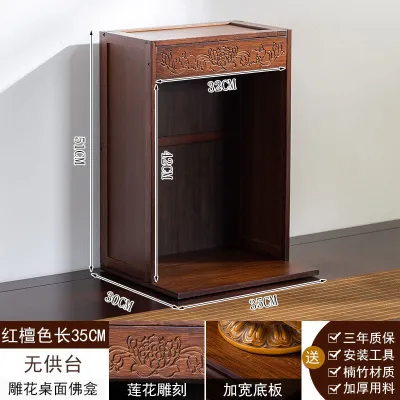
Prices are valid at publication and may change. Please refer to the product page for the latest price.
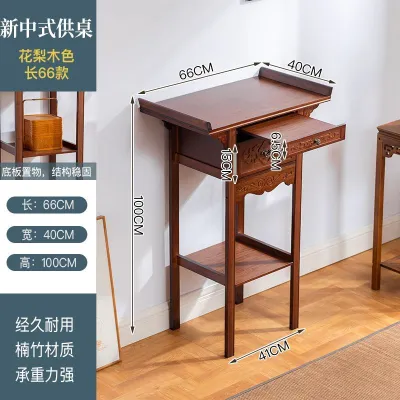
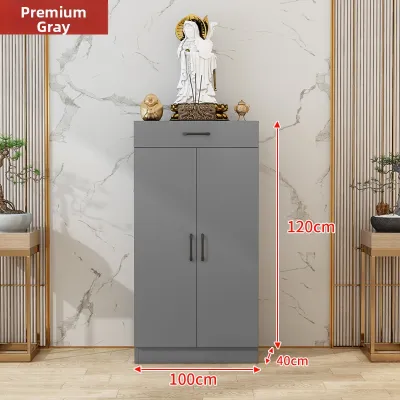
Beyond cultural requirements, precise spatial planning is essential, particularly within the compact layouts of modern Singapore apartments, such as HDB flats and condominiums. You must measure the exact footprint of the designated area, taking into account not just the cabinet’s static dimensions but also the necessary clearance for opening doors, pulling out prayer drawers, and standing comfortably during prayers. Ensure there is sufficient clearance around the cabinet to prevent it from blocking common walkways or striking adjacent furniture when doors are fully extended.
Finally, consider the vertical space and structural weight limits of your home. Multi-tiered cabinets or those crafted from heavy solid hardwoods exert significant downward force on your flooring. If you plan to place an exceptionally large cabinet in an older apartment, it is wise to verify the floor load capacity. Additionally, check your ceiling height to ensure the top of the cabinet, along with any decorative crown molding or top-mounted lighting, remains a safe distance from ceiling fans, air conditioning units, and overhead light fixtures to prevent heat damage or physical obstruction.
Core Criteria for Evaluating Craftsmanship and Joinery
When visiting showrooms or evaluating custom makers, you need practical inspection methods to assess the build quality and structural integrity of potential altar cabinets. High-quality altar cabinets rely on traditional wood joinery techniques, such as mortise-and-tenon joints, which allow the wood to expand and contract naturally with environmental changes without losing structural integrity. In contrast, lower-end mass-produced cabinets often rely heavily on modern mechanical fasteners, staples, or low-grade adhesives, which can loosen over time under the weight of heavy statues and constant use.

Take the time to inspect the moving parts of the cabinet in person. Test the drawer glides; they should slide smoothly and quietly without sticking, wobbling, or dropping when fully extended. Pull-out trays designed for heavy offering plates, incense burners, or scriptures must feature reinforced supports underneath to prevent sagging or structural failure. Inspect the alignment of the cabinet doors; the gaps between the doors and the frame should be uniform, and the hinges must be heavy-duty and securely fastened to prevent the doors from sagging over time.
The finish quality and edge treatment of the cabinet are also critical indicators of craftsmanship. Run your hand along the surfaces, corners, and edges of the cabinet to check for smoothness and the absence of splinters or rough patches. On veneered or engineered wood cabinets, inspect the edge banding closely; it should be seamless, with no visible glue lines, peeling, or sharp corners that could catch on clothing.
Additionally, pay close attention to the smell of the furniture when visiting a showroom. A strong, pungent chemical odor indicates the use of cheap, high-VOC (volatile organic compound) lacquers, paints, or adhesives. These chemicals can off-gas in your home for months, posing respiratory risks and causing discomfort. Reputable brands prioritize low-VOC, water-based finishes or natural oils that protect the wood while ensuring a safe indoor environment for your family.
Material Selection and Durability in a Tropical Climate
Singapore’s tropical climate, characterized by high relative humidity and temperature fluctuations, presents a challenging environment for wooden furniture. Choosing the right materials is crucial to ensure your altar cabinet does not warp, crack, or succumb to pests over time. Solid hardwoods, such as teak, mahogany, and oak, are highly prized for their natural durability, strength, and resistance to decay. Teak, in particular, contains natural oils that repel moisture and insects, making it an excellent, albeit premium, choice for long-term durability.
However, solid wood must be properly seasoned and kiln-dried by the manufacturer to reduce its moisture content before construction. If the wood is not seasoned correctly, the high humidity in Singapore will cause it to warp, split, or crack as it adjusts to your home’s environment. For those on a tighter budget, engineered wood alternatives, such as high-density fiberboard (HDF) or marine-grade plywood finished with high-quality wood veneers, offer excellent dimensional stability. These materials do not expand or contract as drastically as solid wood, making them highly resistant to warping in humid conditions.
To protect the cabinet from moisture-related damage, ensure the manufacturer applies a high-quality moisture-resistant sealant to all sides of the cabinet. This includes the back panel and the underside, which are often left raw and unprotected by lower-end brands. Unsealed wood easily absorbs moisture from the air, leading to mold growth, wood rot, and structural weakening.
When evaluating different brands, review their manufacturer specifications and care labels rather than relying on generic material claims. A reputable brand will provide clear documentation on the origin of their wood, the specific moisture-resistant treatments applied, and the recommended environmental conditions for the cabinet. Avoid brands that use vague terms like “solid wood mix” without specifying the exact wood species used, as this often indicates a blend of lower-quality woods that may not withstand Singapore’s climate.
Navigating Customization and Bespoke Services
While ready-made altar cabinets are widely available, they may not always align with the specific dimensions of your home’s niche or the precise layout required by your spiritual advisor or feng shui practitioner. In such cases, navigating customization and bespoke services becomes necessary. Customization allows you to specify exact heights, integrate hidden storage compartments for prayer books and ritual items, incorporate traditional hand-carved motifs, or design built-in LED lighting channels that highlight your statues without exposing unsightly wires.
The process of ordering a bespoke altar cabinet typically begins with an in-depth consultation with the maker’s design team. During this phase, you will discuss your spiritual requirements, spatial constraints, material preferences, and budget. A professional maker will then provide detailed 2D or 3D technical drawings showing all dimensions, material callouts, and electrical paths. It is crucial to review these drawings carefully and not approve the design until every detail—including the placement of cable grommets, light switches, and pull-out trays—is clearly marked and understood.
Understand that bespoke pieces require significant lead times, often ranging from several weeks to a few months, depending on the complexity of the carvings, material availability, and the workshop’s current workload. To ensure a smooth process, verify the maker’s portfolio for consistency in custom detailing, structural execution, and material transparency. Ask to see physical samples of their past custom work or detailed photographs of completed installations in local homes. A transparent maker will readily explain their sourcing and construction methods, giving you confidence in the quality of the final product.
Verifying Brand Reputation and After-Sales Support
Before committing to a purchase, it is essential to establish a robust framework for researching and validating the reliability of altar cabinet retailers and makers in Singapore. Start by cross-referencing customer reviews across multiple independent platforms, paying close attention to feedback regarding delivery punctuality, installation professionalism, and how the company handles disputes or defects. While online reviews are helpful, physical showroom visits are indispensable; they allow you to physically inspect the build quality, feel the materials, and interact with the staff to gauge their expertise and customer service.
A brand’s longevity in the local market is often a strong indicator of reliability. Companies that have operated in Singapore for decades have maintained their reputation by consistently delivering quality products and honoring their commitments. When discussing your purchase, clarify the warranty terms and after-sales support policies in writing. A trusted brand should offer a clear warranty covering structural defects, joint separation, and hardware failures for a specified period.
Be sure to ask what is excluded from the warranty, such as natural wood grain variations, minor color changes over time, or damage caused by improper cleaning. Additionally, inquire about their repair services—specifically, whether they provide on-site repairs or if you must transport the heavy cabinet back to their workshop for servicing.
Watch out for red flags when researching brands. Be cautious of retailers who cannot identify the specific species of wood used, lack a physical showroom where you can inspect floor models, or demand full payment upfront without providing a detailed, itemized contract. Poor communication, vague answers to technical questions, or a lack of a physical business address are clear indicators that you may face difficulties with after-sales support if issues arise after delivery.
Installation, Electrical Safety, and Placement Rules
Proper installation and placement are critical to ensuring your altar cabinet is secure, functional, and safe for daily use. Many modern altar cabinets feature integrated electrical components, such as LED spotlights, strip lights, or electronic incense burners. All electrical wiring and components must comply with local safety standards to prevent fire hazards. Ensure that any pre-installed wiring, LED drivers, and plugs carry the safety certifications recognized in Singapore, such as the Safety Mark.
Verify that the voltage matches your home’s supply (typically 230V) and that the wattage limits of the light fixtures are not exceeded. It is highly recommended to have a dedicated, easily accessible switch to isolate the power to the altar’s lighting when not in use. Additionally, ensure that LED drivers and light fixtures have adequate ventilation space to dissipate heat, preventing localized hot spots that could dry out the wood or pose a fire hazard.
For safety, tall, narrow, or top-heavy altar cabinets must be anchored securely to the wall to prevent tipping, especially if they are loaded with heavy brass statues, glass-fronted cases, or ceramic offering plates. Follow the manufacturer’s guidelines for anchoring, using appropriate masonry plugs and brackets suitable for your wall type (such as concrete or drywall).
For complex installations—such as mounting floating altar shelves, running new electrical conduits, or positioning cabinets near damp areas like kitchens or bathrooms—always engage a qualified professional carpenter or licensed electrician. This ensures that the installation complies with local building codes, does not compromise load-bearing structures, and maintains a safe distance from moisture sources that could damage the wood or electrical systems.
Frequently Asked Questions (FAQ)
How often should I polish or treat a solid wood altar cabinet?
You should always check the specific care manual and maintenance schedule provided by your cabinet’s manufacturer, as different finishes require distinct care routines. Generally, a light dusting with a dry, clean microfiber cloth is sufficient for weekly maintenance. Avoid using harsh chemical sprays, multi-purpose household cleaners, or abrasive polishes, as these can degrade the protective topcoat over time. If the wood shows signs of dryness, fading, or moisture buildup, consult the original maker for recommended, non-abrasive wood care products or professional refinishing options rather than attempting complex DIY treatments.
Can I relocate a large, assembled altar cabinet by myself?
Relocating a heavy, solid wood altar cabinet without professional assistance carries a high risk of personal injury and structural damage to the furniture. Dragging, tilting, or lifting a fully assembled cabinet can stress the traditional joinery, loosen mechanical fasteners, and scratch your flooring. Before moving, remove all statues, offering plates, glass panels, and loose shelves to reduce weight and prevent breakage. For large or multi-tiered cabinets, it is highly recommended to hire specialized furniture movers who understand how to safely disassemble, pack, transport, and reassemble heavy religious furniture.
Community discussion
Share your experience or ask a question. Comments are reviewed before publication.