
Selecting the right ceiling lights for your home involves more than just picking a design that matches your interior decor. To find the ideal Rayco ceiling light models for each room, you must systematically evaluate the functional demands of the space, the physical constraints of your ceilings, and the technical specifications of the fixtures. By matching the specific requirements of your living room, kitchen, bathroom, and bedrooms with the corresponding product ratings, you can create a safe, efficient, and visually comfortable environment. This guide provides a practical framework to help you navigate the technical details and make an informed decision for every room in your home.
Assessing Lighting Needs for Different Spaces
Evaluating the functional and ambient lighting requirements of each room is the essential first step before purchasing any ceiling fixtures. Every space in your home serves a distinct purpose, and the lighting design should directly support those activities. For instance, a living room requires a versatile combination of ambient lighting for general gathering, task lighting for reading, and accent lighting to highlight artwork or architectural features. By identifying the primary activities in each room, you can determine whether you need wide-beam downlights for general illumination or narrow-beam spotlights for focused task areas.
Calculating the approximate room size is another critical step to estimate the total light output, measured in lumens, required for adequate illumination. To determine this, you can calculate the floor area in square meters and multiply it by the recommended lux level for that specific room type. A standard bedroom might only require 100 to 150 lux, whereas a home office or kitchen work area often demands 300 to 500 lux to prevent eye strain. This calculation provides a reliable baseline for the total lumen output you need to achieve across all the fixtures installed in that space, helping you avoid under-lighting or over-lighting.
Products mentioned in this guide
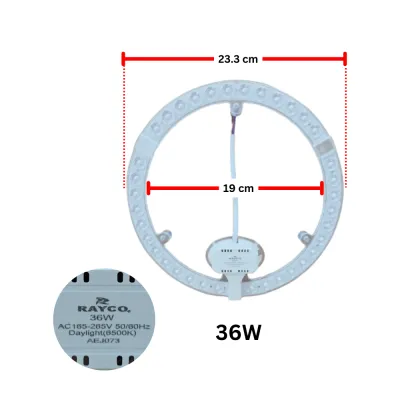
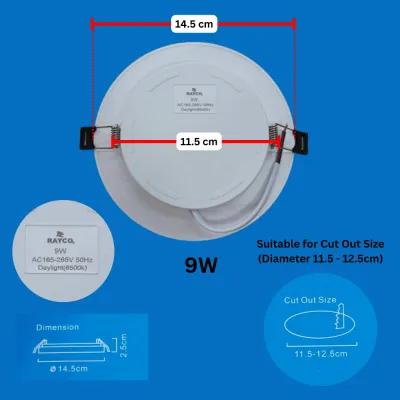
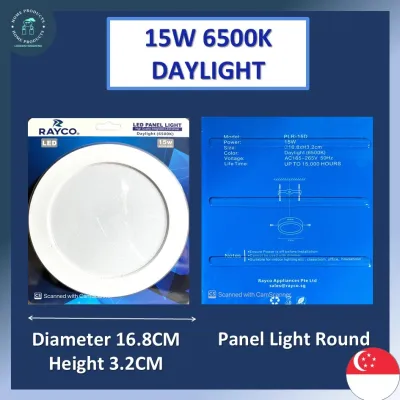
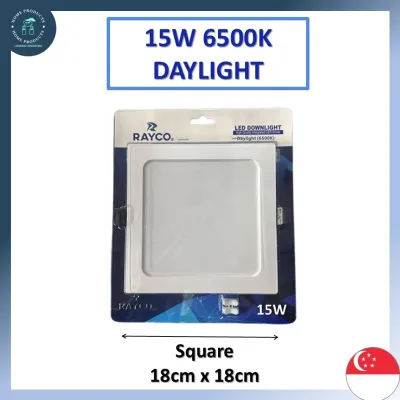
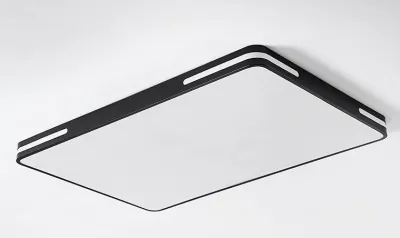
Prices are valid at publication and may change. Please refer to the product page for the latest price.
Beyond room size, you must evaluate your existing electrical infrastructure and ceiling architecture. If you are planning to install recessed downlights, you must measure the available ceiling depth or plenum space behind the plasterboard. Some LED downlights require a deeper clearance to allow heat to dissipate safely, while ultra-thin models are designed specifically for shallow ceiling voids. Additionally, you must check whether your existing wall switches are compatible with the dimming technology of modern LED drivers, as older dimming systems can cause modern fixtures to flicker or hum.
Essential Specifications to Verify on Rayco Packaging
When selecting Rayco ceiling lights, reviewing the technical specifications on the product packaging is vital to ensure safety, compatibility, and performance. First, verify the voltage rating and base type of the fixture to ensure they align with local electrical standards. In Singapore, residential properties operate on a nominal voltage of 230V AC at 50Hz. Choosing a fixture with an incompatible voltage rating can lead to immediate product failure or pose a severe electrical hazard. You should also confirm whether the fixture features an integrated LED driver or uses a standard replaceable bulb base, such as GU10 or E27.

The Ingress Protection (IP) rating is another critical specification to check, particularly for fixtures destined for moisture-prone environments. The IP rating consists of two digits: the first measures protection against solid objects like dust, and the second measures protection against liquids. For dry areas such as bedrooms and living rooms, a standard IP20 rating is generally sufficient. However, for areas exposed to steam, condensation, or direct water splashes, you must select a fixture with a higher rating, such as IP44 or IP65, to prevent moisture from compromising the internal electrical components.
Color temperature and Color Rendering Index (CRI) are key metrics that define the quality and appearance of the light. Color temperature, measured in Kelvin (K), dictates whether the light appears warm and yellowish or cool and bluish. The CRI, rated on a scale up to 100, indicates how accurately the light source renders colors compared to natural daylight. For residential spaces where accurate color representation is important, such as near vanity mirrors or kitchen prep areas, look for fixtures with a CRI of 90 or higher to ensure colors appear vibrant and true to life.
Finally, physical dimensions and cut-out sizes must be verified with precision before making a purchase. For recessed downlights, the cut-out size refers to the diameter of the hole that must be cut into the ceiling plasterboard, which is always smaller than the outer trim of the fixture. If you are replacing existing downlights, measuring the current ceiling holes is essential to find a model that fits perfectly without requiring extensive plasterboard patching or widening. Additionally, check the overall height of the fixture to ensure it fits comfortably within your ceiling void without contacting thermal insulation or structural joists.
Matching Rayco Light Features to Specific Rooms
Matching the specific features of Rayco ceiling lights to the unique characteristics of each room helps optimize both comfort and functionality. In living areas and bedrooms, the primary goal is to create a relaxing, inviting atmosphere. Warm color temperatures, typically ranging from 2700K to 3000K, are highly suitable for these spaces as they mimic the soft, comforting glow of traditional incandescent lighting. Selecting dimmable options for these rooms provides the flexibility to adjust the light levels throughout the day, allowing you to transition from bright ambient light for social gatherings to a low, soothing glow before bedtime.
Kitchens and workspaces demand a completely different lighting strategy focused on high visibility and task performance. In these areas, prioritizing higher lumen output and cooler color temperatures, such as 4000K to 5000K, helps enhance focus and reduce eye fatigue during detailed tasks. A high CRI is particularly beneficial in the kitchen, where accurate color rendering helps you assess the freshness of ingredients and monitor cooking progress. Positioning task lights directly over countertops, sinks, and desks ensures that your body does not cast shadows over your work surface.
Bathrooms and other wet zones require strict adherence to safety standards due to the constant presence of moisture and water spray. When selecting ceiling lights for these spaces, you must verify that the fixtures carry the appropriate IP rating specified by the manufacturer for damp or wet locations. For general bathroom ceiling areas outside the direct splash zone, an IP44 rating is typically recommended to withstand high humidity and steam. For fixtures installed directly inside a shower cubicle or close to water sources, a higher rating such as IP65 is necessary to ensure long-term safety and durability.
Installation Safety and When to Hire a Professional
Working with electrical fixtures requires strict adherence to safety protocols to prevent electrical shock, fire hazards, and equipment damage. Before inspecting, cleaning, or replacing any ceiling light, you must isolate the electrical circuit at the main consumer unit or circuit breaker. Simply turning off the wall switch is not sufficient, as some wiring configurations may still carry live current to the fixture. Always use a certified non-contact voltage tester to verify that the wires are completely de-energized before proceeding with any physical contact.
It is also important to recognize the limitations of your existing electrical wiring and components. In older properties, wiring insulation can become brittle and degrade, increasing the risk of short circuits when disturbed. Furthermore, modern LED downlights rely on electronic drivers that must be compatible with your home’s electrical load and dimming systems. If you observe frayed wires, scorched terminals, or loose connections behind your existing fixtures, you should immediately stop the installation and avoid restoring power to that circuit until it has been thoroughly inspected.
While basic bulb replacements can often be performed safely by homeowners, complex installations require professional intervention. Installing new fixed wiring, modifying structural ceiling joists to accommodate larger fixtures, or running electrical lines through damp zones like bathrooms are tasks that should be left to a qualified professional. In Singapore, hiring a licensed electrical worker (LEW) is essential to ensure that all electrical work complies with local safety codes and regulations. A professional installer can also help you calculate load capacities, select compatible LED drivers, and ensure that your new lighting system operates safely and efficiently for years to come.
Frequently Asked Questions (FAQ)
Can I use standard Rayco downlights in the bathroom?
Standard indoor downlights, which typically carry an IP20 rating, are not designed to withstand the high humidity, steam, and potential water splashes present in a bathroom. Installing these fixtures in wet zones can lead to moisture accumulation inside the housing, causing premature driver failure, corrosion, or dangerous electrical short circuits. To ensure safety, you must check the product label and select Rayco models specifically rated IP44 or higher for general bathroom use, or IP65 for areas directly exposed to water.
Are Rayco LED ceiling lights compatible with my existing dimmer switches?
Not all LED ceiling lights are dimmable, and traditional dimmer switches designed for older incandescent bulbs are often incompatible with modern LED drivers. If you attempt to use an incompatible dimmer, you may experience flickering, buzzing, reduced dimming range, or even permanent damage to the LED driver. To avoid these issues, always verify that the specific Rayco model is labeled as dimmable, and consult both the light’s technical specifications and your dimmer switch manual to confirm mutual compatibility.
How do I clean and maintain recessed downlights?
To clean and maintain your recessed downlights safely, always start by switching off the power at the main circuit breaker and allowing the fixtures to cool down completely to prevent burns. Use a dry or slightly damp microfiber cloth to gently wipe away dust and debris from the outer trim and lens cover. Avoid using abrasive scrubbing pads, solvents, or harsh chemical cleaners, as these substances can strip away protective finishes, discolor the trim, or damage the delicate optical components of the LED.
Community discussion
Share your experience or ask a question. Comments are reviewed before publication.