
Quick Answer: Which Adjustable Mechanism Fits Your Desk?
Choosing the right adjustable table lamp is not about finding a single universal winner. Instead, the ideal choice depends on your primary desk tasks, the physical dimensions of your workspace, and how often you need to redirect your light source. A lamp that works perfectly for a stationary laptop setup may fail completely on a wide drafting table or a dual-monitor desk.
To find the right fit for your workspace, consider this straightforward decision framework:
- Choose a Gooseneck if you require quick, omnidirectional adjustments in a tight space. Goosenecks allow you to twist and bend the light head to precise angles, making them ideal for compact desks, bedside reading, or close-up hobby work where you do not need a long reach.
- Choose an Articulated Arm if you need a wide range of motion, high vertical clearance, and absolute stability. These multi-jointed arms are ideal for large desks, drafting tables, dual-monitor setups, or standing desks because they can extend far across your workspace without losing their balance.
- Choose a Swing Arm if you want a classic, flat-folding profile that excels at horizontal coverage. These setups are perfect for deep desks where you want to swing the light out of the way against a wall or clamp it to the side to keep your workspace clear.
While brand names often dominate product marketing, the actual performance of an adjustable table lamp depends on its mechanical engineering. High-quality joint construction, counterbalancing spring systems, robust friction pads, and the physical weight ratio between the base and the arm are far more important than a logo on the box.
Products mentioned in this guide
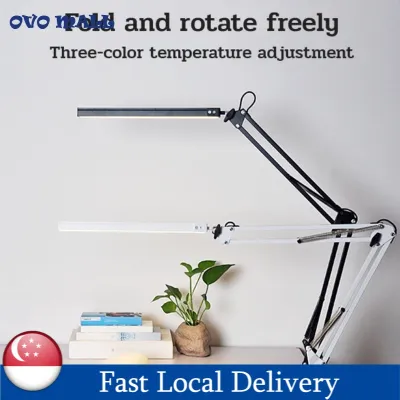
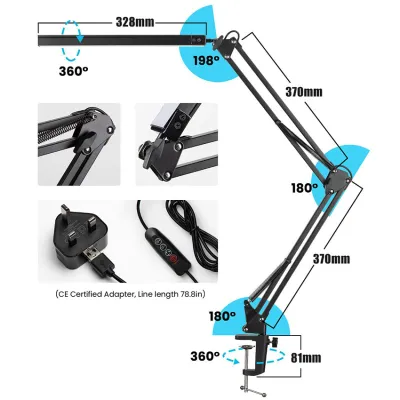
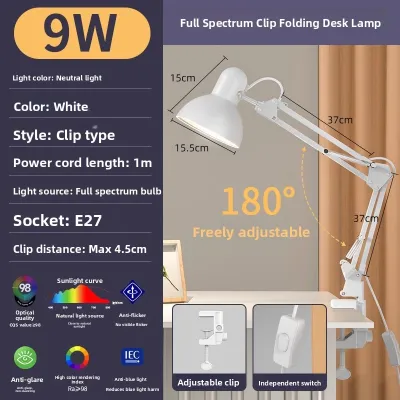
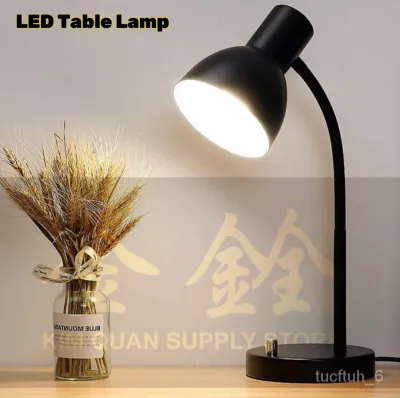
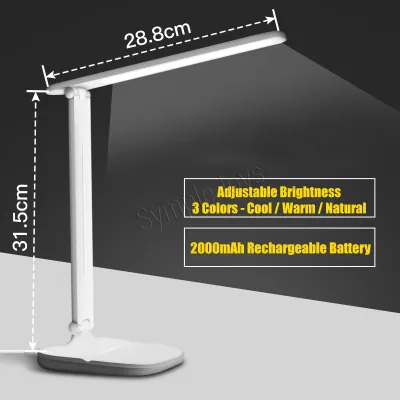
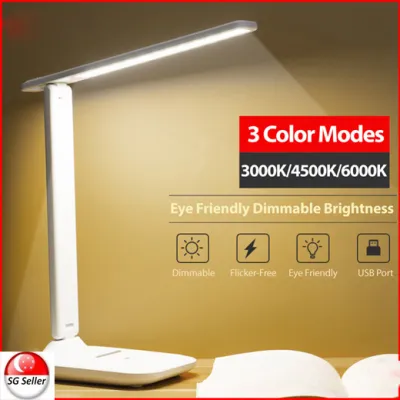
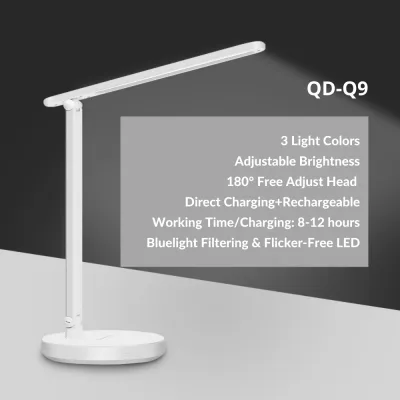
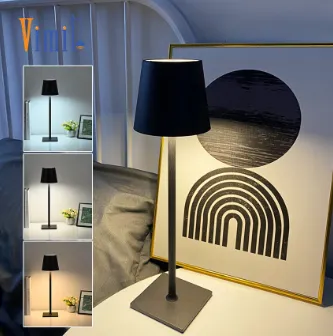
Prices are valid at publication and may change. Please refer to the product page for the latest price.
The Three Main Adjustable Lamp Mechanisms Explained
To make an informed choice, you must first understand how these three common adjustable mechanisms differ in their construction, physics, and movement limitations.

Gooseneck (Flexible Tube)
The gooseneck mechanism consists of a flexible metal hose, typically constructed from a coiled, interlocking steel spiral wrapped around a soft iron wire core. This design allows you to bend the arm in any direction, providing infinite micro-adjustments along a continuous curve. The outer layer is often covered in silicone, plastic, or woven fabric for a cleaner look and smoother handling.
A gooseneck holds its position entirely through internal friction between the interlocking metal spirals and the resistance of the inner wire. Because it relies on this internal friction, a gooseneck has a limited weight capacity. If the lamp head is too heavy, gravity will eventually overcome the friction, causing the arm to droop. For this reason, goosenecks are best paired with lightweight, integrated LED heads rather than heavy glass or metal bulb fixtures.
Articulated Arm (Multi-Joint)
An articulated arm features two or more rigid metal segments connected by pivot joints, resembling the human arm. These joints are typically controlled by external or internal steel springs, friction knobs, or counterweights. This mechanical configuration is the classic design for architect and drafting lamps, engineered to balance the weight of the lamp head at various angles.
The tension springs or friction pads work in opposition to gravity, counterbalancing the weight of the lamp head so it remains suspended exactly where you place it. This setup allows you to lift, lower, pull, or push the lamp across a wide physical plane. While it generally restricts movement to a single vertical and horizontal plane, high-quality models include a rotating joint at the base and head to allow for broader positioning.
Swing Arm (Pantograph or Scissor)
A swing arm lamp uses a pantograph or scissor-like linkage system, or a simple single-hinge arm that moves primarily on a horizontal plane. Historically popular in both industrial workspaces and traditional offices, this design is engineered to extend outward over a desk and then fold back flat when not in use.
Unlike articulated arms that focus on vertical height and deep diagonal reach, a classic swing arm prioritizes horizontal sweeping motions. The linkages keep the lamp head parallel to the desk surface as you move it, preventing you from having to constantly readjust the shade angle. This mechanism is highly effective for wide, shallow desks where you need to move the light from left to right without changing its height.
Flexibility and Range of Motion: Which Reaches Further?
When evaluating flexibility, you need to consider how the lamp moves through space and how far it can reach. The mechanical differences between these three systems directly impact your daily ergonomics.
Omnidirectional vs. Planar Movement
A gooseneck lamp offers true three-dimensional, omnidirectional movement. You can twist, loop, S-curve, or tilt the neck in any direction without adjusting screws or knobs. This makes it incredibly easy to point the light away from your eyes to eliminate direct glare, or direct it downward for high-contrast reading.
In contrast, articulated and swing arms are fundamentally planar devices. They move along defined geometric paths dictated by their hinges. To change the light direction on an articulated arm, you must move the segments along their vertical or horizontal axes. While this requires slightly more deliberate physical effort, it provides a structured, predictable path of travel that keeps the light head steady and level.
Micro-Adjustments and Precision
For tiny, precise changes in light angle—such as shifting the beam slightly to avoid a reflection on your tablet screen—the gooseneck is unmatched. You simply grab the head and nudge it a few millimeters in any direction. There are no joints to lock or unlock, and the movement is completely silent.
Articulated arms can perform micro-adjustments, but their ease of use depends on the quality of their joints. If the joints rely on manual friction knobs, you may need to loosen a knob, adjust the arm, and retighten it to keep the head from sinking. High-end spring-balanced articulated arms do not require manual tightening, but they still require enough force to overcome the initial spring tension, which can make tiny, millimeter-scale adjustments slightly more difficult.
Maximum Reach and Height
If you have a large desk, a dual-monitor setup, or a height-adjustable standing desk, maximum reach is critical. Articulated arms are the clear winners here. A standard dual-segment articulated arm can easily extend 50 to 100 centimeters horizontally and vertically, allowing you to position the light high above your monitors to wash the entire desk in light, or pull it down close for detailed paperwork.
Goosenecks are physically limited by the length of their flexible tubes. Because a longer gooseneck requires a thicker, stiffer internal core to support its own weight, most gooseneck lamps are kept under 40 centimeters in length. Attempting to use a short gooseneck lamp on a deep desk often forces you to pull the entire lamp closer, cluttering your primary work zone.
Cable Management
An often-overlooked aspect of arm flexibility is how the electrical cable is routed. High-quality articulated arms often feature internal cable routing, where the wire runs safely inside the metal hollow tubes. This prevents the cord from pinching, snagging, or stretching as you adjust the arm through its full range of motion.
Gooseneck lamps typically have the cable permanently sealed inside the flexible tube, which keeps it completely out of sight and protected. However, cheaper swing arms or basic articulated models often run the cable externally, securing it with plastic clips along the outside of the metal bars. These external cables are prone to catching on desk items or getting pinched in the hinges during sudden adjustments.
Stability and Wobble Resistance: Keeping the Light Steady
A highly flexible lamp is of little use if it wobbles every time you type, or slowly droops over the course of an hour. Stability is a product of gravity, materials, and joint engineering.
Center of Gravity and Base Requirements
Every time you extend an adjustable lamp arm, you shift its center of gravity away from its physical base. This physical reality creates torque. If the base of the lamp is not heavy enough to counterbalance this torque, the lamp will tip over.
Because goosenecks have a limited overall reach and are lightweight, they have a low center of gravity. They require relatively light bases to remain perfectly stable. Articulated and swing arms, however, can extend far past their physical footprint. If you choose a freestanding model, the base must be exceptionally heavy—often made of cast iron or weighted steel—to prevent the lamp from tipping when fully extended.
Joint Droop and Tension Decay
Over time, all mechanical joints experience wear. Goosenecks suffer from metal fatigue. Repeatedly bending the internal wire back and forth eventually weakens the metal structure, causing it to lose its stiffness. Once a gooseneck begins to fatigue, it will slowly droop under the weight of the lamp head, requiring replacement or constant repositioning.
Articulated arms experience tension decay in their springs or friction pads. Fortunately, this is often fixable. If a spring-balanced arm begins to sag, you can usually tighten the tension screws or adjust the spring mounting points to restore its holding power. If the arm uses friction joints, replacing or tightening the plastic or brass washers inside the pivot points will instantly restore its stability, giving articulated lamps a much longer functional lifespan.
Vibration Transfer
If you are a heavy typist or work on a lightweight desk, vibrations can travel up the lamp and cause the light head to shake. Extended goosenecks are highly susceptible to this, often acting like a pendulum. A minor bump to the desk can cause a gooseneck lamp to oscillate for several seconds, which can be highly distracting and cause eye strain.
Articulated arms with rigid steel or aluminum segments handle vibrations much better. The rigid segments do not flex, and the tension springs quickly absorb and dampen any kinetic energy transferred from the desk. This makes them a superior choice for busy, high-activity workspaces.
Desk Clamp vs. Freestanding Base
To achieve absolute stability with a long-reach articulated or swing arm, you should move away from freestanding bases entirely. A heavy-duty metal C-clamp or a grommet mount secures the lamp directly to the edge of your desk.
Clamping the lamp eliminates any risk of tipping, regardless of how far you extend the arm. It also frees up valuable desk space, which is especially helpful for compact home offices or study desks in Singapore, where space is at a premium. However, if you have a desk made of tempered glass or a thin hollow-core material, you must exercise caution, as the concentrated pressure of a C-clamp can crack or crush these surfaces. In such cases, a heavy freestanding base or a reinforcing plate is necessary.
Mechanism Comparison Matrix
To help you quickly compare these three adjustable lamp styles, the table below outlines their performance across key usability and mechanical dimensions.
| Mechanism Type | Flexibility & Reach | Stability & Wobble Resistance | Best Desk Setup | Key Specs to Verify |
|---|---|---|---|---|
| Gooseneck | Moderate reach; 360-degree omnidirectional micro-adjustments. | High at short lengths; prone to oscillation if bumped. | Compact desks, bedside tables, laptop-only workspaces. | Neck length, silicone sleeve quality, head weight. |
| Articulated Arm | High vertical and horizontal reach; moves along structured planes. | Excellent when clamped; adjustable spring tension. | Large desks, dual-monitor setups, drafting/craft tables. | Spring material, joint adjustment type, maximum reach. |
| Swing Arm | High horizontal reach; limited vertical and tilting range. | High stability; keeps lamp head level during movement. | Deep desks, wall-adjacent desks, reading corners. | Linkage material, clamp width, joint durability. |
Key Specifications to Verify Before Purchasing
Before you buy an adjustable table lamp, you must look past marketing claims and verify the physical specifications to ensure the lamp is safe, durable, and compatible with your workspace.
Joint and Build Materials
The longevity of any adjustable lamp is determined by its materials. Avoid lamps that rely heavily on plastic joints, plastic hinges, or plastic wing nuts. Plastic degrades quickly under the heat generated by the lamp and the mechanical stress of daily adjustments, leading to cracked joints that can no longer hold tension.
Instead, look for lamps constructed with:
- Die-cast aluminum or steel arms for structural rigidity.
- All-metal hinges and pivot joints that can withstand years of movement.
- Replaceable brass or high-density nylon friction washers that allow you to adjust joint tension smoothly without metal-on-metal grinding.
Electrical and Bulb Compatibility
Always verify that the lamp’s electrical specifications are fully compatible with your local power grid. In Singapore, the standard household voltage is 230V at a frequency of 50Hz, and appliances must use a Type G 3-pin plug. If you are purchasing a lamp online from international sellers, ensure it is rated for 230V (not 110V) and comes with a compliant power adapter. For added peace of mind, look for safety certifications, such as the Enterprise Singapore Safety Mark, which indicates the power adapter has been tested and approved for local use.
Additionally, consider the bulb configuration:
- Integrated LED Modules: These offer incredibly slim profiles and excellent energy efficiency. However, the LED light source is non-replaceable. If the light fails, you must replace the entire lamp. If choosing this option, verify the manufacturer's rated lifespan (typically 25,000 to 50,000 hours) and warranty terms.
- Standard Bulb Sockets (e.g., E27 or GU10): These are slightly bulkier but offer maximum versatility. You can easily swap out the bulb if it burns out, or change the bulb type to match your preferred brightness and color temperature. If you use a standard socket, make sure to check the maximum allowable wattage (e.g., Max 15W LED or Max 40W Halogen) to prevent overheating the lamp head.
Weight and Dimensions
Carefully measure your desk depth and compare it against the lamp’s maximum extension length. An arm that is too short will force you to mount the lamp in an inconvenient spot, while an arm that is too long might overshoot your workspace or hit a nearby wall.
If you choose a freestanding lamp, check the net weight of the base. A high-quality articulated lamp with a 70cm reach should ideally have a base weighing at least 2 to 3 kilograms to ensure it remains stable when the arm is extended. If you choose a clamp-on model, measure your desk’s edge thickness and check the clamp’s maximum opening capacity to ensure a secure fit.
Dimming and Color Temperature
Because adjustable lamps are primarily used for close-up task work, they should offer features that protect your eyes from fatigue during long working hours. Look for lamps that feature:
- Stepless dimming or multiple brightness levels so you can match the light output to the ambient room lighting.
- Adjustable Correlated Color Temperature (CCT), which allows you to switch between cool white light (around 5000K to 6000K) for high-focus daytime work, and warm white light (around 2700K to 3000K) to help your eyes relax in the evening.
- Flicker-free LED drivers to prevent the invisible high-frequency flickering that can cause headaches and eye strain over time.
- A high Color Rendering Index (CRI) of 90 or above if you perform color-sensitive work like drawing, painting, or photo editing.
Final Selection Rules for Your Workspace
To make your final decision, weigh the fundamental trade-off of adjustable lighting: do you prioritize the compact, effortless flexibility of a gooseneck, or the structural strength and expansive reach of an articulated arm?
Before finalizing your purchase, run through this quick checklist:
- Measure your desk depth and thickness: Ensure your chosen mount (clamp or base) fits your desk without blocking monitors or drawers.
- Identify your primary task: If you work on a single laptop, a gooseneck is likely sufficient. If you use multiple monitors or a large physical drafting space, choose an articulated arm.
- Confirm the materials: Opt for metal joints and spring-balanced systems over plastic components to ensure long-term durability.
- Verify local electrical safety: Confirm the lamp is rated for 230V and uses a Type G plug.
If possible, visit a local lighting showroom to test the arm tension in person. Pay close attention to how much effort it takes to move the joints, and check if the lamp head holds its position without sinking. If you are buying online, review the retailer’s return policy so you can exchange the lamp if the mechanical tension does not align with your ergonomic needs.
Community discussion
Share your experience or ask a question. Comments are reviewed before publication.