
Quick Answer: Which LED Strip Casing Should You Choose?
Selecting the right LED strip casing—often referred to as a channel or profile—is a critical decision that directly impacts the lifespan, safety, and visual appeal of your lighting installation. The choice between aluminum and plastic (typically polycarbonate) casings is not merely aesthetic; it is primarily dictated by technical requirements, environmental conditions, and the power specifications of your LED strips.
As a general rule, aluminum casings are the mandatory choice for high-wattage, high-density LED strips because of their superior thermal management. Without a metal path to conduct heat away from the light-emitting diodes, high-output strips will rapidly suffer from thermal degradation. Conversely, plastic casings are highly suited for low-wattage accent lighting, budget-conscious DIY projects, or installations requiring tight curves and flexible routing.
To make the right choice for your home or commercial space, you must evaluate three core variables: the power output of your LED strip (measured in watts per meter), the physical installation environment (such as Singapore’s warm, humid climate or wet zones like bathrooms), and your desired aesthetic outcome, such as achieving a completely seamless, dot-free glow. Balancing these factors ensures your lighting remains safe, efficient, and visually striking over years of continuous operation.
Products mentioned in this guide
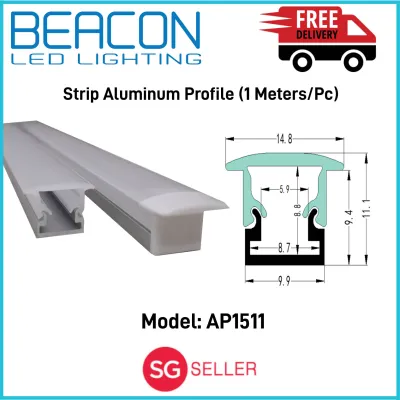
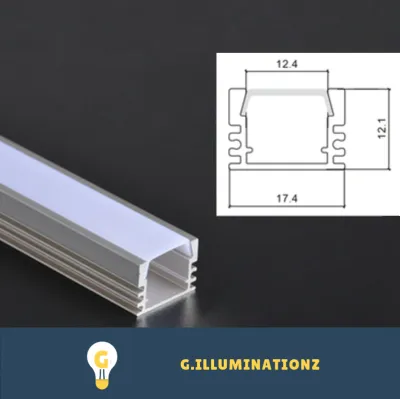
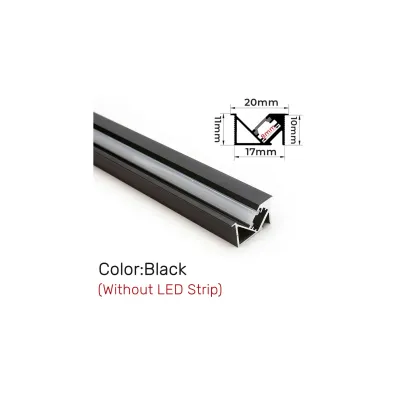
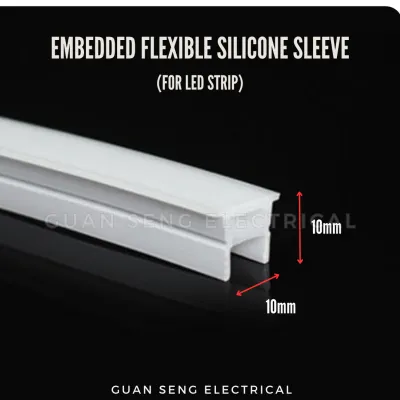
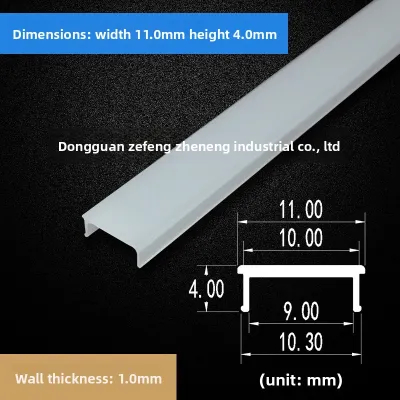
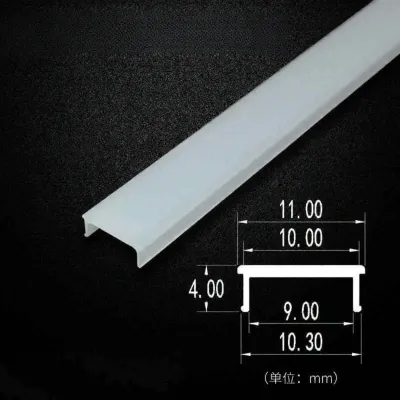
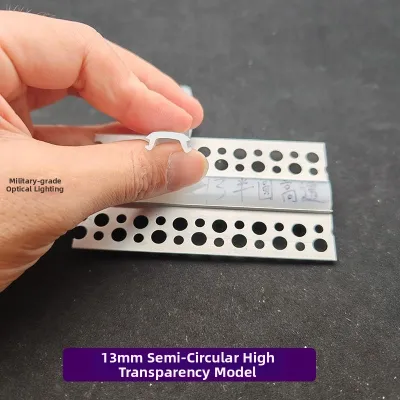
Prices are valid at publication and may change. Please refer to the product page for the latest price.
Heat Dissipation: Protecting Your LED Strips
Although LEDs are celebrated for their energy efficiency compared to traditional incandescent bulbs, they still generate a significant amount of heat. This thermal energy is concentrated in the semiconductor junctions of the individual LED chips. If this heat is not continuously removed, it causes the junction temperature to spike, leading to accelerated lumen depreciation, color shifting, and premature failure of the entire strip. Managing this heat is the single most important factor in preserving the lifespan of your solid-state lighting.

Aluminum is an exceptional thermal conductor, boasting a high thermal conductivity rate that allows it to act as an effective heat sink. When an LED strip is mounted directly onto an aluminum channel, the metal draws the thermal energy away from the circuit board and dissipates it into the surrounding air. This continuous cooling cycle keeps the LEDs running within their optimal temperature limits. In tropical climates where ambient indoor temperatures can regularly hover around 30 degrees Celsius without air conditioning, this passive cooling mechanism is vital to prevent thermal throttling and protect your investment.
Plastic, on the other hand, is a thermal insulator. Rather than drawing heat away, plastic casings tend to trap thermal energy inside the channel, creating a miniature greenhouse effect around the LED chips. If you place a high-output LED strip inside a plastic casing, the heat buildup will rapidly degrade the adhesive backing, yellow the plastic cover, and cause individual diodes to burn out. Therefore, plastic should be reserved strictly for low-power accent strips, typically those operating below 10 watts per meter.
Before purchasing any casing, always verify the wattage limit, voltage compatibility, and thermal specifications of your chosen LED strip. High-wattage strips, such as those used for primary task lighting, under-cabinet work zones, or architectural coves, must always be paired with aluminum profiles to ensure safe operation. When installing these systems, ensure the channel is mounted in a way that allows adequate airflow around the exterior metal surfaces to maximize heat dissipation.
Light Diffusion: Achieving a Dot-Free Glow
One of the primary reasons homeowners and designers use LED strip casings is to eliminate the harsh, pixelated look of individual LED diodes, often referred to as “hotspots.” Achieving a smooth, continuous line of light—resembling a neon tube—depends heavily on how the casing and its diffuser interact with the light emitted by the strip.
Plastic casings often feature integrated frosted or opal diffusers that are molded directly into the channel structure. These diffusers contain microscopic particles that refract and scatter the light rays in multiple directions, effectively blending the individual light points into a single, cohesive glow. Because plastic channels can be manufactured as single, continuous extruded pieces, they can offer a very clean look for low-power decorative installations where a soft, low-intensity glow is desired.
Aluminum profiles, being completely opaque and highly reflective on their interior surfaces, require a separate, dedicated diffuser cover—usually made of polycarbonate (PC) or polymethyl methacrylate (PMMA)—that snaps or slides into the metal channel. The internal reflective walls of the aluminum channel help bounce light forward, maximizing the directional output of the strip before it passes through the diffuser cover. This combination allows you to choose different types of covers, such as clear, frosted, or deep opal, depending on your brightness and diffusion requirements.
The key to achieving a completely dot-free effect is the distance between the LED chips and the diffuser cover, known as the profile depth. Deeper aluminum channels allow the light beams from adjacent diodes to overlap and blend before hitting the frosted cover, resulting in a flawless, uniform glow. Clear covers offer the highest light transmission (often over 90%) but provide zero diffusion, making them suitable only for indirect lighting where the strip is completely hidden from view. Frosted or opal covers improve visual comfort by eliminating glare, though they reduce total lumen output by approximately 20% to 40%.
It is important to remember that decorative style, perceived color temperature, and spatial lighting effects are highly subjective preferences. A warmer color temperature (such as 2700K or 3000K) might feel cozy in a bedroom but may appear dimmer when passed through a heavy opal diffuser. Always test your LED strip and diffuser combination in your specific environment before finalizing the installation to ensure the visual output matches your practical expectations.
Durability and Environmental Resistance
The physical durability and environmental resilience of your casing material determine how well it will protect your lighting system over time, particularly when subjected to physical stress, UV radiation, or high humidity.
Aluminum profiles excel in structural rigidity. They provide a solid, unyielding backing that keeps the LED strip perfectly flat and straight over long, continuous runs, such as along a hallway ceiling or under a kitchen counter. This rigidity prevents the casing from sagging, bowing, or warping over time. In contrast, plastic casings are inherently flexible and can sag under their own weight or warp when exposed to fluctuating indoor temperatures, requiring more frequent mounting clips or support brackets to maintain a straight line.
UV resistance is another critical consideration, especially for installations near windows, glass facades, or outdoor areas. Standard plastics can degrade rapidly when exposed to ultraviolet radiation from sunlight, leading to yellowing, brittleness, and eventual cracking. While high-quality polycarbonate diffusers can be treated with UV stabilizers to resist this degradation, the bare metal of an aluminum channel is naturally immune to UV damage, ensuring that the structural housing remains intact and pristine for decades.
When it comes to moisture and humidity, there is a common misconception that the casing material itself determines the waterproof rating of the installation. In reality, neither a standard aluminum profile nor a plastic casing is inherently waterproof. Protecting your lighting in high-humidity zones—such as Singapore’s damp bathrooms, laundry yards, or outdoor balconies—depends entirely on the ingress protection (IP) rating of the LED strip itself, the quality of the silicone sealant used, and how securely the end caps and power connections are sealed. For these challenging environments, you must verify the manufacturer’s IP rating (such as IP65 or IP67) for the entire completed assembly.
For any installation in damp areas, outdoor environments, or when working at heights, safety must be your absolute priority. Always isolate the mains power before handling any electrical components. Ensure you follow the manufacturer’s precise installation instructions regarding sealing, grounding, and mounting. If your project involves fixed electrical wiring, high-voltage connections, or complex integration into your home’s main distribution board, you must engage a qualified, licensed electrical professional to carry out the work safely and in compliance with local regulations.
Installation, Cutting, and Flexibility
The ease of installation and the tools required to work with each material can significantly influence your project’s timeline, labor costs, and overall feasibility, especially for DIY enthusiasts.
Plastic casings are incredibly user-friendly when it comes to cutting and shaping. Because the material is soft, you can easily score it with a utility knife and snap it cleanly, or cut through it using standard heavy-duty scissors or a fine-toothed hand saw. This makes plastic an excellent choice for quick installations where you need to make precise, on-the-fly adjustments without generating metal shavings or loud noise. The lightweight nature of plastic also means it can often be securely mounted using high-quality, heavy-duty double-sided mounting tape, making it ideal for rental properties or temporary displays where drilling holes is not permitted.
Aluminum profiles demand a more rigorous installation process. Cutting aluminum requires specialized tools, such as a hacksaw, a miter saw equipped with a non-ferrous metal blade, or heavy-duty metal shears. After cutting, the rough metal edges must be carefully filed down to remove burrs that could otherwise slice through the delicate copper circuitry of your LED strip during installation. Because aluminum is heavier than plastic, relying solely on adhesive tape is risky, particularly for overhead or ceiling installations where gravity can cause the channel to fall. Instead, you should use mechanical fasteners, such as mounting clips secured with screws, to ensure a permanent, safe installation.
Flexibility is another major differentiator. Standard variations of both aluminum and plastic are rigid and designed for straight runs. However, if your design features curved walls, arched doorways, or circular ceiling coves, standard rigid profiles will not work. In these scenarios, you must source specialized flexible plastic channels that can bend naturally around tight radii, or segmented aluminum profiles designed with articulated joints that allow them to follow curved surfaces. Always check the minimum bending radius specified by the manufacturer to avoid kinking the channel or damaging the LED strip inside.
Cost and Long-Term Value
When planning your lighting budget, it is essential to distinguish between the immediate, upfront material costs and the long-term value that your choice of casing will deliver over the lifespan of the installation.
Plastic casings generally occupy the budget-friendly end of the pricing spectrum. They represent a low upfront investment, and because they are lightweight and easy to cut, they do not require you to purchase specialized tools or high-end mounting hardware. For simple, low-power decorative projects—such as adding a soft glow behind a television or inside a display cabinet—plastic channels offer a highly cost-effective solution that keeps overall project expenses to a minimum.
Aluminum profiles sit in the mid-range to premium price bands. The initial cost is higher because you are purchasing high-grade extruded metal, and these profiles are typically sold as modular components. This means you may need to purchase the aluminum channel, the separate polycarbonate diffuser cover, mounting clips, and end caps individually, or buy them in complete, pre-packaged kits. Additionally, the potential need for specialized cutting tools and mechanical fasteners can add to the initial setup cost.
However, the long-term value of aluminum often far outweighs its higher initial cost. By providing excellent heat dissipation, aluminum profiles protect expensive, high-density LED strips from thermal damage, ensuring they reach their rated lifespan of 50,000 hours or more. If you install a high-power LED strip in a cheap plastic channel, the cost of replacing the prematurely burned-out strip—along with the labor and time required to tear down and reinstall the system—will quickly exceed the initial savings. For permanent installations, investing in aluminum is a financially sound decision that minimizes maintenance and replacement cycles. To get the best value, look for local suppliers who offer bundle deals containing all necessary mounting hardware and end caps.
Decision Framework: Choose Aluminum If… / Choose Plastic If…
To help you finalize your decision, use this straightforward checklist to match your specific installation requirements with the ideal casing material.
Choose Aluminum if:
- You are using high-wattage or high-density LED strips: Any strip drawing more than 10 watts per meter requires the thermal conductivity of aluminum to prevent overheating and premature failure.
- The installation is in a warm, unconditioned space: If your room experiences high ambient temperatures or lacks consistent air conditioning, aluminum's cooling properties are essential.
- You require perfectly straight, long runs: Aluminum's structural rigidity prevents sagging and ensures a clean, professional line of light along ceilings, walls, or under cabinets.
- The casing will be exposed to physical contact: For floor-recessed lighting, stair treads, or low-wall installations, aluminum provides the necessary impact resistance to protect the delicate LEDs inside.
Choose Plastic if:
- You are installing low-wattage accent lighting: For decorative strips (under 10W/m) where heat buildup is minimal, plastic is a safe and highly economical choice.
- You are working on a strict budget: Plastic keeps material costs low and eliminates the need for expensive tools or specialized mounting hardware.
- You need a fast, simple installation: If you prefer a DIY project that can be completed quickly with basic household tools like scissors and double-sided tape, plastic is ideal.
- You are working with curved surfaces: Lightweight, flexible plastic channels are perfect for wrapping around columns, arches, or organic architectural shapes.
Verify first if:
- You are installing in wet or outdoor zones: Remember that the casing material alone does not provide waterproofing. You must verify that the LED strip, power supply, and connectors have the appropriate IP rating (such as IP65 or IP67) for wet environments, and ensure all joints are sealed with outdoor-grade silicone.
- You are mounting overhead: Ensure that the weight of the casing is compatible with your mounting method. Overhead aluminum profiles must always be secured with mechanical screws rather than adhesive tape to prevent safety hazards.
- You have verified all electrical specifications: Before finalizing your purchase, verify the voltage compatibility (typically 12V or 24V), dimming method (such as Triac, 0-10V, or smart wireless protocols), physical dimensions (ensuring the strip width fits the internal channel width), and local electrical safety certifications.
Frequently Asked Questions (FAQ)
Can I use a plastic casing for outdoor LED strips?
Yes, but with strict conditions. You can use a plastic casing outdoors only if it is manufactured from high-quality, UV-stabilized polycarbonate specifically rated for outdoor exposure. Standard plastics will quickly yellow, warp, and become brittle under direct sunlight. More importantly, the casing itself does not make the installation waterproof. You must ensure the LED strip inside is rated IP65 or higher, all electrical connections are housed in waterproof junction boxes, and the casing’s end caps are thoroughly sealed with outdoor-grade silicone sealant to prevent water ingress.
Do aluminum LED profiles come with diffusers included?
Not always. Aluminum profiles are frequently sold as bare metal channels, with the diffuser covers, mounting clips, and end caps sold separately as modular components. This allows designers to customize the setup by pairing a specific channel with their choice of a clear, frosted, or opal cover. However, many suppliers also offer complete, pre-packaged kits that include the aluminum channel, a matching cover, and all necessary mounting hardware. Always read the product description carefully before purchasing to ensure you are ordering all the components required for a complete installation.
Community discussion
Share your experience or ask a question. Comments are reviewed before publication.