
Choosing between the Aqara GU10 and the Philips Hue GU10 smart spotlights for your home involves looking beyond basic active wattage. While both options utilize highly efficient LED technology to replace power-hungry halogen bulbs, their true energy efficiency and overall value depend on standby power consumption, ecosystem integration, and your specific usage habits. In a typical Singapore household, where spotlights are often grouped in tracks or recessed ceilings, these minor differences in power draw and control protocols can accumulate over time.
To make an accurate comparison, you must evaluate how each bulb operates within its respective smart home ecosystem. Active energy savings are only one part of the equation; standby power (the energy consumed while the bulb is “off” but waiting for a wireless signal) and the continuous power draw of required smart hubs also play critical roles. By understanding these technical specifications and verifying them against your home’s electrical setup, you can select the smart spotlight system that delivers the best long-term efficiency and performance.
Core Energy Efficiency Metrics to Verify
When comparing the energy efficiency of the Aqara GU10 and Philips Hue GU10, the first step is to examine the technical specifications printed on the product packaging or manufacturer data sheets. Do not rely solely on marketing terms like “eco-friendly” or “high-efficiency.” Instead, look for the rated active wattage and the maximum lumen output. By dividing the total lumens by the active wattage, you can calculate the luminous efficacy (lumens per watt). A higher efficacy rating indicates that the bulb produces more visible light for every watt of electricity consumed, which is a primary indicator of active energy efficiency.
Products mentioned in this guide
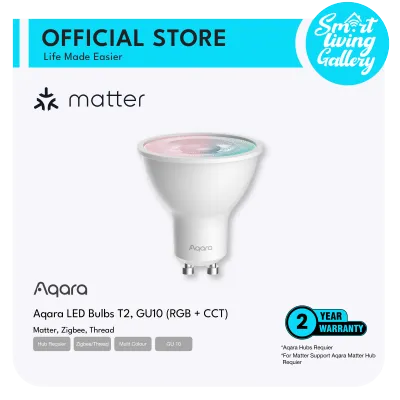
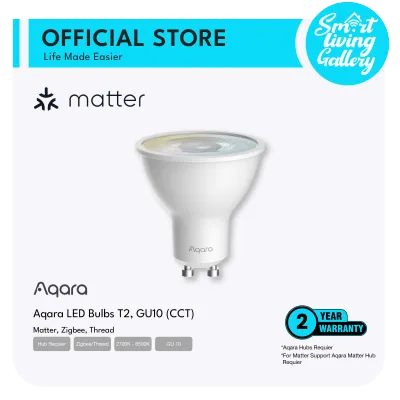
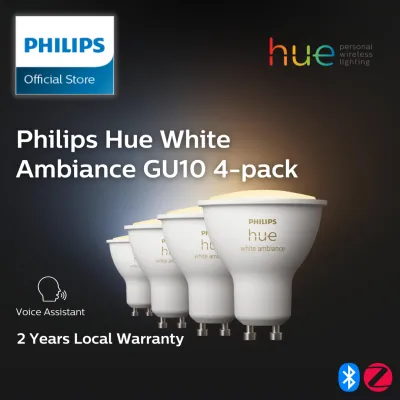
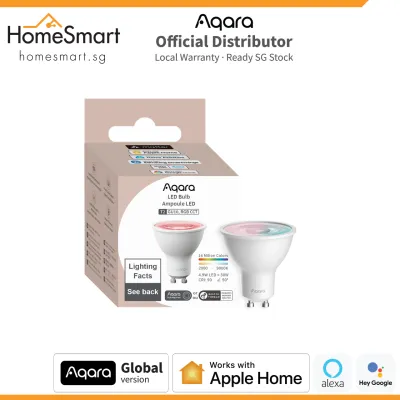
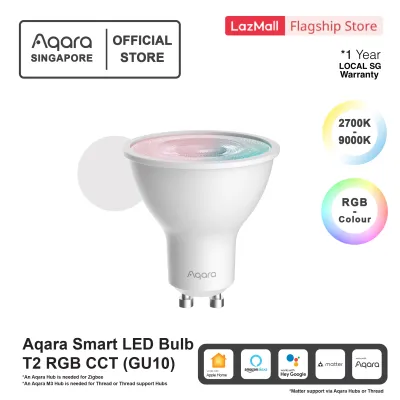
Prices are valid at publication and may change. Please refer to the product page for the latest price.
Standby power consumption is another critical metric that is frequently overlooked. Because smart bulbs must remain connected to a wireless network to receive commands, they continuously draw a small amount of electricity even when the light is turned off. This is known as standby or “vampire” power draw. When verifying these specifications, look for standby ratings that are ideally below 0.5 watts per bulb. In installations with multiple GU10 spotlights—such as a living room track with eight bulbs—a high standby draw can quietly add up to a noticeable continuous load on your electrical meter.
Thermal management is the third pillar of long-term LED efficiency. High temperatures accelerate the degradation of both the LED chips and the internal driver electronics, leading to a faster decline in light output over time. When evaluating these bulbs, observe the design of the housing and heat dissipation elements. Well-engineered thermal pathways allow the bulb to run cooler, preserving its luminous efficacy and preventing premature failure. Ensure that your intended fixtures provide adequate ventilation, as trapping heat within tight, fully enclosed recessed canisters will compromise the efficiency and lifespan of any smart GU10 bulb.
Smart Ecosystem and Standby Power Trade-offs
The wireless protocol used by a smart bulb directly influences its standby power consumption and overall system efficiency. The Aqara GU10 relies primarily on the Zigbee protocol, which is highly regarded for its low power requirements and mesh-networking capabilities. Philips Hue bulbs also utilize Zigbee, but many models include Bluetooth connectivity as well, allowing for direct control without a dedicated bridge. While Bluetooth offers a simpler initial setup, a Zigbee-based mesh network is generally more energy-efficient and stable when managing a large number of nodes across a home.

To achieve full smart functionality, automation, and remote access, both ecosystems generally require a central hub or bridge. The continuous energy draw of these hubs must be factored into your overall household energy footprint. A standard smart hub or bridge typically draws between 1 and 3 watts of continuous power. If you already run a compatible Zigbee hub or a Matter-over-Thread border router, choosing a bulb that integrates directly into your existing hardware eliminates the need to plug in an additional bridge, thereby saving energy at the system level.
Network latency and automation reliability also have an indirect effect on power usage. A responsive system ensures that motion sensors and automated timers turn lights off instantly when a room is unoccupied. If a system suffers from high latency or frequent disconnections, lights may remain on longer than necessary. Zigbee mesh networks excel at local processing, meaning your automations can execute reliably even if your active internet connection drops, ensuring that your energy-saving schedules are always maintained.
Lighting Quality and Dimming Efficiency
Dimming is one of the most effective ways to reduce the daily energy consumption of your lighting system. Reducing a bulb’s brightness level directly lowers its active wattage draw. When comparing these smart spotlights, verify the minimum dimming threshold on the product specification sheet. High-quality smart bulbs can dim down to 1% or lower, allowing you to create low-power ambient lighting. Bulbs with a higher minimum dimming limit (such as 10%) restrict your ability to maximize energy savings during evening hours.
Color temperature adjustments also play a role in perceived brightness and energy use. Both brands offer tunable white models that allow you to adjust the light from warm white (typically 2700K or lower) to cool daylight (6500K). Cool white light often appears brighter to the human eye than warm light at the same wattage, which may allow you to run the bulbs at a lower dimming percentage while maintaining sufficient visibility. However, you should treat color temperature and decorative lighting styles as subjective preferences rather than universal indicators of energy performance.
To ensure that energy efficiency does not come at the expense of visual comfort, check the Color Rendering Index (CRI) on the product label. A CRI of 90 or higher indicates that the light represents colors accurately, which is essential for task lighting in kitchens, vanity areas, or art displays. While achieving a high CRI sometimes requires slightly more sophisticated LED phosphor mixes, the impact on overall energy consumption is minimal compared to the substantial savings gained through active dimming and automated scheduling.
Upfront Cost vs Long-Term Energy Savings
Evaluating the true value of your smart lighting investment requires balancing the upfront hardware costs against the projected long-term energy savings. Smart GU10 bulbs carry a price premium compared to standard non-smart LEDs. To calculate the payback period, you must consider the retail price of the individual bulbs, the cost of any mandatory hubs, and your local utility rates. In Singapore, where electricity tariffs are subject to quarterly adjustments, reducing your lighting load can provide measurable financial relief over the lifespan of the products.
To estimate your potential savings, you can use a straightforward calculation based on your daily usage patterns. Multiply the total wattage of your spotlight fixtures by the number of hours they operate each day to find the daily watt-hours, then convert this to kilowatt-hours (kWh). By applying the prevailing Singapore electricity tariff, you can compare the operating costs of smart LEDs against your existing halogen or older LED setups. Factor in the standby power of the smart bulbs for the remaining hours of the day when the lights are turned off via software.
Annual Operating Cost = [(Active Wattage * Daily Hours) + (Standby Wattage * (24 - Daily Hours))] * 365 * TariffAdditionally, verify the rated lifespan metrics, such as the L70/B50 rating, on the manufacturer’s specification sheet. This metric indicates the point in time (usually in hours) at which 50% of the bulbs are expected to have their light output fall below 70% of its original level. A longer rated lifespan reduces the frequency of replacements, lowering the total cost of ownership and offsetting the initial capital expenditure of setting up a premium smart lighting system.
Decision Framework: Which Smart Spotlight Fits Your Home?
To choose the right smart GU10 spotlight for your home, evaluate your existing smart home infrastructure, budget, and lighting priorities. Before making any purchase, verify that your home’s electrical system is compatible. GU10 bulbs operate on mains voltage (typically 220V-240V in Singapore) and feature a twist-and-lock bi-pin base. Ensure that your existing light fixtures are designed for GU10 bases and do not exceed the maximum wattage limits specified by the fixture manufacturer.
Consider the Aqara GU10 if you are looking for a highly cost-effective entry point into smart lighting and already utilize or plan to build an Aqara Zigbee ecosystem. This option is particularly suitable for budget-conscious projects where you want to deploy a large number of spotlights alongside compatible smart sensors, switches, and security devices. The lower upfront cost per bulb makes it easier to scale your installation across multiple rooms without a massive initial investment.
Choose the Philips Hue GU10 if your priority is premium lighting quality, precise color rendering, and deep integration with a wide variety of third-party platforms, smart assistants, and entertainment systems. The Philips Hue ecosystem offers exceptional reliability and a mature software experience, making it ideal for users who want advanced lighting scenes, synchronization with media, and a highly polished user interface, and who are willing to pay a premium for these features.
Before installing your new smart spotlights, always prioritize safety. If you are working at height to replace bulbs in high ceilings, ensure you use a stable ladder and isolate the mains power at the distribution board before touching the fixtures. Smart GU10 bulbs must never be connected to traditional wall dimmer switches, as the chopped voltage will damage the internal electronics; they require constant, un-dimmed power to operate safely. For any complex installations, track light mounting, or modifications to fixed electrical wiring, always engage a licensed electrical worker in Singapore to ensure full compliance with local safety regulations.
Frequently Asked Questions (FAQ)
Do Aqara and Philips Hue GU10 bulbs require a hub?
The Aqara GU10 bulb requires a compatible Zigbee-enabled Aqara hub to access its smart features, automations, and remote control capabilities. Without a hub, the bulb cannot connect to your home network or smart assistants. In contrast, Philips Hue GU10 bulbs feature dual-protocol support, allowing you to control them directly via Bluetooth using a smartphone app without a hub. However, to unlock advanced features such as out-of-home control, complex automations, and integration with wider smart home ecosystems, you will need to connect the Hue bulbs to a Philips Hue Bridge.
Can I mix Aqara and Philips Hue bulbs in the same smart home system?
Yes, you can integrate both Aqara and Philips Hue bulbs into a single smart home system, provided you use a compatible third-party smart home platform such as Apple Home, Google Home, or Amazon Alexa. These platforms act as an overarching control layer that can trigger automations across different brands simultaneously. However, you cannot connect an Aqara bulb directly to a Philips Hue Bridge, nor can you connect a Hue bulb directly to an Aqara hub. Additionally, advanced proprietary features, such as synchronized entertainment lighting zones or specific dynamic color scenes, may not work seamlessly across mixed brands.
Community discussion
Share your experience or ask a question. Comments are reviewed before publication.