
Arch mirrors are exceptionally effective for expanding the visual footprint of compact Singapore apartments because their curved silhouettes draw the eye upward to create the illusion of height, while their reflective surfaces bounce light deep into narrow layouts. To achieve this spatial transformation, homeowners can source curated designs from local furniture brands like Castlery or Island Living, opt for standardized and budget-friendly models from global retailers like IKEA, or commission custom glass studios for bespoke installations tailored to specific architectural alcoves. Selecting the right arch mirror requires balancing frame materials, glass quality, and strategic placement to maximize the optical illusion of open space.
While decorative style and spatial effects are ultimately conditional design preferences rather than absolute physical performance facts, a well-chosen mirror acts as a powerful visual tool. By understanding how light, scale, and frame design interact with your apartment’s layout, you can turn a cramped entryway or a dim living room into a bright, airy space that feels significantly larger than its physical dimensions.
Why Arch Mirrors Work Wonders in Compact Singapore Homes
The primary architectural challenge in many local Housing & Development Board (HDB) flats and condominiums is a rectangular, boxy layout with standard ceiling heights of approximately 2.6 meters. Arch mirrors counteract this rigidity by introducing a soft, organic curve at the top. This curved silhouette breaks up the monotonous straight lines of walls, beams, and doorways, tricking the brain into perceiving the space as more dynamic and less confined. The upward sweep of the arch naturally draws the viewer’s gaze toward the ceiling, creating an optical illusion of vertical clearance and loftiness.
Products mentioned in this guide
![[SG Seller] READY STOCK Nordic bathroom mirror bathroom mirror hanging wall bathroom mirror arch makeup mirror dressing mirror](https://img.lazcdn.com/g/p/e3ebc6e7d8215972747f2e5ac6ff4cc5.jpg_400x400q80.jpg_.webp)

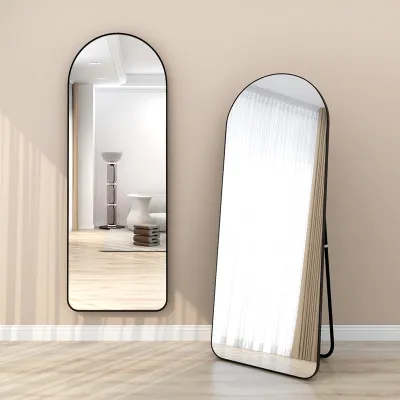
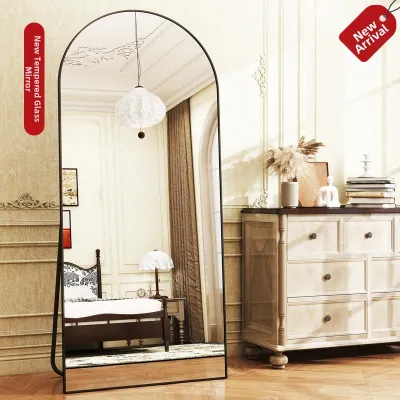
Prices are valid at publication and may change. Please refer to the product page for the latest price.
In addition to altering perceived height, arch mirrors play a critical role in light distribution. Many compact Singaporean homes feature deep-plan layouts where natural light from the balcony or windows struggle to reach the kitchen, dining area, or foyer. Placing a mirror in these darker zones captures incoming daylight and projects it into the interior core. This increased ambient brightness eliminates dark corners, which are notorious for making rooms feel smaller and more enclosed than they actually are.
Furthermore, the psychological impact of a large arch mirror cannot be understated. Because the arched shape mimics the appearance of a classical window or an open doorway, the human brain subconsciously interprets the reflection as an extension of the room or a portal to an adjacent space. This simulated depth relieves the visual claustrophobia often associated with windowless dining alcoves or narrow household shelters, making the entire living environment feel more breathable.
Essential Design Features for Maximizing Space
To maximize the spatial expansion effect, scale and proportion are the most critical factors to consider. Oversized, floor-leaning arch mirrors that stand at least 1.8 meters tall generally create a much stronger spatial illusion than small, wall-mounted vanity mirrors. A large-format mirror covers a substantial portion of the wall, effectively replacing a solid, light-absorbing surface with a bright, reflective plane. This large scale is what successfully mimics a doorway or passage, whereas a small mirror merely acts as a framed picture, failing to alter the room’s perceived boundaries.

Frame thickness and material choice also dictate how well a mirror integrates into a small room. Minimalist frames, such as ultra-thin powder-coated aluminum, slim brass, or light-toned oak, allow the reflective glass to extend almost to the very edge of the frame. This maximizes the active surface area and helps the mirror blend seamlessly into the wall, creating a clean, unobstructed look. Conversely, chunky statement frames made of thick plaster, carved timber, or bold terrazzo can anchor a room and serve as beautiful decorative focal points, but they also occupy more visual weight and can make a very tight space feel cluttered if not styled with restraint.
Glass quality is another non-negotiable element when selecting a mirror for spatial enhancement. Low-quality glass often suffers from minor structural imperfections that cause visual warping or distortion, which immediately ruins the illusion of depth and can cause eye strain. Homeowners should look for copper-free silver mirrors with a thickness of at least 5mm to ensure a perfectly flat, distortion-free reflection. Copper-free mirrors are also highly resistant to atmospheric corrosion and oxidation, preventing the unsightly black edges that frequently develop on cheaper mirrors exposed to Singapore’s high humidity. Opting for a mirror with polished or beveled edges can further enhance the design, as the angled borders catch and refract light, adding a subtle layer of three-dimensional depth.
Where to Find Quality Arch Mirrors in Singapore
Navigating the local market reveals three primary sourcing categories for arch mirrors, each offering distinct advantages in terms of aesthetics, convenience, and customization.
Local Design Brands for Curated Aesthetics
Local furniture and lifestyle brands in Singapore design their collections specifically with contemporary apartment dimensions and regional design trends in mind. Brands like Castlery and Island Living offer curated arch mirrors that balance modern aesthetics with practical proportions. Castlery often focuses on sleek, mid-century modern designs with slim metal frames that fit neatly into minimalist or industrial interiors. Island Living, on the other hand, specializes in sustainable materials like rattan and light-toned mindi wood, which are ideal for creating a breezy, tropical, or Scandinavian aesthetic that softens hard concrete walls.
Visiting a physical showroom is highly recommended when purchasing from curated local brands. This allows you to inspect the frame finishing, verify the glass clarity, and assess the physical weight of the mirror in person. Seeing the mirror styled alongside actual sofas and dining tables also helps you gauge how the proportions will translate to your own living room.
Keep in mind that because these brands curate specific seasonal collections, popular arch mirror models may occasionally go out of stock. If a mirror is imported in batches or made-to-order, lead times can range from a few weeks to several months. Planning your purchase well ahead of your renovation key-collection date is essential to avoid delivery delays.
Global Retailers for Accessible and Standardized Options
For homeowners seeking immediate availability and highly predictable dimensions, global home furnishing chains like IKEA provide excellent, budget-friendly options. Standardized arch mirrors, such as those in IKEA’s Lindbyn series, offer clean lines, lightweight construction, and straightforward installation systems at an accessible price point. These products are manufactured to strict global standards, ensuring consistent quality and reliable material specifications.
The primary benefits of buying from global giants are immediate stock availability and generous return policies. If you bring a mirror home and realize the scale does not suit your wall, exchanging it is generally hassle-free. Furthermore, flat-pack packaging makes transporting smaller wall-mounted arches in a standard car or taxi highly convenient.
However, because these designs are mass-produced, they can look somewhat generic. To prevent your home from looking like a showroom replica, you will need to apply creative styling. Flanking a standardized arch mirror with unique wall sconces, placing a statement console table beneath it, or surrounding it with potted indoor plants can elevate the overall look. Always check the manufacturer’s specified weight limits and assembly instructions, especially when putting together mirrors with multi-piece frames.
Custom Glass Studios for Bespoke Fits
When dealing with awkward architectural features like structural pillars, recessed wall alcoves, or non-standard ceiling heights, off-the-shelf mirrors may not suffice. Commissioning a local custom glass studio or glazing contractor allows you to design a bespoke arch mirror tailored to the exact millimeter of your space. Custom studios can cut glass to any scale, allowing you to create dramatic, floor-to-ceiling arched panels that make a powerful design statement.
During the commissioning process, you can select specific glass thicknesses (typically 5mm or 6mm for large residential installations) and choose customized edge treatments, such as a wide bevel or a sleek polished flat edge. You can also opt for tinted mirror glass, such as bronze or grey tint, which offers a warmer, more atmospheric reflection, though standard clear glass remains the best choice for maximum light reflection and spatial expansion.
Working with a custom studio requires careful attention to structural backing materials. Heavy, large-scale custom mirrors must be bonded to a rigid backing, such as marine-grade plywood, to prevent the glass from flexing or warping over time. Avoid standard medium-density fiberboard (MDF) backing in areas prone to dampness, as MDF can absorb atmospheric moisture and swell, potentially damaging the mirror backing. Professional installation by the studio’s glazing team is mandatory for these heavy, custom-cut pieces, and the cost of transport, handling, and on-site mounting should be factored into your overall budget.
Strategic Placement to Amplify the Spacious Illusion
To fully unlock the spatial benefits of an arch mirror, placement must be calculated based on your apartment’s layout and natural light sources. The most effective strategy is to position the mirror opposite or adjacent to a primary window or balcony door. This placement allows the mirror to capture the maximum amount of incoming daylight and project it deep into the room. By reflecting the outdoor view, the mirror acts as a secondary window, visually opening up the wall and making the room feel connected to the outdoors.
Equally important is managing what the mirror reflects. A mirror duplicates whatever is in its line of sight, so placing it directly opposite a cluttered kitchen counter, an open utility yard, or a busy storage shelf will double the visual clutter, making the room feel more chaotic and cramped. Instead, position the mirror so that it reflects clean, minimalist surfaces, a well-styled dining table, a piece of artwork, or healthy indoor plants. This ensures that the reflected image contributes to a sense of order, calm, and spaciousness.
Deciding between a floor-leaning mirror and a wall-mounted installation depends on your spatial constraints and aesthetic goals:
- Floor-Leaning Arches: Leaning a tall arch mirror casually against a wall creates a relaxed, contemporary, and layered look. This technique works beautifully in living rooms or spacious bedrooms where the mirror can anchor a corner. However, because the mirror tilts slightly upward, it will reflect more of the ceiling and upper walls, which is excellent for emphasizing ceiling height but less effective for reflecting eye-level views. It also occupies a small amount of floor space, which may not be ideal for high-traffic pathways.
- Wall-Mounted Arches: Mounting the mirror flat against the wall saves valuable floor space, making it the superior choice for narrow entryways, corridors, or behind a dining table. A flat, wall-mounted mirror provides a true, level reflection of the room, maximizing the illusion of an adjoining space. It creates a clean, architectural look but requires robust wall anchors to support the weight safely.
Crucial Pre-Purchase and Installation Checks
Before purchasing or installing a heavy arch mirror, several technical and structural verifications must be completed to ensure safety and long-term durability.
First, you must verify the composition of the target wall. Singapore apartments feature a mix of wall materials. Structural walls and external boundary walls in HDB flats and condominiums are typically solid reinforced concrete. Mounting a heavy mirror on concrete requires a rotary hammer drill, masonry drill bits, and heavy-duty plastic wall plugs or sleeve anchors. Conversely, internal partition walls—especially those separating bedrooms or enclosing newer renovated spaces—are often hollow drywalls consisting of plasterboard over metal studs. Drywall cannot support the weight of a heavy mirror using standard screws. If mounting on drywall, you must locate the vertical metal studs using a stud finder and screw directly into them, or use specialized heavy-duty toggle bolts and hollow-wall anchors rated for the mirror’s specific weight.
Second, anti-tip safety is an absolute necessity for all floor-leaning arch mirrors. Even heavy mirrors can slide or tip forward due to floor vibrations, accidental bumps, vacuuming, or the curiosity of pets and young children. Most reputable mirror brands supply anti-tip hardware, which typically consists of a safety strap or bracket anchored to the wall and secured to the back of the mirror frame. Never skip this installation step; securing the top of a leaning mirror to a wall stud or concrete wall is vital to prevent catastrophic accidents.
Third, do not overlook the logistics of delivery. Oversized arch mirrors are bulky, fragile, and exceptionally difficult to maneuver through tight spaces. Before placing an order, measure the exact dimensions of your apartment’s access route. This includes the height, width, and depth of the passenger elevator, the clearance of tight staircase turns, the width of your front door, and any low-hanging ceiling fixtures in your common corridor. Many Singapore condominiums have strict rules regarding delivery hours and require prior booking of the service lift. Ensure your delivery provider is aware of these constraints to avoid on-site complications.
Finally, if you are installing an illuminated or backlit LED arch mirror, electrical safety and compatibility must be addressed. Ensure the mirror is rated for Singapore’s standard voltage of 230V at 50Hz and carries appropriate safety certifications. If the backlit mirror is intended for a damp environment, such as a bathroom or adjacent to a vanity sink, it must have a minimum ingress protection rating of IP44 to ensure resistance to moisture and splashing water. For any fixed-wiring installations, always isolate the mains power supply at the distribution board before commencing work, follow the manufacturer’s detailed wiring instructions, and hire a licensed electrical worker (LEW) to complete the connection safely and in compliance with local regulations.
Community discussion
Share your experience or ask a question. Comments are reviewed before publication.