
When looking for a reliable cordless lighting solution, finding a balance between robust structural design and long-lasting illumination is essential. A high-quality battery operated lamp must withstand daily adjustments while maintaining stable light output without requiring frequent recharging.
In the current market, brands are broadly divided into premium architectural or professional task lighting brands and mid-range consumer electronics brands. Premium brands prioritize structural longevity, using materials like anodized aluminum and zinc alloys alongside sophisticated constant-current drivers. These models offer exceptional build quality and eye comfort but come at a higher price point.
Conversely, mid-range brands focus on maximizing value. They utilize durable ABS plastics and high-capacity, mass-produced lithium-ion cells to deliver impressive runtimes at a fraction of the cost. While their physical joints and materials may wear faster under heavy use, their cost-to-runtime ratio makes them highly attractive for everyday, portable applications.
Products mentioned in this guide
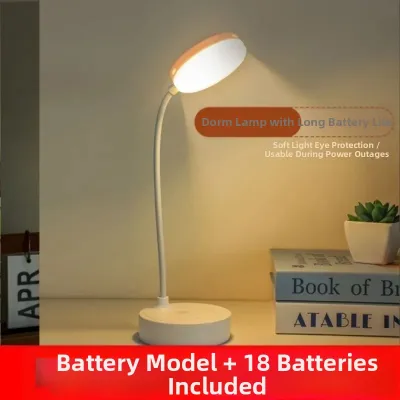
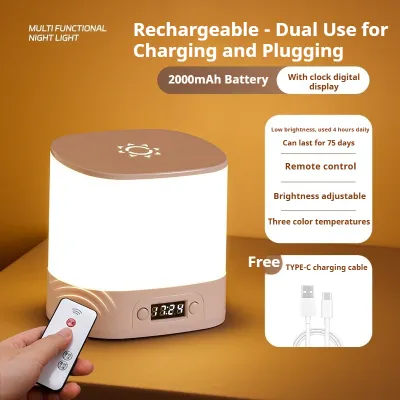
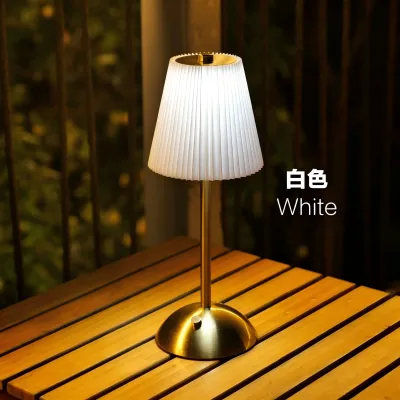
Prices are valid at publication and may change. Please refer to the product page for the latest price.
Evaluation Criteria: What Makes a Reliable Battery Operated Lamp?
To evaluate any portable lighting option, we must look beyond aesthetic appeal and examine the engineering behind its construction and power delivery.
Build Quality and Structural Integrity
The primary differentiator in build quality is the housing material. Premium lamps rely heavily on extruded or CNC-machined anodized aluminum. Aluminum is not only structurally rigid and resistant to physical impacts, but it also serves as an excellent passive heat sink. LEDs, while highly efficient, still generate localized heat at the diode junction. Proper heat dissipation prevents the diodes from overheating, which directly preserves their lifespan and maintains color consistency over time.
In contrast, budget and mid-range lamps frequently utilize Acrylonitrile Butadiene Styrene (ABS) or polycarbonate plastics. While modern high-grade plastics are remarkably tough and lightweight, they lack the thermal conductivity of metals. Over years of exposure to heat and ambient UV light, plastic housings can become brittle or experience slight color shifting.
Another critical structural component is the hinge or joint mechanism. Desk lamps require frequent adjustment to direct light precisely where it is needed. Premium models employ tension-adjustable steel friction joints, counterbalanced spring arms, or magnetic ball joints. These mechanisms maintain their holding power over thousands of adjustments. Lower-cost models often rely on simple plastic-on-plastic friction joints. Over time, friction wears down the plastic surfaces, leading to sagging lamp heads that fail to hold their position.
Base stability is also paramount. A well-designed lamp incorporates a heavily weighted base—often utilizing cast iron or steel inserts beneath the outer casing. This lowers the center of gravity, ensuring that the lamp remains completely stable even when the arm is fully extended. Lightweight plastic bases are prone to tipping, which increases the risk of dropping and damaging the internal components.
Battery Capacity, Voltage, and Real-World Runtime
When comparing battery performance, manufacturers often advertise raw capacity in milliampere-hours (mAh). However, comparing mAh directly can be misleading without considering the operating voltage. For instance, a 2000mAh battery operating at a nominal voltage of 3.7V provides 7.4 Watt-hours (Wh) of energy. A 2000mAh battery pack configured at 7.4V provides 14.8 Wh—double the energy capacity.
Actual runtime is a direct function of energy consumption (wattage) and battery capacity. A lamp drawing 2 Watts of power from a 7.4 Wh battery will run for approximately 3.7 hours at maximum brightness. Understanding this relationship helps clarify why high-brightness task lamps (which require more wattage) have significantly shorter runtimes than low-power ambient decorative lights.
LED Driver Efficiency and Battery Degradation
The LED driver acts as the brain of the lamp, regulating the electrical current delivered to the light-emitting diodes. High-quality lamps utilize constant-current drivers. These circuits ensure that the LEDs receive a steady, regulated current even as the battery voltage drops during discharge. This prevents the light from gradually dimming, maintaining a consistent lumen output until the battery is depleted.
Cheaper alternatives often use simple resistor-based circuits or basic voltage regulators. As the battery drains, the voltage drops, causing the light output to dim progressively. This can lead to eye strain as the illumination levels fluctuate unnoticed during a long study or work session.
Furthermore, all lithium-based batteries degrade over time. A standard lithium-ion or lithium-polymer cell typically retains about 80% of its original capacity after 300 to 500 complete charge-discharge cycles. Premium brands mitigate this degradation by incorporating sophisticated Battery Management Systems (BMS). A high-quality BMS protects the cells from overcharging, over-discharging, and operating at extreme temperatures, thereby extending the overall lifespan of the integrated battery pack.
Brand Comparison: Build Quality vs. Battery Performance
To help you navigate the options available, we can evaluate brands across two main tiers: Premium and Professional vs. Mid-Range and Everyday Value.

Premium and Professional Brands
In the premium segment, brands focus on delivering professional-grade optical performance and architectural-grade materials. Brands such as BenQ, Neoz, and specialized design houses represent this tier.
These brands construct their lamps using high-grade metals. For example, Neoz utilizes solid brass, copper, and anodized aluminum for their cordless lamp bodies. This heavy-duty construction ensures that the lamps can withstand demanding commercial environments, such as restaurants or busy residential studies, without showing signs of wear. The bases are heavily weighted, providing absolute stability on any surface.
Optically, premium brands invest heavily in high-CRI (Color Rendering Index) LED arrays, often achieving scores of CRI 90 or higher. This means colors appear natural and vibrant, which is crucial for detailed tasks like drawing, reading, or crafting. To support these high-performance LEDs, premium lamps utilize advanced constant-current drivers that eliminate high-frequency flickering, reducing eye fatigue during extended use.
Battery systems in this tier are highly sophisticated. They often feature modular designs, allowing the internal lithium-ion packs to be replaced by the user or a service technician once they eventually degrade. This modularity significantly extends the product’s overall lifespan, justifying the higher initial financial outlay. Runtimes are carefully balanced; while a high-CRI task light at maximum brightness (approx. 300 to 450 lumens) may run for 4 to 6 hours, lowering the intensity to a comfortable ambient level can extend the battery life to 40 hours or more.
The primary trade-off is the cost. Premium battery-operated lamps typically range from S$150 to over S$400 in Singapore. For heavy daily users who prioritize eye health, structural durability, and long-term repairability, this investment represents excellent lifetime value.
Mid-Range and Everyday Value Brands
The mid-range market is dominated by consumer electronics and smart home brands such as Xiaomi, Yeelight, Baseus, and established lighting manufacturers like Philips and Panasonic. These brands excel at delivering highly functional, mass-produced products that offer exceptional value for money.
Structurally, these brands rely primarily on high-impact ABS plastics, occasionally accented with thin aluminum alloys for aesthetic appeal. While these materials are lightweight and highly portable, they do not offer the same tactile premium feel or structural rigidity as solid metal. The joints are typically friction-based, which may require gentle handling to avoid loosening over several years of daily use.
Where mid-range brands truly shine is their cost-to-runtime ratio. By leveraging high-density, mass-produced 18650 or 21700 lithium-ion cells, these lamps can pack substantial battery capacities (often ranging from 2000mAh to 4000mAh) into affordable designs. A typical mid-range lamp costing between S$30 and S$80 can easily provide 5 to 8 hours of continuous reading light at a functional 150 to 200 lumens. On their lowest night-light or ambient settings, runtimes can exceed 40 to 100 hours.
However, certain compromises are made to keep prices low. The LED arrays in this tier usually have a standard CRI of 80 to 85, which is perfectly adequate for general reading and studying but less suited for color-critical work. The LED drivers are simpler, meaning you may notice a gradual decrease in brightness as the battery nears depletion. Additionally, the batteries are almost always permanently sealed inside the housing. Once the internal battery degrades to the point where it can no longer hold a charge, the entire unit must be recycled, as user replacement is rarely supported.
Essential Specifications to Verify Before Purchase
Before purchasing a battery operated lamp in Singapore, it is vital to verify several technical specifications to ensure safety, compatibility, and optimal performance.
Charging Standards and Compatibility
Modern portable lamps should ideally feature a USB-C charging port. However, you must check whether the lamp supports standard USB-C Power Delivery (PD) or if it is restricted to legacy 5V/1A or 5V/2A charging profiles. Some entry-level lamps will not charge when connected to a high-power USB-C PD charger (such as a laptop power brick) because their internal charging circuits lack the necessary negotiation chips. Ensure the lamp is compatible with your existing chargers to avoid needing to keep multiple specific adapters.
Electrical Safety and Certification
Because these lamps contain high-energy lithium batteries and are charged via mains electricity, safety is a primary concern. In Singapore, any AC adapter (charger) supplied with the lamp must carry the Enterprise Singapore Safety Mark, complete with a unique 8-digit certification number. If the lamp is sold without an adapter, ensure that the USB wall charger you plan to use is certified. On the lamp itself, look for international safety certifications such as CE, FCC, or RoHS, which indicate that the internal circuitry meets strict standards for electrical safety and hazardous substance limits.
Battery Chemistry and Configuration
Look for lamps powered by lithium-ion (Li-ion) or lithium-polymer (Li-Po) batteries. These chemistries offer high energy density, minimal self-discharge, and no memory effect. Avoid lamps that rely on disposable alkaline AA or AAA batteries. Alkaline batteries have high internal resistance, meaning their voltage drops rapidly under the heavy current draw of modern high-brightness LEDs, leading to extremely short runtimes and high ongoing operating costs.
Light Output, Color Temperature, and Power Consumption
Verify the maximum light output, measured in lumens (lm), and the color temperature, measured in Kelvin (K). For comfortable reading, a light output of 150 to 300 lumens on the desk surface is recommended. A color temperature between 3000K (warm white) and 4000K (cool white) is ideal for reducing eye strain. Be aware that higher brightness levels and cooler temperatures (e.g., 6000K) draw more power from the battery. Selecting a lamp with step-less dimming or multiple pre-set brightness levels allows you to manage battery consumption dynamically based on your immediate needs.
Decision Framework: Which Brand Should You Choose?
To finalize your choice, consider how your specific usage patterns align with the strengths and limitations of each brand tier.
Choose Premium Brands if:
- You require a primary, high-performance desk lamp for long hours of study, professional design work, or reading.
- You prioritize long-term eye comfort and require flicker-free, high-CRI illumination.
- You value premium materials like anodized aluminum and zinc, prefer a heavy, stable base, and want the ability to replace the battery in the future to extend the lamp's lifespan.
- Your budget allows for an investment of S$150 or more.
Choose Mid-Range/Value Brands if:
- You need a highly portable, lightweight light source to move around different rooms, such as from the study to the dining table or bedside.
- You want the best possible battery runtime per dollar spent and are satisfied with standard optical performance (CRI 80-85).
- Your budget is under S$100, and you accept the trade-offs of plastic construction and a non-replaceable battery.
Verify first if:
- You plan to use the lamp in high-humidity areas like bathrooms or covered outdoor patios. Most indoor desk lamps carry an IP20 rating, meaning they have no protection against moisture. For damp environments, search for a lamp specifically rated IP44 or higher.
- You require specific smart-home integrations (such as control via mobile apps or voice assistants) or specialized optical features (like asymmetric projection to eliminate glare on computer monitors).
Frequently Asked Questions (FAQ)
Can I leave a battery-operated desk lamp plugged in all the time?
Yes, most reputable brands equip their lamps with modern battery management systems (BMS) that feature overcharge protection. This safety circuit automatically stops drawing power once the battery is fully charged. However, keeping a lithium-ion battery constantly at 100% capacity—especially in warm environments or while the lamp is running and generating heat—can accelerate the degradation of the battery cells over time. To maximize the overall lifespan of the battery, it is highly recommended to unplug the lamp occasionally and let it run on battery power down to approximately 20% to 30% before recharging it.
Do battery-operated lamps provide enough light for reading?
Yes, modern battery-operated lamps are fully capable of providing sufficient light for reading, provided they output at least 150 to 300 lumens of focused light on your reading material. For the most comfortable reading experience, look for a lamp that offers a color temperature between 3000K and 4000K, which provides a balanced, warm-white light that minimizes eye strain. Keep in mind that running the lamp at its maximum brightness setting will drain the battery much faster, typically limiting cordless operation to between 3 and 6 hours depending on the battery’s capacity.
Community discussion
Share your experience or ask a question. Comments are reviewed before publication.