
When planning the lighting design for a Singapore HDB flat with a standard 2.6m ceiling height, selecting the right fixtures is a delicate balance of physical clearance, visual comfort, and light output. A 5w led downlight is a highly versatile choice for these spaces, offering localized illumination without overwhelming the room. Reliable brands such as Philips, Panasonic, Opple, and NVC provide excellent 5W options, each catering to different installation depths, design preferences, and budget considerations.
Choosing the right downlight involves understanding how wattage translates to actual brightness in a residential setting. While a 5W model is highly efficient, its role must be carefully planned within a layered lighting scheme to ensure your home is both functional and inviting.
The Role of 5W Downlights in 2.6m HDB Ceilings
A standard 5W LED downlight typically produces between 300 and 450 lumens of light. While this output is highly efficient, it is generally insufficient to serve as the primary ambient light source for large, open HDB spaces like living rooms or spacious kitchens. Relying solely on 5W fixtures to illuminate a broad area would require installing an excessive number of units, resulting in a cluttered ceiling appearance and uneven light distribution.
Products mentioned in this guide
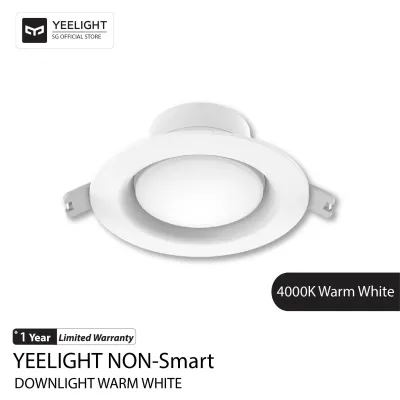
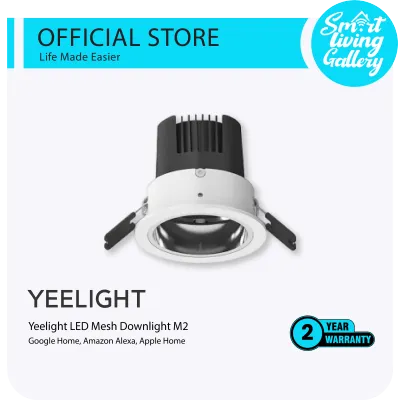
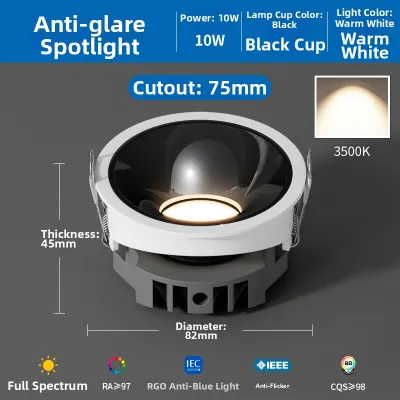
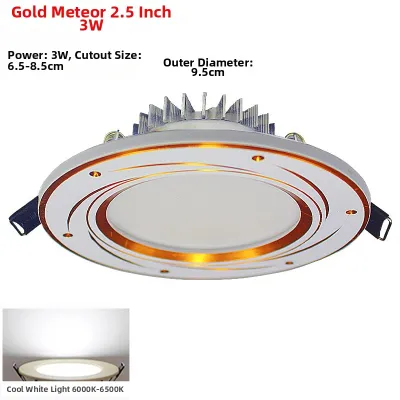
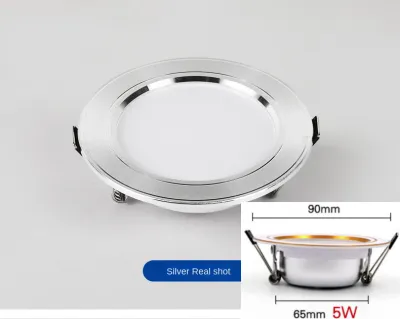
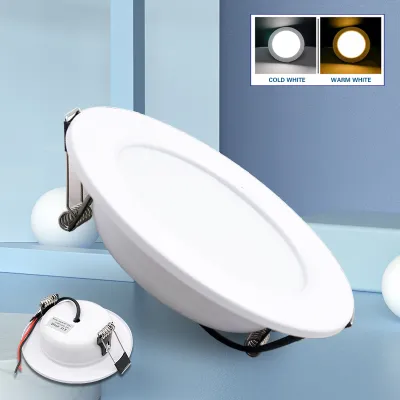
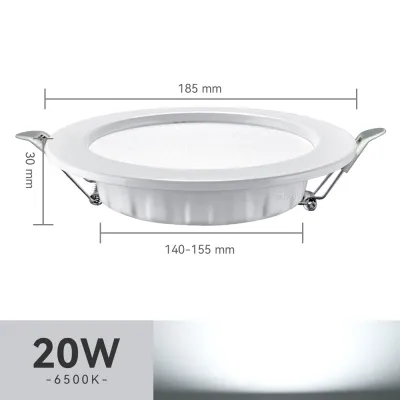
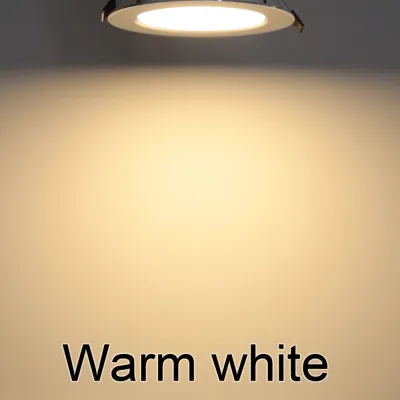
Prices are valid at publication and may change. Please refer to the product page for the latest price.
Instead, 5W fixtures excel in targeted, supplementary, or accent lighting applications. They are ideal for illuminating narrow corridors, providing focused light over a bathroom vanity, or serving as soft bedside reading lights. Additionally, they work beautifully in cove lighting setups or when positioned to highlight specific wall textures, architectural features, and artwork.
The standard 2.6m HDB ceiling height plays a critical role in how light behaves in your home. Because the ceiling is relatively low, higher-wattage fixtures can easily cause harsh glare and create overly bright hot spots on the floor or walls. Utilizing a 5W LED downlight at this height prevents these visual discomforts, delivering a softer, more intimate illumination that makes compact or narrow spaces feel comfortable and visually balanced.
Key Selection Criteria for a 5W LED Downlight in HDB False Ceilings
Installing downlights in an HDB flat typically requires a false ceiling, which introduces several physical and technical constraints. To ensure a successful installation, homeowners must evaluate several critical parameters before purchasing their fixtures.

Recessed Depth and Cut-Out Size
The plenum space—the gap between the concrete slab and the false ceiling—is often highly restricted in HDB flats due to the presence of structural beams, air-conditioning trunking, and electrical conduits. Before purchasing any downlights, it is essential to measure the available depth of this plenum space. If your false ceiling has a shallow clearance, you will need to select ultra-slim downlights. Additionally, verify the cut-out diameter required by the fixture (typically ranging from 75mm to 95mm for 5W models) to ensure it matches the holes cut by your contractor.
Beam Angle
The beam angle determines how wide the light spreads as it travels from the ceiling to the floor. Given the 2.6m mounting height, the light cone does not have a long distance to expand. For general corridor washing or soft ambient fill, a wider beam angle of 60° to 90° is recommended to ensure even coverage. If your goal is to highlight a specific feature wall, piece of art, or carpentry detail, a narrower beam angle of 24° to 36° is ideal, as it keeps the light focused and prevents unnecessary spill.
Anti-Glare Design
With a 2.6m ceiling, the light sources sit closer to your natural line of sight, increasing the risk of direct eye strain. To mitigate this, look for downlights designed with deep-recessed baffles, where the LED light source is set back into the fixture housing. Checking for a Unified Glare Rating (UGR) of less than 19 (UGR<19) is an excellent way to verify that the downlight is engineered to minimize glare and maximize visual comfort.
Color Temperature and CRI
Color temperature and spatial effects are highly subjective preferences rather than fixed performance metrics, but they significantly influence the mood of a room. A warm white light of 3000K is highly recommended for bedrooms and living areas to create a cozy, relaxing environment. For task-oriented spaces like kitchens and bathrooms, a neutral white light of 4000K provides better clarity. Regardless of the color temperature you choose, prioritize a high Color Rendering Index (CRI > 80, or ideally CRI > 90) to ensure that your home’s interior colors, wood grains, and furnishings appear accurate and vibrant.
Top 5W LED Downlight Brands for HDB Flats
Several reputable lighting brands offer reliable 5W LED downlights tailored to residential use. These brands are widely available in Singapore and are known for their quality construction, electrical safety, and performance.
Philips Lighting
Philips is a household name in Singapore, recognized for its exceptional reliability, consistent color binning, and advanced smart lighting integration. Their Essential LED and smart Hue lines are highly competitive candidates for 5W applications in HDB flats.
One of the standout features of Philips downlights is their superior thermal management. In Singapore’s warm tropical climate, heat dissipation is critical; Philips fixtures are engineered to channel heat away from the LED chip, preventing premature color shifting and ensuring a long operating life. If you are planning a smart home ecosystem, the Philips Hue 5W options allow for seamless integration, wireless dimming, and custom scene creation, though they do carry a premium price point compared to standard models.
Panasonic
Panasonic downlights are highly regarded for their outstanding visual comfort, robust build quality, and excellent color rendering. Their 5W downlight models often feature specialized anti-glare louvers that direct light downward while keeping the source hidden from direct view, making them an exceptional choice for study areas and bedrooms.
The long lifespan of Panasonic fixtures reduces the hassle of frequent replacements, which is particularly beneficial for fixtures mounted in false ceilings where access can be inconvenient. Homeowners should note that some high-comfort Panasonic models feature slightly deeper heat sinks to maintain optimal operating temperatures. It is crucial to verify your false ceiling’s plenum depth to ensure these deeper fixtures can be accommodated safely.
Opple Lighting
Opple Lighting is a value-driven brand that excels at bringing commercial-grade optical engineering into residential homes. They offer highly cost-effective 5W downlights with exceptionally slim profiles, making them the go-to choice for HDB renovations with very shallow false ceiling clearances.
Despite their slim form factor, Opple downlights maintain precise beam control and efficient heat dissipation, preventing the fixtures from overheating in tight ceiling cavities. While they are highly functional, durable, and budget-friendly, their smart home ecosystem integration is less extensive than premium brands. They are best suited for traditional on-off switch configurations or basic dimming setups.
NVC Lighting
NVC Lighting is a professional-grade brand that is highly favored by local interior designers and lighting specialists. Known for their architectural focus, NVC’s 5W downlights feature deep anti-glare designs and specialized optical lenses that deliver clean, precise light beams with minimal light spill.
This precise control makes NVC fixtures ideal for highlighting HDB feature walls, custom carpentry, or decorative shelving, helping homeowners achieve a high-end, minimalist “see the light, not the fixture” aesthetic. Because NVC caters heavily to the professional trade, their products are more commonly sourced through specialized lighting suppliers and renovation contractors rather than standard retail shelves.
Quick Comparison of Recommended 5W Downlights
To help you decide which brand fits your specific renovation goals, the table below summarizes the key characteristics of the recommended 5W downlights.
| Brand | Best HDB Application | Standout Feature | Depth Requirement | Price Tier (SGD) |
|---|---|---|---|---|
| Philips | Smart homes, corridors, and general accenting | Consistent color binning & smart ecosystem | Standard | Mid-Range to Premium |
| Panasonic | Bedrooms, study areas, and reading nooks | High visual comfort & anti-glare louvers | Standard to Deep | Mid-Range |
| Opple | Shallow false ceilings & budget renovations | Ultra-slim profile & cost-effective | Shallow | Budget-Friendly |
| NVC | Feature walls, carpentry, & architectural accents | Deep-recessed optics & clean beam control | Standard to Deep | Mid-Range to Premium |
When choosing between these options, consider both your physical ceiling limitations and your budget. A shallow plenum space will naturally point you toward Opple, while a desire for smart automation or premium design aesthetics may make Philips or NVC the more appropriate choice.
Installation and Safety Checklist for HDB Ceilings
Installing recessed downlights in a false ceiling involves electrical work and structural considerations. Adhering to proper safety and installation guidelines is critical to protecting your home and ensuring the longevity of your lighting system.
- Clearance and Structural Verification: Before cutting any holes in your false ceiling, verify the exact depth of the plenum space and locate the metal support channels of the false ceiling frame. Avoid cutting into these structural supports or placing fixtures directly beneath concrete structural beams, as this can compromise the ceiling's integrity or prevent the downlight from fitting. Always refer to the manufacturer's product label for exact cut-out dimensions.
- Heat Dissipation and Insulation: In Singapore, some homeowners install thermal or acoustic insulation inside their false ceilings to reduce heat or noise. If you do this, ensure that your downlights are not covered by insulation unless they are explicitly rated as IC (Insulation Contact). Covering non-IC rated downlights traps heat, posing a serious fire risk and dramatically shortening the lifespan of the LED driver. Maintain a clearance gap of at least 50mm around the fixture.
- Electrical Compliance and Safety: Working with electrical wiring carries inherent risks of shock and fire. In Singapore, while homeowners can safely replace plug-and-play LED modules or bulbs on existing fittings (provided the mains power is isolated at the consumer unit/DB box), any fixed wiring work must be handled by a professional. Installing new downlight circuits, running new wires, or altering transformers requires an Energy Market Authority (EMA) licensed electrician. Always verify that your chosen downlight is certified for local electrical standards (such as carrying the Safety Mark) and matches Singapore's standard voltage of 230V.
- Transformer and Driver Placement: LED downlights rely on drivers (transformers) to convert high-voltage AC power to low-voltage DC power. These drivers are often the first component to fail over time. When installing downlights, ensure the drivers are placed in accessible locations within the false ceiling—such as close to the fixture's cut-out hole or near an air-conditioning access panel—so they can be easily replaced in the future without damaging the plasterboard.
Frequently Asked Questions (FAQ)
Can 5W downlights be the main lighting for an HDB living room?
No, 5W downlights alone are not sufficient to serve as the primary ambient light source for a standard HDB living room. Because they typically produce only 300 to 450 lumens, using them as the sole light source would leave the room under-lit and shadowy. It is better to use 7W to 12W downlights for main ambient lighting, reserving 5W fixtures for supplementary layers, corridors, or decorative accent lighting.
What is the ideal spacing for 5W downlights in a 2.6m ceiling corridor?
For a standard 2.6m HDB corridor, spacing 5W downlights approximately 1.0m to 1.5m apart is ideal. This spacing ensures an even wash of light along the floor and walls without creating dark gaps or overly bright, overlapping hotspots. You should adjust this spacing slightly based on the beam angle of your chosen fixture, placing wider beam angles further apart and narrow beam angles closer together.
Do I need a licensed electrician to replace HDB downlights?
If you are simply swapping out a plug-and-play LED module or a bulb on an existing fixture, you can do this safely yourself, provided you isolate the power at the main distribution board (DB box) first. However, if the replacement involves installing new electrical wiring, adding new circuits, cutting new ceiling holes, or replacing hardwired external drivers, Singapore regulations require that the work be performed by an EMA-licensed electrician.

Community discussion
Share your experience or ask a question. Comments are reviewed before publication.