
Refreshing your living space does not require a complete structural renovation; often, the most impactful transformations come from subtle, tactical updates to your soft furnishings. Incorporating a blue cushion cover is one of the most effective ways to introduce a sense of calm, sophistication, or tropical vibrancy into a Singapore home. Whether you are looking to ground a bright living room with deep navy tones or brighten up a shaded corner with airy sky blue hues, selecting the right brand and material is key to achieving a lasting style update. In Singapore’s retail landscape, you can find excellent blue options across three primary avenues: high-end designer labels for investment statement pieces, accessible everyday home retailers for versatile and budget-friendly updates, and local artisan textile studios that offer unique handcrafted designs like batik or indigo. By understanding how to balance shades, materials, and sizes, you can easily curate a refreshed aesthetic that withstands the local climate and elevates your daily living environment.
How to Select the Perfect Blue Cushion Cover for Your Space
The specific shade of blue you choose dictates the mood and visual weight of your seating arrangement. Deep navy and indigo tones act as excellent grounding colors, offering a sense of stability, sophistication, and timeless elegance that anchors lighter-colored sofas. In contrast, lighter shades like sky blue, powder blue, or soft mist create an airy, tranquil atmosphere, making smaller rooms feel more spacious and open. For those seeking a nod to Singapore’s tropical environment, vibrant shades of teal, turquoise, or cobalt inject energy and warmth, pairing beautifully with lush indoor plants and natural wood furniture.
When selecting fabrics for a tropical, high-humidity environment like Singapore, breathability and moisture management are paramount. Natural fibers such as pure cotton and linen are highly recommended because they allow air circulation, resist clamminess, and are generally easy to wash. Cotton offers a crisp, smooth finish that suits modern and minimalist styles, while linen provides a relaxed, textured drape that softens the look of structured furniture. While luxury materials like velvet or silk add undeniable depth and rich color saturation to blue shades, they can trap heat and require more meticulous care; if you choose velvet, look for lightweight cotton-velvet blends or reserve them for air-conditioned spaces to prevent moisture build-up and fiber degradation. Additionally, consider how the fabric interacts with your choice of insert; natural feather inserts require highly breathable covers to allow the feathers to loft properly, whereas synthetic microfiber inserts, which are highly resilient against humidity and dust mites, work well with almost any fabric weight.
Products mentioned in this guide
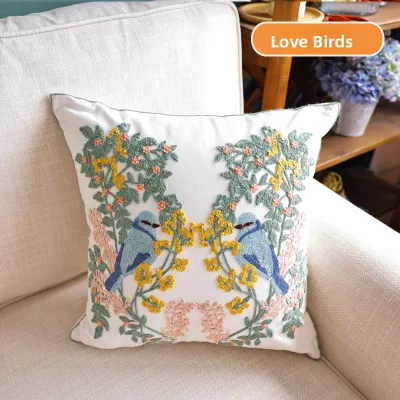
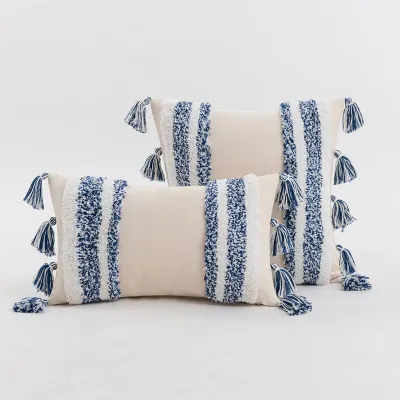
Prices are valid at publication and may change. Please refer to the product page for the latest price.
The surface design of your cushion cover determines how it interacts with the rest of your room’s decor. Solid blue covers in rich woven textures, such as jacquard, waffle, or boucle, provide subtle visual interest without cluttering the eye, making them excellent base layers. Geometric prints offer a modern, structured aesthetic that pairs well with contemporary interiors, while botanical or tropical motifs bring an organic, lively feel that complements biophilic design. If you prefer a more classic look, traditional stripes or woven patterns add a timeless, nautical, or artisanal touch that easily bridges the gap between different decor styles.
Achieving the right proportions requires mixing different sizes and shapes of cushion covers to match your furniture’s scale. Standard square covers, typically measuring 45×45 centimeters or 50×50 centimeters, serve as the reliable foundation for most sofas and armchairs. To break up the visual monotony of repetitive squares, consider introducing rectangular or lumbar cushions, which offer excellent lower-back support while adding a different geometric dimension. For deep-seated sofas or bedding arrangements, layering larger 60×60 centimeter cushions behind smaller ones creates a plush, inviting depth that looks professionally styled.
Where to Find the Best Blue Cushion Covers in Singapore
The home decor market in Singapore is dynamic and constantly evolving, with seasonal collections bringing fresh iterations of classic blue palettes throughout the year. Navigating this diverse landscape is much simpler when you categorize retail options by their brand profile, pricing structure, and design philosophy. By understanding what premium labels, everyday retailers, and local artisan studios offer, you can match your shopping journey directly to your budget, aesthetic goals, and quality expectations.

Premium and Designer Home Labels
Premium and designer home labels in Singapore cater to homeowners who view decor as a long-term investment in craftsmanship and exclusive design. These brands typically distinguish themselves through collaborations with independent artists, high-thread-count natural fabrics, and intricate detailing such as hand-guided embroidery, custom piping, or unique jacquard weaves. The resulting blue cushion covers feature deep, complex dye lots and highly durable construction that maintains its structural integrity and color richness over years of use. This category is ideal for formal living rooms, primary bedrooms, or any space where you want to feature a standout, tactile centerpiece that commands attention.
Furthermore, many high-end brands apply specialized treatments to their fabrics, such as UV-resistance or spill-repellent coatings, which are particularly beneficial if your cushions are placed near large, sun-drenched windows or on semi-outdoor balcony spaces where Singapore’s intense afternoon sun can otherwise cause rapid color fading. In Singapore, these premium collections are best explored in dedicated boutique showrooms located in design-centric districts like Tanglin or Outram, within high-end department stores along Orchard Road, or via official brand websites. When shopping these venues, it is highly beneficial to ask showroom consultants about their seasonal design drops, as many premium labels release limited-edition blue collections inspired by global design trends or maritime themes.
Accessible and Everyday Home Retailers
For those looking to furnish multiple rooms, update their decor on a seasonal basis, or stay within a strictly defined budget, accessible everyday home retailers offer an invaluable resource. These mass-market brands excel at providing a vast array of blue shades, from soft pastels to deep navies, across a wide variety of standard sizes. Because these retailers experience high inventory turnover, they are quick to adopt the latest global interior trends, making it easy to find contemporary geometric or botanical blue prints at competitive price points.
To make the most of your shopping experience, utilize the advanced search and filtering tools on their local e-commerce platforms to isolate specific shades of blue, fabric types, and dimensions. However, because fabric texture and true color can vary significantly on digital screens, visiting their widespread physical mall locations in regional hubs like Tampines, Jurong, or Dhoby Ghaut is highly recommended. This allows you to feel the weight of the fabric, test the zipper smoothness, and ensure the blue hue aligns with your home’s existing color scheme before making a purchase.
Local and Artisan Textile Studios
Homeowners seeking highly personalized, culturally rich, or truly unique decor pieces should turn their attention to local and regional artisan textile studios. These independent creators often specialize in small-batch production, utilizing traditional dyeing techniques such as natural indigo fermentation, hand-blocked printing, or regional batik methods. Because these covers are made by hand, each piece possesses subtle variations in color and pattern that tell a story of craftsmanship, making them distinct from mass-produced items. This category is perfect for creating a warm, eclectic, or character-filled home environment while supporting sustainable production practices and regional design heritage.
In Southeast Asia, indigo and batik carry deep cultural narratives, and incorporating these patterns adds an authentic sense of place to a Singapore home. Over time, hand-dyed natural indigo fabrics develop a beautiful, soft patina similar to fine denim, characterizing a living piece of art that evolves with your home. You can discover these unique blue cushion covers by visiting local design markets, curated craft fairs, or independent online storefronts based in Singapore. When purchasing handcrafted or hand-dyed items, always verify the production and delivery lead times with the studio, especially if you are requesting custom blue dye matching or made-to-order sizing to fit non-standard cushion inserts.
Practical Styling Tips for Blue Cushion Covers
Integrating blue cushion covers into your home requires a thoughtful approach to color coordination to ensure the space feels balanced and cohesive. For a classic, serene aesthetic, pair various shades of blue with neutral backdrops such as crisp white, warm beige, or cool gray sofas. This combination evokes a clean coastal or modern Scandinavian feel that is highly suited to bright, airy Singapore apartments. If you prefer a bolder, more contemporary look, introduce high-contrast complementary accents; pairing deep navy or cobalt with mustard yellow, terracotta, or warm brass metallic elements creates a sophisticated, energetic palette that highlights the depth of the blue tones.
The way you style your cushions should reflect the primary function of each room and the material of your seating. In the living room, focus on creating layered focal points on your main sofa by placing larger, solid-colored blue cushions at the outer corners and layering patterned or smaller textured covers toward the center. If you have a leather sofa—highly popular in Singapore for its cooling touch in warm weather—opt for textured blue cushion covers like linen or heavy cotton jacquard to prevent them from sliding off the slick surface while adding a soft, tactile contrast to the smooth leather. In the bedroom, prioritize tranquility and restfulness by opting for soft, muted blues, such as slate or powder blue, styled symmetrically on your bed to promote a calming, sleep-ready environment. For reading nooks or accent armchairs, a single, carefully chosen lumbar cushion in a striking blue pattern provides both personalized ergonomic comfort and a stylish visual anchor for the space.
To prevent your seating arrangement from looking flat, clinical, or monotonous, employ professional layering techniques such as the “rule of three.” This design principle involves grouping cushions in odd numbers while varying three key elements: size, pattern scale, and texture. For example, you might pair a large 50×50 centimeter solid navy velvet cushion (acting as the rich, textured base) with a medium 45×45 centimeter light blue linen cover featuring a large-scale geometric print (adding pattern and contrast). Complete the trio with a small rectangular lumbar cushion in a neutral cream shade with subtle blue embroidery or woven stripes to pull the entire look together cohesively.
Because blue is a highly light-sensitive color, its appearance can change dramatically depending on the illumination in your home. Singapore’s natural daylight is bright but highly variable, shifting from intense, direct sunlight to the cool, gray tones of an afternoon monsoon. Furthermore, indoor artificial lighting—ranging from warm yellow LEDs (2700K) to cool daylight bulbs (6500K)—will alter how warm or cool the blue fabric appears. To avoid surprises, always observe fabric swatches or test the cushion covers in your actual room under both natural daylight and your specific evening artificial lighting before committing to a full set.
What to Verify Before Buying Cushion Covers Online or In-Store
One of the most common mistakes when purchasing cushion covers is pairing them with an identically sized insert, which often results in a flat, loose-fitting appearance with empty corners. To achieve a professional, plump, and well-filled look, select a cushion insert that is slightly larger than the cover itself. For standard covers under 50×50 centimeters, choose an insert that is 2 to 5 centimeters larger in both dimensions (for example, putting a 50×50 centimeter feather or microfiber insert inside a 45×45 centimeter blue cover). For larger covers, a 5-centimeter difference is generally recommended to ensure the fabric is filled out completely to the seams.
High-quality construction is essential for cushion covers that will undergo regular use, washing, and re-stuffing. Examine the closure mechanism closely; high-quality covers typically feature hidden or invisible zippers that are color-matched to the fabric and sewn flat along the bottom seam to prevent scratching your sofa or skin. Check that the interior seams are overlocked or reinforced to prevent fraying during washing, and inspect any decorative piping, tassels, or fringes to ensure they are securely stitched into the main body of the cover.
Before finalizing your purchase, always review the care label and manufacturer instructions attached to the cover, as maintenance requirements directly impact longevity in Singapore’s humid climate. High humidity can foster dust mites or mold if fabrics are not kept clean and dry, making machine-washable covers highly desirable for everyday use. Verify whether the fabric is prone to shrinkage, and check for colorfastness instructions, particularly for deep indigo or hand-dyed blue fabrics which may bleed color onto light-colored sofas during the first few washes. If the care instructions conflict with your lifestyle—such as a delicate dry-clean-only silk cover intended for a high-traffic family room—it is best to opt for a more resilient, machine-washable cotton or synthetic blend.
When shopping online, minor color discrepancies are common due to differences in screen calibration, brightness settings, and photographic lighting. To manage expectations, read customer reviews for mentions of color accuracy, check the brand’s return and exchange policy regarding opened or tested items, and confirm physical stock availability or restock timelines for popular blue shades. If you are ordering multiple covers to create a matched set, try to purchase them in a single order to ensure they are cut from the same dye lot, minimizing any subtle color variations between individual pieces.

Community discussion
Share your experience or ask a question. Comments are reviewed before publication.