
Standard Singapore Housing & Development Board (HDB) flats constructed in recent decades typically feature a ceiling height of 2.6 meters. While this height is highly functional, it presents unique challenges when selecting decorative ceiling fixtures. Homeowners often wonder if they can successfully integrate a classic chandelier light without making the living space feel cramped, dark, or physically hazardous. The short answer is yes, but achieving this balance requires a careful assessment of fixture styles, dimensions, and clearance rules. By shifting focus toward low-profile designs, open frames, and horizontal configurations, you can enjoy the elegance of a chandelier without sacrificing precious headroom or visual breathing room.
Understanding Spatial Limits: The 2.6m HDB Ceiling Constraint
A 2.6m ceiling height establishes a strict boundary for the vertical volume of any room. In a typical Singapore home, this space must accommodate furniture, walkways, and residents of varying heights. Standard, traditional chandeliers are often designed for historical homes or landed properties with ceilings of 3 meters or higher. These traditional fixtures frequently feature long suspension chains, multiple tiers of heavy glass or crystal, and deep central bodies. When placed in a standard HDB layout, such voluminous fixtures hang too low, creating a physical hazard for taller family members and guests.
Beyond physical obstruction, oversized fixtures introduce a heavy visual weight. They block the natural flow of light and sightlines across the room, making the ceiling feel lower than it actually is. This crowding effect can transform an otherwise cozy living room into a claustrophobic space. To maintain an airy, open, and inviting atmosphere, the lighting must complement the room’s proportions. This means prioritizing fixtures that distribute light outward rather than downward, preserving the upper third of the room’s vertical space.
Products mentioned in this guide
![[SG Stock] Nordic Glass & Iron Chandelier Ceiling Light Modern Pendant Light Dining Light LED Dimmable 10-14 Inch](https://img.lazcdn.com/g/p/d8df39f7c886cb188cf8caccec219082.jpg_400x400q80.jpg_.webp)
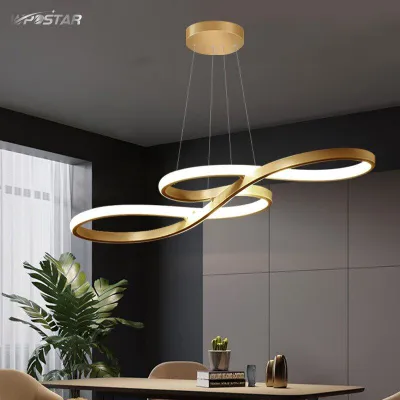
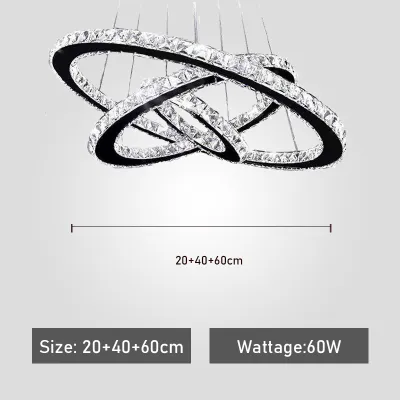
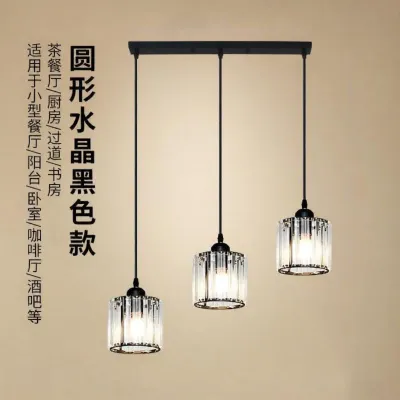
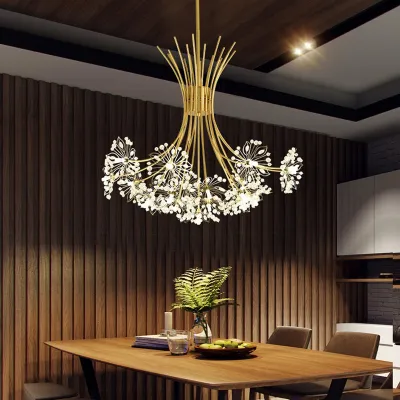
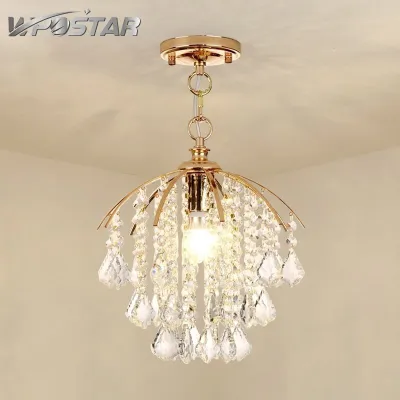
Prices are valid at publication and may change. Please refer to the product page for the latest price.
Best Chandelier Light Styles That Maximize Vertical Space
Semi-Flush and Flush Mount Chandeliers
Flush mount and semi-flush mount fixtures are the premier choices for low-ceiling environments. A flush mount chandelier light sits directly against the ceiling surface, leaving no gap between the fixture body and the concrete or plaster. This style maximizes vertical clearance, making it highly suitable for high-traffic zones, entryways, and central living areas. Semi-flush mount fixtures, on the other hand, feature a very short stem or collar that creates a small gap—typically between 10cm and 20cm—between the ceiling and the decorative elements.

This slight drop is highly beneficial for lighting quality. It allows light to cast upward and reflect off the ceiling surface, creating a soft, indirect glow that can make the entire room feel taller and brighter. For HDB flats, selecting a semi-flush design with a total height of 30cm or less ensures that you capture the multi-directional illumination of a traditional chandelier while keeping the bottom of the fixture well above head height.
Linear and Rectangular Chandeliers
When lighting a dining area or a kitchen island, vertical drop is less of a concern directly over the table, but visual proportion remains critical. Linear and rectangular chandelier lights are designed to spread horizontally rather than vertically. Instead of concentrating all their visual weight and light output into a single, deep central point, these fixtures distribute light along a sleek, elongated frame.
Using a linear fixture over a dining table guides the eye across the room, creating an illusion of visual expansion. When selecting a linear design, it is essential to align the fixture’s length with the dining table’s proportions. A good rule of thumb is to choose a fixture that is roughly half to two-thirds the length of the table. This ensures balanced illumination across the entire dining surface without the fixture feeling overwhelming or visually dominant in the compact dining zone.
Mini Chandeliers and Open-Cage Designs
If you desire the intricate details of a decorative fixture but worry about spatial crowding, mini chandeliers and open-cage designs offer an elegant compromise. Mini chandeliers scale down the traditional multi-bulb design into a compact package, often featuring a diameter of 30cm to 40cm and a minimal drop. These are highly effective for smaller rooms, such as study rooms, walk-in wardrobes, or cozy reading nooks.
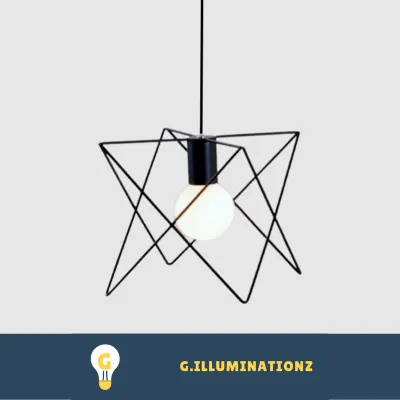
Open-cage or geometric designs utilize thin metal bands, open frames, or clear glass panels instead of solid, heavy materials. Because the structural frame is minimalist, light passes through the fixture unimpeded, and the eye can see the wall and ceiling behind it. This transparency significantly reduces the visual weight of the fixture. In a 2.6m HDB space, avoiding dense, heavy materials—such as thick, multi-layered lead crystals or large opaque drum shades—is crucial. These heavy materials trap light and create dark shadows, which visually lower the ceiling.
Sizing Formulas and Clearance Rules for HDB Layouts
To ensure your chosen chandelier light fits your HDB flat perfectly, you must rely on precise measurements rather than visual estimation. You can adapt standard sizing formulas to the metric measurements typically used in Singapore.
To determine the ideal diameter for a central living room fixture, use the room diameter formula. Measure the length and width of the room in meters. Add these two numbers together, and then multiply the sum by 10. The resulting number represents the approximate ideal diameter of your fixture in centimeters. For example, if your HDB living room measures 4 meters in length and 3.5 meters in width, add them to get 7.5. Multiplying by 10 gives you 75, indicating that a fixture with a diameter of approximately 75cm will sit comfortably within the space without looking too small or too large.
For dining spaces, the fixture’s width should be scaled directly to the table rather than the entire room. The dining table sizing rule dictates that the width or diameter of the chandelier should be between half and two-thirds of the width of the dining table. This prevents guests from bumping their heads when leaning in and ensures the light is concentrated where it is needed most.
Clearance rules are the most critical safety and comfort factor in a 2.6m ceiling layout:
- Walkways and High-Traffic Zones: You must maintain a minimum clearance of 2.1 meters from the bottom of the fixture to the floor. With a 2.6m ceiling, this leaves a maximum allowable fixture height (including any mounting hardware or stems) of 50cm.
- Dining Table Surfaces: Because foot traffic does not pass directly under a dining table, you can hang a fixture lower. Maintain a clearance of 75cm to 85cm between the bottom of the fixture and the tabletop surface. This height keeps the light source out of your direct line of sight while preventing glare.
Always treat these formulas as foundational guidelines. It is vital to physically measure your specific HDB layout, accounting for the height of your family members and the layout of your furniture, before making a purchase.
Structural and Electrical Safety for HDB Installations
Installing a chandelier light in an HDB flat requires careful attention to the structural integrity of your ceiling and the electrical capacity of your home.
First, identify whether you are mounting the fixture directly onto the solid concrete ceiling slab or onto a gypsum false ceiling. Modern HDB flats are constructed with robust concrete ceilings that can support substantial weight when paired with proper concrete expansion anchors or masonry bolts. However, many homeowners install false ceilings to conceal wiring, run air conditioning pipes, or house recessed downlights.
Gypsum false ceilings have strict weight limitations. Standard plasterboard cannot support the weight of a heavy chandelier. If you plan to install a fixture weighing more than a few kilograms on a false ceiling, it must be supported by structural reinforcements. This typically involves securing a timber support bracket behind the gypsum board or running a threaded rod directly up into the concrete slab above. Never rely on simple plasterboard toggle bolts for heavy decorative fixtures.
On the electrical side, you must verify several technical specifications before installation:
- Voltage and Frequency: Ensure the fixture is compatible with Singapore's standard electrical supply of 230V at 50Hz.
- Base and Interface: Confirm the bulb socket type (such as E27, E14, or GU10) matches your preferred bulb options.
- Wattage Limit: Never exceed the maximum wattage rating specified by the manufacturer, as this can cause overheating and pose a fire hazard.
- Ceiling Rose and Wiring: Inspect the condition of the existing ceiling rose and wiring insulation. Older wiring may be brittle and require replacement.
Safety must always be your top priority. Before beginning any installation or maintenance, isolate the power supply by switching off the relevant circuit breaker at your main distribution board (DB box). If you encounter complex wiring, structural challenges, or if the weight limits of your false ceiling are unclear, stop immediately. You must consult a licensed electrician or a qualified structural professional to complete the installation safely and in compliance with local regulations.
Common Sizing and Selection Mistakes to Avoid
Avoiding common pitfalls during the selection process will save you from costly returns, poor lighting performance, and safety hazards.
One frequent mistake is purchasing a fixture based solely on its catalog appearance without checking its physical proportions. A chandelier that looks delicate in a spacious showroom can easily overwhelm a compact HDB living room if it is too wide or hangs too low. Conversely, choosing a fixture that is too narrow for a large dining table will result in uneven lighting and an unbalanced aesthetic.
Another common error is ignoring the visual density of the materials. A fixture made of dark, opaque metal or dense, heavy glass blocks natural light during the day and casts harsh, restrictive shadows at night. In a 2.6m space, this visual blockage makes the ceiling feel lower and more oppressive.
Additionally, homeowners often overlook the technical compatibility of their bulbs and switches. Forgetting to check the bulb type, wattage, and heat output can lead to an uncomfortably warm environment, especially in low-ceiling rooms where the light source is closer to your head. Always verify dimmer switch compatibility if you plan to adjust the ambiance. Using non-dimmable LED bulbs with a dimmer switch, or pairing dimmable bulbs with an incompatible dimmer phase, will lead to annoying flickering, buzzing, or premature driver failure.
Frequently Asked Questions (FAQ)
Can I install a chandelier in an HDB bedroom?
Yes, you can install a chandelier in an HDB bedroom, but you must select its style and placement carefully. Opt for mini chandeliers, low-profile semi-flush mounts, or lightweight open-cage designs that do not overwhelm the limited space. Avoid mounting a low-hanging fixture directly over the bed. This placement can cause visual discomfort when you are lying down and poses a physical hazard when you are changing bedsheets or making the bed. Instead, position the fixture in the center of the room or over a dressing area, ensuring it maintains safe clearance.
Do I need a professional electrician to install a chandelier light?
For basic, lightweight, like-for-like fixture replacements on an existing, secure ceiling mount, some homeowners with DIY experience and proper safety knowledge may choose to handle the installation. However, if your project involves running new electrical wiring, mounting heavy fixtures, reinforcing a false ceiling, or modifying the existing electrical layout, you must hire a licensed electrician in Singapore. Professional installation ensures that the fixture is structurally secure, electrically safe, and compliant with local housing guidelines.
Community discussion
Share your experience or ask a question. Comments are reviewed before publication.