
Core Principles for 2.6m HDB Ceilings
Selecting the right lighting for a standard 2.6m HDB flat requires balancing physical clearance with visual comfort. Because these ceilings offer limited vertical space, bulky or low-hanging fixtures can quickly make a room feel cramped and visually cluttered. To maintain an open, airy atmosphere, homeowners should focus on three fundamental principles when evaluating Daiyo LED ceiling lights.
First, prioritize ultra-slim or flush-mount profiles that sit as close to the concrete ceiling slab as possible. Minimizing the physical drop of the fixture preserves valuable headroom and keeps the sightlines across the room unobstructed.
Second, opt for fixtures featuring diffused shades or indirect lighting designs. In a 2.6m space, the light source is closer to eye level than in higher-ceilinged homes, making raw, exposed LEDs highly uncomfortable. A quality diffuser softens the output, spreading light evenly and reducing harsh glare.
Products mentioned in this guide
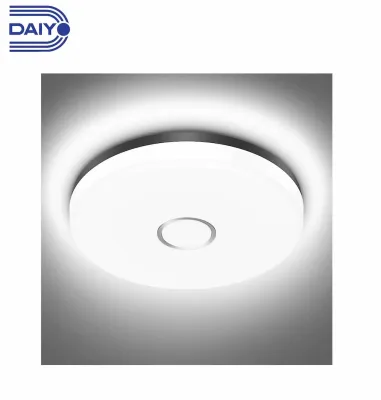
Prices are valid at publication and may change. Please refer to the product page for the latest price.
Third, carefully balance the total lumen output with the specific dimensions of each room. Over-lighting a compact HDB space can create a clinical, sterile environment, while under-lighting makes daily tasks difficult.
Sizing Standards: Thickness and Diameter
When browsing Daiyo LED ceiling lights, physical dimensions are the most critical specifications to check first. For a standard 2.6m HDB ceiling, the maximum thickness of a flush-mount fixture should ideally remain under 50mm to 80mm. Keeping the fixture within this slim profile ensures that the light blends seamlessly into the ceiling plane rather than protruding awkwardly into the living space.

The diameter of the fixture must also scale proportionally with the width of the room to maintain visual balance. For a typical HDB living room, which often spans three to four meters in width, a ceiling light with a diameter between 400mm and 600mm provides broad coverage without dominating the ceiling. For smaller spaces like bedrooms or study rooms, a diameter of 300mm to 400mm is generally sufficient, while narrow hallways or utility yards are ideally served by compact fixtures under 300mm.
To verify these measurements before purchasing, always consult the official Daiyo product specification sheets or packaging. Look for the physical dimensions, which are typically listed as “Diameter x Height” or “D x H” in millimeters. Measuring your designated ceiling space and mapping out the footprint with painter’s tape can help you visualize the final look before committing to an installation.
Room-by-Room Lighting Requirements
Different areas of an HDB flat serve distinct purposes, meaning your choice of Daiyo LED lights should vary from room to room.
Living and Dining Areas The living and dining rooms are the social hubs of the home, requiring versatile, high-quality illumination. For these spaces, look for fixtures that offer a wide beam angle to ensure even light distribution across seating and dining areas. It is also beneficial to check the Color Rendering Index (CRI) of the LED; a CRI of 80 or higher ensures that colors in your home decor, food, and furnishings appear natural and vibrant under the light.
Bedrooms Bedrooms are personal sanctuaries where relaxation is the priority. To support healthy sleep cycles, avoid high-intensity daylight fixtures. Instead, select Daiyo LED lights that offer warmer color temperatures, such as warm white (3000K) or cool white (4000K). If possible, opt for models that feature dimming capabilities or multi-tone switching, allowing you to lower the light levels as you wind down in the evening.
Kitchens and Bathrooms Kitchens and bathrooms present unique environmental challenges due to moisture, steam, and airborne grease. For these zones, pay close attention to the Ingress Protection (IP) rating on the product packaging. Bathrooms require a minimum of an IP44 rating to protect the internal electrical components from water splashes. Kitchens benefit from bright, focused task lighting over countertops and cooking zones to ensure safety during meal preparation.
Evaluating Daiyo LED Specifications
Reading an LED specification sheet can feel overwhelming, but focusing on a few key metrics will help you determine if a Daiyo light is suitable for your HDB flat.
First, understand the relationship between wattage and lumen output. Wattage measures electrical power consumption, whereas lumens measure the actual brightness emitted by the light. Because modern LEDs are highly energy-efficient, a low-wattage Daiyo fixture can produce substantial brightness. Instead of buying based on wattage, calculate your required lumens: a general guideline for HDB living spaces is roughly 150 to 200 lumens per square meter, while task-heavy areas like kitchens may require up to 300 to 400 lumens per square meter.
Second, consider the color temperature, measured in Kelvin (K). Daiyo LED lights are commonly available in warm white (3000K), cool white (4000K), and daylight (6500K). Some advanced models feature built-in “3-tone” technology, which lets you cycle through these three temperatures using your existing wall switch, providing maximum flexibility for different times of day.
Finally, check the product documentation for built-in drivers and flicker-free technology. A built-in driver simplifies the installation process by eliminating the need for an external transformer box. Flicker-free technology is recommended for study rooms and home offices, as it reduces eye strain and headaches during long hours of reading or working.
Installation and Safety Boundaries
Installing a new ceiling light on an HDB concrete ceiling requires careful attention to structural and electrical safety.
Because HDB ceilings are constructed from solid concrete slabs, you must use high-quality masonry drill bits and appropriate concrete wall plugs to secure the mounting bracket. Never rely on standard drywall screws or adhesive solutions, as the fixture must be anchored firmly to prevent it from falling. Always verify the weight limit of the existing ceiling junction box before mounting a new light.
For electrical safety, any task involving fixed wiring modifications, running new electrical points, or replacing complex fixtures must be handled by a licensed electrician. Working with live electricity poses severe risks of shock or short circuits, and professional installation ensures that your home remains compliant with local electrical safety standards.
Additionally, ensure that the flush-mount fixture is installed with adequate ventilation space if specified by the manufacturer. While LEDs generate significantly less heat than older halogen or incandescent bulbs, the internal driver still produces heat that must dissipate. Proper mounting prevents heat buildup, which is essential for preserving the lifespan of the LED chips and internal circuitry.
Common Sizing and Lighting Mistakes
Many homeowners make simple errors when lighting a 2.6m ceiling, which can make the space feel smaller or uncomfortable.
One common mistake is choosing low-hanging pendant lights or thick, decorative semi-flush fixtures in high-traffic areas. These fixtures physically reduce the vertical clearance, making tall occupants feel self-conscious and breaking the visual flow of the room.
Another error is over-lighting small rooms by installing fixtures with excessively high lumen outputs. This results in a harsh, clinical glare that bounces off polished flooring and light-colored walls, causing visual fatigue.
Lastly, ignoring the beam angle can lead to uneven lighting. A fixture with a narrow beam angle will create a “spotlight” effect directly underneath it, leaving the corners of the room in deep shadow and making the space feel smaller than it actually is.
Frequently Asked Questions (FAQ)
Can I install a Daiyo LED ceiling light on a false ceiling?
Yes, but you must take extra structural precautions. Standard plasterboard false ceilings cannot support the weight of a heavy light fixture directly. The mounting bracket must be secured to the metal support frame of the false ceiling, or anchored directly into the concrete slab above using long threaded rods. Consult a professional installer to assess the load-bearing capacity before proceeding.
Do Daiyo LED ceiling lights require a specific dimmer switch?
Yes, if you intend to dim your lights, you must first ensure that the specific Daiyo LED model is explicitly labeled as dimmable. Standard LED lights cannot be dimmed and will flicker or buzz if connected to a dimmer. Furthermore, you must use an LED-compatible dimmer switch (such as a trailing-edge dimmer) rather than a traditional dimmer designed for older incandescent bulbs.
How do I clean a flush-mount Daiyo LED light without damaging it?
To clean your fixture safely, always turn off the main power switch at the distribution board and allow the light to cool completely. Wipe the exterior diffuser gently with a dry or slightly damp microfiber cloth to remove dust and insects. Never use harsh chemical solvents, abrasive pads, or spray liquids directly onto the fixture, as moisture ingress can damage the internal LED driver.

Community discussion
Share your experience or ask a question. Comments are reviewed before publication.