
Using decorative mirrors is one of the most effective ways to visually expand a compact apartment, such as a Housing & Development Board (HDB) flat or a modern condominium in Singapore. By strategically reflecting light and extending sightlines, a well-placed mirror can make a cramped entryway or a narrow living room feel twice its actual size. However, achieving this optical illusion requires more than simply hanging any reflective surface on the wall. The effectiveness of a mirror depends heavily on its size, frame design, glass quality, and placement.
To select the best decorative mirror designs and sourcing channels in Singapore, you must evaluate how different designs manipulate light and spatial perception. While mainstream retailers offer highly accessible, standardized solutions, specialized boutiques and custom glass fabricators provide tailored options that can address complex layouts. Understanding these distinctions allows you to choose a mirror that not only enhances your interior aesthetic but also withstands the unique environmental challenges of a tropical climate.
Design Features That Maximize the Illusion of Space
To successfully use mirrors as spatial expanders, you must understand how physical design characteristics influence the human brain’s perception of depth. Different frame styles, shapes, and edge treatments alter how light is distributed across a room, changing a cramped layout into an open, airy environment.
Products mentioned in this guide
Prices are valid at publication and may change. Please refer to the product page for the latest price.
Size, Proportion, and Visual Weight
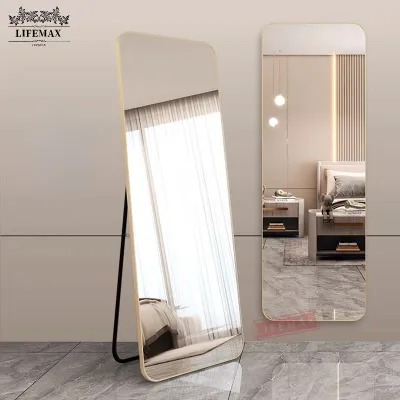
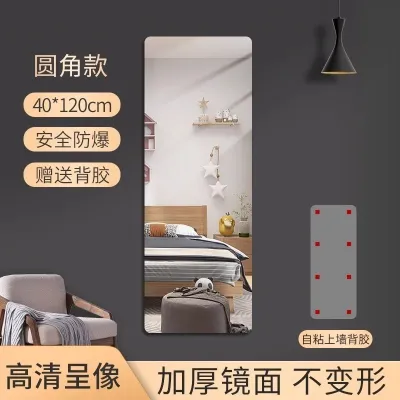
To create a convincing illusion of depth, the physical dimensions of the mirror must match the scale of the room. A common mistake in small-space design is choosing a mirror that is too small, which can make the wall look cluttered rather than expansive. For maximum spatial impact, floor-to-ceiling leaning mirrors or large-format wall-mounted panels are highly effective. A tall leaning mirror draws the eye upward, emphasizing vertical space and making low ceilings feel higher. Wall-mounted panels, when placed opposite windows, bounce natural light deep into the room, effectively acting as an extra window.
The frame of the mirror plays a critical role in its perceived visual weight. In compact rooms, heavy, ornate frames can crowd the space and disrupt the visual flow. Minimalist, ultra-thin, or completely frameless mirrors are generally preferred for small-space applications. A flush or thin metal frame—often finished in matte black, brass, or brushed aluminum—provides a clean border without interrupting the reflection. Frameless mirrors are particularly successful at blending into the wall, creating a seamless transition that tricks the brain into perceiving a continuous space.
When positioning a mirror relative to your furniture, follow the rule of proportions. If you are hanging a mirror above a sideboard, console table, or sofa, the width of the mirror should ideally be between 50% and 75% of the width of the furniture below it. This ensures the mirror feels anchored and balanced rather than overwhelming the piece it sits above. In tight corridors or entryways, a mirror that covers at least two-thirds of the wall height will yield the strongest space-expanding effect, preventing the reflection from feeling awkwardly cropped.
Shape, Beveling, and Light Distribution
The geometric shape of a mirror influences how light is distributed across a room and how the eye moves through the space. Rectangular mirrors are excellent for reinforcing clean, architectural lines and are highly effective when aligned horizontally along a dining wall or vertically in a narrow entryway. However, arched and round mirrors introduce soft curves that break up the rigid, boxy feel of standard HDB layouts. An arched mirror, mimicking the shape of a doorway or classical window, creates a strong psychological sense of a passage leading to another room, which significantly enhances the illusion of depth.
Beveled edges offer a sophisticated alternative to traditional frames. A bevel is a decorative angle ground into the outer edges of the glass panel, acting as a prism that refracts light. This treatment creates a subtle, elegant border that catches the light without adding any physical bulk or visual weight to the wall. For those who want the clean look of a frameless mirror but desire a touch of classic refinement, beveled mirrors provide the perfect balance, adding depth and texture to the edges while keeping the reflection uninterrupted.
Multi-panel or segmented mirrors—often arranged in a grid or windowpane pattern—are another powerful tool for small spaces. Instead of presenting a single, massive sheet of glass, segmented designs break up the reflection into structured panels. This layout mimics the appearance of multi-pane windows, adding architectural interest while preventing the mirror from feeling like a sterile commercial installation. The gaps between the panels create a sense of rhythm and depth, making large blank walls feel dynamic and open.
Where to Source Space-Expanding Mirrors in Singapore
Singapore offers a diverse retail landscape for sourcing decorative mirrors, ranging from international mass-market brands to bespoke local craftsmen. Finding the right source depends on your budget, timeline, and whether you require a standardized product or a highly customized installation.

Mainstream Home Furnishing Retailers
For homeowners and renters seeking immediate, cost-effective, and standardized spatial upgrades, mainstream home furnishing retailers in Singapore are highly reliable sources. Brands like IKEA, Castlery, and HipVan offer a wide selection of large-format wall mirrors and floor-standing leaning mirrors. These retailers specialize in contemporary, minimalist designs that fit seamlessly into Scandinavian, modern, or industrial interiors. Because these products are mass-produced, they are highly accessible and come with predictable dimensions, making it easy to plan your layout before purchasing.
One of the primary advantages of sourcing from large-scale retailers is the logistical convenience. Large mirrors are heavy, fragile, and difficult to transport in a standard passenger vehicle. Mainstream retailers provide structured, flat-rate delivery services, often bundled with professional assembly or basic wall-mounting options. Additionally, these brands typically offer transparent return policies and warranty periods, which provide peace of mind in case the mirror arrives damaged or does not fit the scale of your room as expected. This makes them an excellent choice for renters who need versatile, non-permanent decor solutions that can be easily moved to a new home.
Specialized Decor and Lighting Boutiques
If you view a mirror as a primary design statement or a piece of functional art, specialized decor boutiques in Singapore—such as Taylor B, Soul & Tables, or local curated design studios—offer distinctive alternatives. These boutiques source unique, artisan-crafted mirrors that feature premium materials, such as solid teak, reclaimed wood, hand-forged metals, or antique finishes. Rather than blending into the background, these mirrors are designed to act as focal points that elevate the entire room’s aesthetic while performing their spatial duties.
Boutique brands typically maintain stricter quality control over the glass manufacturing process. They are more likely to use high-clarity, low-iron glass, which eliminates the subtle green tint common in standard float glass, resulting in a brighter and more accurate reflection. Furthermore, the backing materials used in boutique-tier mirrors are often superior, featuring robust moisture barriers and reinforced hanging systems. While the price point is higher than mainstream alternatives, a boutique mirror is a long-term investment that brings character, craftsmanship, and exceptional visual clarity to your living space.
Custom Glass and Mirror Fabricators
In many Singaporean homes, standard retail mirrors may not fit awkward architectural configurations, such as narrow structural columns, recessed entryway niches, bomb shelter doors, or sloped ceiling spaces under staircases. In these scenarios, bypassing retail brands in favor of local custom glass and mirror fabricators (often referred to as glaziers or glass contractors) is the most effective path. Custom fabricators can cut glass to your exact millimeter specifications, allowing you to create seamless, wall-to-wall mirrored surfaces or floor-to-ceiling installations that retail products cannot match.
Commissioning a custom mirror allows you to design a fully integrated mirrored accent wall, which is the ultimate technique for making a small room feel twice its size. You can select the precise glass thickness, choose custom tints (such as bronze or grey mirror glass to soften the reflection), and specify the exact bevel width or frame integration. However, custom fabrication involves several trade-offs. The process requires an on-site measurement, has longer lead times for production, and generally carries non-refundable deposit terms. Furthermore, because large custom panels are incredibly heavy and fragile, they require professional installation by the fabricator’s team, which adds to the overall project cost.
How to Evaluate Mirror Quality and Durability
To ensure your mirror provides a clear reflection and lasts for years without deteriorating, you must evaluate several physical specifications before making a purchase. Investing in a high-quality product prevents safety hazards and aesthetic degradation.
- Glass Thickness and Clarity: The thickness of the glass is the single most important factor governing reflection quality. Cheap, thin mirrors (typically 3mm or thinner) are highly prone to flexing and bending when mounted on a wall, which causes a "funhouse" warping effect that distorts the reflection. For large decorative mirrors, a minimum thickness of 5mm to 6mm is highly recommended. Thicker glass provides structural rigidity, ensuring a perfectly flat surface and a true, undistorted reflection. Additionally, look for low-iron glass if you want maximum brightness, as it allows more light to pass through without the greenish tint found in standard glass.
- Backing Materials: Singapore's tropical, high-humidity climate poses a severe threat to mirrors. Standard mirrors are created by applying a thin layer of silver to the back of the glass, which is then protected by a layer of paint. Over time, moisture and airborne salts can penetrate this protective paint, causing the silver layer to oxidize. This process, known as desilvering, manifests as unsightly black spots or corroded edges that ruin the mirror's appearance. To prevent this, look for mirrors labeled as copper-free or those featuring a specialized moisture-resistant backing. Ensure the edges are completely sealed with a protective lacquer to block humidity from creeping behind the glass.
- Edge Finishing: The way the edges of the glass are finished is critical for both safety and durability. Raw, cut glass is incredibly sharp and prone to micro-fractures that can lead to major cracks over time. Ensure the mirror you select has seamed, ground, or polished edges. Polished edges are smooth to the touch and structurally stable, significantly reducing the risk of chipping during transport, installation, or cleaning.
- Hardware and Mounting Points: Large mirrors are exceptionally heavy, and relying on inadequate hanging hardware is a major safety hazard. Inspect the back of the mirror to verify how the mounting points are attached. High-quality mirrors feature heavy-duty D-rings or French cleat systems that are securely fastened directly to the frame or bonded to the glass backing with industrial-strength adhesive. Avoid mirrors that rely on simple wire strings or flimsy plastic clips, as these can stretch, degrade, or fail under the constant load of a heavy glass panel. Always check the manufacturer's specified weight limits for the pre-installed hardware.
Safe Installation Practices for Large Wall Mirrors
Mounting a heavy decorative mirror requires careful planning, the right tools, and a clear understanding of your home’s structural limitations. Following proper installation protocols ensures the mirror remains securely anchored to the wall.
- Wall Assessment: Before drilling, you must identify the composition of the wall where you plan to hang the mirror. In Singapore, HDB flats and condominiums feature a mix of structural concrete walls, pre-cast lightweight concrete panels, and drywall partitions. Concrete walls offer excellent load-bearing capacity but require a rotary hammer drill and heavy-duty masonry wall plugs (rawplugs) to secure the mounting screws. Drywall partitions, commonly found in newer condo layouts or internal bedroom walls, cannot support heavy mirrors using standard screws. For drywalls, you must locate the internal timber or metal studs using a stud finder and anchor your mounting hardware directly into them. If no stud is available at your desired position, you must use heavy-duty toggle bolts or hollow-wall anchors rated specifically for the weight of your mirror.
- Pre-Installation Checks: Before drilling into any wall, perform a thorough safety check. Use a multi-detector to scan the area for concealed electrical wiring or water pipes running behind the wall. This is especially critical in entryways, hallway walls adjacent to bathrooms, or walls directly behind light switches. If you must drill near known electrical conduits, isolate the power at your home's main distribution board (DB box) before commencing work to prevent accidental electrocution or short circuits.
- Safety Enhancements: For large wall mirrors, especially floor-to-ceiling panels or mirrors placed in high-traffic zones like narrow corridors, applying a shatter-resistant safety film to the back of the glass is highly recommended. In the rare event that the mirror suffers a hard impact and breaks, the adhesive safety film holds the shattered glass fragments together, preventing dangerous shards from falling and causing injuries to children, pets, or family members.
- Professional Boundaries: While hanging a small or medium-sized mirror is a manageable DIY project, mounting oversized floor mirrors, ceiling-adjacent panels, or complex multi-panel setups should be left to qualified professionals. If a mirror weighs more than 15kg, requires fixed wiring (such as backlit LED models), or must be suspended at a significant height, hire a professional handyman or a specialized installer. If the manufacturer's installation instructions conflict with your wall type or if you are unsure of the wall's structural integrity, stop immediately and consult a structural engineer or a professional installer.
Frequently Asked Questions (FAQ)
What is the best height to hang a decorative mirror in a small hallway?
For a standard decorative mirror in a small hallway, the center of the mirror should ideally hang at eye level, which is approximately 140cm to 150cm from the floor. This height ensures that most people can comfortably view their reflection without straining. If you are placing the mirror above a console table, leave a gap of 15cm to 20cm between the bottom of the mirror frame and the tabletop to prevent a cluttered appearance. Always position the mirror to reflect a clean, open space—such as an adjacent living room or a piece of wall art—rather than reflecting a cluttered storage area or a blank bomb shelter door, which would only amplify the visual clutter.
How do I prevent a large mirror from warping or desilvering in a humid climate?
To protect your mirror from warping or desilvering in Singapore’s humid climate, avoid placing it in unventilated bathrooms, directly opposite open-air balcony doors, or on damp external-facing walls. When cleaning the mirror, never spray liquid glass cleaners directly onto the surface, as the liquid can run down the glass and pool along the bottom edge, seeping behind the backing and causing edge corrosion. Instead, spray a small amount of specialized glass cleaner or a mild water-and-vinegar solution onto a lint-free microfiber cloth, wipe the glass gently, and immediately dry the edges with a clean, dry cloth. Ensure the back of the mirror has a small air gap (using small rubber bumper pads) to allow air circulation and prevent moisture from getting trapped against the wall.
Can I use multiple smaller mirrors instead of one large mirror to expand space?
Yes, you can use multiple smaller mirrors to expand space, but the visual outcome will differ from that of a single large panel. A single large mirror provides an uninterrupted, seamless reflection that maximizes the illusion of depth and light. In contrast, a gallery wall of smaller mirrors or a structured grid layout creates a more decorative, window-like effect. To make multiple mirrors work effectively for spatial expansion, arrange them in a tight, symmetrical grid with minimal spacing between the frames. This unified layout acts as a cohesive visual anchor, bouncing light across different angles and adding structured depth without the logistical challenges and high costs associated with transporting and installing a massive single pane of glass.
Community discussion
Share your experience or ask a question. Comments are reviewed before publication.