
Quick Answer: Finding the Ideal Book Reading Light Brand
Selecting the ideal brand for a book reading light is not a matter of finding a single universal winner, but rather matching a manufacturer’s specific engineering philosophy to your reading environment, habits, and budget. Physical book readers have different needs—such as wide, uniform coverage to illuminate dual pages—compared to e-reader users who primarily require precise glare reduction on glass screens.
Brands specializing in optical engineering typically excel in glare reduction and wide, uniform illumination, making them ideal for expansive desks. Conversely, smart lighting brands offer superior adaptability to ambient room conditions through automated sensors, while minimalist brands focus on reliable basic performance, compact footprints, and straightforward value. This comparison analyzes these brands based on their design philosophies, providing a practical framework to help you match the right technology to your personal reading setup.
Key Criteria: Evaluating Light Quality and Ergonomics
Before comparing specific brands, it is essential to understand the stable, verifiable standards that define a high-quality, comfortable reading lamp.
Products mentioned in this guide
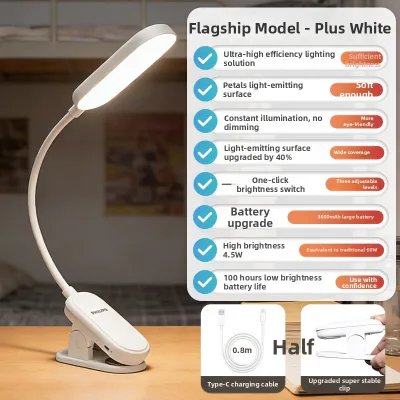

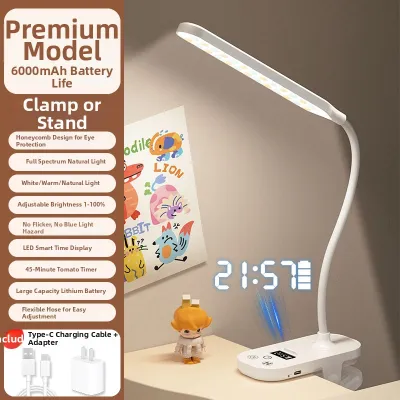

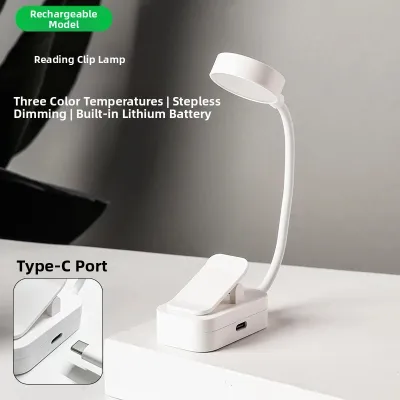
![[SG stock]Teacher day Gift Mini Book Light LED Night Light USB Rechargeable Clip On Reading Lamp Brightness Adjustable Bedroom Travel](https://img.lazcdn.com/g/p/158e98bcbacab16537c08ec35b24cce7.jpg_400x400q80.jpg_.webp)
Prices are valid at publication and may change. Please refer to the product page for the latest price.

Color Rendering Index (CRI): The Color Rendering Index measures a light source’s ability to reveal the colors of various objects faithfully in comparison with natural sunlight. For reading, a CRI of 90 or higher is highly recommended. When the CRI is low, the contrast between the printed ink and the paper page degrades, forcing your visual cortex to work harder to decode the shapes of letters. This subtle strain accumulates over hours, leading to dry eyes and mental fatigue. High-CRI lamps utilize specialized multi-phosphor LEDs to emit a fuller, more continuous spectral distribution, ensuring that illustrations, colored diagrams, and text are crisp and true to life.
Color Temperature: Measured in Kelvin (K), the physiological impact of color temperature is closely tied to our circadian rhythms. Cool white light, typically between 5000K and 6500K, contains a higher proportion of blue wavelengths. This spectrum stimulates photoreceptors in the retina that suppress the production of melatonin, the hormone responsible for sleep. Consequently, cool light enhances alertness, concentration, and visual acuity, making it suitable for daytime study or reading dense, technical material. Conversely, warm white light, ranging from 2700K to 3000K, mimics the gentle glow of sunset. It promotes relaxation and is the ideal choice for evening reading, as it does not disrupt your natural sleep cycle. An effective reading lamp should offer step-less or multi-level color temperature adjustments to accommodate these shifting needs throughout the day.
Flicker and Glare: Even when flicker is imperceptible to the naked eye, low-frequency modulation in LED drivers can cause the ciliary muscles in the eye to rapidly contract and relax. This micro-strain is a primary driver of tension headaches and premature eye fatigue during prolonged reading sessions. High-quality reading lights employ advanced direct current (DC) dimming circuits or ultra-high-frequency pulse-width modulation (PWM) to ensure a completely stable, flicker-free output. Glare is another critical hurdle. Direct glare occurs when the light source shines directly into your eyes, while indirect or specular glare happens when light reflects off glossy book pages or digital screens. To combat this, look for lamps featuring physical diffusers, micro-prismatic lenses, or specialized optical geometry that redirects the light path away from your direct line of sight.
Ergonomics and Adjustability: A high-quality reading lamp must offer extensive physical adjustability to adapt to different seating positions, desk heights, and book sizes. Multi-axis adjustability—typically achieved through dual or triple-jointed arms—allows you to control the height, tilt, and rotation of the lamp head. This mechanical flexibility ensures you can position the light source to project downward onto your reading material without casting shadows from your head or hands, and without exposing the bare LED diodes to your eyes. The joints must be engineered with high-quality tension springs or friction hinges that hold their position securely over time, preventing the lamp head from gradually drooping.
Physical Footprint and Stability: The physical design of the lamp base is a critical practical consideration. A heavy, counterweighted metallic base provides the necessary stability to prevent the lamp from tipping over when the adjustable arm is fully extended. However, these heavy bases occupy valuable desk real estate. For compact workspaces, clamp-on bases or monitor-mounted form factors offer an elegant solution by securing directly to the edge of the desk or the top of a screen, freeing up the entire desktop surface for books, notebooks, and writing materials.
Electrical and Safety Verification: When purchasing a desk lamp in Singapore, electrical compatibility and safety certifications are paramount. Singapore’s domestic electricity supply operates on a nominal voltage of 230V at a frequency of 50Hz, utilizing the Type G three-pin plug standard. It is essential to verify that any imported or locally purchased lamp is equipped with a power adapter designed for this voltage range to prevent overheating or electrical failure. Furthermore, look for the Safety Mark issued by Enterprise Singapore. This certification indicates that the appliance, particularly its external power adapter, has undergone rigorous independent testing to comply with local safety standards, significantly reducing the risk of short circuits, electrical fires, and shock hazards.
Comparing Popular Desk Lamp Brands by Design Philosophy
To make an informed decision, it is helpful to analyze popular desk lamp brands by grouping them into categories based on their typical technological focus, design philosophies, and target user profiles. While these categories represent general brand characteristics, readers must always verify the specific model specifications, dimming methods, and wattage limits before making a final purchase.
Optical and Ergonomic Specialists
Brands within this category, such as BenQ (specifically their WiT series), approach desk lighting from an optical engineering perspective. Instead of using standard circular bulb designs, they develop curved lamp heads and custom-engineered light guides. This curved geometry distributes light in a wide, horizontal arc rather than a concentrated spot, providing a much larger and more uniform illumination field. This wide coverage is highly beneficial for readers who work with large-format textbooks, open reference manuals, or multiple documents spread across a wide desk.
Additionally, these specialists often incorporate asymmetric optical designs. By projecting the light at a precise forward angle rather than straight down, the lamp illuminates the reading area while preventing the light from reflecting off computer screens or glossy paper back into the reader’s eyes. The physical build of these lamps typically features heavy-duty steel or aluminum components, counterweighted bases, and robust desk clamps. The mechanical joints are often tension-adjustable, allowing the user to fine-tune the resistance of the arm.
The ideal user for this category includes academic researchers, students, and professionals who read physical books alongside digital screens on large desks, and who require wide, uniform, glare-free illumination across their entire workspace.
Premium Smart and Architectural Brands
This category includes brands like Dyson (known for its Solarcycle and Lightcycle series) and high-end architectural lighting designers like Flos. These manufacturers prioritize advanced automation, premium materials, and sophisticated aesthetic designs. A key feature of these premium lamps is the integration of ambient light sensors coupled with smart microprocessors. These sensors continuously monitor the surrounding room lighting and automatically adjust the lamp’s brightness and color temperature in real-time to maintain a constant, pre-set level of illumination on your desk. This automated adjustment prevents the common issue of eye strain that occurs when a reader fails to manually adjust their lamp as natural daylight fades.
Premium brands also invest heavily in advanced thermal management. High-power LEDs generate localized heat that, if left unmanaged, can degrade the phosphor coating over time, causing the light to lose brightness and shift in color temperature. To prevent this, brands like Dyson incorporate copper heat pipe cooling systems—similar to those used in satellites—to draw heat away from the LED chips, preserving the quality, color accuracy, and efficiency of the light for decades.
The ideal user for this category includes design-conscious consumers, early adopters of smart home ecosystems, and readers with a flexible budget who want a highly automated, visually striking, and exceptionally durable lighting solution that adapts seamlessly to natural daylight patterns.
Accessible and Minimalist Brands
This category is represented by mainstream manufacturers such as Philips, Xiaomi, and Panasonic. These brands focus on delivering clean, minimalist designs, reliable basic optics, and straightforward functionality at a highly accessible price point. Rather than utilizing complex mechanical arms or advanced thermal cooling pipes, these lamps rely on lightweight materials like high-grade plastics and slim aluminum alloys. They are highly portable and have a compact footprint, making them easy to move between a study desk, a bedside table, or a living room side table.
In terms of light quality, these brands often employ honeycomb diffusers or micro-lens arrays to soften the LED output, reducing harsh shadows and minimizing direct glare. They typically feature touch-sensitive control panels on the base, allowing users to toggle between pre-set modes (such as “reading,” “writing,” or “relaxing”) or perform step-less dimming. Many models also offer basic smart integration, allowing users to control the lamp via mobile apps or integrate it into standard smart home platforms.
The ideal user for this category includes students, individuals with compact study areas, and budget-conscious readers who prioritize value, ease of use, and reliable eye protection without the need for high-end mechanical adjustability or premium architectural aesthetics.
Decision Framework: Matching the Right Brand to Your Setup
To finalize your decision, it is helpful to evaluate your specific reading habits, desk space, and technical requirements against the following structured framework.
Choose an Optical Specialist if:
- You work with a deep or wide desk setup.
- You frequently read large, physical books, textbooks, or spreadsheets.
- You need to illuminate a wide workspace without creating hot spots or screen glare.
- You prefer a heavy, highly stable lamp that can be clamped securely to the desk edge to save space.
Choose a Premium Smart Brand if:
- You want a hands-off, automated experience where the lamp adjusts its brightness and color temperature dynamically based on the time of day and ambient room light.
- You value high-end materials, precise mechanical movement, and architectural design.
- You are looking for a long-term investment with advanced cooling technologies that prevent LED degradation over time.
Choose an Accessible/Minimalist Brand if:
- You have a compact workspace, a small bedside table, or need a lightweight lamp that is easy to move around.
- You want straightforward, reliable eye protection with basic dimming and color temperature controls.
- You prefer a cost-effective solution that delivers excellent value and simple touch or app-based operation.
Verify First:
- Desk Compatibility for Clamps: If you decide on a clamp-mounted lamp, verify that your desk's edge is compatible. Many clamps require a flat overhang of at least 2 to 8 cm and are not suitable for desks with decorative beveled edges, under-desk drawers, or hollow-core construction (such as paper-honeycomb filled MDF), which can crush under the pressure of a heavy clamp.
- Smart Home Ecosystems: If you plan to control your lamp via voice commands or smart home routines, check the specific wireless protocols (Wi-Fi, Bluetooth, or Zigbee) and ensure compatibility with your existing smart home hub (such as Apple Home, Google Home, or Samsung SmartThings) before purchasing.
- Wattage and Dimming Methods: Always check the manufacturer's manual for the maximum wattage limit if the lamp has a replaceable bulb, and verify whether the dimming method is compatible with your personal preference (such as step-less touch dimming versus physical buttons).
Positioning Your Reading Light for Eye Comfort
Once you have selected the right brand and model, proper installation and positioning are critical to maximizing the performance of your book reading light and protecting your long-term eye health.
Optimal Height and Angle: To prevent direct glare, position the bottom of the lamp head slightly above your eye level when you are seated in your reading position. This ensures that the light source itself is shielded from your direct line of sight while casting a bright, even pool of light onto your book. Angle the lamp head downward and slightly away from your face. If you take notes or write while reading, place the lamp on the side opposite your dominant hand—for example, on the left side of the desk if you are right-handed. This simple adjustment prevents your writing hand from casting distracting shadows across your book or notepad.
Ambient Room Lighting: One of the most common mistakes is reading in a completely dark room with only the desk lamp illuminated. This high contrast forces your pupils to dilate when looking at the dark surroundings and constrict when looking at the bright book page. This constant adjustment, known as transient adaptation, rapidly fatigues the eye muscles. To prevent this, always maintain a moderate level of ambient room lighting. A soft ceiling light, a warm floor lamp, or a shaded table lamp in the corner of the room will balance the contrast, creating a much more comfortable and sustainable reading environment.
Safe Cable Management and Usage: Ensure that the power cable has sufficient slack to accommodate the full range of motion of the lamp’s adjustable arm without pulling the cord taut. Route the cable neatly behind your desk, securing it with cable clips or ties to keep it out of walkways. This prevents accidental tripping hazards, which could pull a heavy, expensive lamp off your desk, potentially causing damage to the lamp, your desk, or posing a safety hazard. Additionally, if you need to clean the lamp, adjust a fixed-wiring component, or work near any electrical connections, always isolate the power by switching off the outlet and unplugging the device first. Avoid placing the lamp in damp environments, such as near open windows where rain might enter. If you encounter any persistent electrical issues, flicker that cannot be resolved by dimming adjustments, or damaged wiring, stop using the lamp immediately and consult a qualified electrical professional or the manufacturer’s service center.
Community discussion
Share your experience or ask a question. Comments are reviewed before publication.