
A bedroom is a deeply personal sanctuary where restorative rest takes priority over external noise. In modern Singaporean homes, where compact master bedroom layouts require intentional space planning, every item on your bedside table must earn its place. A reliable digital table clock does more than display the hours; it serves as an anchor for your morning routine and a guardian of your sleep environment. Finding the best digital table clock for your bedroom means balancing visual clarity with sensory comfort, ensuring that the device helps you wake up refreshed without disrupting your sleep cycle with intrusive light or jarring sound. The ideal bedside clock should offer customizable dimming, intuitive alarm features, and a compact footprint that fits seamlessly onto your nightstand.
Essential Features for a Sleep-Friendly Bedroom Clock
Display Brightness and Dimming
The human brain is highly sensitive to light exposure during the night. Artificial blue and white light, common in standard LED displays, can suppress the production of melatonin—the hormone responsible for regulating sleep-wake cycles. When selecting a digital table clock, adjustable brightness is a critical consideration. Look for models featuring continuous or multi-level manual dimming, or advanced auto-dimming sensors. Auto-dimming technology utilizes a built-in photodetector to measure ambient light levels, automatically lowering the display’s output to a soft glow when the bedroom lights are switched off. If you prefer a completely dark room, look for clocks with a “display off” mode that only illuminates the screen for a few seconds when tapped.
Alarm Functions
Waking up should be a gradual, stress-free transition rather than a sudden shock to your cardiovascular system. Progressive volume alarms, often called crescendo alarms, start with a faint, low-frequency beep that slowly increases in volume and tempo over several minutes. This gentle approach allows your brain to transition smoothly from deep sleep to wakefulness. Additionally, customizable snooze durations are highly beneficial; while the traditional nine-minute snooze is standard, some users prefer shorter five-minute intervals or longer fifteen-minute windows. For couples or roommates with different daily routines, a dual-alarm function is indispensable, allowing two distinct wake-up times to be programmed independently without needing two separate devices on the nightstand.
Products mentioned in this guide
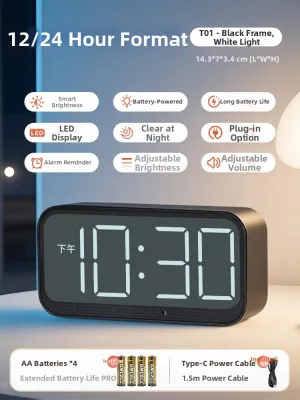
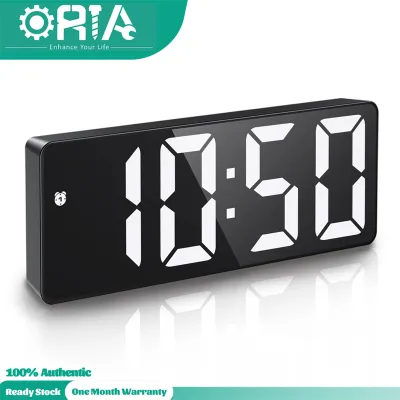
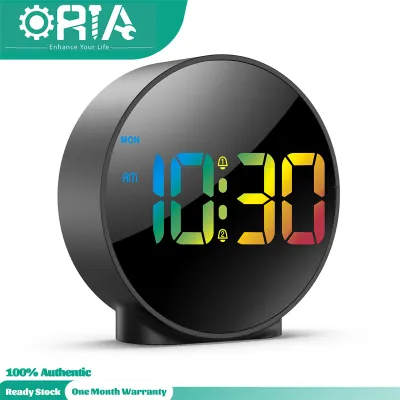
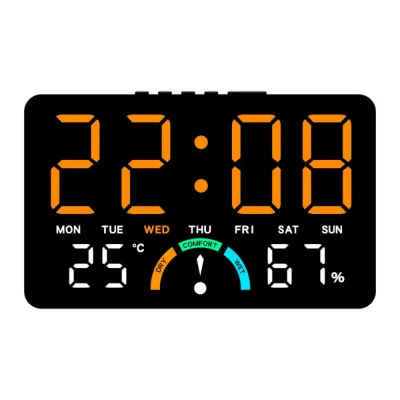
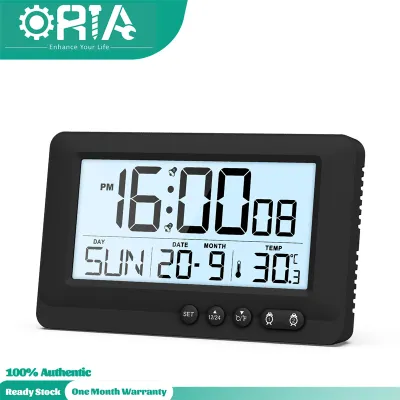
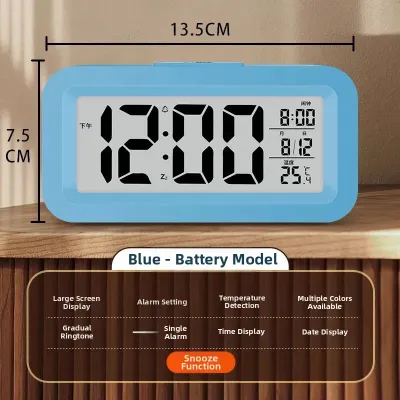
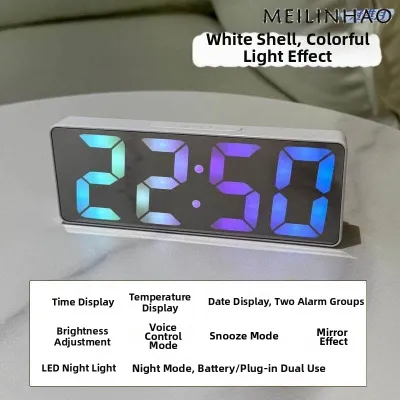
Prices are valid at publication and may change. Please refer to the product page for the latest price.
Power Sources and Backup
Bedside clocks generally operate on direct AC power, USB power, or replaceable batteries. In Singapore, where electrical outlets are designed for Type G plugs operating at 230V and 50Hz, USB-powered clocks have become increasingly popular due to their versatility. They can be powered using standard USB wall adapters or directly from a multi-port charging hub on your nightstand. However, regardless of the primary power source, a built-in battery backup is essential. This backup—typically powered by a CR2032 button cell or a couple of AAA batteries—does not usually keep the main display illuminated during a power outage. Instead, it maintains the internal timekeeping chip and active alarm settings. If a localized power trip occurs overnight, the clock will still trigger your alarm at the correct time, preventing missed appointments or late mornings.
Size and Footprint
Bedside tables in Singaporean apartments, particularly in newer Build-To-Order (BTO) flats and compact condominiums, are often modest in size to maximize walking space. A bulky clock can easily clutter a small nightstand, leaving little room for a water glass, reading glasses, or a phone charger. Ideally, a bedroom clock should have a compact footprint, with a width of no more than 12 to 15 centimeters and a shallow depth. The display itself must strike a balance: it needs to be large enough to read clearly from a distance of two to three meters without your glasses, yet compact enough to avoid dominating the visual landscape of your bedroom.
Top Digital Table Clock Categories for Your Nightstand
Minimalist LED Clocks with Auto-Dimming
Braun BC10 Digital Alarm Clock This model is a testament to functional, minimalist German design. It features a high-contrast LCD screen with a continuous backlight option that can be set to activate automatically in dark environments via a light sensor. The display is exceptionally clear, and the physical interface is highly intuitive, featuring a large snooze/light touch button across the top.

- Ideal User Profile: Purists who want a highly reliable, non-distracting clock without smart features or complex menus.
- Key Strengths: Exceptional build quality, highly legible screen from various viewing angles, crescendo alarm that prevents morning startle, and a clean aesthetic that complements modern Scandinavian or minimalist bedroom decor.
- Limitations: Operates primarily on batteries (requires two AA batteries), which means the continuous backlight feature can drain power over several months, requiring regular battery replacements. It lacks smart home connectivity and FM radio.
- Bedroom Use Case: Perfect for placement on compact floating shelves or narrow nightstands where cable clutter is undesirable.
Muji Digital Clock with Alarm Known for its signature clean aesthetic, this clock features a highly legible, segmented LCD screen that displays the time, calendar date, temperature, and humidity. The inclusion of humidity monitoring is particularly useful in Singapore’s tropical climate, helping residents manage air-conditioning and dehumidifier settings for optimal sleep comfort.
- Ideal User Profile: Individuals who appreciate Japanese minimalist design and want a comprehensive overview of their bedroom's environmental conditions.
- Key Strengths: Neutral design that blends seamlessly into any decor, highly accurate temperature and humidity sensors, and a simple, hassle-free setup process.
- Limitations: It does not feature a continuous night-light or auto-dimming backlight; checking the time in complete darkness requires physically pressing the top button to illuminate the screen for a brief period.
- Bedroom Use Case: Best suited for well-lit bedrooms or sleepers who prefer a completely dark sleeping environment with zero ambient light emission during the night.
Smart Clocks with Sleep Aids and Connectivity
Xiaomi Mi Smart Clock A versatile option for the modern connected home, this smart clock features a vibrant 4-inch color touchscreen. It integrates seamlessly with Google Assistant, allowing users to control compatible smart home devices, stream feed from security cameras, and set alarms using voice commands.
- Ideal User Profile: Tech-savvy individuals who want to centralize their morning routines and control their smart bedroom lighting or climate control directly from their bedside.
- Key Strengths: Highly customizable clock faces, integration with local smart home ecosystems, built-in speaker for playing music or white noise, and automatic time synchronization via Wi-Fi.
- Limitations: Requires a constant USB power connection and a stable 2.4GHz Wi-Fi network. The screen, even at its lowest brightness setting, may still emit too much light for highly light-sensitive sleepers. There are also potential privacy considerations regarding the built-in microphone.
- Bedroom Use Case: Ideal for spacious master bedrooms where the clock can be positioned slightly further from the bed to minimize light disruption while remaining within voice control range.
Lenovo Smart Clock Essential This device strikes a balance between a traditional digital clock and a smart speaker. It features a simple, high-contrast LED display that shows the time, temperature, and weather icons, alongside a built-in smart assistant (available in Google Assistant or Alexa variations).
- Ideal User Profile: Users who want the convenience of a smart assistant and voice-controlled alarms without the distraction of a full-color video screen on their nightstand.
- Key Strengths: Clear, non-glare display that is easy on the eyes, robust physical buttons for volume and alarm control, a built-in soft nightlight on the rear of the device, and decent speaker quality for morning news or ambient sounds.
- Limitations: Requires a companion smartphone app for initial setup and ongoing configuration, lacks advanced display customization, and must remain plugged into a wall outlet at all times.
- Bedroom Use Case: Excellent for children's bedrooms or guest rooms where a gentle nightlight and simple voice-activated alarms are highly valued.
Projection Clocks for Effortless Time Checking
TFA Dostmann Show Projection Clock This German-engineered projection clock is designed to project the current time or indoor temperature directly onto your ceiling or wall. The projection arm can be rotated 180 degrees, allowing you to position the image exactly where it is easiest to view from your sleeping position.
- Ideal User Profile: Individuals who wear corrective lenses and struggle to read a standard bedside clock at night, or anyone who dislikes turning their head to check the time.
- Key Strengths: Clear red projection that is gentle on night-adjusted eyes, adjustable projection brightness, focus dial for sharp image clarity, and dual-alarm functionality.
- Limitations: The unit has a slightly larger physical footprint than standard digital clocks, and the projection can become difficult to read in bedrooms with high ambient light or textured ceilings.
- Bedroom Use Case: Best placed on a nightstand directly adjacent to a flat, light-colored ceiling for optimal projection clarity.
La Crosse Technology WT-521 Projection Clock A compact and reliable projection clock that offers a streamlined approach to night-time time checking. It features a small, adjustable projection lens on the side of the main unit, allowing you to cast the time onto a nearby wall or ceiling.
- Ideal User Profile: Budget-conscious buyers looking for a reliable projection feature without unnecessary smart home complications.
- Key Strengths: Compact design, simple manual focus wheel, clear and readable projection font, and an easy-to-set alarm system.
- Limitations: The projection angle is somewhat limited compared to more expensive models, and continuous projection requires the clock to be plugged into mains power via the included adapter.
- Bedroom Use Case: Ideal for narrow bedside tables where space is limited but projection functionality is still desired.
Placement and Setup Tips for Optimal Comfort
Viewing Angle and Distance
To maximize physical comfort and prevent unnecessary neck strain, place your digital table clock at approximately arm’s length (about 50 to 70 centimeters) from your sleeping position. The screen should be angled slightly upward or directly toward your eyes when you are lying down. This positioning allows you to check the time with a simple glance, without needing to sit up or stretch awkwardly, which can disrupt your transition back to sleep.
Cable Management
Bedside safety is paramount, especially in compact bedrooms where power outlets may be positioned behind the bedhead or wardrobe. Ensure that all power cables are routed neatly behind your nightstand to prevent tripping hazards or accidental pulling. Use adhesive cable clips or hook-and-loop fasteners to secure cords to the back of your furniture. When using USB-powered clocks, always connect them to high-quality, certified USB wall adapters. In Singapore, look for adapters bearing the Enterprise Singapore Safety Mark, which ensures the device has been tested and certified safe for continuous household use. Avoid placing power strips directly under pillows or bedding, as this can restrict airflow and create a fire hazard.
Configuration for Sleep
Before using your new clock for the first time, take a few minutes during the day to configure its settings. Set the display brightness to its lowest comfortable level; in a dark room, even a dim display is highly legible. Test the alarm volume during daylight hours to find a level that is sufficient to wake you without causing a sudden, jarring startle response. If your clock features a customizable snooze, set it to an interval that aligns with your natural waking habits, and ensure that any dual-alarm features are correctly assigned to the appropriate days of the week.
Frequently Asked Questions (FAQ)
Do digital clocks emit radiation that affects sleep?
Standard digital table clocks emit extremely low levels of extremely low frequency (ELF) electromagnetic fields (EMF), which are non-ionizing and fall well within international safety guidelines. There is no credible scientific evidence suggesting that these negligible emissions disrupt sleep quality or pose any risk to human health. However, if you are highly sensitive to electronics in your sleeping space or wish to minimize ambient EMF, you can easily place the clock an arm’s length away from your head pillow. Alternatively, opting for a battery-operated digital clock that does not draw continuous mains power from a wall outlet will virtually eliminate localized electrical fields.
What is the best display color for preserving sleep quality?
The color of your clock’s display plays a significant role in maintaining healthy sleep hygiene. Red, orange, or warm amber wavelengths are the optimal choices for bedroom environments. These longer wavelengths of light are far less disruptive to the brain’s circadian rhythm and do not suppress the natural production of melatonin. Conversely, you should avoid clocks with bright blue, green, or stark white displays. These shorter wavelengths mimic natural daylight, tricking your brain into thinking it is daytime, which can make it significantly harder to fall back asleep if you wake up and glance at the clock in the middle of the night.
How can I keep my clock running during a power outage?
To ensure your clock remains operational during a power outage or a localized electrical trip, look for models equipped with a dedicated battery backup system. This feature typically utilizes a small CR2032 lithium button cell or a set of AAA batteries to power the internal timekeeping microchip when the main power source is cut. While the backup battery usually turns off the main display to conserve power, it keeps the internal clock running and preserves your programmed alarm times. Once mains power is restored, the display will light up again with the correct time. Alternatively, choosing a fully battery-operated or USB-rechargeable clock ensures uninterrupted operation regardless of your home’s electrical status.
Community discussion
Share your experience or ask a question. Comments are reviewed before publication.