
Creating a warm, inviting atmosphere in your home begins with understanding how light interacts with your surroundings. In Singapore’s fast-paced urban environment, the living room serves as a vital sanctuary—a place to unwind after a long day, gather with family, or entertain guests. Achieving the perfect balance of comfort and style often depends on your choice of secondary lighting. Selecting the right lamp living room fixture can completely transform a space, turning a bright, functional area into a soft, restful retreat. While ceiling downlights are excellent for general visibility, they often cast harsh downward shadows that can make a room feel cold and clinical. A well-chosen floor lamp, conversely, introduces light at eye level, softening the overall environment and establishing a cozy, layered glow that makes any home feel instantly more welcoming.
Defining the Perfect Ambiance for Your Living Room
To design a truly cozy atmosphere, it is helpful to understand what “ambiance” means in practical lighting terms. True ambient comfort relies on three core principles: warm color temperatures, effective light diffusion, and the elimination of direct glare. When light is diffused—meaning it passes through a semi-translucent material or bounces off a solid surface—it scatters evenly throughout the space. This scattering minimizes high-contrast shadows and prevents the harsh, blinding effect of an exposed light source. By reducing glare, your eyes can relax, which signals to your nervous system that it is time to wind down.
In Singapore, achieving this effect requires navigating unique spatial and structural realities. Modern Housing & Development Board (HDB) flats and private condominiums often feature compact layouts where floor space is at a premium. A bulky, wide-base floor lamp can easily obstruct walkways, disrupt the flow of traffic, and make a small room feel cluttered. Therefore, selecting fixtures with slim profiles, high visual lightness, or smart cantilevered designs is essential. A lamp with a slender stem and a compact base can tuck neatly beside a sofa or into an unused corner, providing ample illumination without dominating the room’s physical footprint.
Products mentioned in this guide
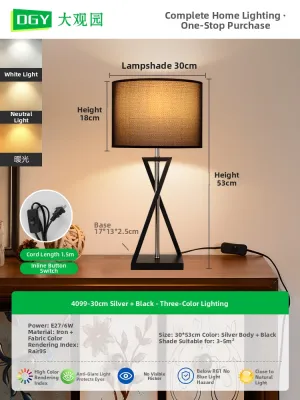
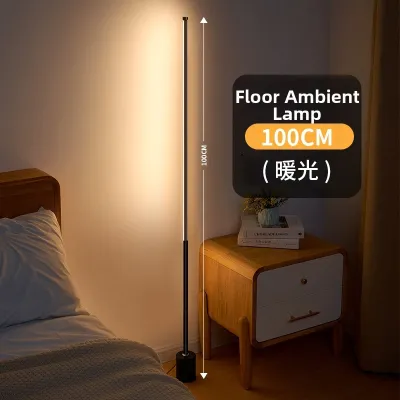
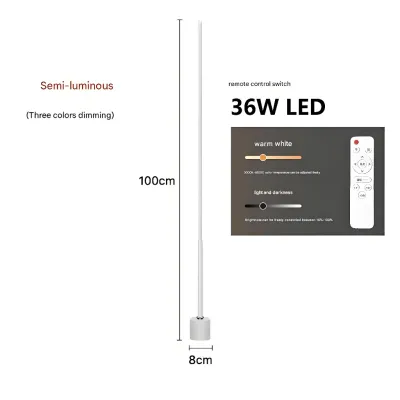
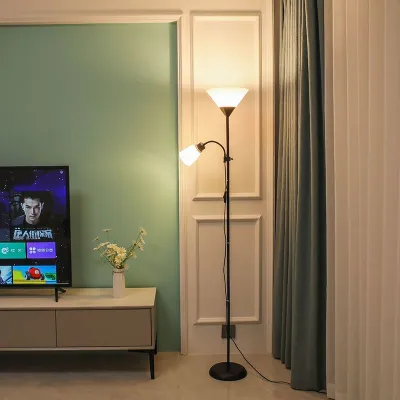
Prices are valid at publication and may change. Please refer to the product page for the latest price.
Beyond spatial constraints, safety and electrical compatibility must remain top priorities. Singapore’s electrical grid operates on a standard voltage of 230V at a frequency of 50Hz, utilizing Type G three-pin plugs. When browsing for lighting fixtures—particularly when ordering from international online marketplaces or overseas retailers—it is crucial to verify that the lamp’s internal wiring and socket are rated for 230V. Importing a lamp designed solely for 110V systems without a compatible step-down transformer will cause the bulb to burn out instantly, damage the fixture’s internal electronics, and pose a severe fire hazard. Always look for safety certifications, such as the Enterprise Singapore Safety Mark, to ensure the appliance has been thoroughly tested and approved for local household use.
Best Floor Lamp Living Room Styles for a Cozy Atmosphere
Different floor lamp designs distribute light in distinct ways, meaning the style you choose will directly dictate the mood of your living room. Rather than focusing on specific brand names, it is more practical to evaluate how different structural designs handle light dispersion, physical space, and safety. By matching the lamp’s optical characteristics to your specific seating arrangement and room layout, you can easily curate a comfortable and highly functional lighting scheme.

Fabric and Paper Shade Floor Lamps
Fabric and paper shade floor lamps are among the most classic and effective tools for generating soft, ambient light. Materials like linen, cotton, and high-quality rice paper act as natural diffusers, scattering the light in a full 360-degree radius. This omnidirectional glow gently fills the surrounding area, softening harsh angles and eliminating deep shadows. Because the shade completely conceals the bulb, these lamps are ideal for placement directly next to sofas, armchairs, or reading nooks where your eyes are likely to be level with the fixture.
However, Singapore’s tropical climate presents unique considerations for natural materials. High relative humidity can cause low-grade paper shades to sag, discolor, or accumulate dust over time. When choosing a paper or fabric lamp, look for high-quality, treated materials that resist moisture absorption, and commit to regular, gentle dusting with a dry microfiber cloth.
Safety is another critical factor when dealing with enclosed fabric or paper shades. Every lamp shade has a maximum wattage limit specified by the manufacturer, which must never be exceeded. Traditional incandescent or halogen bulbs generate significant heat that can build up within a paper or fabric enclosure, creating a serious fire hazard. To prevent heat buildup, always pair these lamps with modern, low-wattage LED bulbs. LEDs produce virtually no heat, are highly energy-efficient, and will keep the shade safe to the touch even after hours of continuous use.
Dimmable Torchiere Lamps with Warm Bulbs
For living rooms with limited floor space or lower ceilings, torchiere lamps offer an ingenious lighting solution. Unlike traditional lamps that cast light downward or outward, a torchiere directs its light straight up toward the ceiling. This upward projection, known as uplighting, bounces light off the ceiling surface, scattering a soft, indirect wash of illumination across the entire room. This bounce-light effect visually stretches the space, making low ceilings feel higher and small rooms feel significantly more open.
To maximize the cozy potential of a torchiere, a dimming mechanism is absolutely essential. Bouncing a high-intensity, un-dimmed light off a white ceiling can quickly make a room feel overly bright and sterile. An integrated rotary dimmer or a step-dimming foot switch allows you to lower the light output to a gentle, warm simmer in the evening, mimicking the natural transition of twilight.
When evaluating a torchiere, pay close attention to the design of the lamp head. The bowl or shade housing the bulb should be deep enough to fully conceal the light source from view. If the bowl is too shallow, or if the lamp is positioned on an elevated platform, the bare bulb may shine directly into the eyes of anyone standing up or walking past, defeating the purpose of indirect, glare-free lighting.
Adjustable Arc and Overhead Lamps
Arc floor lamps feature a dramatic, curved neck that extends horizontally from a heavy base, suspending the light source directly over a targeted area. This design is highly effective for compact Singapore living rooms because it allows you to position the light source over the center of a coffee table or a sectional sofa without requiring a ceiling installation or taking up central floor space. The result is a beautifully focused “pool” of warm light that defines an intimate conversational or reading zone.
Because the weight of the lamp head is suspended at the end of a long, curved arm, stability is a paramount safety concern. High-quality arc lamps rely on heavy, substantial bases—often made of solid marble, concrete, or thick steel—to counter the cantilevered weight. Before purchasing, verify the total weight and footprint of the base. Ensure the base can be tucked safely behind a sofa or in a low-traffic corner, preventing any risk of the lamp tipping over if bumped by children, pets, or guests navigating a busy walkway.
Additionally, it is vital to measure your ceiling height and map out the arc’s trajectory before committing to this style. In Singapore, ceiling fans are a staple in almost every HDB and condominium living room to maintain airflow. An arc lamp that is too tall or positioned too close to a ceiling fan can easily interfere with the spinning blades, leading to catastrophic physical damage and electrical hazards. Ensure there is a safe clearance of at least several tens of centimeters between the highest point of the lamp’s arc and the lowest point of your ceiling fan.
Essential Lighting Specs to Check Before You Buy
Navigating the technical specifications of lighting can feel overwhelming, but understanding a few key metrics will ensure your chosen floor lamp performs safely and delivers the exact atmosphere you desire.
First and foremost is color temperature, measured in Kelvins (K). To create a cozy, relaxing environment, look for bulbs rated between 2700K (warm white) and 3000K (soft white). These temperatures emit a rich, golden-amber glow that mimics candlelight, helping to signal to your body that it is time to rest. Avoid bulbs rated at 4000K (cool white) or 6500K (daylight) for your living room’s ambient lighting. These higher color temperatures contain a high concentration of blue light, which stimulates alertness, suppresses melatonin, and can make your cozy evening space feel like a clinical office or hospital ward.
Next, consider lumens and dimmability. Lumens measure the total amount of light emitted by a bulb, whereas wattage merely measures the energy consumed. For general ambient lighting in a living room, a total output of 400 to 800 lumens is typically ideal. If you plan to use the lamp for reading, you may want a bulb that can reach up to 1000 lumens. However, because cozy lighting is entirely dependent on control, dimmability is non-negotiable. Look for lamps with integrated dimming switches, or ensure the fixture is compatible with dimmable LED bulbs or smart lighting systems that allow you to adjust brightness levels via an app or remote control.
Bulb base compatibility is another practical detail that is easy to overlook. Always check the manufacturer’s specifications to identify the socket type, such as E27 (the standard large screw base), E14 (a smaller screw base), or GU10 (a twist-and-lock spot base). In Singapore, E27 and E14 are the most widely available bulb bases. Additionally, verify the physical dimensions of the bulb itself. Some decorative shades have narrow openings or shallow interiors; a standard A60 globe bulb might physically touch the shade material, which can trap heat and damage both the bulb and the fixture.
Finally, prioritize material and heat safety. Even though modern LED bulbs are highly efficient, they still generate a small amount of heat at their base where the driver electronics are located. Enclosed fixtures made of glass, metal, or dense plastics must have adequate ventilation holes to allow heat to dissipate. Operating an LED bulb in a completely sealed, unventilated fixture can cause the internal electronics to overheat, drastically shortening the bulb’s lifespan. Always choose high-quality, certified LED bulbs from reputable brands, and avoid legacy halogen or incandescent bulbs, which run extremely hot and present unnecessary safety and energy-consumption risks. Before performing any maintenance, cleaning, or bulb replacements, always isolate the power by switching off the wall outlet and unplugging the fixture.
Smart Placement Tips for Compact Singapore Living Rooms
Where you position your floor lamp is just as important as the style of lamp you choose. Proper placement maximizes the cozy effect, improves the functionality of the room, and ensures your living space remains safe and easy to navigate.
A key concept in professional interior design is light layering. Relying solely on a single, central ceiling light often results in a flat, uninspiring room with harsh shadows in the corners. To create visual depth, pair your floor lamp with other light sources, such as warm LED strips behind your TV console, small table lamps on side tables, or dim wall sconces. This distribution of light sources at different heights and locations eliminates dark, gloomy spots and creates a rich, multi-dimensional environment that feels incredibly cozy.
Corner placement is a highly effective strategy for compact HDB and condo layouts. Tucking a fabric or paper shade floor lamp into an unused corner does more than just light up a dark spot; it actually makes the entire room feel larger. The light reflects off the two adjacent walls, visually pushing them outward and creating an illusion of spaciousness. This technique is particularly useful in narrow living rooms where maximizing the perception of space is a priority.
When placing a lamp beside or behind a sofa, ensure it is positioned slightly to the side or rear of your primary seating angle. This prevents the physical structure of the lamp from blocking your view of the television or disrupting conversations. Cable management is another critical aspect of placement. In open-plan layouts, power cords trailing across walkways present a major tripping hazard. Always route your lamp’s power cable along the baseboards, securing it with paintable cord covers or flat, heavy-duty rubber floor channels designed for high-traffic areas. Never run power cables under heavy furniture or thick rugs, as the constant pressure and friction can degrade the wire insulation over time, creating a hidden fire hazard.
Frequently Asked Questions (FAQ)
What is the best color temperature for a cozy living room?
The ideal color temperature for a cozy living room is between 2700K and 3000K, often labeled as warm white or soft white. This temperature range emits a soothing, golden-toned light that mimics natural firelight, promoting relaxation and helping your body prepare for sleep. Higher temperatures, such as 4000K or 6500K, contain high levels of blue light that stimulate focus and alertness, making them unsuitable for a relaxing living space.
Can I use smart bulbs in any floor lamp for better ambiance?
Yes, you can install smart bulbs in most standard floor lamps, provided the fixture uses a simple mechanical on/off switch (such as a foot pedal or inline rocker) and receives a steady supply of power. However, you must never use a smart bulb in a lamp that features a built-in physical dimmer switch. The dimming mechanism alters the voltage delivered to the lamp, which starves the smart bulb’s internal wireless receiver and microprocessors, leading to severe flickering, connectivity issues, and permanent hardware damage.
How do I hide unsightly lamp cords safely?
To manage lamp cords safely, route them along baseboards using self-adhesive, paintable cord channels that blend seamlessly with your walls. If a cord must cross an open walkway, secure it using a flat, heavy-duty rubber floor cord protector designed to prevent trips. Never run power cords under rugs or heavy furniture, as continuous foot traffic and compression can wear down the protective outer jacket, exposing live wires and creating a serious electrical and fire hazard.
Community discussion
Share your experience or ask a question. Comments are reviewed before publication.