
In compact Singapore apartments, where floor space is at a premium, creating a sense of openness is a primary design goal. Frameless mirrors offer an elegant, structural solution to this challenge, serving as visual amplifiers that trick the eye into perceiving double the actual depth of a room. By eliminating bulky borders, these sleek glass panels blend seamlessly into their surroundings, bouncing light deep into tight HDB flats and cozy condominiums. Selecting the right style, thickness, and installation method is key to transforming a cramped layout into a bright, airy sanctuary.
Why Frameless Mirrors Maximize Space in Compact Homes
To understand why a frameless mirror is so effective in a small home, one must look at how the human brain processes visual boundaries. A framed mirror acts as a visual stop sign; the frame clearly defines where the mirror ends and the wall begins, trapping the eye within a set perimeter. In contrast, a frameless mirror has no physical border. The reflection merges directly with the adjacent wall surface, creating a continuous visual plane. This seamless transition tricks the brain into perceiving the reflection as an extension of the room itself, effectively dissolving physical walls.
Light reflection is another critical factor in spatial design. Dark or heavy frames absorb a portion of the incoming light and cast subtle shadows around their borders, which can make a small room feel even more enclosed. Frameless mirrors expose the entire glass surface to the room, capturing ambient light from windows, balcony doors, or ceiling fixtures and scattering it into darker corners. This is especially valuable in deep-layout HDB units where natural light struggles to reach the dining foyer or entryway.
Products mentioned in this guide
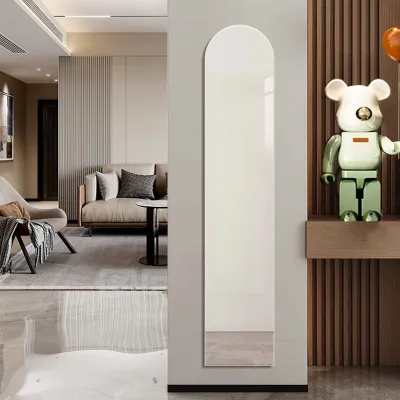
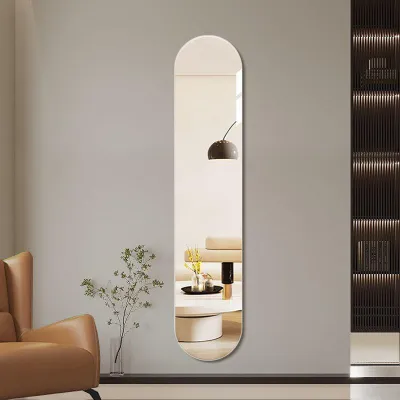
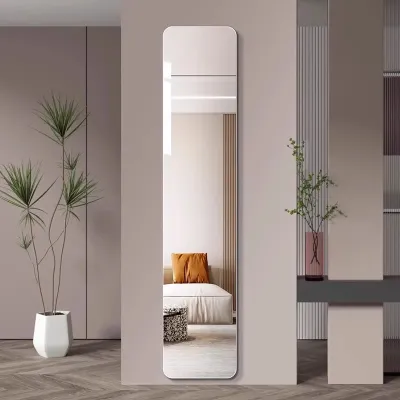
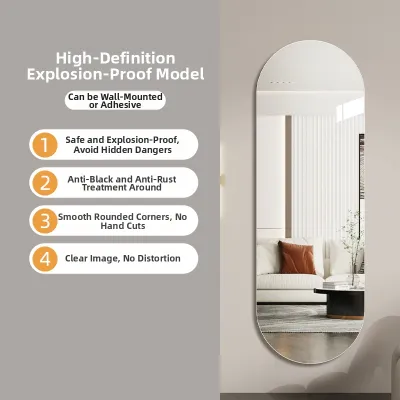
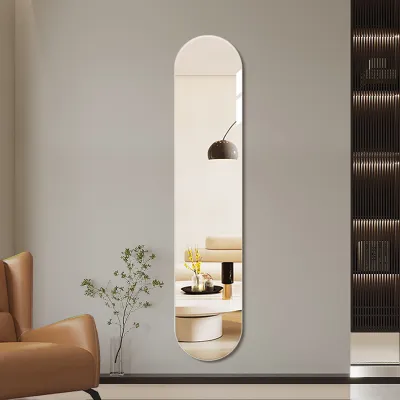
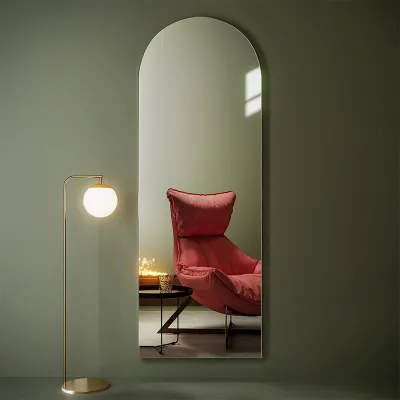
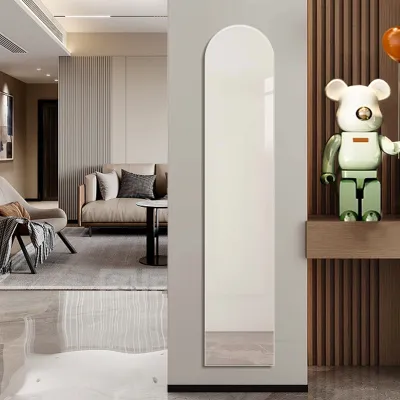
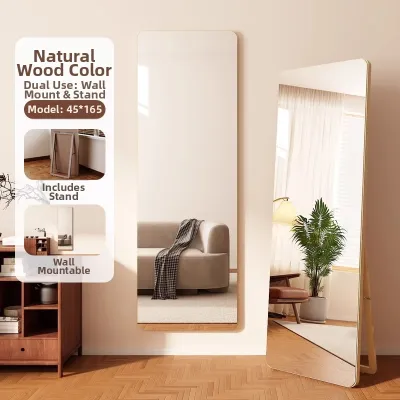
Prices are valid at publication and may change. Please refer to the product page for the latest price.
Furthermore, minimizing visual clutter is paramount in compact living. Small apartments can quickly feel overwhelmed by too many textures, colors, and materials. Frameless mirrors act as neutral architectural elements rather than additional pieces of furniture. They provide all the spatial benefits of a large reflective surface without adding to the visual noise of the room, maintaining a clean, minimalist aesthetic that makes any space feel instantly larger.
Key Selection Criteria for Small Apartments
Choosing a frameless mirror for a compact home requires careful attention to technical specifications to ensure both safety and aesthetic success.

- Size and Proportion: Homeowners often make the mistake of buying mirrors that are too small, which can look floating and disjointed. To successfully anchor a room, a wall mirror should ideally cover 50% to 70% of the wall width it occupies, or align closely with the width of the furniture below it, such as a sideboard or entryway console. Always measure your wall space carefully, leaving at least 10 to 15 centimeters of breathing room from the edges of adjacent walls or door frames to prevent a cramped look.
- Glass Thickness and Edge Finish: Standard retail mirrors are often 3mm to 4mm thick, which is lightweight but prone to slight warping over large spans, creating a distorting 'funhouse' effect. For a premium, flat reflection, opt for 5mm or 6mm high-quality float glass. Because there is no frame to hide raw edges, the edge finish is critical for safety and aesthetics. Polished edges are flat, smooth, and safe to touch, offering a ultra-modern look. Beveled edges feature an angled cut along the perimeter (typically 10mm to 25mm wide) that catches and refracts light, providing a subtle, built-in border effect without physical bulk.
- Mounting Hardware: Frameless mirrors require robust mounting mechanisms. Look for pre-installed heavy-duty D-rings, French cleats, or J-channels. French cleats are highly recommended for larger mirrors because they distribute the weight evenly across the wall and allow for easy horizontal adjustments. J-channels or mirror clips are excellent for a flush mount but require precise leveling during installation. Always verify the maximum weight capacity of the hardware before hanging.
- Distortion-Free Guarantee: High-quality mirrors utilize copper-free silver backing on premium float glass. Cheap glass often contains impurities or uneven thicknesses that warp reflections when viewed from an angle or from a distance. Ensure the product specifications explicitly guarantee distortion-free glass, which is crucial in bright, open living areas.
- Backlit and LED Options (Electrical Safety): If you opt for an LED backlit frameless mirror to add depth and ambiance, you must verify the electrical specifications. Ensure the built-in LED driver is compatible with Singapore's 220-240V electrical grid and carries the appropriate local electrical safety certifications (such as the Safety Mark). For fixed wiring or hardwired installations, always engage a licensed electrical worker (LEW) to handle the connections safely.
Recommended Frameless Mirror Styles for Space Enhancement
Our selection methodology focuses on styles that actively manipulate light, alter spatial perception, and fit within standard Singapore residential layouts. The following categories represent the most effective designs, featuring real, locally available options or customizable specifications from Singapore glass specialists.
Oversized Leaning Floor Mirrors
Leaning a tall, oversized mirror against a wall creates an upward-tilted reflection. This angle captures more of the ceiling and high wall areas, visually raising the height of the room and extending the floor plane. It is highly effective in narrow HDB corridors or bedroom corners where vertical space is underutilized.
Because these mirrors are heavy and sit on the floor, they must be secured. Always use anti-tip wall straps anchored into the wall, and ensure the base has non-slip rubber pads to prevent sliding on polished porcelain tiles or vinyl flooring.
For a premium local option, look for a custom 180cm by 80cm frameless mirror with a 5mm thickness and polished edges from local glass contractors (such as Glass-Contractor.com.sg or Seng Kwong Glass). These custom pieces can be fitted with safety backing film, which holds the glass fragments together in the rare event of breakage, making them incredibly safe for homes with children or pets.
Beveled Edge Wall Mirrors
The angled perimeter of a beveled mirror acts as a prism, catching light and reflecting it at different angles. This creates a brilliant border effect that defines the mirror’s shape without adding physical weight, making it a perfect fit for a dining area opposite a pendant light.
Beveled edges are delicate. When installing with metal clips or J-channels, ensure they are lined with rubber or felt to avoid chipping the glass. Alternatively, specialized mirror mastic (adhesive) can be used for a permanent, flush-to-wall mount, but this requires professional application and is difficult to remove.
A classic option available in Singapore is the ‘IKEA LÄRBRO’ mirror, which features clean, frameless lines and a simple mounting system. For a more dramatic look, local glass merchants can custom-cut a rectangle mirror (such as 60cm by 90cm) with a wide 25mm bevel, adding a touch of traditional elegance to a modern entryway.
Round and Organic Shape Mirrors
Most HDB flats and condos are dominated by hard, right angles—square rooms, rectangular doors, and blocky built-in cabinets. Round, oval, or organic (pebble-shaped) frameless mirrors break up these rigid lines. This softening effect makes the room feel more fluid, relaxed, and spacious.
Curved edges require highly precise CNC polishing to ensure there are no sharp points or micro-fractures. When handling organic shapes, take extra care as the center of gravity may not align with the physical center of the mirror, making leveling during installation slightly more complex.
For a stylish organic design, the ‘HipVan Asymmetrical Frameless Mirror’ series offers beautiful, fluid shapes that mimic natural pebbles. Alternatively, a classic 80cm diameter round frameless mirror with a polished edge from a local supplier like Masons Home Decor provides a clean, floating look that works beautifully above a bathroom vanity or a living room console.
Grid and Panel Mirror Arrangements
Transporting a single giant sheet of glass (e.g., 2.4m by 1.2m) into an HDB flat is often impossible due to elevator height restrictions and narrow stairwells. A grid or panel arrangement solves this. By mounting multiple smaller square or rectangular frameless mirrors side-by-side, you create a stunning ‘window’ effect that dramatically expands the room without the logistics of a single massive pane.
You can opt for a seamless flush grid (where panels touch) or a spaced grid (leaving a 5mm to 10mm gap between panels). Spaced grids look highly intentional and modern. Use consistent spacing spacers during installation to maintain perfect alignment.
The ‘IKEA LOTS’ mirror tiles (30cm by 30cm, sold in packs of 4) are a staple for this style in Singapore. They are lightweight, highly affordable, and can be configured into infinite grid patterns using double-sided adhesive tape (for lightweight applications) or mirror mastic for permanent fixtures on solid walls.
Safe Installation and Placement in HDBs and Condos
Installing a heavy frameless mirror in a Singapore home requires a safety-first approach, taking into account wall types, weight limits, and environmental factors.
- Wall Type Identification: Before drilling, you must identify your wall material. HDB internal walls are typically solid concrete or precast panels, which require a hammer drill and heavy-duty masonry wall plugs (such as Fischer plugs) to hold heavy loads. Condo walls, especially partition walls dividing bedrooms or hallways, are frequently hollow drywall (gypsum board). Drywall cannot support heavy frameless mirrors using standard screws; you must locate the timber or metal studs behind the drywall using a stud finder, or use heavy-duty metal toggle bolts. Tiled walls (such as in bathrooms) require specialized diamond-tipped drill bits to prevent cracking the tiles.
- Weight Limits and Professional Help: If your frameless mirror weighs more than 15kg, or if you are mounting it in a high-traffic zone (like a narrow entryway) or above a sofa, DIY installation is not recommended. Always consult a qualified local handyman or glass specialist. For fixed wiring, damp bathroom environments, or suspended overhead loads, professional installation is crucial to ensure safety and prevent catastrophic falls. Always isolate any nearby electrical conduits before drilling into walls.
- Placement Strategy: To maximize the spatial illusion, place the mirror opposite a primary light source—such as a balcony sliding door or a large window. This bounces natural light deep into the flat. Avoid placing mirrors directly opposite cluttered areas (like open shoe racks or laundry zones), as this will only double the visual clutter. Also, be mindful of direct sunlight paths to prevent harsh, blinding glare at certain times of the day.
- Maintenance and Care: Frameless mirrors are uniquely vulnerable to 'desilvering'—a chemical reaction where moisture attacks the silver backing, causing unsightly black spots along the edges. This is highly common in Singapore's humid climate. To prevent this, never spray glass cleaner directly onto the mirror. The liquid can run down the glass and pool at the bottom edge, seeping into the backing. Instead, spray a microfiber cloth with cleaner and wipe the glass, leaving the edges completely dry.
Frequently Asked Questions (FAQ)
How do I clean the edges of a frameless mirror without damaging them?
To clean the edges safely, spray a clean microfiber cloth with a mild, ammonia-free glass cleaner or a 1:1 mixture of water and white vinegar. Wipe the center of the mirror first, then gently clean the edges. Immediately follow up with a dry microfiber cloth to buff away any remaining moisture along the polished or beveled perimeter. Never let liquid sit on the edges, as this leads to desilvering.
Can I install a heavy frameless mirror on a hollow drywall partition?
Heavy mirrors (over 10kg) should not be hung on drywall using standard plastic anchors. You must locate the structural studs using a stud finder and screw the mounting brackets directly into them. If no stud is available at your desired position, use heavy-duty metal toggle bolts (such as Snaptoggles) rated for the mirror’s weight, or hire a professional to reinforce the wall partition.
Community discussion
Share your experience or ask a question. Comments are reviewed before publication.