
In compact urban homes, space is the ultimate luxury. Whether you are living in a cozy HDB flat, a modern condominium, or a multi-story terrace house in Singapore, maximizing the perception of square footage is a primary design goal. While knocking down walls is costly and structurally limiting, there is a simpler, highly effective design tool at your disposal: the full body mirror.
A strategically placed, high-quality full body mirror does far more than offer a spot to check your outfit before heading out. It acts as an architectural window, bouncing natural light into dim corners, doubling the visual depth of narrow corridors, and creating the illusion of an expansive, airy layout. To achieve these space-enhancing benefits without compromising on style, you must understand how to select the right mirror, where to source the best designs in Singapore, and how to position and install them safely in your home.
How to Choose a Space-Enhancing Full Body Mirror
Selecting a mirror that successfully enlarges a room requires looking beyond basic aesthetics. The interaction between light, glass, frame design, and spatial dimensions determines whether a mirror truly opens up a room or simply becomes another piece of heavy, light-absorbing furniture.
Products mentioned in this guide
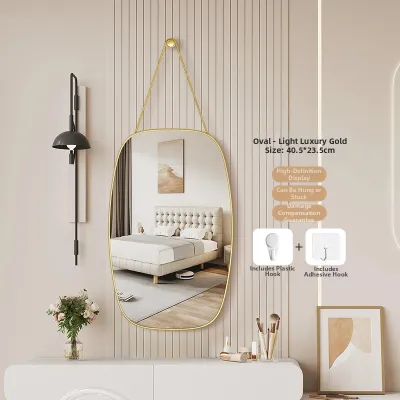
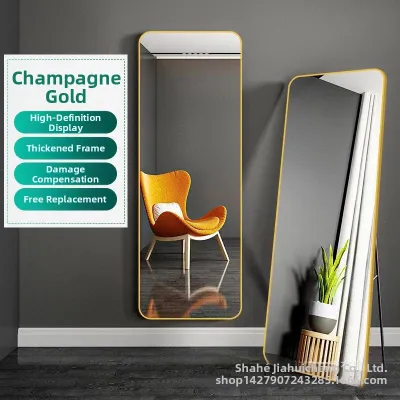
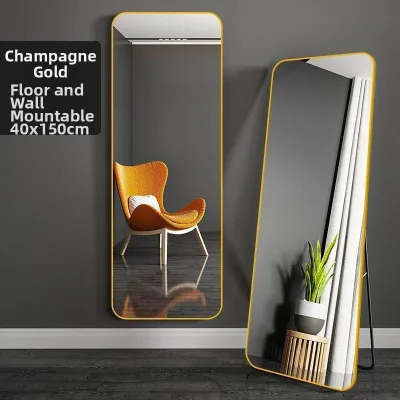
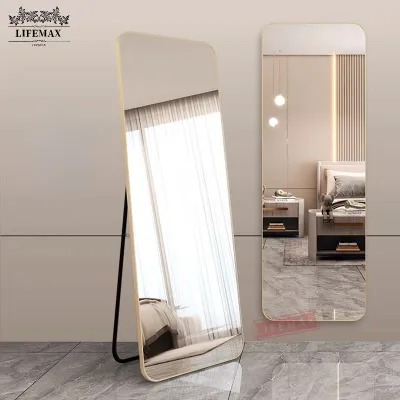


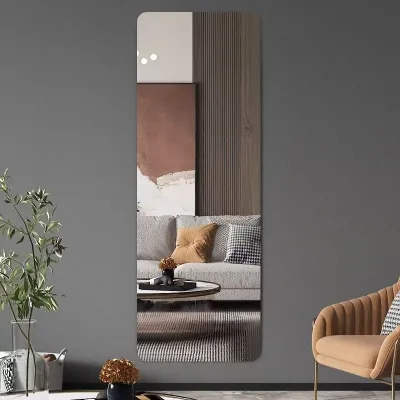
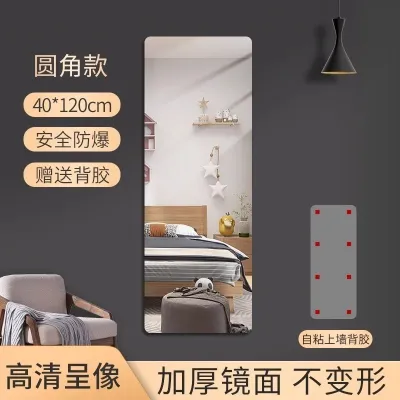
Prices are valid at publication and may change. Please refer to the product page for the latest price.
The Optical Principles of Space Enhancement
At its core, a mirror expands a room by manipulating light and perspective. When natural light from a window strikes a mirror, it obeys the law of reflection, bouncing back into the room at the same angle it entered. This effectively doubles the light source, making dark rooms feel brighter and more open.
To maximize this effect, the choice between frameless and framed designs is critical. Frameless mirrors offer an uninterrupted transition between the wall and the reflection. Because there is no solid border to catch the eye, the boundary of the room seemingly disappears, creating a seamless sense of continuous space. Conversely, mirrors with thin, minimalist frames act like indoor windows. A slender frame in matte black, brushed brass, or light oak frames the reflected view, tricking the brain into perceiving a whole new room or outdoor vista just beyond the glass.
Determining the Minimum Practical Dimensions
To get a true head-to-toe reflection without awkward bending or backing up, the mirror must meet specific dimensional thresholds. As a rule of physics, a mirror must be at least half the height of the tallest user to display a full-body reflection, provided it is positioned correctly. However, in compact Singaporean living spaces where viewing distances are short, a larger surface area is highly beneficial.
For standard bedrooms and entryways, look for a mirror that is at least 150 centimeters tall and 45 centimeters wide. If you are placing the mirror in a narrow hallway where you can only stand a meter or two away, increasing the width to 60 centimeters or more is highly recommended. This wider profile prevents a cramped, “tunnel” effect and ensures you do not have to squeeze against the opposite wall to see your entire silhouette.
Frame Materials and Visual Weight
In typical Singaporean apartments, every piece of furniture contributes to the overall “visual weight” of the room. Visual weight refers to how much attention an object demands and how heavy it feels within the interior composition.
- Metal Frames: Slim aluminum, steel, or brass frames offer exceptional structural rigidity with minimal thickness, often measuring less than one centimeter across. This ultra-thin profile keeps the visual weight incredibly low, making metal-framed mirrors ideal for minimalist, modern, or industrial interiors.
- Wood Frames: Teak, oak, and walnut frames bring natural warmth and texture, aligning beautifully with Scandinavian, Japandi, or mid-century modern ethics. However, wood frames are naturally thicker and carry more visual weight. To keep the space feeling open, opt for light-colored woods with tapered or rounded edges rather than bulky, dark-stained block frames.
- Acrylic and Resin Frames: These modern materials allow for playful, organic, and wavy shapes that serve as excellent decorative statements. While lightweight, their wider profiles can dominate a small wall, so they are best reserved for areas where the mirror is intended to be the primary design focal point.
Glass Quality and the Prevention of Desilvering
Not all mirror glass is created equal. Cheap, low-grade mirrors often use thin glass that flexes within the frame, resulting in a subtle “funhouse” distortion that ruins both the reflection and the illusion of depth. For a perfectly flat, true-to-life reflection, ensure the glass is at least 4 to 6 millimeters thick.
Furthermore, the backing material of the mirror is highly consequential, especially in Singapore’s tropical, high-humidity climate. Standard mirrors are often aluminum-backed, which is cost-effective but highly susceptible to oxidation when exposed to moisture in the air. Over time, this oxidation causes “desilvering”—the unsightly black spots and peeling that typically start at the edges of the glass.
To ensure your investment lasts, look for silver-backed mirrors, ideally those labeled as copper-free. Copper-free silver mirrors feature multiple protective layers that resist moisture and chemical corrosion, ensuring the reflective backing remains pristine and distortion-free for years.
Where to Find Stylish Full Body Mirrors in Singapore
Singapore offers a diverse retail landscape for home decor, ranging from global furniture giants to bespoke local glass craftsmen. Knowing where to look based on your design preferences and budget will streamline your search.

Mainstream Furniture Retailers
For homeowners seeking reliable, accessible, and highly functional designs, mainstream furniture retailers are an excellent starting point. Brands operating in this space specialize in clean, Scandinavian, and contemporary minimalist aesthetics that integrate effortlessly into standard HDB and condominium layouts.
These retailers typically offer standardized sizes with thin metal or light wood frames. Because they produce in larger volumes, their mirrors are highly cost-effective and come with standardized mounting hardware. If your goal is a clean, fuss-free mirror that does its job without overwhelming the room, these mainstream collections provide excellent value and predictable quality.
Premium Decor Boutiques
If you want your full body mirror to serve as a dramatic focal point or an artistic statement piece, premium decor boutiques are the ideal avenue. These stores curate unique, artisanal, and high-end designs that feature premium materials such as solid reclaimed teak, hand-brushed brass, or intricate vintage-inspired carvings.
In these boutiques, you will find mirrors with arched tops, asymmetrical organic shapes, and oversized dimensions. While these pieces carry a higher price tag, their superior craftsmanship, heavy-duty frames, and distinct design languages make them perfect for anchoring a living room, dining area, or a spacious master suite.
Custom Glass and Mirror Specialists
For unique architectural challenges—such as a dark, narrow entryway that requires a seamless wall-to-wall mirror, or an awkwardly shaped structural pillar that you want to clad in reflective glass—custom specialists are the ultimate solution. Local glass merchants and mirror fabricators can cut copper-free silver mirrors to your exact specifications.
Custom specialists can provide specialized edge treatments, such as elegant beveled borders, and can handle complex installations like floor-to-ceiling mounting. While this route requires precise on-site measurements and professional installation, it offers an unmatched ability to transform a cramped, dark corner into a bright, seemingly boundless space.
A Strict Pre-Purchase Verification Checklist
Before finalizing your purchase from any retailer, protect your investment by verifying these critical product specifications:
- Exact Dimensions: Measure your intended wall space twice. Account not just for the glass, but for the outer boundaries of the frame.
- Total Weight: Ensure you know the weight of the mirror. This dictates whether your wall can support it and what type of mounting hardware is required.
- Backing Material: Confirm that the mirror is silver-backed and copper-free to withstand Singapore's humidity.
- Edge Finishing: If opting for a frameless design, ensure the edges are polished or beveled to prevent cuts and chipping.
- Safety Film: Check if the mirror includes an explosion-proof safety film on the back, which holds the glass shards together in the rare event of breakage.
Navigating Delivery and Logistics in High-Rise Homes
Oversized full body mirrors are incredibly fragile and difficult to transport. When ordering, do not overlook the logistical constraints of high-rise living in Singapore.
Always measure your building’s passenger lift dimensions, including the door height and internal depth, before ordering a mirror taller than 1.8 meters. If the mirror cannot fit into the lift, delivery personnel will have to carry it up the stairwell, which often incurs steep manual handling fees per floor. Additionally, carefully review the retailer’s return and transit-damage policies. Inspect the mirror thoroughly upon delivery for any hairline cracks, chips, or silvering defects before signing the acceptance form.
Placement and Styling Strategies to Maximize Room Size
Where you place your mirror is just as important as the design of the mirror itself. Poor placement can result in distracting glare or double the appearance of household clutter, while strategic positioning can completely transform your home’s atmosphere.
Optimal Placement Zones for Light and Depth
To make a room feel significantly larger, identify areas where the mirror can interact with light and architectural lines:
- Opposite Windows: Placing a full body mirror directly opposite or adjacent to a window is the most effective way to brighten a room. The mirror catches incoming natural light and bounces it deep into the interior, illuminating dark corners and making the entire space feel open and airy.
- Narrow Hallways: Long, windowless corridors can feel claustrophobic. Mounting a series of vertical mirrors or a single long horizontal mirror along one wall breaks up the solid surface, widening the visual path and making the hallway feel twice as wide.
- Adjacent to Focal Points: Position your mirror so it reflects a beautiful part of your home, such as a well-styled dining table, a lush indoor houseplant, or an elegant piece of art. This duplicates the visual interest, creating a sense of layers and depth.
Leaning Floor Mirrors vs. Wall-Mounted Setups
Both installation styles offer distinct aesthetic and functional advantages, but they impact your floor plan differently.
| Feature | Leaning Floor Mirrors | Wall-Mounted Mirrors |
|---|---|---|
| Aesthetic | Casual, relaxed, contemporary, and artistic. | Clean, structured, formal, and permanent. |
| Floor Space | Consumes a small footprint on the floor. | Leaves the floor completely clear; ideal for walkways. |
| Flexibility | Easy to move and reposition around the home. | Fixed in place; moving requires patching and painting. |
| Safety | Requires secure wall tethers to prevent tipping. | Highly secure when mounted with correct wall anchors. |
Angling Leaning Mirrors to Enhance Ceiling Height
If you choose a leaning floor mirror, you can use its natural tilt to your advantage. Because a leaning mirror rests at a slight upward angle, its reflection points toward the ceiling and the upper portion of the opposite walls rather than the floor.
In standard HDB flats where ceiling heights hover around 2.6 meters, this upward reflection tricks the eye into focusing on the vertical volume of the room. By reflecting the ceiling and upper walls, the mirror draws the gaze upward, making the room feel significantly taller and loftier.
Pitfalls to Avoid: Glare and Visual Noise
While mirrors are excellent tools for space enhancement, improper placement can create visual discomfort. Avoid placing a mirror where it directly reflects high-clutter areas, such as open shoe racks, utility closets, or the kitchen sink. Doubling the view of clutter simply doubles the visual noise, making the room feel chaotic rather than spacious.
Additionally, be mindful of harsh light sources. Avoid placing a mirror directly opposite a television screen or a powerful, unshaded spotlight. This can create blinding, uncomfortable glare that disrupts your comfort and ruins the relaxing ambiance of your living space.
Installation, Safety, and Maintenance Guidelines
Because full body mirrors are heavy, fragile, and made of glass, safety must be your top priority during installation and daily maintenance.
Structural Requirements for Wall-Mounting
Before hanging a heavy mirror, you must identify the composition of your wall. In Singapore, home walls generally fall into two categories:
- Reinforced Concrete (Structural Walls): Common in HDB structural columns and household shelters (bomb shelters). These walls are incredibly solid and require a rotary hammer drill and heavy-duty masonry wall plugs (such as Fischer plugs) to secure mounting screws.
- Drywall or Partition Walls: Often used to divide bedrooms in newer apartments. Drywalls cannot support the weight of a heavy mirror on their own. You must use a stud finder to locate the internal timber or metal studs and screw directly into them, or use specialized heavy-duty hollow-wall toggle bolts.
Warning: Never attempt to hang a heavy full body mirror using standard adhesive strips, double-sided tape, or simple picture-hanging nails. Over time, humidity and weight will cause the adhesive to fail, leading to catastrophic breakage and potential injury.
The Necessity of Anti-Tip Straps for Leaning Mirrors
If you opt for a leaning floor mirror, do not simply prop it against the wall and walk away. Vibrations from heavy footsteps, slammed doors, or vacuuming can cause the base of the mirror to slide outward, leading to a fall.
Always install anti-tip straps or wall tethers. These heavy-duty nylon or metal straps screw into the back of the mirror frame and anchor securely into the wall behind it. They remain completely hidden from view while ensuring the mirror cannot tip forward, providing essential safety for households with children, pets, or high foot traffic.
Knowing When to Call a Professional
If your mirror weighs more than 15 kilograms, if you are mounting it on a fragile drywall, or if you are dealing with an oversized, custom architectural piece, do not attempt a DIY installation.
Always check the manufacturer’s installation instructions first. If the instructions conflict with your wall type, or if you are unsure of your wall’s load-bearing capacity, stop and consult a qualified professional installer. Hiring a professional handyman or glass specialist ensures the mirror is mounted level, secure, and in compliance with safety standards, protecting both your property and your family.
Safe, Low-Risk Cleaning and Maintenance Routines
To maintain the crystal-clear clarity of your mirror and prevent premature aging, follow these gentle cleaning steps:
- Dust Regularly: Use a dry, clean, lint-free microfiber cloth to remove loose dust and debris from the glass and frame.
- Avoid Direct Spraying: Never spray glass cleaner directly onto the mirror. The liquid can run down the glass and pool along the bottom edge or seep behind the frame. This moisture can attack the silver backing, leading to rapid desilvering.
- Dampen the Cloth: Spray a small amount of water, a 1:1 mixture of water and isopropyl alcohol, or a dedicated pH-neutral mirror cleaner onto your microfiber cloth until it is slightly damp, then wipe the glass in a tight, S-shaped pattern.
- Protect the Edges: Keep the edges of the mirror completely dry. Avoid using harsh, ammonia-based, or highly acidic cleaners, as these chemicals will corrode the protective backing of the mirror glass.
Frequently Asked Questions (FAQ)
Can a full body mirror be placed in a humid area like a bathroom?
Yes, but you must select a mirror specifically engineered to withstand high-moisture environments. Standard mirrors will rapidly desilver and develop black edges when exposed to bathroom humidity. Look for copper-free silver mirrors that feature sealed, water-resistant backings and rust-proof aluminum or stainless steel frames. Always ensure your bathroom has adequate ventilation, such as an active exhaust fan or open windows, to prevent prolonged condensation from sitting on the mirror surface.
What is the best height for a wall-mounted full body mirror?
As a general rule of thumb, the center of a wall-mounted full body mirror should sit at average eye level, which is approximately 1.5 meters from the floor. To ensure a complete head-to-toe reflection for users of varying heights, the top edge of the mirror should stand at least 1.8 meters from the floor, while the bottom edge should hang no higher than 60 centimeters above the ground. This positioning ensures that even when standing close to the mirror, your entire silhouette remains fully visible.
How do I safely move a large leaning mirror by myself?
Moving a large leaning mirror solo is highly discouraged due to the extreme physical risk of dropping the glass, twisting the frame, or causing structural cracks. Always enlist the help of a partner. For safe transport, use specialized vacuum suction cups to maintain a secure grip, wrap the entire mirror in thick moving blankets, and carry it vertically on its edge. Never carry or transport a large mirror flat, as glass is structurally weakest when horizontal and can easily crack under its own weight during transit.
Community discussion
Share your experience or ask a question. Comments are reviewed before publication.