
A compact room can easily feel restrictive, but strategic interior design choices can dramatically alter your perception of the space. Among the most effective tools for visually expanding a room is the full height mirror. By reflecting light and extending sightlines, a well-placed mirror tricks the eye into perceiving a room that is twice its actual size. Choosing the right style and positioning it correctly can transform a cramped bedroom, narrow entryway, or tight living area into an open, airy sanctuary.
How Full-Height Mirrors Create the Illusion of Space
The human brain relies heavily on visual cues to determine the boundaries of a physical environment. When you look at a solid, dark wall, your brain registers a hard boundary, which can make a small room feel enclosing. Placing a full height mirror against that same wall introduces a secondary plane of depth. This optical illusion effectively doubles the visual volume of the room by reflecting the existing floor, ceiling, and walls, making the physical limits of the space disappear.
Light reflection is the primary mechanism behind this spatial expansion. Mirrors do not generate light, but their highly polished surfaces redirect natural and artificial light waves throughout the room. When sunlight streams through a window and strikes a large mirror, the light bounces back into the darker corners of the space. This increased illumination eliminates shadows that typically make a room feel smaller and more confined.
Products mentioned in this guide
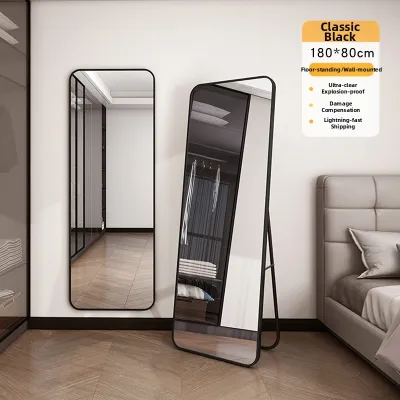
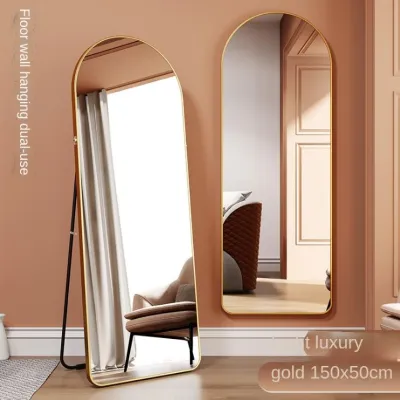
![[SG Seller]Arch Standing Mirror | Wall Mount Mirror | Full Length Mirror | Extra Large Mirror](https://img.lazcdn.com/g/p/fb1d847d21139127646644fd97798cd8.jpg_400x400q80.jpg_.webp)

![[OKLIFE.SG] Floor Stand Mirror Home Bedroom Wall Hanging Mirror Full Length Mirror](https://img.lazcdn.com/g/p/585357ae4f483a530b7e0e7cde45369b.jpg_400x400q80.jpg_.webp)
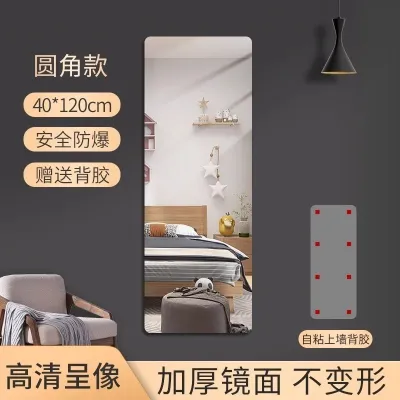
Prices are valid at publication and may change. Please refer to the product page for the latest price.
To maximize this effect, you must focus on what the mirror is reflecting. Positioning a mirror to capture a well-lit area, an outdoor view, or an open doorway creates a sense of continuity. Conversely, placing a mirror where it reflects a dark, unused corner or a cluttered shelf will only duplicate the visual noise, defeating the purpose of the installation. The goal is to reflect openness and light, thereby extending the room’s natural boundaries.
What to Look for When Choosing a Space-Enhancing Mirror
Selecting a mirror that successfully enlarges a room requires careful attention to dimensions, frame design, and material quality. A mirror that is too small will function merely as a decorative wall hanging rather than a spatial expander, while a poorly constructed mirror can distort the reflection and ruin the illusion.

Proportions and Scale
To create a convincing illusion of space, the mirror must have sufficient height and width to dominate a portion of the wall. Ideally, a full-height mirror should stand at least 160 to 180 centimetres tall, allowing most individuals to see their entire reflection with ample headspace. In rooms with standard ceilings, matching the mirror’s height to the room’s proportions is crucial. A taller mirror draws the eye upward, emphasizing vertical space and making low ceilings feel significantly higher.
Frame Thickness and Color
The frame of a mirror acts as a visual border. In a compact room, a thick, heavy, or dark frame creates a distinct boundary that stops the eye, highlighting the physical limits of the mirror and the wall. To maintain a seamless transition between the reflected image and the actual room, opt for frameless designs or mirrors with incredibly slim profiles. If you prefer a framed look, select light-colored materials such as brushed brass, champagne gold, light oak, or painted white wood. These tones blend easily with neutral wall colors, minimizing visual clutter.
Glass Quality and Thickness
Large mirrors are highly susceptible to physical distortion if the glass is too thin. Cheap, lightweight mirrors often use 3mm-thick glass, which can easily bend or warp within the frame, creating a “funhouse” effect that immediately breaks the illusion of depth. For a perfectly flat, warp-free reflection, choose a mirror made from high-quality, copper-free silver glass with a thickness of at least 5mm or 6mm. This ensures a crystal-clear reflection that accurately replicates the room’s dimensions.
Recommended Full-Height Mirror Styles for Compact Rooms
Different mirror styles offer distinct functional and aesthetic benefits. Understanding how these styles interact with your room’s layout will help you select the ideal design for your space.
Frameless Floor Mirrors for Seamless Expansion
Frameless floor mirrors offer the most direct path to visual expansion because they lack any bordering elements. Without a frame to interrupt the view, the glass blends directly into the surrounding wall, creating a seamless transition between the real room and its reflection. This edge-to-edge glass design maximizes the reflective surface area, allowing the maximum amount of light to bounce back into the room.
These minimalist designs are incredibly versatile, fitting effortlessly into modern, contemporary, or Scandinavian interiors. To achieve a built-in, architectural look, place a large frameless mirror flush against a solid wall. This placement makes the mirror look like an intentional glass partition or an opening into an adjacent room, rather than an afterthought.
Arched Leaning Mirrors to Soften Boxed Rooms
Many compact rooms, particularly in modern apartments and standard HDB layouts, suffer from rigid, boxy architecture dominated by sharp angles and straight lines. An arched leaning mirror features a curved top that introduces organic shapes into the space, softening the room’s overall aesthetic and breaking up the monotony of rectangular walls.
The curved top of an arched mirror naturally draws the eyes upward, mimicking the architectural lines of vaulted ceilings or classic doorways. When leaned casually against a bedroom wall, this style adds a relaxed, layered depth without looking overly formal. However, because leaning mirrors rest on the floor at an angle, you must ensure you have at least 10 to 15 centimetres of floor depth clearance at the base so the mirror can lean safely without slipping.
Slim-Profile Wall-Mounted Mirrors for Tight Floor Plans
When floor space is exceptionally tight, every square centimetre counts. In narrow entryways, walk-in wardrobes, or small bedrooms, a floor-standing or leaning mirror might obstruct foot traffic. A slim-profile, wall-mounted mirror solves this issue by floating entirely off the floor, preserving precious floor space while still delivering the full spatial benefits of a large mirror.
Slim metal frames, such as matte black or brushed brass, provide a clean, modern border that defines the mirror without overwhelming the wall. These frames offer structural rigidity to the glass while maintaining a sleek, unobtrusive profile. Because these mirrors are mounted directly to the wall, they require robust structural support and heavy-duty anchors to safely manage the weight of the large glass panel.
Strategic Placement to Maximize the Spatial Illusion
Where you place your mirror is just as important as the style you choose. Proper positioning ensures the mirror interacts optimally with the room’s natural light sources and layout.
- Window Proximity: To maximize brightness, position your full-height mirror on a wall adjacent to or directly opposite a window. This allows the mirror to capture incoming natural light and throw it deep into the room. If your window looks out onto a garden, balcony, or open sky, the mirror will bring that outdoor view inside, visually extending the room's boundaries into the outdoors.
- Reflection Management: Always consider what will be visible in the reflection from key sitting or standing positions in the room. Avoid placing a mirror where it directly reflects a cluttered desk, a laundry basket, or a blank, dark wall. Instead, aim to reflect clean architectural lines, a beautiful light fixture, or a indoor plant. This ensures the reflected space feels organized, calm, and inviting.
- Layout Adaptation: In compact apartments and HDB flats, space-saving layouts require creative mirror placement. Placing a full-height mirror at the end of a narrow hallway creates a "false doorway" effect, making the corridor feel twice as long. In a small bedroom, mounting a slim mirror on the wall opposite the entrance door immediately opens up the space the moment you step inside, preventing that closed-in feeling.
Installation Safety and Wall Compatibility
Because full-height mirrors are heavy, fragile, and potentially hazardous if they fall, safe installation must be your top priority. Before purchasing or mounting a mirror, you must evaluate your wall structure and select the appropriate hardware.
Different wall materials require specific mounting techniques. In Singapore, residential walls typically fall into two categories: structural masonry (concrete, brick, or structural columns) and drywall partitions (gypsum board or fiber cement board used to divide rooms). Drywall partitions cannot support the weight of a heavy mirror using standard screws; they require a stud finder to locate the underlying timber or metal studs, or the use of heavy-duty toggle bolts. Masonry walls require a hammer drill, masonry drill bits, and high-quality wall plugs to ensure a secure hold.
If you choose a leaning mirror, do not rely solely on gravity to keep it upright, especially on slick flooring surfaces like polished tiles, vinyl, or laminate. Always secure the top of a leaning mirror to the wall using discreet anti-tip furniture straps or heavy-duty brackets. This prevents the mirror from sliding forward if bumped by pets, children, or vacuum cleaners.
Always establish clear safety boundaries before starting the installation. If your mirror is equipped with integrated LED backlighting, verify the voltage, wattage limits, and dimming compatibility, and ensure the power is safely isolated before making any electrical connections. If you are unsure of your wall’s composition, if the mirror’s weight exceeds your safe lifting capacity (typically over 20 kilograms for a single person), or if you need to drill into complex surfaces like bathroom tiles, stop immediately. In these scenarios, hiring a qualified professional installer is the safest way to protect your home and ensure your mirror remains securely mounted for years to come.
Frequently Asked Questions (FAQ)
What is the minimum height for a full-length mirror?
To function as a practical full-length mirror, the glass must be at least half the height of the tallest person using it, provided it is mounted at the correct height on the wall. For example, a person who is 180 centimetres tall needs a mirror that is at least 90 centimetres tall to view their entire figure. However, when the goal is to visually expand a small room rather than just check your outfit, you should look for a true full-height mirror. These mirrors typically start at 160 to 180 centimetres in height, as the extra glass area is necessary to draw the eye upward and create a convincing illusion of spatial depth.
Can a large mirror make a small room feel cluttered?
Yes, a large mirror can inadvertently make a small room feel cluttered if it is poorly positioned or heavily framed. Because a mirror duplicates whatever is in front of it, reflecting a disorganized space, a messy wardrobe, or a pile of storage boxes will instantly double the visual clutter in the room. To prevent this, choose a mirror with a frameless or incredibly slim-profile frame to minimize visual weight. Additionally, place the mirror where it reflects clean, open areas, natural light, or minimalist decor, ensuring the reflection contributes to an airy, organized, and spacious feel.
Community discussion
Share your experience or ask a question. Comments are reviewed before publication.