
A compact living space does not have to feel restrictive. In Singapore, where space-efficient HDB flats and cozy condominiums are the norm, interior design choices must work double duty. One of the most effective ways to visually expand a room without undergoing major structural renovations is the strategic use of a full-length decorative mirror. By reflecting both natural and artificial light, these pieces trick the eye into perceiving greater depth, effectively making a small room feel twice its actual size.
Choosing the right mirror, however, involves more than simply picking an attractive frame. To maximize the spatial illusion, you must evaluate several physical characteristics, including frame profile, glass quality, shape, and size. Selecting a piece that complements your existing layout while serving as a functional decor element requires a balance of aesthetic judgment and practical planning.
Key Features to Look for in a Space-Enhancing Mirror
When selecting a full-length mirror to visually expand a compact room, the frame’s profile and color are critical. Heavy, dark, or highly ornate wooden frames carry significant visual weight. They draw the eye directly to the boundaries of the mirror, emphasizing where the room ends and defeating the illusion of continuous space. In contrast, slim metal frames in neutral tones like matte black, brushed gold, or anodized aluminum offer a clean border that defines the mirror without cluttering the wall. Frameless options are even more effective, allowing the reflection to merge seamlessly with the surrounding environment.
Products mentioned in this guide
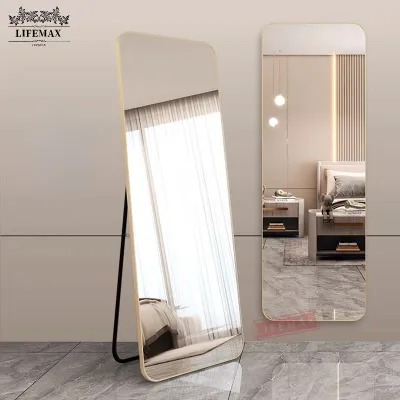
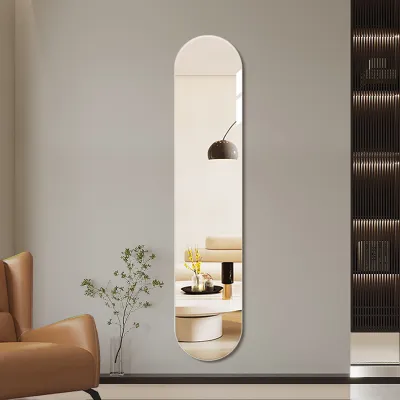
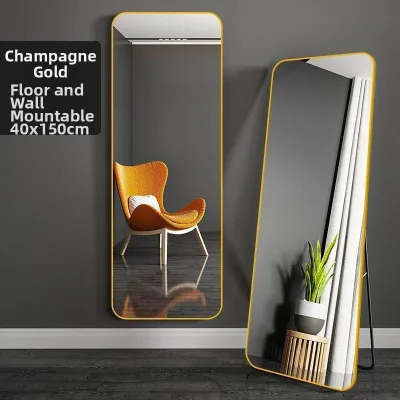
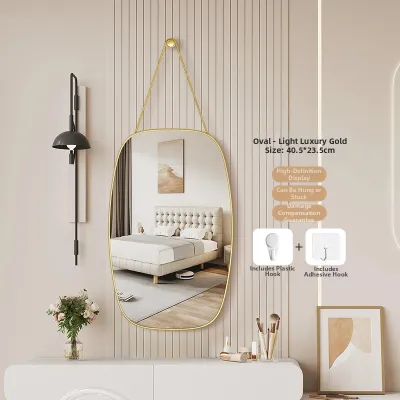
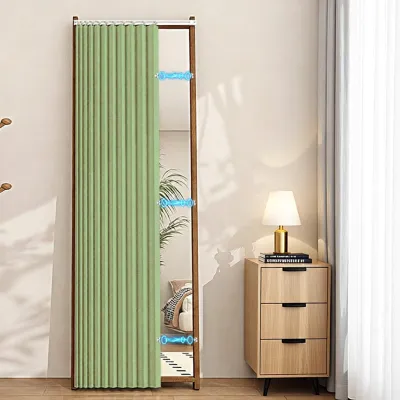


Prices are valid at publication and may change. Please refer to the product page for the latest price.
Glass clarity and tint also play a major role in how light behaves within a space. High-quality, copper-free silver mirrors are the standard for space-enhancing applications. They provide maximum light transmission and a highly accurate reflection, which helps brighten dark corners. Avoid bronze, grey, or smoky tinted mirrors if your primary goal is to make a room feel larger. While tinted mirrors offer a moody, sophisticated aesthetic, they absorb light rather than reflecting it, which can make a small room feel more enclosed.
The shape of the mirror should complement the architectural lines of your home. Standard Singapore apartments often feature rigid, boxy layouts with low or standard ceiling heights of 2.6 to 2.8 meters. Introducing a tall, rectangular mirror emphasizes vertical lines, drawing the eye upward and creating an illusion of loftiness. Alternatively, curved or arched silhouettes break up the monotony of sharp corners and straight walls, softening the overall feel of the room while maintaining functional reflection.
Finally, accurate physical dimensions are non-negotiable. A full-length mirror must be large enough to fulfill its purpose—typically at least 150 centimeters tall—but it must not overwhelm the available wall space. Before purchasing, measure your floor-to-wall clearances carefully. Ensure the mirror’s placement leaves adequate breathing room around its edges and does not obstruct high-traffic pathways, door swings, or cabinet openings.
Top Full-Length Mirror Styles for Compact Rooms
Frameless and Beveled Edge Designs
Frameless mirrors are the ultimate minimalist solution for compact rooms. Because they lack a physical border, these mirrors allow the reflected image to transition directly into the surrounding wall. This lack of visual interruption blurs the boundary between the physical room and its reflection, creating a highly convincing illusion of an adjoining space. They are particularly effective when wall-mounted in narrow entryways or small bedrooms where every millimeter of visual clarity counts.

For those who find completely frameless glass too plain, beveled edge designs offer an elegant compromise. A beveled edge features a subtly angled perimeter that acts as a natural frame by refracting light. This prism-like effect catches ambient light and creates a delicate, shimmering border without adding any physical bulk or visual weight to the room. It provides a touch of classic sophistication that fits modern, transitional, or Scandinavian interior styles.
When sourcing a frameless mirror, pay close attention to the glass specifications. Opt for float glass with a thickness of at least 5 to 6 millimeters. Thinner glass is highly prone to warping, which creates a distorted reflection that instantly ruins the illusion of depth. Additionally, ensure the edges are professionally polished or ground to eliminate sharp, hazardous borders, especially if the mirror will be installed in a home with children or pets.
Arched and Curved Silhouettes
Arched and curved full-length mirrors have become highly popular in contemporary Singapore interior design, and for good reason. The rounded top of an arched mirror mimics the shape of a traditional window or an architectural doorway. This organic curve tricks the brain into perceiving an opening to another room or an outdoor view, which instantly softens the boxy, rigid feel of standard HDB layouts.
To maximize the impact of an arched mirror, pair it with clean, minimalist furniture. Placing a curved mirror above a low-profile console table or alongside a simple indoor plant allows its elegant silhouette to serve as the room’s primary decorative focal point. Keeping the surrounding area free of busy patterns or excessive ornaments prevents the curved shape from competing for visual attention, maintaining a serene and open atmosphere.
When choosing an arched mirror, ensure the width is sufficient to maintain functionality. A width of 50 to 70 centimeters is ideal for comfortable full-body viewing. Additionally, check that the curve of the arch begins high enough so that it does not cut off the reflection of your head or shoulders when standing at a natural viewing distance.
Freestanding and Leaning Floor Mirrors
Leaning floor mirrors offer a casual, contemporary elegance that works exceptionally well in bedrooms and walk-in wardrobes. Unlike wall-mounted mirrors, a leaning mirror is positioned at a slight upward angle, typically between 3 and 5 degrees. This tilt causes the glass to reflect more of the ceiling and the upper portions of the room rather than just the floor. By capturing and projecting the vertical dimensions of the space, it makes the ceiling feel significantly higher.
For renters or homeowners who prefer not to drill permanent holes into their walls, freestanding and leaning mirrors offer unmatched flexibility. They can be easily relocated to different rooms as your layout needs evolve. This portability is particularly useful in multi-functional spaces, allowing you to shift the mirror from a dressing corner to a living area when hosting guests to instantly brighten the social space.
Safety is a paramount consideration for any leaning mirror. Because the mirror relies on gravity and friction, it must have a sturdy, weighted frame to prevent sliding. Look for models equipped with non-slip rubber backing or protective feet on the base. Most importantly, always utilize the manufacturer-provided anti-tip safety straps to anchor the top of the frame securely to the wall, mitigating the risk of accidental tipping on smooth tiled or polished wood floors.
Multi-Functional Mirrored Storage
In ultra-compact apartments, furniture must often serve multiple purposes to conserve precious floor space. Multi-functional mirrored storage units, such as jewelry armoires or shallow shelving units hidden behind a full-length mirror, are excellent space-saving solutions. These pieces consolidate your dressing mirror and storage needs into a single compact footprint, keeping daily accessories organized and out of sight.
Another highly effective application is the integration of full-length mirrored sliding doors on built-in wardrobes. This setup is a staple of Singapore bedroom design. By replacing standard wooden wardrobe doors with floor-to-ceiling mirrored panels, you can visually double the width of a narrow master bedroom. The sliding mechanism also eliminates the need for door-swing clearance, preserving valuable floor space around the bed.
When investing in mirrored furniture or sliding doors, prioritize high-quality hardware. The constant movement of doors and drawers puts stress on hinges and tracks. Look for heavy-duty, soft-close mechanisms that prevent the glass from slamming, which could lead to cracks or structural failure. Ensure the back of the mirror glass is coated with a safety shatterproof film to keep the glass intact in the rare event of an impact.
Strategic Placement to Maximize Light and Depth
To achieve the best optical illusion and lighting benefits, strategic placement is key. The most effective technique is the “opposite the window” rule. By positioning your full-length mirror directly opposite or adjacent to a primary window, you capture incoming natural light and bounce it deep into the room. This not only brightens dark corners but also reflects the outdoor view, effectively creating the illusion of an additional window and making the room feel connected to the outdoors.
However, mirrors are indiscriminate reflectors; they will double whatever is in their line of sight. Placing a large mirror where it directly reflects a cluttered corner, an open laundry basket, or the foot of an unmade bed will visually multiply the mess. This creates a chaotic, disorganized environment that makes the room feel smaller and more cramped. Always position your mirror to reflect clean, visually pleasing areas, such as a well-styled bookshelf, a minimalist wall, or a healthy indoor plant.
In narrow condo entryways and compact HDB corridors, thoughtful placement can completely transform the transition into your home. Placing a full-length mirror on a side wall perpendicular to the entrance widens the tight passage, making the entryway feel spacious and welcoming. It also provides a convenient spot for a final outfit check before leaving the house. Avoid placing a mirror directly facing the front door if you prefer to keep the interior of your home private when the door is opened.
Artificial lighting must also be carefully coordinated with your mirror placement. Avoid positioning harsh, exposed light bulbs directly opposite the glass, as this creates blinding reflections and uncomfortable glare during the evening. Instead, position warm, diffused light sources, such as wall sconces, floor lamps, or track lighting, to the side of or above the mirror. This ensures even, flattering illumination for personal grooming while enhancing the ambient glow of the room.
Safe Installation and Care for Large Mirrors
Securing a large, heavy mirror requires careful planning, especially when dealing with different wall structures. Singapore homes typically feature a mix of solid concrete structural walls and lightweight drywall partitions. For concrete walls, you must use a hammer drill, masonry drill bits, and heavy-duty plastic or metal wall plugs to support the weight. For drywall partitions, you must locate the wooden or metal studs behind the plasterboard, or use specialized heavy-duty hollow-wall toggle bolts. Never rely on standard adhesive hooks or light nails to support a full-length mirror.
Always consult the manufacturer’s installation guide to verify the mirror’s weight limits and recommended mounting hardware. If the mirror is exceptionally heavy (typically over 15 kilograms), is suspended high on a wall, or features a complex mounting bracket, it is highly recommended to hire a qualified professional handyman. When drilling into any wall, always isolate the electrical power at the main distribution board if there is any risk of encountering hidden electrical conduits or water pipes.
Singapore’s tropical, high-humidity climate presents unique challenges for mirror maintenance. High humidity can accelerate the degradation of the silver backing on the glass, a process known as “silvering rot” or “black edge.” This causes unsightly black spots and peeling along the borders of the mirror. To prevent this, ensure your rooms are well-ventilated. Use dehumidifiers or ceiling fans to maintain air circulation, and avoid installing standard mirrors in poorly ventilated bathrooms or damp utility areas unless they are specifically rated as moisture-resistant or copper-free.
Proper cleaning practices are essential to protect both the glass and the delicate backing. Never spray glass cleaners or water directly onto the mirror surface, as the liquid can run down the glass, pool at the bottom edge, and seep behind the frame, causing silvering corrosion. Instead, spray a small amount of mild, ammonia-free glass cleaner onto a soft microfiber cloth, then gently wipe the surface. Use a dry section of the cloth to buff out any remaining streaks, taking extra care around beveled or exposed edges to prevent chipping or moisture entrapment.
Frequently Asked Questions (FAQ)
Can a full-length mirror be too large for a small room?
While large mirrors are highly effective at enhancing the illusion of space, they can overwhelm a compact room if they are not proportioned correctly. A mirror that is too large for its wall can make the space feel cramped rather than open. As a general rule of thumb, leave at least 10 to 15 centimeters of exposed wall space on either side of the mirror to provide visual breathing room. If you want a wall-to-wall reflection, it is best to opt for a custom-fitted, frameless mirrored wall rather than an oversized independent piece.
How do I prevent a leaning mirror from slipping on smooth tiles?
Smooth porcelain, ceramic, or vinyl tiles common in Singapore homes offer very little natural traction, which can cause a leaning mirror to slide out at the base. To prevent this, apply heavy-duty, non-slip rubber adhesive pads or silicone bumpers to the bottom contact points of the mirror’s frame. Additionally, always check the manufacturer’s safety guidelines and install the included anti-tip wall strap or anchor kit. This secure strap anchors the top of the frame to the wall, maintaining the casual leaning aesthetic while preventing any risk of the mirror slipping or falling forward.
Community discussion
Share your experience or ask a question. Comments are reviewed before publication.