
Living in a compact apartment often means finding creative ways to make limited square footage feel open, airy, and inviting. A strategically chosen full-length mirror is one of the most effective tools for achieving this transformation. By reflecting light, extending sightlines, and introducing new geometric angles, the right mirror does more than show an outfit—it fundamentally alters how a room is perceived. Choosing the perfect style involves balancing dimensions, frame designs, and placement to maximize this spatial illusion without cluttering your home.
How Full-Length Mirrors Create the Illusion of Space
The spatial magic of a full-length mirror relies on basic optical physics. When light hits a reflective glass surface, it bounces back into the room rather than being absorbed by dark walls or furniture. This continuous bounce of both natural sunlight and artificial illumination brightens shadows, making tight corners feel integrated into the larger living area. In compact layouts, such as studio apartments or narrow corridors, this increased brightness immediately reduces the feeling of confinement.
Beyond light multiplication, mirrors create a powerful illusion of depth. By reflecting the opposite side of a room, a large mirror tricks the brain into perceiving a “virtual window” or an additional doorway. Instead of your gaze stopping abruptly at a solid wall, the eye travels into the reflected space, effectively doubling the visual length of the room. This depth perception is particularly valuable in boxy, high-rise apartments where architectural variety is limited.
Products mentioned in this guide
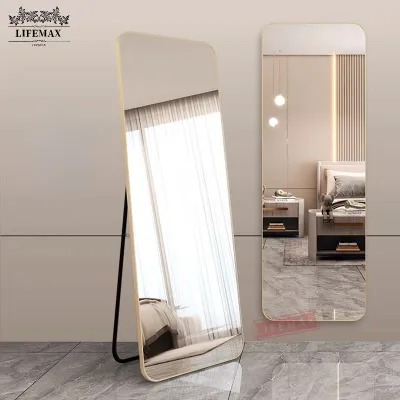
![[SG Seller]Full Length Mirror Standing Mirror Floor mirror bedroom Wall hanging light luxury fitting Mirror](https://img.lazcdn.com/g/p/22976d02973382f28b711003c7f3e190.jpg_400x400q80.jpg_.webp)
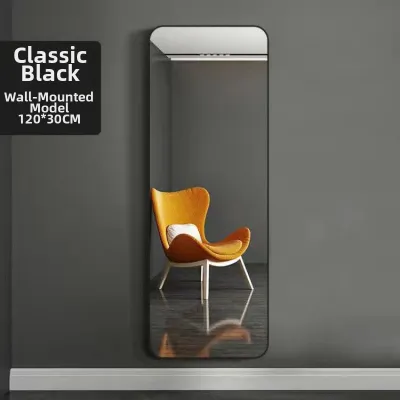
![[OKLIFE.SG]Full-Length Mirror Wall Fitting Mirror Dressing mirror household stereo mirror wall Mounted Floor Mirror](https://img.lazcdn.com/g/p/c85719568091e0f8d8b4db165f311818.jpg_400x400q80.jpg_.webp)
![SG [ READY STOCK ] HD Acrylic soft mirror attached to wall self-adhesive full body dressing mirror non perforated](https://img.lazcdn.com/g/p/10f5a09c2f952c5c8f6fe9a8d334827a.jpg_400x400q80.jpg_.webp)
Prices are valid at publication and may change. Please refer to the product page for the latest price.
What to Look for When Buying a Space-Enhancing Mirror
Selecting a full-length mirror requires careful evaluation of physical specifications to ensure it complements your apartment’s layout.

Size and Proportion To create a convincing illusion of space, height is critical. A true full-length mirror should be tall enough to capture a complete reflection from a reasonable standing distance. As a general rule, the mirror glass should measure at least half the height of the tallest user, though taller is almost always better for spatial expansion. For most standard apartments, a mirror height of 150 cm to 170 cm is ideal. The width should be proportional, typically between 50 cm and 70 cm, to avoid dominating a narrow wall.
Frame Thickness and Material Frames act as visual borders. In small rooms, heavy, ornate, or dark wooden frames can restrict the reflective flow and make the mirror feel like a heavy piece of furniture. To maximize the spatial effect, opt for frameless designs, ultra-thin metal borders, or light-colored frames that blend seamlessly with your wall paint. These minimalist frames reduce the visual weight of the mirror, allowing the reflection to merge naturally with the surrounding environment.
Shape and Edges The silhouette of your mirror dictates how it interacts with the room’s geometry. Rectangular mirrors offer clean, traditional lines that align well with door frames and wall corners, reinforcing structural symmetry. Arched or curved mirrors, on the other hand, introduce organic shapes that break up the rigid, boxy feel of typical apartment rooms. Irregular or asymmetrical shapes can serve as artistic focal points, drawing the eye upward and outward.
Glass Quality and Safety High-definition, distortion-free glass is essential for maintaining a clean and realistic reflection. Inferior glass can warp images, which disrupts the spatial illusion and causes visual fatigue. Look for mirrors with a minimum thickness of 4mm to 5mm to prevent bending. Additionally, because Singapore’s tropical climate brings high humidity, verify that the mirror features a copper-free silver backing or a moisture-resistant coating to prevent black-edge corrosion over time. A shatterproof safety film backing is also highly recommended to prevent hazardous glass shards in the event of an accidental impact.
Best Full-Length Mirror Styles for Small Apartments
Different layouts demand different design solutions. Here is an analysis of the most effective full-length mirror styles for compact spaces, along with their practical advantages and limitations.
Frameless or Minimalist Edge Mirrors
Best For: Dark corridors, narrow entryways, or minimalist interiors where clean lines are preferred.
Frameless mirrors offer the most uninterrupted reflection possible. Because they lack a defining border, the transition from wall to mirror is virtually seamless, making the wall itself seem to disappear. This style is exceptionally efficient at bouncing light across narrow pathways, such as an entryway passage or a hallway between bedrooms.
Pros: This style maximizes the usable reflective surface area, eliminates heavy visual boundaries, and blends effortlessly with any existing interior design theme. It is also generally lighter than heavily framed options, making wall mounting less complex.
Cons & Limitations: The exposed glass edges are inherently more fragile and prone to chipping if bumped. They require precise handling during installation and must be perfectly aligned with the wall surface to prevent gaps or uneven reflections.
Arched and Curved Top Mirrors
Best For: Living rooms, dining areas, or bedrooms with low, flat ceilings where you want to draw the eye upward.
Arched mirrors combine the structural stability of a flat base with a soft, rounded top. This architectural silhouette mimics the look of traditional arched windows, tricking the mind into sensing an opening to the outside world. The curved top breaks up the monotonous horizontal and vertical lines common in modern apartment construction.
Pros: The soft curve adds visual height to a room by encouraging the eye to travel vertically. It introduces an elegant, decorative focal point without requiring a heavy, space-consuming frame.
Cons & Limitations: The tapered upper section reduces the total reflective surface area at the top compared to a standard rectangular mirror. Additionally, the classical aesthetic of an arch may not align with ultra-modern, industrial, or highly angular decor styles.
Leaning Floor Mirrors
Best For: Bedrooms, dressing areas, or rented apartments where drilling holes into concrete walls is restricted or prohibited.
Leaning mirrors rest directly on the floor and tilt slightly backward against the wall. This slight upward angle alters the reflection perspective, capturing more of the ceiling and sky (if placed near a window), which naturally makes the room feel taller and more dynamic.
Pros: This style requires no permanent wall mounting, making it highly flexible and easy to reposition as your layout needs change. It creates a relaxed, layered, and sophisticated aesthetic that works well in cozy bedrooms or living room corners.
Cons & Limitations: Because the base sits away from the wall, a leaning mirror consumes valuable floor space, which can be a drawback in extremely tight rooms. It also presents a tipping hazard, making secure anchoring or anti-tip hardware mandatory, particularly in homes with children or pets.
Mirrored Storage or Furniture Pieces
Best For: Studio apartments, small entryways, or compact walk-in closets where every square meter must serve multiple purposes.
Multi-functional mirrored furniture, such as jewelry cabinets with full-length mirrored doors or slim rotating wardrobes, combines storage utility with optical expansion. These pieces allow you to enjoy the benefits of a large reflective surface without dedicating separate wall or floor space to a standalone mirror.
Pros: This style significantly reduces your overall furniture footprint by consolidating storage and reflection into a single unit. It keeps daily clutter hidden behind the mirror, maintaining a clean visual environment.
Cons & Limitations: The reflective surface is often smaller, narrower, or segmented by cabinet frames. These units are also considerably heavier, bulkier, and more difficult to move or install compared to standard wall-mounted mirrors.
Where to Place Your Mirror for Maximum Impact
Proper placement is just as important as choosing the right mirror style. To amplify space effectively, you must consider what the mirror will reflect and how it interacts with light.
Light Multiplication To double the brightness of your room, position your full-length mirror opposite or adjacent to a primary window. This placement allows the mirror to capture incoming natural light and bounce it deep into the interior, mimicking the presence of a second window. If natural light is limited, place the mirror near an artificial light source, such as a floor lamp or wall sconce, to diffuse warm light across dark corners.
Reflection Management Always pay attention to what lies directly opposite your mirror. Reflecting a cluttered bookshelf, a storage rack, or a busy utility area will double the visual noise, making your apartment feel smaller and more chaotic. Instead, aim the reflection toward clean, open spaces, a piece of minimalist art, or indoor plants. This creates a sense of tranquil depth rather than visual clutter.
Angle and Height For wall-mounted mirrors, the center of the glass should ideally sit at eye level (approximately 150 cm from the floor) to provide a comfortable viewing angle. If you are using a leaning mirror, ensure the tilt angle is subtle—typically between 3 to 5 degrees. A tilt that is too steep will distort the proportions of the room and reflect too much of the ceiling, breaking the illusion of realistic depth.
Installation and Safety Checks for Small Spaces
Installing a large, heavy mirror in a high-rise apartment requires careful preparation to ensure structural safety and prevent damage.
Wall Compatibility Before mounting any mirror, identify the composition of your wall. Many apartments in Singapore feature solid concrete structural walls or brick partition walls, while some newer developments use drywall. Concrete walls require a masonry drill bit, plastic wall plugs, and heavy-duty screws to support the weight of a full-length mirror. Drywall, on the other hand, requires specialized hollow-wall anchors or toggle bolts. Never rely on standard nails or adhesive strips for a heavy glass mirror.
Rental Constraints If you are renting your apartment, check your tenancy agreement regarding drilling rules. For lighter, smaller decorative mirrors, high-quality, damage-free adhesive hooks may be suitable, but they are generally unsafe for heavy, full-length mirrors. If drilling is prohibited, a leaning floor mirror is the safest choice, but it must still be secured to prevent accidental falls.
Anti-Tip Safety Even if a leaning mirror is designed to rest on the floor, it should never be left entirely unsecured. Always install an anti-tip safety strap or a discrete wall bracket. This hardware connects the top or back of the mirror frame to the wall, preventing the mirror from sliding forward or tipping over if bumped by pets, vacuum cleaners, or household members.
Product Verification Before starting any installation, always read the manufacturer’s instruction manual, check the specified weight limits of both the mirror and your mounting hardware, and ensure the power is isolated if drilling near electrical outlets. If you are uncomfortable working with heavy glass or drilling into concrete, consult a qualified local handyman or professional installation service to ensure a secure, level fit.
Frequently Asked Questions (FAQ)
What is the ideal height for a full-length mirror in a small room?
To function effectively, a full-length mirror does not need to stretch from floor to ceiling, but it must be tall enough to reflect your entire figure. The general guideline is that the mirror’s height should be at least half of your actual height. For a household with multiple users, a mirror measuring between 150 cm and 170 cm in height, mounted or positioned so the top edge sits around 180 cm to 190 cm from the floor, will comfortably accommodate everyone while creating a strong vertical sightline that makes the room feel taller.
Can a large mirror make a small room feel cluttered?
Yes, an improperly placed mirror can backfire and make a compact room feel chaotic. This typically happens when the mirror reflects cluttered shelves, laundry areas, or multiple competing patterns in a small space. To prevent this, ensure the mirror reflects a clean, simple view, such as a plain wall, a window view, or a tidy dining area. Avoid placing multiple large mirrors directly opposite each other, as this creates an infinite reflection loop that can feel disorienting and visually overwhelming.
Community discussion
Share your experience or ask a question. Comments are reviewed before publication.