
The best full-length mirrors with storage for compact Singapore apartments are those that maximize vertical space without encroaching on high-traffic walkways. In typical Housing & Development Board (HDB) flats and modern condominiums where bedroom floor space is limited, wall-mounted jewelry cabinets and over-the-door storage mirrors offer the most efficient footprints. For bedrooms with unused corners, a slim, rotating freestanding storage mirror provides multi-directional utility by combining a full-length glass pane, rear shelving, and hanging rods on a compact swivel base.
Selecting the ideal model requires evaluating your bedroom’s layout, your storage needs, and the structural limits of your walls. By choosing a dual-purpose piece, you can eliminate the need for separate dressing tables and accessory organizers, keeping your sleeping area open, bright, and organized.
The Dual Benefit: Maximizing Space and Light in Compact Bedrooms
Modern Singapore apartments, particularly 3-room and 4-room HDB BTO flats, feature bedrooms where floor space is at a premium. In these compact layouts, fitting a queen-sized bed, a wardrobe, and a traditional dressing table can quickly lead to visual clutter and physical obstruction. A full-length mirror with integrated storage addresses this challenge by combining multiple daily functions into a single vertical asset.
Products mentioned in this guide
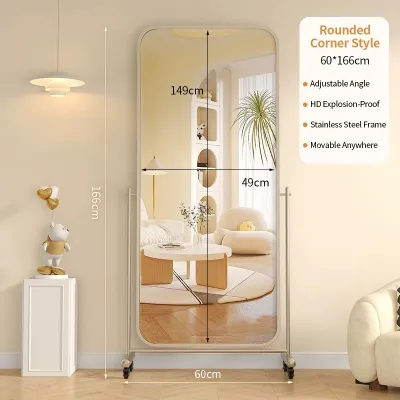
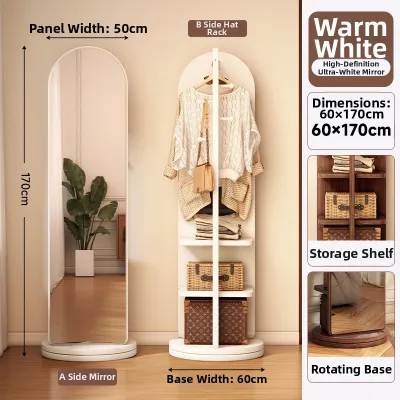
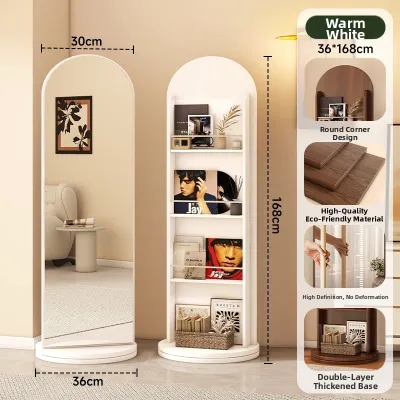
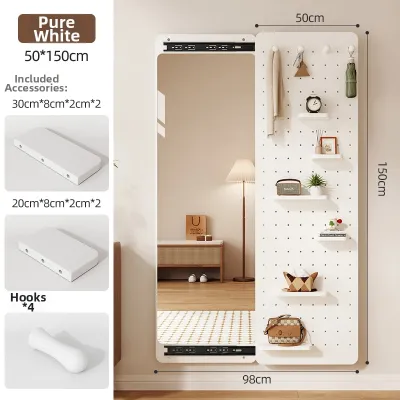
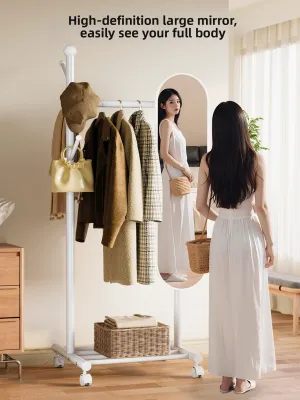
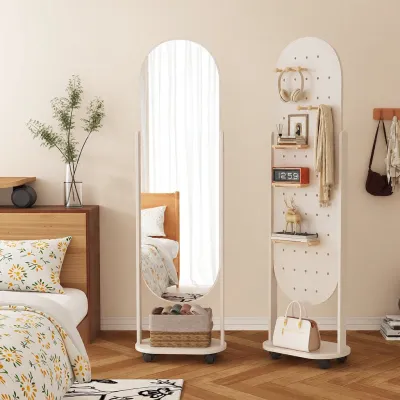
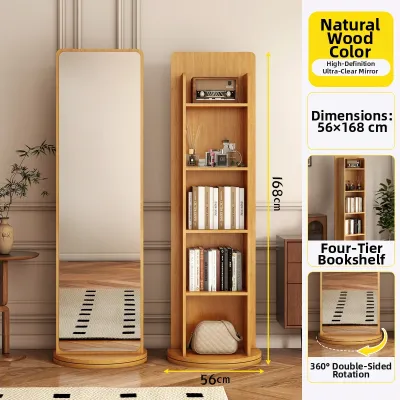
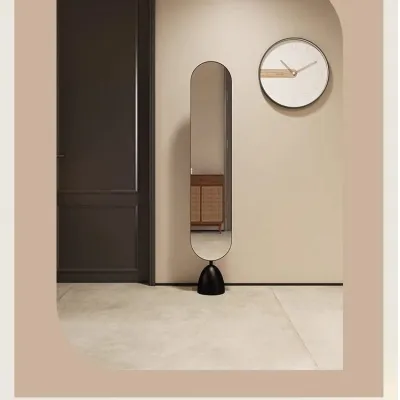
Prices are valid at publication and may change. Please refer to the product page for the latest price.
From a spatial design perspective, mirrors are highly effective tools for visual expansion. By reflecting the room’s interior and bouncing ambient light, a large mirror creates an illusion of depth that makes a tight bedroom feel spacious. This is particularly beneficial in high-rise environments where deep floor plans or adjacent buildings can limit the penetration of natural daylight. Placing a reflective surface strategically opposite or adjacent to a window distributes natural light into darker corners, reducing the reliance on artificial overhead lighting during the day.
Consolidating furniture pieces is a key strategy for maintaining clear pathways. A traditional setup consisting of a freestanding dressing table, a separate jewelry box, and cosmetic shelving can easily consume over one square meter of floor space. A dual-purpose storage mirror replaces all of these items, utilizing vertical wall space or a minimal floor footprint of less than 0.2 square meters. This reduction in furniture bulk preserves the flow of the room, keeping walkways clear and ensuring the bedroom remains a restful, uncluttered sanctuary.
What to Look for in a Space-Saving Storage Mirror
Selecting the right storage mirror for a compact apartment requires a careful balance of physical dimensions, structural safety, and organizational utility. Because space is limited, purchasing a mirror without precise measurements can result in blocked wardrobe doors or cramped walkways.

Dimensions and Proportions: Before purchasing, measure both the floor area and the wall clearance where the mirror will reside. For wall-mounted or over-the-door models, ensure there is at least 60cm to 80cm of clear space in front of the mirror so you can stand back and view your full reflection. If the mirror features a hinged cabinet door, verify that the door swing does not collide with your bed frame, bedside table, or wardrobe. Standard storage mirror cabinets typically range from 30cm to 45cm in width, with depths between 10cm and 15cm.
Storage Depth vs. Capacity: Consider what items you intend to store. Shallow cabinets (around 10cm deep) are ideal for flat accessories, jewelry, makeup, and small skincare bottles. They keep items organized in a single layer, making them easy to find. However, if you need to store bulkier items like hair dryers, handbags, or folded towels, look for models with a base drawer or rear shelving, which typically require a depth of 15cm to 25cm. Be aware that deeper cabinets protrude further from the wall, which can restrict movement in narrow galley-style layouts.
Weight and Mounting Requirements: Full-length storage mirrors are significantly heavier than standard decorative mirrors because of their solid frames, thick glass, and internal shelving. A typical empty cabinet can weigh between 10kg and 20kg; once filled with cosmetics and accessories, the total weight can easily exceed 25kg. It is crucial to evaluate whether your bedroom walls can support this load. Solid concrete walls, common in HDB structural partitions, can handle heavy loads easily when paired with appropriate masonry plugs. In contrast, hollow drywall or gypsum board partitions, often found in newer condo layouts, require specialized heavy-duty hollow-wall anchors or must be secured directly to internal timber or metal studs.
Glass Quality and Safety Backing: Safety is paramount in tight spaces where accidental bumps are more likely to occur. Look for mirrors equipped with an explosion-proof or shatterproof membrane. This safety backing ensures that if the glass is struck and breaks, the shards will remain adhered to the film rather than scattering across the floor, preventing injuries. Additionally, high-definition, copper-free silver glass is recommended, as it resists humidity-induced oxidation (black spots) which is common in Singapore’s humid climate.
Electrical and Lighting Features: If you select a storage mirror with integrated LED lighting, you must verify the electrical specifications. Ensure the power adapter is compatible with Singapore’s 230V voltage and uses a standard Type G (UK 3-pin) plug. Look for components that have been tested and certified under local safety schemes, such as the Enterprise Singapore SAFETY Mark, to prevent electrical hazards. Verify the dimming method (e.g., touch sensor or physical switch) and ensure the power cord can safely reach an electrical outlet without creating a tripping hazard across the bedroom floor.
Best Mirror Types for Small Bedroom Layouts
Different room layouts demand different mirror configurations. Understanding the strengths and limitations of each design type allows you to select a model that complements your existing furniture and architectural constraints.
Jewelry Cabinet Mirrors (Freestanding or Wall-Mounted)
Jewelry cabinet mirrors, also known as armoires, feature a full-length mirror door that opens to reveal a felt-lined storage compartment. This compartment is typically outfitted with specialized hooks, slots, drawers, and shelves designed to hold jewelry, cosmetics, and small accessories.
- Best use cases: These mirrors are excellent for individuals who want to replace a traditional vanity table. They consolidate a dressing mirror and a massive accessory collection into a single, organized vertical unit.
- Pros and cons: The primary advantage is superior organization; items are kept dust-free, organized, and hidden from view, which reduces visual clutter in the bedroom. However, freestanding versions require a dedicated patch of floor space (usually a base footprint of 40cm by 40cm) and require sufficient clearance for the cabinet door to swing open fully. Wall-mounted versions save floor space entirely but require secure wall drilling and permanent placement.
- Key checks: Open the cabinet door and examine the interior layout. Ensure the necklace hooks are high enough to accommodate your longest necklaces without them bunching at the bottom. Check that the ring slots and earring bars match your collection size, and verify if the shelves have protective ledges to prevent cosmetic bottles from sliding off when the door is opened.
Over-the-Door and Door-Mounted Mirrors
Over-the-door storage mirrors utilize the ultimate dead space in a bedroom: the back of the entry door or a built-in wardrobe door. These units hang from heavy-duty metal brackets that hook over the top edge of the door, requiring no drilling into walls.
- Best use cases: This is the ultimate space-saving solution for extremely narrow bedrooms, rental rooms where drilling is prohibited, or galley-style layouts where every centimeter of floor and wall space is already occupied.
- Pros and cons: They require zero floor space and keep the mirror completely flush against a vertical surface. The downside is that opening and closing the bedroom door can cause the cabinet to swing or rattle if it is not securely anchored at the bottom. Additionally, the added weight can strain door hinges over time, and a deep cabinet may prevent the door from opening fully against the adjacent wall.
- Key checks: Measure your door thickness carefully; standard Singapore bedroom doors are typically 35mm to 40mm thick, so ensure the mounting brackets match this dimension. Check that the gap between the top of the door and the door frame is at least 2mm to allow the door to close smoothly with the brackets in place. Finally, ensure the cabinet's depth does not collide with any wall-mounted door stops or light switches behind the door.
Lean-to Mirrors with Shelves or Drawers
Lean-to storage mirrors are designed to stand on the floor and lean back against a wall at a slight angle. While traditional lean-to mirrors offer no storage, modern space-saving variations incorporate open display shelves, hanging rails, or small drawers integrated behind the mirror frame or at the base.
- Best use cases: These mirrors are perfect for creating a stylish, casual dressing zone in a bedroom corner. They are highly suited for displaying frequently used items, such as daily perfumes, handbags, hats, or light jackets.
- Pros and cons: They offer high aesthetic appeal and can make a bedroom feel more relaxed and spacious. Because they are not permanently mounted, they are easy to reposition when you want to rearrange your room layout. However, they provide less concealed storage than closed cabinets, leaving items exposed to dust, and they occupy more floor space due to the angled stance.
- Key checks: Ensure the bottom of the mirror frame is equipped with high-friction rubber or silicone anti-slip pads to prevent the base from sliding forward on smooth flooring like polished marble, vinyl, or laminate. Verify that the lean angle (ideally between 5 and 10 degrees) provides a clear, undistorted head-to-toe reflection from your preferred viewing distance without requiring you to stand too far back.
Placement Strategies for HDB and Condo Bedrooms
Where you place your storage mirror is just as important as the type of mirror you choose. Strategic placement maximizes the visual benefits of the mirror while ensuring the storage compartments remain easily accessible.
Reflecting Natural Light: To make your compact bedroom feel brighter and more open, position the mirror on a wall adjacent to your window. This allows the glass to capture incoming daylight and bounce it across the room. Avoid placing the mirror directly opposite a bright, unshaded window, as this can create intense, blinding glare at certain times of the day, making it uncomfortable to look at and disrupting the room’s ambiance.
Navigating Narrow Walkways: In modern HDB layouts, the walkway between the foot of the bed and the opposite wall is often quite narrow—sometimes as little as 60cm to 70cm. Placing a protruding storage cabinet in this pathway can make the room feel cramped and create a tripping hazard. Instead, opt for a wall-mounted cabinet or an over-the-door mirror that sits flush against the surface. Keep walkways clear by ensuring that any freestanding or rotating mirror is tucked into a corner, away from the primary path of travel.
Utilizing Awkward Alcoves: Many condo and HDB bedrooms feature structural pillars, recessed niches, or awkward corners created by the placement of built-in wardrobes. These dead zones are ideal locations for a freestanding, rotating storage mirror. By placing a swivel mirror in an unused corner, you transform an awkward architectural feature into a highly functional dressing nook. The swivel mechanism allows you to access the rear storage shelves easily and then spin the mirror back into place when finished.
Visual Expansion: When deciding on an angle for your mirror, consider what it will reflect. To maximize the illusion of space, align the mirror so that it reflects the longest line of sight in the room, such as an open doorway or a clean, uncluttered wall. Avoid angling the mirror toward a cluttered desk, an unmade bed, or an open laundry basket, as reflecting disorganization will visually double the clutter, defeating the purpose of a clean, minimalist design.
Safe Installation for Heavy Wall-Mounted Mirrors
Because full-length storage mirrors carry substantial weight, proper installation is critical to prevent structural failure and serious accidents. A falling mirror can cause severe injury and property damage, making safety the top priority during setup.
Identifying Wall Types: Before drilling any holes, you must identify the composition of your bedroom wall.
- Concrete or Brick Walls: These are solid, load-bearing walls common in HDB flats (especially external walls and household shelter walls). They are highly stable and can support heavy wall-mounted cabinets. To install, you must use a rotary hammer drill with a masonry drill bit, followed by plastic wall plugs or expansion anchors.
- Drywall or Partition Walls: These are lightweight, hollow walls often used to separate bedrooms or create walk-in wardrobes in modern condos and renovated HDB flats. They cannot support heavy dynamic loads on their own. For these walls, you must locate the internal timber or metal studs using a stud finder and screw the mounting brackets directly into them. If stud placement does not align with your mirror, you must use specialized heavy-duty toggle bolts or hollow-wall anchors rated for the total loaded weight of the cabinet. Never rely on standard plastic wall plugs in drywall.
Load-Bearing Limits: Always calculate the total weight of your storage mirror, including the items you plan to store inside. Skincare bottles, perfumes, and heavy jewelry add up quickly. Ensure that the mounting brackets, screws, and wall anchors you use are rated for at least 1.5 times the maximum loaded weight of the mirror to provide a safe margin of error.
Professional Boundaries: Do not hesitate to hire a qualified professional handyman or installer if you are uncomfortable with the installation process. Professional assistance is highly recommended if you are mounting a heavy cabinet onto a drywall partition, if you need to work at height, or if you are drilling near light switches or power outlets where there is a risk of hitting concealed electrical wiring or water pipes. Always isolate the electrical power at the main distribution board before drilling into any wall if you suspect wires are nearby.
Anti-Tip Measures: If you choose a freestanding or lean-to storage mirror, do not assume it is stable simply because it stands on its own. These units can easily tip over if bumped, or if a heavy cabinet door is swung open too quickly. Always secure freestanding and lean-to mirrors to the wall using the manufacturer-provided anti-tip straps, safety brackets, or wall anchors. This simple step is non-negotiable for households with children, elderly family members, or pets, ensuring the mirror remains stable under all conditions.
Frequently Asked Questions (FAQ)
Can I mount a heavy storage mirror on an HDB partition wall?
Yes, but you must take specific structural precautions. Standard HDB internal partition walls are typically made of drywall or lightweight concrete panels. To mount a heavy storage mirror safely, you must locate the internal studs (timber or metal framing) using a stud finder and secure the mirror’s mounting brackets directly into them. If the studs do not align with your desired position, you must use heavy-duty toggle bolts or hollow-wall anchors designed for hollow cavities. Never use standard plastic wall plugs, as they will pull out of the drywall under the weight of a heavy cabinet. If in doubt, consult a professional handyman to ensure a secure installation.
How do I prevent a freestanding mirror from tipping over?
To prevent a freestanding or rotating storage mirror from tipping, you must anchor it to the wall using anti-tip hardware. Most high-quality storage mirrors come with nylon safety straps or metal L-brackets. Secure one end of the strap or bracket to the solid frame of the mirror and the other end directly into a wall stud or solid concrete wall using appropriate wall anchors. Additionally, ensure the mirror is placed on a flat, level surface and avoid overloading the top shelves or the cabinet door with heavy items, which can shift the center of gravity and make the unit unstable.
Will a mirror facing the bed or window cause glare?
Yes, a poorly positioned mirror can cause disruptive glare. If placed directly opposite a window, the mirror will reflect intense sunlight into your eyes during the day. If placed directly opposite your bed, it can catch streetlights or early morning sun, disrupting your sleep. To avoid this, position the mirror at an angle or on a wall adjacent to the window rather than directly facing it. This allows the mirror to brighten the room by bouncing ambient light without creating harsh, direct reflections that interfere with your comfort or sleep quality.
Community discussion
Share your experience or ask a question. Comments are reviewed before publication.