
Maximizing the visual square footage of a compact home requires strategic design choices, and few tools are as effective as a standing mirror full of reflective potential. Singaporean residential layouts—such as high-density HDB flats and cozy condominiums—often present challenges with narrow corridors, boxy bedrooms, and limited natural light. A well-chosen full-length standing mirror does not just serve your daily dressing routine; it acts as a passive architectural element that alters your perception of spatial boundaries. By selecting the right style, frame profile, and placement, you can transform a cramped room into an airy, light-filled sanctuary.
While a mirror cannot physically add square meters to your floor plan, it changes how your brain processes the physical limits of a room. Understanding the relationship between glass quality, frame design, and spatial geometry allows you to make an informed purchase that elevates both the functionality and aesthetic of your living space.
The Optical Science: How Standing Mirrors Expand Small Rooms
To understand why a standing mirror full of reflective surface area works so well, it helps to look at the physics of light. Light travels in straight lines and bounces off the reflective silver backing of the glass. In a small room, light often gets trapped in dark corners, making the space feel closed-in and restrictive. When you introduce a large reflective surface, you redirect both natural daylight from windows and artificial light from warm ceiling fixtures across the room. This bounce-back effect illuminates shadowed areas, instantly softening the room’s visual borders.
Products mentioned in this guide
![[Delivered in 1 days]Standing Mirror Full length Mirror Floor Mirror Home Bedroom Large Mirror Hanging Wall Hanging Fitting](https://img.lazcdn.com/g/p/e18709c82d74ad5234f1ada3475c9a3d.jpg_400x400q80.jpg_.webp)
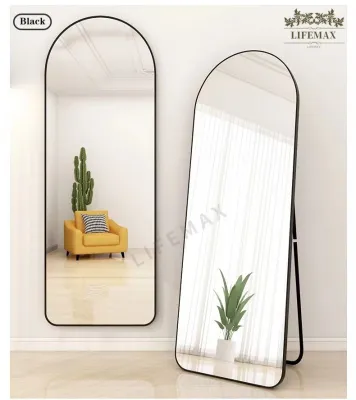
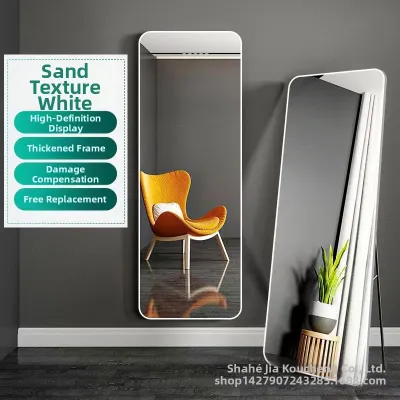
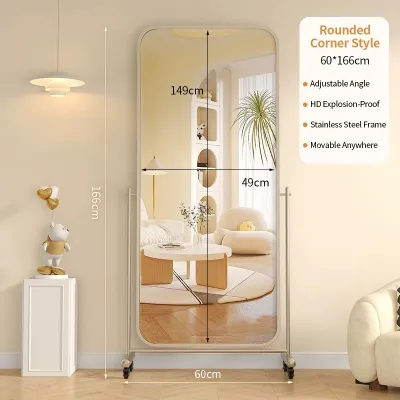
Prices are valid at publication and may change. Please refer to the product page for the latest price.
Depth perception is equally critical to this spatial illusion. The human brain interprets the reflected image as a physical extension of the room. By projecting a duplicate of the floor, walls, and ceiling, the mirror tricks the visual system into perceiving twice the actual depth. This psychological extension breaks the feeling of confinement, making walls feel less like barriers and more like transitions.
Unlike small wall-mounted vanity mirrors that only capture high-level sightlines, a full-length standing mirror spans from the floor upward. This vertical continuity is essential because it maintains the visual flow of your flooring material—whether you have light oak vinyl, polished porcelain tiles, or classic parquet. When the floor line continues uninterrupted into the reflection, the ground plane appears significantly larger, which is the foundation of making any compact room feel spacious.
Sizing and Design: What to Look for in a Space-Expanding Mirror
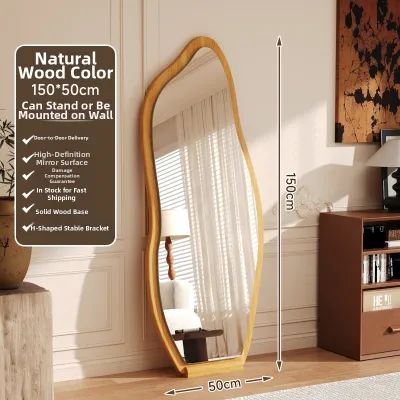
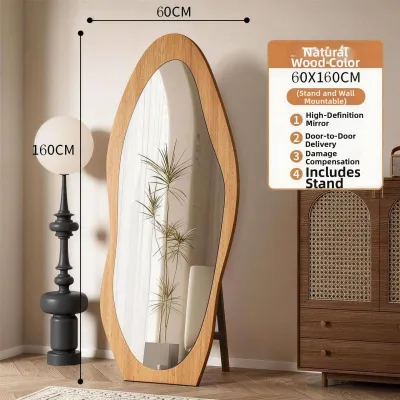
To achieve a true full-length reflection without needing to step back, the mirror must meet specific dimensional thresholds. In tight Singaporean bedrooms where the distance between the bed and the wall might be less than a meter, stepping back is not an option. As a practical rule of thumb, the mirror glass should be at least 150 centimeters tall, though 160 to 180 centimeters is highly recommended for taller households. The width should span at least 45 to 60 centimeters. If the mirror is too short or narrow, you will constantly have to tilt the frame or squeeze yourself into the reflection, breaking both the functional utility and the spatial illusion.

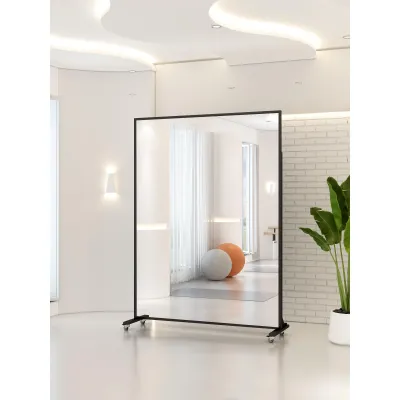
Frame proportions dictate how much visual weight the mirror adds to your room. Thick, heavy, or ornate frames—such as dark carved wood or wide baroque plaster—create a hard stop for the eyes. They draw attention to the physical limits of the wall, which can make a small room feel even more cluttered and enclosed. Conversely, ultra-thin metal frames or completely frameless designs allow the reflection to merge seamlessly with the surrounding wall. This lack of a heavy border keeps the visual weight low, allowing the eye to glide across the transition from wall to glass without interruption.
Inexpensive mirrors often use thin glass sheets (2mm to 3mm) that easily warp under their own weight or temperature fluctuations. This warping creates a subtle “funhouse” effect, distorting vertical lines and making the reflected room look unstable or disorienting. For a clean, realistic expansion of space, prioritize high-quality glass with a minimum thickness of 4mm to 5mm. Look for copper-free silver mirrors, which are highly durable and resistant to the black-edge oxidation common in Singapore’s humid, tropical climate.
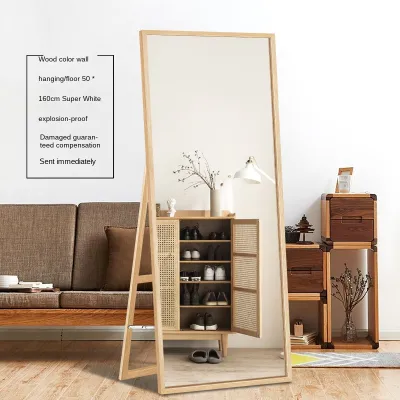
Finally, consider the base and stand footprint. A standing mirror must sit stably on the floor, but its support mechanism should not steal valuable floor space. Traditional easel-back (A-frame) stands require a significant footprint behind the mirror, often extending 30 to 50 centimeters into the room. In a narrow hallway or compact bedroom walkway, this protruding leg becomes a tripping hazard and eats up precious floor space. For tight layouts, consider flat-profile bases, U-shaped metal stands that sit flush against the frame, or lean-to models that require minimal floor clearance at the base.
4 Best Standing Mirror Styles to Make Small Rooms Feel Larger
Different mirror styles offer distinct aesthetic benefits and spatial illusions. Choosing the right style depends on your room’s existing layout, ceiling height, and design theme.
Frameless and Beveled Edge Mirrors
- Best For: Ultra-compact rooms, narrow entryways, and minimalist interiors where every millimeter counts.
- Space-Expanding Reason: Frameless mirrors are the ultimate champions of spatial illusion. Without a frame to define where the wall ends and the mirror begins, the reflection appears to be an actual doorway or opening into an adjacent room. Beveled edges—where the glass borders are ground down at an angle—add a touch of sophisticated detail. These sloped edges catch and refract light like a prism, creating a soft, elegant transition that blends the mirror naturally into your wall paint.
- Limitations: The lack of a protective frame makes the glass edges highly vulnerable to impact. If bumped by a vacuum cleaner or during a move, the edges can chip or crack easily. They are also more difficult to handle safely, requiring careful, two-person installation or relocation.
Arched Floor Mirrors
- Best For: Boxy HDB bedrooms, rooms with low ceilings, or spaces that lack architectural character.
- Space-Expanding Reason: Most modern apartments are dominated by rigid, straight lines—square walls, rectangular doors, and flat ceilings. An arched floor mirror breaks this monotony by introducing a soft, organic curve. The rounded top naturally draws the human eye upward, emphasizing vertical space and creating the illusion of higher ceilings. Furthermore, the arch shape closely mimics a classic window frame, tricking the brain into perceiving a "portal" to the outdoors, which instantly alleviates any feelings of claustrophobia.
- Limitations: Arched mirrors require clear vertical wall space. If you have low-hanging beams, wall-mounted air conditioning units, or decorative shelving, the curved top may not fit cleanly or may look visually crowded.
Thin-Frame Minimalist Mirrors
- Best For: Scandinavian, Japandi, or modern industrial interiors that require structured decor without the bulk.
- Space-Expanding Reason: These mirrors feature incredibly slim profiles—often just 1 to 2 centimeters wide—made from lightweight aluminum alloy or sleek, light-toned timber. This thin border provides a clean, modern frame that anchors the mirror as a deliberate design choice without adding visual clutter. It offers the perfect balance: you get the structural stability of a framed mirror while keeping the profile airy, light, and unobtrusive.
- Limitations: Because the frames are so thin, they do not pair well with heavy, traditional, or classical design schemes. Additionally, ultra-thin metal frames can bend or warp if the mirror is subjected to uneven pressure or dragged across rough flooring during cleaning.
Leaning Oversized Mirrors
- Best For: Living rooms, dining areas, or master suites with a generous, blank wall that needs a dramatic visual anchor.
- Space-Expanding Reason: Instead of standing perfectly vertical, these mirrors lean back against the wall at a slight angle (usually 3 to 5 degrees). This tilt changes the angle of reflection, capturing more of the ceiling and floor than a standard vertical mirror would. By showing more of the vertical plane, it stretches the perceived height of the room and adds a layered, three-dimensional depth that makes the entire living area feel significantly longer and grander.
- Limitations: The leaning angle means the base of the mirror must sit 15 to 25 centimeters away from the wall, consuming some floor space. Because they rely on gravity and friction, they pose a severe tipping hazard if bumped, making them unsuitable for homes with active toddlers, playful pets, or high-traffic zones unless they are securely anchored.
Strategic Placement: Where to Put Your Mirror for Maximum Depth
To maximize the brightness of your room, position your standing mirror opposite or adjacent to a window. This allows the mirror to catch incoming natural light and bounce it deep into the interior. In Singapore’s high-rise apartments, this placement also has the added benefit of bringing the outdoor view—whether it is lush tropical greenery, city skylines, or open sky—directly inside, effectively creating a “second window” that breaks down solid wall barriers.
A mirror doubles whatever it sees. If you place your mirror directly opposite an open wardrobe, a cluttered desk, or a storage rack, you will double the visual chaos, making your small room feel twice as messy and cramped. Instead, ensure the mirror reflects clean, open spaces or minimalist decor elements. Avoid placing a mirror directly facing a blank, unadorned wall, as this simply reflects “dead space” and fails to add any interesting depth or character.
Corners in small rooms are often underutilized or represent dead space that cuts off visual flow. Angling a full-length standing mirror into a corner softens the harsh 90-degree intersection of the walls. It creates a dynamic, multi-dimensional reflection that makes the boundaries of the room feel ambiguous, tricking the eye into thinking the room continues past the corner.
Use your mirror to highlight the best design elements of your home. Align the reflection so that it frames a beautiful piece of wall art, a thriving indoor plant (like a tall monstera), or a cozy, well-lit reading nook with a warm floor lamp. This not only adds visual interest but also guides the viewer’s eye to the most appealing parts of your living space.
Safety and Stability: Securing Heavy Freestanding Mirrors
Safety must be your top priority when installing heavy glass decor. No matter how heavy or stable a leaning mirror seems, it can easily slide or tip over if bumped, presenting a major safety risk. Always secure the mirror using heavy-duty furniture straps, D-rings, or anti-tip kits anchored directly into the wall. In Singapore, most residential walls are made of solid concrete or brick (for HDB flats) or drywall (for newer condo partitions). Ensure you use the correct wall plugs—such as masonry anchors for concrete or toggle bolts for drywall—to secure the brackets safely. If you are drilling into walls or working with heavy, suspended loads, always turn off nearby power lines and follow the manufacturer’s installation instructions, or hire a qualified professional handyman to ensure a secure fit.
Before setting up your mirror, check the levelness of your floor. Singaporean homes utilize various flooring materials, from ceramic tiles and vinyl planks to engineered parquet. Minor unevenness along tile grout lines or warped wood planks can cause a standing mirror to wobble, putting uneven stress on the frame and glass. Use adhesive felt pads or plastic shims under the base to level the mirror and absorb micro-vibrations from footsteps.
Carefully plan the placement of your mirror to ensure it does not protrude into primary walking paths. Avoid placing it directly behind doors, in narrow corridors where people carry groceries, or right next to low-slung furniture where someone might accidentally kick the base. Keeping the mirror clear of high-traffic zones protects both the glass and your household members.
Oversized full-length mirrors can weigh anywhere from 15 to 30 kilograms. Always verify the weight of the mirror and ensure that the supporting wall, floor, or built-in easel stand is rated to handle that specific load. If you are mounting a heavy mirror to a partition wall, locate the internal studs or consult a professional to avoid structural damage or collapse.
Frequently Asked Questions (FAQ)
What is the minimum height for a true full-length mirror?
To see your entire figure from head to toe without stepping back, the mirror glass should be at least half your height. However, for a practical, comfortable viewing experience in a small room, a minimum height of 150 to 160 centimeters (about 59 to 63 inches) is recommended. This allows users of varying heights to view their outfits easily without needing to tilt the glass or stand at an awkward distance.
Do I need to anchor a leaning mirror to the wall?
Yes, anchoring is highly recommended for all leaning mirrors to prevent tipping accidents. Even heavy mirrors can slip on smooth tile or vinyl floors over time due to vibrations or accidental bumps. Use specialized wall-anchoring kits, D-rings, or safety straps secured with appropriate wall plugs to ensure the mirror remains stable and safe.
Community discussion
Share your experience or ask a question. Comments are reviewed before publication.