
Choosing the right lighting for a standard Singapore HDB flat with a 2.6-meter ceiling is a balancing act between maximizing headroom and avoiding blinding glare. The best GU10 downlight setups use deep-recessed, low-glare fixtures to keep the light source hidden from direct sightlines. Brands like Sol Luminaire excel in premium architectural designs, Philips provides reliable everyday performance, and Near offers excellent integration for smart homes. By matching the right housing depth and beam angle to your ceiling, you can create a bright, visually comfortable home without making your rooms feel cramped.
Why 2.6m Ceilings Change Your GU10 Downlight Choices
Visual compression is a major design challenge in standard HDB flats. With a ceiling height of 2.6 meters, any light fixture that protrudes downward—such as bulky surface-mounted ceiling lights or low-hanging pendants—visually lowers the room. This can make living areas feel cramped and oppressive. Recessed downlights solve this by sitting flush with the plasterboard ceiling, maintaining clean, uninterrupted sightlines across the room.
However, recessed lighting in a low ceiling brings its own set of challenges, primarily glare. Because the light source is closer to eye level, standard flush-mounted downlights can create harsh, uncomfortable glare that strains the eyes. This is where the GU10 downlight format becomes highly advantageous. GU10 fixtures utilize a twist-and-lock bulb mechanism that operates directly on 230V mains voltage.
Products mentioned in this guide
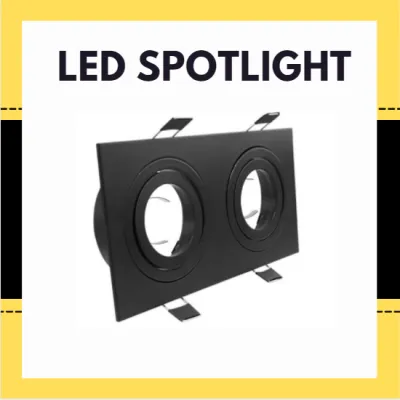
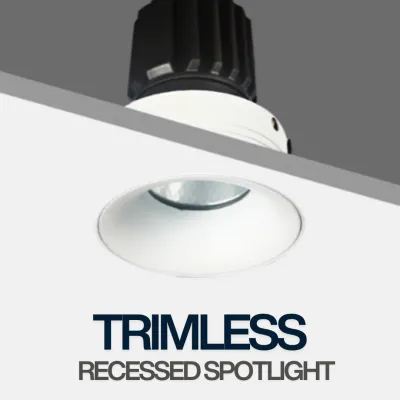
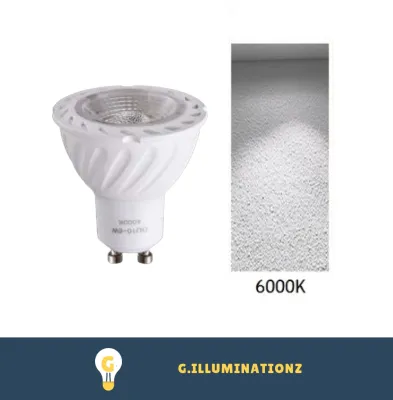
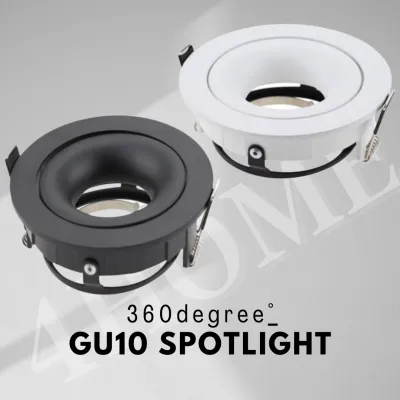
Prices are valid at publication and may change. Please refer to the product page for the latest price.
Operating directly on 230V mains voltage means GU10 downlights do not require bulky external LED drivers or transformers. In HDB flats, minimizing the thickness of the false ceiling is critical to preserving as much of the 2.6-meter height as possible. Because there are no external drivers to accommodate, the false ceiling void can be kept remarkably shallow—often requiring as little as 100mm of clearance. This allows homeowners to install beautiful recessed lighting while keeping the finished ceiling height at a comfortable 2.5 meters.
Additionally, GU10 bulbs offer unmatched maintenance convenience. When an integrated LED downlight fails, the entire fixture—including the trim, driver, and LED chip—must be removed and replaced, which can damage the plasterboard ceiling. With a GU10 setup, you simply twist the failed bulb out and insert a new one, leaving the outer housing completely undisturbed. This makes GU10 a highly practical, long-term choice for busy Singaporean households.
Crucial Specs to Check Before Buying
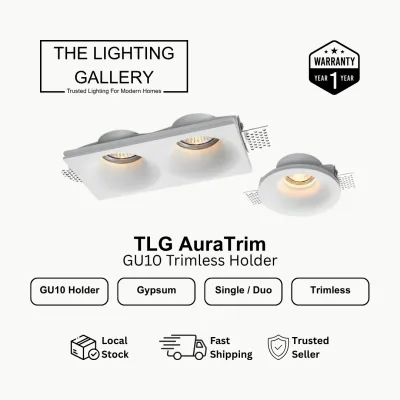
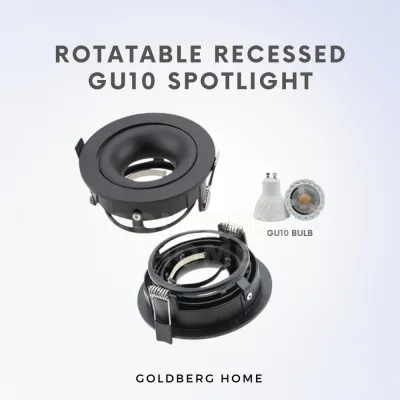
To prevent the ceiling from feeling visually cluttered, look for downlight housings with ultra-slim trims or trimless (plaster-in) designs. More importantly, prioritize deep-recessed housings. A deep-recessed fixture places the GU10 bulb 20mm to 50mm upward into the ceiling void. This physical recess shielding ensures that the glowing bulb filament is not visible from normal viewing angles, eliminating harsh side-glare.

The Unified Glare Rating (UGR) is an approximate measure of glare in a given environment. For comfortable residential living, aim for a UGR of less than 19. You can achieve this by choosing GU10 housings equipped with anti-glare baffles or reflectors. Matte black, dark chrome, or stepped white reflectors are excellent at absorbing stray light rays, ensuring that light is directed downward onto your living surfaces rather than scattering horizontally into your eyes.
In a 2.6m ceiling, wide-beam downlights (60° to 120°) tend to flood the entire room with flat, shadowless light, which can visually flatten the space and make it feel smaller. Instead, opt for narrow to medium beam angles, typically between 24° and 36°. These angles create distinct pools of light and shadow, adding depth, texture, and architectural drama to your HDB flat. For color temperature, 3000K (warm white) or 3500K (cool warm) is highly recommended for living rooms and bedrooms to create a cozy, inviting atmosphere. Reserve 4000K (cool white) for task-oriented areas like kitchens and bathrooms.
Even though GU10 bulbs do not require external drivers, the LED chips and internal circuitry still generate heat. In the confined, unventilated space of an HDB false ceiling void, heat buildup can drastically shorten the lifespan of your LED bulbs. Always verify the manufacturer’s required clearance distances. Generally, a minimum gap of 50mm to 100mm should be maintained between the top of the GU10 bulb housing and the concrete ceiling slab above to allow heat to dissipate safely.
Top GU10 Downlight Brands and Models for HDB Flats
Selecting the right brand and model involves evaluating local availability, build quality, and compatibility with standard Singapore electrical systems (230V, 50Hz). The market offers a wide spectrum of choices, ranging from high-end architectural systems to budget-friendly essentials. By understanding the strengths of each category, you can make an informed decision that aligns with your interior design goals and renovation budget.
Best for Anti-Glare and Minimalist Designs
For homeowners seeking a high-end, clean architectural look, specialist brands like Sol Luminaire and Near offer premium GU10-compatible housings. Sol Luminaire, a well-known local brand, provides architectural-grade fixtures such as the Isa or Halo series. These fixtures are engineered with deep-set designs and interchangeable magnetic inner baffles, allowing you to customize the trim color to match your ceiling perfectly.
Another excellent local specialist is Near, which designs sleek, minimal-bezel housings optimized for both standard and smart GU10 bulbs. These premium housings feature high-quality aluminum construction that aids in heat dissipation. They are designed to sit flush with the plasterboard, creating a seamless, high-end look that elevates the aesthetic of any HDB flat.
The primary advantage of these architectural fixtures is their superior visual comfort. With deep-set baffles and advanced optics, they achieve exceptionally low glare ratings, making your 2.6m ceiling feel clean and spacious. However, these premium options come with a higher price tag ($$$) and require precise installation. For trimless models, your plasterer must carefully integrate the outer frame into the gypsum board before painting, which adds to the labor cost. Before purchasing, always check the technical drawings to ensure your false ceiling void has sufficient depth to accommodate these taller fixtures.
Best for Reliable Everyday Lighting on a Budget
If you are looking for reliable, no-nonsense lighting that performs well without breaking the bank, mainstream brands like Philips and Megaman are the industry standards in Singapore. Philips offers highly reliable GU10 LED bulbs (such as the Essential or MyCare range) that pair beautifully with standard, widely available recessed housings. These bulbs provide excellent lumen output and consistent color rendering at an affordable price point.
Megaman is another outstanding brand, highly regarded by local electricians for its durable GU10 LED lamps and robust ceramic lamp holders. Megaman’s GU10 bulbs often feature advanced thermal management technology, ensuring a long operating life even in tighter ceiling voids. When paired with basic aluminum recessed housings, they offer a highly cost-effective and dependable lighting solution.
The main benefit of this budget-friendly approach ($) is its accessibility and ease of maintenance. Replacement bulbs are readily available at almost any local hardware store or online marketplace, and the standard spring-clip housings are incredibly straightforward to install. The trade-off is that these basic housings typically position the bulb closer to the ceiling surface, resulting in standard glare levels and visible outer bezels. Additionally, some budget housings have very tight internal dimensions, which may limit your ability to upgrade to larger smart bulbs in the future.
Best for Smart Home Integration
Smart lighting has become a staple in modern HDB renovations, allowing homeowners to adjust brightness and color temperature to suit different times of day. When it comes to smart GU10 bulbs, Philips Hue is the undisputed market leader, offering unmatched color accuracy, smooth dimming, and reliable Zigbee connectivity. However, smart GU10 bulbs are physically longer and heavier than standard LED bulbs because they must house wireless receivers and advanced driver electronics.
To accommodate these larger smart bulbs, you need specialized downlight housings with extra internal depth. Local smart lighting specialist Near offers deep-recessed housings specifically designed to fit smart GU10 bulbs perfectly, ensuring the bulb sits deep enough to prevent glare while leaving ample room for wiring. Using a housing designed for smart bulbs is crucial, as cramming a longer bulb into a shallow housing can compress the wiring and restrict airflow.
While smart GU10 setups offer incredible flexibility and convenience ($$), they require careful planning. Metal downlight housings can sometimes shield or weaken Wi-Fi or Zigbee signals, so choosing high-quality housings with minimal signal interference is important. Furthermore, because smart bulbs generate more heat due to their continuous standby power and onboard electronics, maintaining adequate clearance and airflow within the false ceiling void is absolutely critical to prevent premature component failure.
Quick Comparison of Top GU10 Picks
To help you decide which setup fits your HDB flat renovation, this table summarizes the key differences between the primary GU10 downlight categories available in Singapore:
| Category / Brand Focus | Best Feature for 2.6m Ceilings | Glare Control Level | Estimated Price Tier | Ideal Room Application |
|---|---|---|---|---|
| Premium Architectural (Sol Luminaire / Near Premium) | Deep-set interchangeable baffles, trimless options | Excellent (UGR < 19) | $$$ | Living Room, Dining Area, Feature Walls |
| Reliable Budget (Philips / Megaman / Opple) | Affordable, standard spring-clip installation | Moderate | $ | Kitchen, Bathrooms, Utility Rooms |
| Smart Home Integration (Philips Hue / Near Smart) | Extra housing depth for longer smart bulbs | Good to Excellent | $$ to $$$ | Bedrooms, Study Room, Living Room |
HDB Installation Constraints and Safety Boundaries
It is important to understand that recessed GU10 downlights cannot be installed directly into the solid concrete ceiling slabs of HDB flats. To install recessed lighting, you must construct a false ceiling using gypsum plasterboard suspended from the concrete slab. This false ceiling creates the necessary hollow void (typically 100mm to 150mm deep) to house the downlight fixtures and run the electrical wiring.
Before your contractor begins cutting holes in the false ceiling, ensure you have purchased or finalized your downlight fixtures. Cut-out dimensions vary significantly between brands and models—ranging from 65mm to 90mm or more. Cutting holes without verifying the exact product manual specifications can lead to costly ceiling repairs or loose-fitting fixtures that sag over time.
All 230V electrical works in Singapore are strictly regulated to ensure household safety. You must engage a Licensed Electrical Worker (LEW) to perform any new wiring, create new lighting points, or calculate the electrical load of your distribution board. Before performing any maintenance or replacing a GU10 bulb, always isolate the power supply at the main distribution board (DB box) to eliminate the risk of electrical shock.
To prevent fire hazards, maintain a safe distance between the back of the GU10 downlight housing and any materials inside the ceiling void. If your HDB flat has thermal or acoustic insulation installed above the false ceiling, ensure that the insulation does not directly drape over or cover the downlight fixtures. Use downlight covers or maintain a clear 100mm perimeter around each fixture to allow heat to rise and dissipate safely.
Frequently Asked Questions (FAQ)
Do GU10 downlights need a transformer or driver?
No, GU10 downlights do not require an external transformer or LED driver. They are designed to operate directly on Singapore’s standard 230V mains voltage. This contrasts with MR16 (GU5.3) downlights, which operate on 12V and require a separate transformer to step down the voltage. By eliminating the transformer, GU10 systems save valuable space in shallow HDB ceiling voids and eliminate a common electrical failure point.
Can I install recessed GU10 downlights directly on a concrete HDB ceiling?
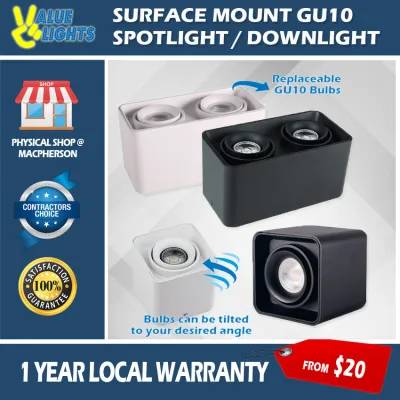
No, you cannot install recessed GU10 downlights directly into a solid concrete HDB ceiling slab, as cutting or drilling deep recesses into structural concrete is strictly prohibited. If you prefer not to install a false ceiling, you can still use GU10 bulbs by opting for surface-mounted canister downlights, surface-mounted spotlights, or track lighting systems. These fixtures mount directly to the concrete surface while keeping the wiring neatly concealed inside surface conduits.
Community discussion
Share your experience or ask a question. Comments are reviewed before publication.