
When searching for the highest-value GU10 LED bulb brand in Singapore, there is no single brand that fits every scenario. True value is determined by matching a bulb’s technical specifications to your specific installation environment and usage patterns.
If your priority is minimizing upfront costs for low-use areas, budget-focused brands with basic specifications are highly practical. However, if you are installing bulbs in hard-to-reach high ceilings, enclosed downlights, or commercial spaces where lights remain active for long hours, premium brands that offer superior thermal management, higher luminous efficacy, and multi-year warranties deliver far greater long-term savings.
Evaluating value requires looking beyond the initial retail price tag to analyze key metrics such as the lumens-per-watt (lm/W) ratio, driver quality, and dimming compatibility. This guide establishes a clear, specification-based framework to help you compare available brands and select the most cost-effective solution for your space.
Products mentioned in this guide
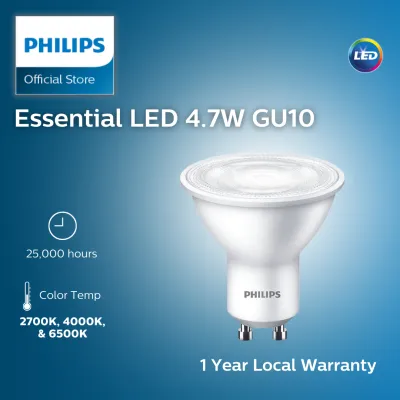
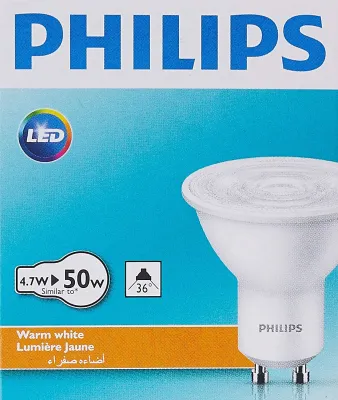
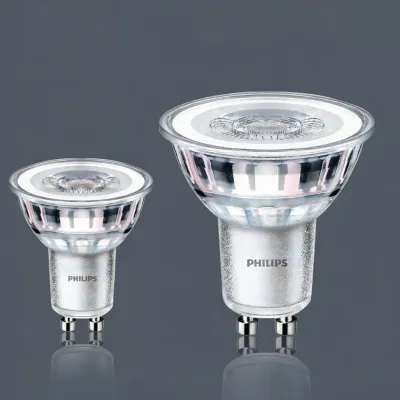
![[3 Year Warranty] [Authorized Dealer] Philips GU10 LED Spotlight Bulb Philips Essential LEDspot MV 4.7W GU10](https://img.lazcdn.com/g/p/f05426a137fb394924178754ffb22158.png_400x400q80.png_.webp)
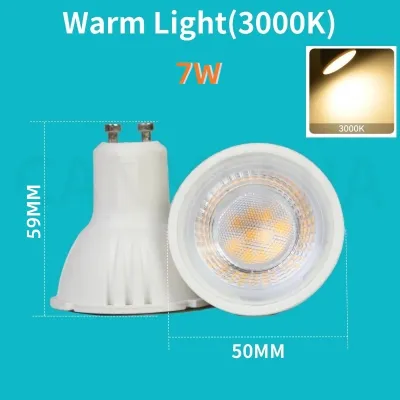
![[HomeBox] 🇸🇬 MUYISO 6W | 8W LED bulb GU10 Spot Light / Track Light Bulb Cool White Nature White Warm White (6500K 4000K 3000K)](https://img.lazcdn.com/g/p/1675473c10c402e452f87ff60dd0a30a.png_400x400q80.png_.webp)
Prices are valid at publication and may change. Please refer to the product page for the latest price.
Core Comparison Dimensions for a GU10 Bulb
To make an informed decision when comparing different brands, you must understand the core technical dimensions of a gu10 bulb. These specifications dictate not only how much light the bulb produces, but also how much electricity it consumes, how long it will last, and how the light will look in your space.
Wattage versus Lumens: Understanding Luminous Efficacy
Many consumers mistakenly rely on wattage as a measure of brightness, a habit carried over from the era of incandescent and halogen lighting. Wattage simply measures the amount of electrical power a bulb consumes. Brightness, on the other hand, is measured in lumens.
To determine the true energy efficiency of a bulb, you must calculate its luminous efficacy by dividing the total lumen output by the wattage (lm/W). For example, a 5-watt LED bulb that produces 400 lumens has an efficacy of 80 lm/W, whereas a highly efficient 4-watt LED bulb producing 450 lumens achieves 112.5 lm/W. When comparing brands, prioritizing those with higher luminous efficacy ratings ensures you receive maximum light output while minimizing energy consumption.
Color Temperature and Color Rendering Index (CRI)
Color temperature, measured in Kelvin (K), defines the visual warmth or coolness of the light. Warm white (2700K to 3000K) delivers a soft, yellowish glow suitable for bedrooms and living rooms. Cool white (4000K) provides a neutral, crisp light ideal for kitchens and study areas, while daylight (6000K to 6500K) offers a high-contrast, bluish-white light suitable for task-oriented spaces. These color choices are conditional preferences based on personal taste and spatial design rather than objective performance metrics.
Conversely, the Color Rendering Index (CRI) is a critical quality metric. Rated on a scale from 0 to 100, CRI indicates how accurately a light source reveals the true colors of objects compared to natural daylight. For general home lighting, a CRI of 80 is standard. However, for art galleries, walk-in wardrobes, retail displays, or dining areas, selecting a brand that offers a CRI of 90 or higher is essential to prevent colors from appearing dull or distorted.
Beam Angle and Optical Control
A GU10 bulb is inherently a directional spotlight, making it popular for track lighting and recessed downlights. The beam angle determines how wide or narrow the light spreads from the fixture.
Narrow beam angles, ranging from 15 to 24 degrees, focus light into a tight, intense spot. This is ideal for accent lighting to highlight specific features like artwork, sculptures, or architectural details. Wider beam angles, typically between 36 and 60 degrees, distribute light more broadly, making them better suited for general ambient illumination. High-quality brands design superior optical lenses that shape the light beam smoothly, preventing harsh edges, distracting glare, or uneven rings of light.
Dimmability and Smart Home Integration
If you plan to adjust your lighting levels to create different ambiances, verifying dimming compatibility is crucial. Not all GU10 LED bulbs are dimmable. Installing a non-dimmable bulb on a dimmer circuit can lead to severe flickering, audible buzzing, and permanent damage to the bulb’s internal driver.
When selecting a dimmable bulb, you must also ensure compatibility with your wall dimmer switch. Most modern LED bulbs require trailing-edge (electronic) dimmers rather than older leading-edge (triac) dimmers designed for halogens. Alternatively, smart GU10 bulbs bypass traditional wall dimmers entirely by integrating wireless chips (using protocols like Zigbee, Wi-Fi, or Bluetooth). These smart options allow you to dim, change color temperatures, or schedule lighting via mobile apps and smart home hubs, though they require a continuous, un-dimmed power supply to operate.
How to Verify Energy Efficiency and Lifespan Claims
The lighting market is filled with bold claims regarding energy savings and longevity. To protect your investment, you must know how to read product packaging and technical datasheets to verify these assertions independently.

Decoding the Lumens-per-Watt Efficiency Ratio
Never rely solely on vague marketing terms such as “ultra-efficient” or “eco-friendly.” Instead, locate the technical specifications panel on the packaging or the manufacturer’s official datasheet.
Find the rated lumen output (lm) and the nominal power consumption in watts (W). Divide the lumens by the watts to obtain the actual luminous efficacy. If a brand claims to offer superior energy savings but has a lower lm/W ratio than a competitor, its operational cost will be higher. Verifying this simple ratio allows you to cut through marketing hype and compare energy performance objectively.
Demystifying Lifespan Ratings and the L70 Standard
Unlike traditional bulbs that burn out abruptly, LED bulbs experience lumen depreciation, meaning they slowly lose brightness over time. The industry standard for measuring this degradation is the L70 rating.
An L70 rating indicates the number of operating hours it takes for the bulb’s light output to drop to 70% of its original level. For example, a bulb rated at 15,000 hours L70 will still function after that period, but it will only emit 70% of the light it did when new. When comparing brands, look for those that explicitly state their L70 lifespan based on standardized testing, rather than those offering vague “long-life” promises without a corresponding hourly metric.
Warranty Periods as an Indicator of Driver Quality
The lifetime of a GU10 LED bulb is rarely limited by the LED chips themselves; instead, the internal electronic driver is almost always the first component to fail. The driver converts high-voltage alternating current (AC) from your mains to low-voltage direct current (DC) required by the LEDs. This process generates heat, and low-quality drivers utilize cheap capacitors that degrade rapidly under thermal stress.
A manufacturer’s warranty is one of the most reliable proxies for driver quality. Budget-focused brands typically offer a limited 1-year warranty or no warranty at all, indicating the use of basic, low-cost internal components. Premium manufacturers frequently provide warranties ranging from 2 to 5 years. A longer warranty demonstrates that the brand has invested in high-grade capacitors and advanced thermal management to ensure the driver survives the claimed lifespan.
Verifying Safety Certifications for Singapore Homes
Electrical safety must never be compromised. In Singapore, household electrical appliances and accessories must comply with strict safety standards to prevent electrical fires, shocks, and electromagnetic interference.
When purchasing GU10 bulbs, verify that they carry recognized safety certifications. Locally distributed bulbs should display the Enterprise Singapore Safety Mark if they fall under controlled categories, or comply with equivalent international standards such as those from the International Electrotechnical Commission (IEC). Avoid purchasing unbranded, ultra-cheap bulbs from direct-import online marketplaces, as these products often lack essential safety features like thermal cut-offs, adequate electrical insulation, or flame-retardant housings.
Price vs. Value: Calculating Long-Term Savings in SGD
To identify the best value option, you must look beyond the initial retail price. A complete financial comparison requires analyzing the total cost of ownership, which factors in purchase price, electricity consumption, and potential replacement expenses over time.
The Total Cost of Ownership Framework
The total cost of ownership (TCO) represents the complete financial impact of a lighting decision over a set period. It is calculated by adding the initial purchase cost of the bulbs to the total electricity costs and any maintenance or replacement expenses incurred during their operational life.
A cheap, low-efficiency GU10 bulb may save you a few dollars upfront, but if it consumes more electricity or fails after only a year, the cost of buying replacements and paying higher utility bills will quickly surpass the initial price of a premium, highly efficient bulb. Evaluating TCO ensures you make a decision that maximizes your savings in Singapore Dollars (SGD) over the long run.
Formula for Estimating Annual Electricity Costs
You can easily estimate the annual running cost of any GU10 bulb in Singapore using a straightforward formula. This calculation allows you to compare the operational expenses of different brands directly.
To calculate the annual cost, use this formula:
Annual Operating Cost (SGD) = (Bulb Wattage × Daily Usage Hours × 365 / 1000) × Electricity Tariff (SGD per kWh)
For example, consider a home with 12 GU10 spotlights in the living room, operated for an average of 6 hours per day. If you choose a highly efficient 4.5-watt LED bulb, the annual consumption is:
(4.5W × 6 hours × 365 days / 1000) × 12 bulbs = 236.52 kWh per year
Assuming a typical Singapore household electricity tariff of S$0.30 per kWh, the annual cost to run these lights is approximately S$70.96. If you instead install cheaper, less efficient 7-watt LED bulbs to achieve the same brightness, the annual consumption rises to:
(7W × 6 hours × 365 days / 1000) × 12 bulbs = 367.92 kWh per year
At the same tariff rate, the annual cost increases to S$110.38. This represents an extra S$39.42 in electricity costs every year. Over a five-year period, the less efficient bulbs cost an additional S$197.10 in power alone, completely wiping out any initial savings from a cheaper purchase price.
Factoring in Replacement and Maintenance Labor Costs
Calculating energy costs is only part of the equation; you must also consider the physical effort and expense of replacing dead bulbs. In many Singaporean homes and commercial spaces, GU10 spotlights are installed in recessed ceiling downlights or high-mounted track systems.
If your ceilings are exceptionally high, such as in double-volume living rooms, loft apartments, or commercial retail spaces, replacing a bulb is not a simple task. It often requires specialized tall A-frame ladders, scaffolding, or even hiring external maintenance personnel. If a cheap bulb fails prematurely, the labor cost or physical inconvenience of replacing it can easily exceed the cost of the bulb itself. Opting for a premium brand with a proven long lifespan minimizes these maintenance cycles, protecting you from repeated hassle and expense.
Upfront Cost Versus Long-Term Component Quality
The price difference between budget and premium GU10 brands is directly tied to their internal construction. Budget brands minimize manufacturing costs by using lightweight plastic housings, basic electronic circuits, and minimal heat sinks. While these bulbs are highly affordable, they struggle to dissipate heat effectively, which accelerates driver degradation.
Premium brands invest heavily in advanced materials, such as ceramic or heavy aluminum heat sinks, which draw heat away from the sensitive electronics. They also feature sophisticated multi-element optical lenses that reduce glare and distribute light evenly, alongside high-grade capacitors designed to handle voltage fluctuations without flickering. Investing in premium build quality ensures stable performance, consistent light output, and a much lower rate of premature failure.
Decision Framework: Which Brand Profile Fits Your Needs?
Choosing the right GU10 brand is a matter of matching the bulb’s characteristics to your specific scenario. Use this structured decision framework to determine which brand profile aligns with your requirements.
When to Select Premium or Established Brands
You should invest in premium, established GU10 brands if your installation meets any of the following conditions:
- High Ceilings or Hard-to-Reach Fixtures: Minimize the safety risks and labor costs associated with frequent bulb replacements in double-volume spaces or high-mounted tracks.
- Enclosed Downlight Fixtures: Premium bulbs feature superior thermal designs that can withstand the heat buildup common in tight, unventilated ceiling cavities.
- Dimmable or Smart Systems: If you require smooth, flicker-free dimming down to low levels, or want reliable smart home integration, premium brands offer the advanced drivers necessary for stable performance.
- High-Traffic or Commercial Areas: For living rooms, kitchens, offices, or retail floors where lights remain active for many hours a day, the energy savings from high-efficacy premium bulbs accumulate rapidly, delivering excellent long-term value.
When to Opt for Budget or Value Brands
Budget or value brands are highly practical and cost-effective under the following circumstances:
- Low-Traffic Residential Areas: For spaces like storerooms, balconies, guest bathrooms, or corridors where lights are only switched on for a few minutes at a time, the energy savings of a premium bulb will take years to offset its higher purchase price.
- Easily Accessible Fixtures: If your spotlights are mounted on low, easily reachable tracks or standard-height ceilings, replacing a failed bulb is a quick, safe DIY task that carries no extra labor cost.
- Tight Upfront Budgets: When managing a large renovation project with a strict initial capital limit, budget-friendly bulbs allow you to complete the installation without overspending, though you should prepare for shorter replacement cycles.
Crucial Compatibility Checks for Halogen Upgrades
If you are upgrading your home from old, power-hungry halogen GU10 spotlights to modern LED bulbs, you must perform several compatibility checks before buying.
Halogen bulbs operate on a different electrical principle than LEDs. Traditional dimmer switches are designed for high-wattage resistive loads (often 20W to 50W per bulb). Because LED GU10 bulbs draw very low wattage (typically 4W to 7W), your existing dimmer may not detect the load properly. This mismatch frequently causes rapid flickering, buzzing, or a failure to turn off completely. Before purchasing any LED GU10 bulb, consult the manufacturer’s compatibility list to ensure it works with your existing dimmer, or consult a professional to replace the switch with an LED-compatible trailing-edge dimmer.
Installation, Compatibility, and Safety Checks
Proper installation and safety checks are essential to ensure your new GU10 bulbs operate safely, efficiently, and last for their full rated lifespan.
Safe Handling and Power Isolation Protocols
Before attempting to replace or install any GU10 bulb, always isolate the electrical power. Do not rely solely on the wall switch, as it may only cut the neutral wire, leaving live voltage at the socket. Switch off the corresponding circuit breaker at your home’s main distribution board (DB box) to guarantee safety.
If the light has been turned on recently, allow the bulb to cool down completely. Halogen bulbs become hot enough to cause severe skin burns, and even high-efficiency LED bulbs can have warm heat sinks. When handling the bulb, use a clean, dry cloth or a dedicated suction cup tool to avoid leaving oily fingerprints on the lens, which can attract dust and create localized hot spots that degrade optical performance.
Verifying Physical Dimensions and Base Fitment
The GU10 base features a standardized twist-and-lock design with two pins spaced exactly 10mm apart. To install the bulb, align the pins with the slots in the socket, push gently, and rotate the bulb clockwise by a quarter-turn until it locks securely into place.
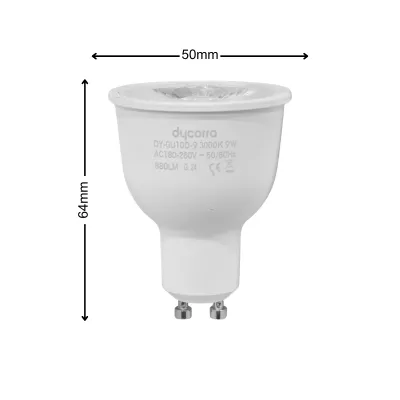
However, while the base connection is standard, the physical dimensions of the bulb body can vary. Traditional halogen bulbs have a highly compact, standardized profile. Some LED GU10 bulbs feature bulky aluminum heat sinks or extended driver compartments that make them longer or wider than their halogen predecessors. Always measure the depth and diameter of your recessed downlight fixtures before purchasing to ensure the new LED bulb will fit flush and allow any retaining clips or decorative rings to close properly.
Thermal Management in Enclosed Downlights
Unlike halogen bulbs, which radiate heat forward in their light beam, LED bulbs generate heat at the back of the bulb, where the electronic driver and LED emitter chips are located. This heat must be dissipated into the surrounding air to prevent damage to the electronics.
If you install a GU10 LED bulb in a tightly enclosed downlight fixture or a ceiling cavity packed with thermal insulation, heat will build up rapidly around the base of the bulb. This excessive thermal stress degrades the driver’s capacitors, leading to premature failure, flickering, and the voiding of your warranty. Always check the bulb’s packaging to verify if it is rated for use in enclosed fixtures, and ensure there is adequate airspace around the downlight housing to allow natural air circulation.
When to Hire a Licensed Electrician
Replacing a standard GU10 bulb in an existing, undamaged fixture is a straightforward task that most homeowners can complete safely. However, certain situations require the expertise of a professional.
If you notice any signs of electrical damage, such as scorching, melting, or discoloration on the GU10 socket, or if the wiring insulation appears brittle or cracked, stop immediately. Do not attempt to install a new bulb. For any tasks involving modifications to fixed household wiring, installing new lighting tracks, replacing entire recessed downlight fixtures, or working in damp environments like bathrooms, always engage a licensed electrical worker (LEW) in Singapore. This ensures all work complies with local safety regulations (SS 638) and protects your home from electrical hazards.
Community discussion
Share your experience or ask a question. Comments are reviewed before publication.