
Hanging a high-quality hanging mirror door is one of the most effective, non-invasive design strategies to visually expand a compact apartment bedroom. In urban environments like Singapore, where modern Build-To-Order (BTO) Housing & Development Board (HDB) flats and boutique condominiums often feature highly optimized, space-constrained bedroom layouts, finding room for traditional floor-standing mirrors can be a challenge. By utilizing the vertical plane of an existing bedroom or wardrobe door, you can reclaim valuable floor area while introducing a powerful tool for light distribution.
A well-chosen door mirror does more than offer a convenient spot to check your outfit before leaving for the day; it acts as a visual amplifier. When positioned correctly, it tricks the brain into perceiving a room that is twice its actual size by reflecting light and extending sightlines deep into otherwise dark corners. However, achieving this spatial transformation requires more than simply hanging any standard mirror over your door. It requires a careful balance of optical mechanics, design aesthetics, and strict safety considerations to ensure the installation is both beautiful and secure.
Key Features to Look for in a Space-Boosting Door Mirror
To understand how a mirror can amplify a small room, it helps to look at the basic optical mechanics of reflection. When light hits a mirror, it bounces off the reflective silver backing at the same angle it arrived. In a small bedroom, this reflected light illuminates shadowed areas, making the entire room feel brighter and more open. Furthermore, because the mirror reflects the physical environment, it creates a virtual window that extends the visual field. The brain interprets this reflection as an extension of the room itself, effectively pushing back the walls and breaking the feeling of confinement.
Products mentioned in this guide
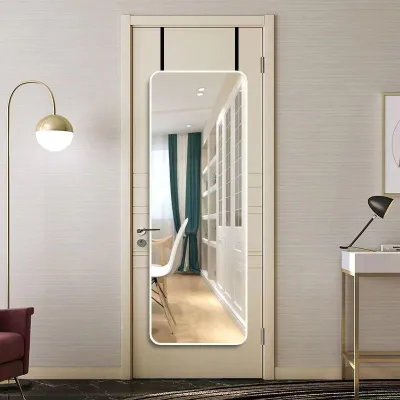
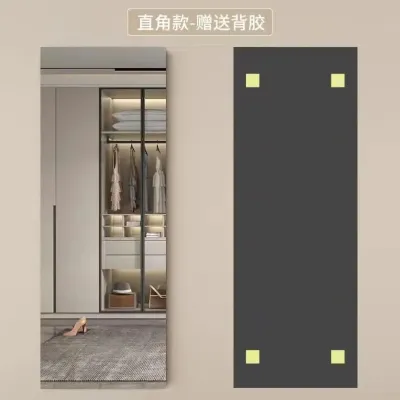
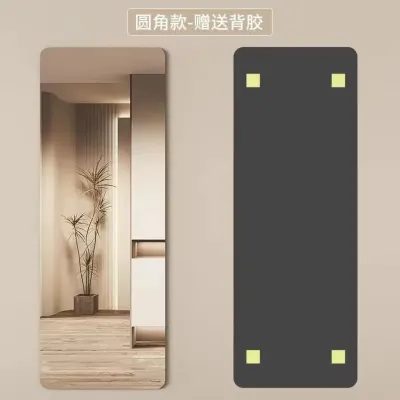
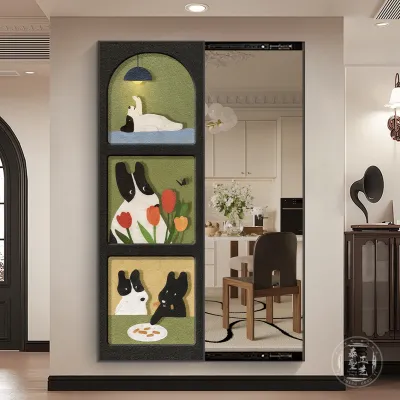
Prices are valid at publication and may change. Please refer to the product page for the latest price.
To maximize this spatial illusion, the physical dimensions of the mirror are critical. A full-length mirror is highly recommended, and it should measure at least 150 cm in height. This specific height is necessary because it allows the mirror to capture both the floor line and the ceiling line in its reflection. When you can see the floor continuing into the mirror and the ceiling extending upward in the reflection, your brain registers a continuous, uninterrupted space. A shorter mirror that cuts off halfway down the door will only fragment the room, drawing attention to the smallness of the wall rather than expanding it.
Frame thickness and color also play a decisive role in how heavily the mirror sits in your visual field. In a compact bedroom, a thick, heavy, or dark-colored frame acts as a bold border, emphasizing the mirror’s physical limits and making the door feel closer and more imposing. To avoid this visual heaviness, look for ultra-slim frames, light-colored borders (such as matte white, soft champagne gold, or light natural wood), or completely frameless designs. These minimalist borders allow the mirror to blend almost seamlessly into the door surface, ensuring the eye focuses on the expansive reflection rather than the frame itself.
Finally, the quality of the glass is paramount to maintaining a convincing illusion of depth. Low-cost, thin glass mirrors are highly susceptible to warping, especially when exposed to the high humidity levels common in Singapore’s tropical climate. A warped mirror creates a “funhouse” effect, distorting straight lines and making the reflected room look unnatural, which can cause visual fatigue and ruin the spacious feel. To prevent this, invest in high-definition, copper-free silver glass with a thickness of at least 4mm to 5mm. High-definition glass ensures a perfectly flat, clear, and true-to-life reflection that seamlessly mimics an open doorway.
Best Hanging Mirror Designs to Make Compact Rooms Feel Larger
Choosing the right structural design for your over-the-door mirror allows you to align your spatial goals with your personal interior design style. Different mirror shapes and frame structures offer unique visual benefits and trade-offs.

Full-Length Frameless or Ultra-Slim Frame Mirrors
For pure, uninterrupted space amplification, a full-length frameless mirror or one with an ultra-slim metal frame is the gold standard. By removing the visual boundary of a traditional frame, these mirrors maximize the active reflective surface area. When mounted on a light-colored bedroom door, a frameless mirror behaves almost exactly like an additional window, reflecting light from adjacent walls and windows without any dark lines to break the illusion.
This clean, unadorned aesthetic is particularly well-suited for modern, minimalist, or Scandinavian interior themes, which are highly popular in local HDB and condo designs. The absence of a bulky frame keeps the focus entirely on clean lines and open space, preventing the bedroom from feeling cluttered or visually busy.
When selecting a frameless model, safety and durability should be your top priorities. Look for mirrors that feature polished, beveled edges, which smooth out the sharp glass corners and add a subtle, elegant touch of light refraction. Alternatively, a microscopic aluminum alloy frame of just 1mm to 2mm in thickness can provide excellent structural protection for the glass edges against accidental bumps, without compromising the weightless, open look.
Arched or Curved-Top Hanging Mirrors
If you want to soften the rigid, boxy feel of a standard rectangular bedroom, an arched or curved-top hanging mirror is an excellent alternative. The gentle curve at the top of the mirror introduces an organic shape that contrasts beautifully with the straight vertical lines of doors, built-in wardrobes, and walls.
From a spatial perspective, the arched top serves a specific psychological purpose: it naturally draws the eye upward. In rooms with standard ceiling heights, this upward visual movement creates a strong perception of vertical space, making the ceiling feel higher than it actually is. It transforms a simple functional mirror into an elegant architectural feature, reminiscent of a classic arched doorway leading to an adjoining room.
To enhance the cozy yet spacious atmosphere created by an arched mirror, consider pairing it with soft, diffused lighting. Placing a warm bedside lamp or a low-profile pendant light near the mirror allows the curved glass to catch and scatter the warm glow throughout the room, creating a soft, layered depth that makes small spaces feel incredibly inviting.
Multi-Panel or Grid-Style Mirrors
Multi-panel or grid-style mirrors, often designed to mimic traditional French windows or industrial metal-paned windows, are highly sought after for their decorative charm. They excel at adding character, texture, and a sense of classic elegance to a plain bedroom door, making the room feel more architecturally interesting.
However, if your primary goal is to make a very small room feel as large as possible, grid-style mirrors come with a notable trade-off. The dark metal or wooden grid lines (muntins) segment the glass, breaking up the continuous reflection into smaller, individual panes. This fragmentation can sometimes make a compact room feel busier and more visually cluttered, as the brain has to process multiple small reflections instead of one continuous, deep image.
If you love the window-pane aesthetic but still want to boost your room’s sense of space, look for designs that feature the thinnest possible grid lines in light, neutral, or metallic tones. This approach allows you to enjoy the architectural depth and vintage appeal of a multi-panel mirror while minimizing the visual disruption to the reflected space.
Door Compatibility and Safe Installation Checks
Hanging a large glass mirror on a door that is opened and closed multiple times a day requires careful planning and safety checks. Before purchasing or installing your mirror, run through these essential compatibility guidelines to protect your home and ensure long-term safety.
First, measure your door thickness and top clearance. Most standard interior doors in Singapore are between 35mm and 40mm thick, but it is crucial to measure your specific door to ensure the over-the-door hooks will fit snugly without wobbling. Next, check the clearance gap between the top of the door and the frame. A simple way to test this is to place a Singapore two-dollar coin (which is approximately 2mm thick) flat on top of the door and close it. If the door closes smoothly without scraping the coin, your door frame has sufficient clearance to accommodate standard metal hanging brackets. Additionally, ensure there is enough side clearance near the door hinges so the brackets do not catch or scrape the frame when the door swings wide.
Second, consider the hook types and padding. Over-the-door mirrors generally come with either fixed-length brackets or adjustable hanging straps. Adjustable straps are highly preferable because they allow you to customize the height of the mirror, ensuring it sits at the perfect viewing level for your height. To protect your door’s finish, it is absolutely essential to use thick foam or felt padding. Apply these padded strips to the inside of the hanging hooks where they contact the top of the door, as well as to the back corners of the mirror frame. This padding prevents the hardware from scratching your door’s paint or laminate, dampens the sound of the mirror when the door is operated, and stops the mirror from swinging or rattling against the door panel.
Third, verify weight limits and safety features. Many modern interior doors, particularly in newer HDB flats, are hollow-core doors. While lightweight and easy to operate, hollow-core doors have limited structural support in their center panels. Hanging an excessively heavy mirror (typically anything over 10 kg) can put undue strain on the door hinges and may cause the door panel to sag or warp over time. Keep your choice to a lightweight aluminum or frameless design. Furthermore, always ensure the mirror is manufactured with a shatterproof safety film or an explosion-proof backing. In a high-traffic, compact bedroom where accidental bumps are common, this safety backing ensures that if the glass does break, the shards will remain adhered to the film rather than shattering across the floor.
Fourth, pay close attention to fire-rated doors. In Singapore, main entrance doors and certain utility or kitchen doors in condominiums and HDB flats are legally mandated fire-rated doors designed to contain smoke and flames during an emergency. These doors are significantly heavier than standard interior doors and are subject to strict building regulations. Drilling into, modifying, or hanging heavy, unapproved fixtures on a fire-rated door can compromise its safety rating, void its certification, and potentially violate building management (MCST) guidelines or home insurance policies. If you plan to hang a mirror on a fire-rated door, always consult your building management or the door manufacturer first to verify what hardware is permitted.
Placement Tips to Maximize Light and Depth
Once you have selected a compatible and safe mirror, its placement and the angle of the door will determine how effectively it amplifies your bedroom’s space.
When deciding which door to use, the inside of your main bedroom door is usually the most practical and effective location. This placement keeps the mirror tucked away and private when the door is open, and allows it to face the main body of the room when the door is closed. Alternatively, if you have hinged wardrobe doors that are structurally sturdy, mounting the mirror on the closet exterior can turn an empty wooden surface into a highly functional dressing zone while saving wall space.
To get the most out of your mirror’s light-reflecting capabilities, apply the “reflection rule.” Position the door so that when it is closed, the mirror directly faces a primary light source, such as a window or a stylish light fixture. By capturing natural daylight or the warm glow of your bedroom lights, the mirror will bounce that light deep into the darker corners of the room. This simple alignment instantly makes the entire bedroom feel brighter, airier, and more expansive.
Conversely, be highly mindful of what your mirror reflects. A mirror duplicates whatever is in its line of sight. If your mirror directly faces a cluttered desk, an open wardrobe filled with clothes, or a messy corner, it will visually double that clutter, making your small bedroom feel twice as cramped and chaotic. For a serene and spacious atmosphere, position the mirror so that it reflects an uncluttered accent wall, a neat window view, or a minimalist corner of the room. This ensures that the reflected image contributes to a sense of calm and visual order.
Frequently Asked Questions (FAQ)
Will an over-the-door mirror damage my bedroom door?
An over-the-door mirror will not damage your bedroom door if you take a few simple protective precautions during installation. Most damage is caused by metal hooks rubbing against the top of the door frame or the back of the mirror frame rattling against the door panel when it is opened and closed. To prevent scratches and scuffs on your door’s paint or laminate, always apply adhesive felt pads or dense foam bumpers to the back of the mirror and the undersides of the hanging brackets. To eliminate rattling entirely, use double-sided mounting tape or hook-and-loop strips near the bottom of the mirror frame to secure it firmly flat against the door surface.
Can I use a hanging mirror on a sliding wardrobe door?
Standard over-the-door hanging mirrors are generally not suitable for sliding wardrobe doors. Sliding doors operate on very tight tracks with minimal clearance between the door panels and the wardrobe frame. The thick metal hooks of a standard over-the-door mirror will obstruct the sliding mechanism, preventing the doors from opening fully and likely causing deep scratches to the adjacent panels. If you want to mount a mirror on a sliding wardrobe door, you should avoid hanging hooks entirely. Instead, look for lightweight, frameless mirror panels specifically designed to be mounted directly to the door surface using high-strength, damage-free adhesive strips, ensuring smooth, uninterrupted sliding operation.
Community discussion
Share your experience or ask a question. Comments are reviewed before publication.