
Finding the perfect pendant lamp for a Japandi-style home in Singapore requires balancing Scandinavian functionality with Japanese minimalism. In Singapore’s interior design landscape, where space-saving layouts and natural textures dominate, selecting the right lighting brand is crucial. Homeowners can find exceptional Japandi designs across three distinct tiers: premium design houses like Louis Poulsen and HAY, accessible giants like MUJI and IKEA, and local curators like Castlery and Journey East. By choosing from these curated brands, you can introduce organic textures, soft light diffusion, and clean geometric lines that define this popular design movement.
How to Identify Authentic Japandi Pendant Lamp Designs
Japandi style is the intersection of Scandinavian “hygge” (warmth, comfort, and functionality) and Japanese “wabi-sabi” (finding beauty in imperfection, rustic simplicity, and natural transience). A true Japandi pendant lamp serves as a bridge between these philosophies. It avoids the cold, clinical feel of ultra-modern minimalism while steering clear of overly rustic or chaotic bohemian styles. The design must feel intentional, balanced, and deeply connected to nature.
Materiality is the cornerstone of this aesthetic. Look for lightweight, organic materials that age gracefully. Light-toned woods such as white oak, ash, and pale walnut provide structural warmth. Woven fibers like rattan, bamboo, and seagrass introduce texture and cast intricate, soft shadows across a room. Washi paper and fine linen shades offer unparalleled light diffusion, softening the glare of modern LED bulbs into a warm, ambient glow. Matte, unglazed ceramics bring a tactile, earthy element that feels grounded and hand-crafted.
Products mentioned in this guide
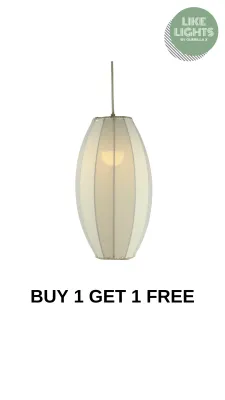
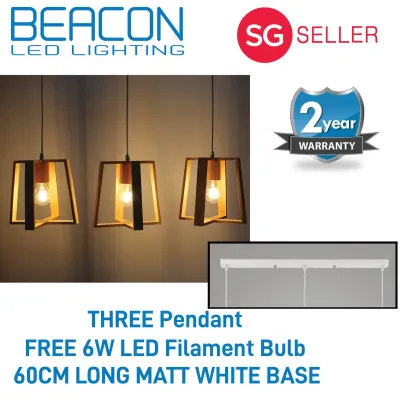
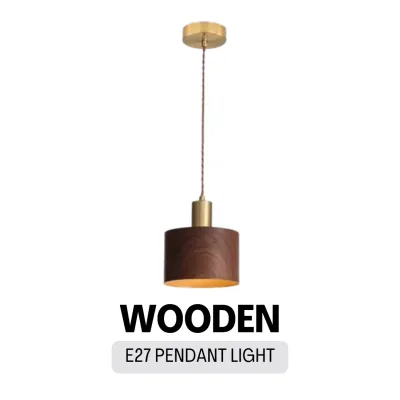
Prices are valid at publication and may change. Please refer to the product page for the latest price.
The color palette of a Japandi fixture should remain close to nature. Warm neutrals, soft creams, sand, charcoal, muted olive greens, and unbleached natural fibers are the standard. These tones harmonize with Singapore’s abundant natural light, making living spaces feel larger and more serene.
Conversely, you should avoid fixtures that feature high-gloss finishes, polished chrome, ornate crystal embellishments, or heavy industrial metals. While matte black metal accents are acceptable in small doses to provide structure—reminiscent of traditional Japanese ink paintings—they should never dominate the fixture. The goal is to create a soft, inviting atmosphere, not a harsh, high-contrast industrial statement.
Best Brands for Japandi Pendant Lighting in Singapore
Choosing where to purchase your pendant lamp depends on your budget, appreciation for designer heritage, and the specific spatial requirements of your home. The Singapore market offers a rich variety of options, ranging from investment-grade heritage pieces to highly accessible flat-pack designs and locally curated furniture collections.

Premium Scandinavian and Japanese Design Houses
For those seeking heirloom-quality pieces that serve as the artistic focal point of a room, premium design houses are the premier choice. Brands like Louis Poulsen, HAY, and Karimoku are celebrated for their meticulous craftsmanship and scientific approach to light distribution. Louis Poulsen, for instance, is famous for designing fixtures where the light source is shielded, eliminating glare while casting a warm, downward glow perfect for dining areas. HAY brings a playful yet restrained Danish sensibility, often utilizing paper-thin shades and soft geometric wireframes that feel incredibly light. Karimoku showcases the pinnacle of Japanese woodworking, utilizing sustainably sourced timbers to create seamless, organic light fixtures.
When purchasing these high-end pieces, it is vital to buy through authorized local dealers in Singapore. This ensures that the electrical components are rated for Singapore’s 230V grid, come with valid local warranties, and include proper installation hardware. Authorized showrooms also allow you to inspect the exquisite wood grains and hand-finished details in person before making an investment.
Accessible Minimalist Brands
If you want to capture the essence of Japandi style without a major financial investment, accessible global brands offer excellent entry points. MUJI is the quintessential representative of Japanese minimalism, offering clean, unpretentious designs. Their paper and simple fabric shade options are highly affordable and blend seamlessly into any background. IKEA similarly provides a wide array of budget-friendly pendant lamps made from renewable materials like bamboo, rattan, and birch veneer.
To elevate these accessible fixtures, consider pairing them with high-quality, dimmable warm LED bulbs rather than standard utility bulbs. You can also experiment with clustering two or three smaller paper or bamboo lamps together at varying heights above a dining table or in a corner. This creates a custom, high-end look at a fraction of the cost. When buying flat-pack lighting, always check the assembly requirements and material durability, as lightweight paper and thin veneers require gentle handling during setup.
Local and Regional Furniture Curators
Local and regional curators bridge the gap between high-end design houses and mass-market retailers. Homegrown Singapore brands like Castlery, Commune, and Journey East specialize in furniture and lighting scaled specifically for Southeast Asian apartments. Castlery offers modern, streamlined lighting with warm wood and matte finishes that fit perfectly into contemporary HDB layouts. Commune blends sleek lines with rich, earthy tones, while Journey East focuses on reclaimed wood, vintage-inspired designs, and eco-friendly woven rattan fixtures.
Shopping with local curators offers the immense benefit of visiting physical showrooms in Singapore. Here, you can assess the true scale, weight, and texture of natural materials under realistic lighting conditions. It also allows you to speak directly with staff regarding custom cord lengths, lead times for imported items, and recommendations for local installation support.
Sizing and Placement Rules for HDB and Condo Ceilings
In typical Singapore residential developments, ceiling heights are a primary constraint. Standard HDB flats and many modern condominiums have ceiling heights hovering around 2.6 meters. Installing a pendant lamp in these spaces requires careful calculation to avoid making the room feel cramped or creating physical hazards.
When hanging a pendant lamp over a dining table, the general rule of thumb is to position the bottom of the fixture 70 to 80 centimeters above the tabletop. This height is low enough to create an intimate, cozy dining zone—essential for the “hygge” aspect of Japandi design—but high enough to keep sightlines clear across the table, ensuring you can converse with guests without a physical barrier.
For open walkways, corridors, or the center of a living room, maintaining adequate clearance is paramount. The bottom of the pendant lamp should sit at least 2.1 meters above the floor. This provides comfortable clearance for taller residents and guests while keeping the fixture visually integrated into the room rather than tucked awkwardly against the ceiling.
If you are working with a smaller living area, opt for airy, open-weave designs such as slatted wood or woven rattan. These materials allow light and sightlines to pass through the fixture, preventing it from feeling like a heavy visual block. This transparency helps maintain the light, uncluttered feel that is fundamental to Japandi interiors.
Essential Technical and Safety Checks Before You Buy
Before purchasing any pendant lamp, conducting a thorough technical and safety check is essential to ensure compatibility with Singapore’s residential infrastructure. Singapore uses a standard electrical voltage of 230V at a frequency of 50Hz. If you are considering purchasing a light fixture from overseas online marketplaces, verify that the internal wiring and sockets are rated for this voltage. Fixtures designed solely for 110V systems, common in North America and Japan, are not compatible without a step-down transformer and can present a serious fire hazard if connected directly to Singapore’s grid.
Pay close attention to the bulb base specifications of the fixture. The most common bulb bases in Singapore are E27 (medium screw) and E14 (small screw), which are widely available in local hardware stores and supermarkets. Selecting a fixture that uses these standard bases ensures that finding replacement bulbs will be easy and convenient. Additionally, check the maximum wattage rating of the fixture to prevent overheating, especially when using traditional halogen or incandescent bulbs. Opting for energy-efficient LED bulbs is highly recommended, as they generate significantly less heat and have a much longer lifespan.
Color temperature is another critical factor that directly influences the mood and aesthetic of your Japandi home. To complement the natural wood grains, woven fibers, and earthy textures of your decor, opt for warm white bulbs with a color temperature of 2700K to 3000K. Avoid cool white (4000K) or daylight (6000K) bulbs, as their bluish undertones can make natural materials look cold, flat, and sterile, stripping away the cozy warmth that is central to the Japandi philosophy.
When it comes to installation, safety must always come first. For any hardwired ceiling installation, begin by isolating the power supply at the main circuit breaker (MCB) to eliminate the risk of electrical shock. It is strongly advised to hire a licensed electrical worker (LEW) to perform the installation, particularly when dealing with fixed wiring, concrete ceiling drilling, or heavy fixtures. Before beginning, always check the applied product’s label and the treated item’s manufacturer instructions. If the instructions conflict, or if you are unsure about the ceiling’s load-bearing capacity, stop immediately and consult the manufacturer or a qualified professional.
Frequently Asked Questions (FAQ)
Can I install a heavy wood or ceramic pendant lamp on an HDB false ceiling?
Standard gypsum board false ceilings are not designed to support heavy loads directly. Hanging a heavy solid wood or ceramic pendant lamp directly from the plasterboard can cause the ceiling to sag or collapse over time. To install a heavy fixture safely, the mounting bracket must be anchored directly to the structural concrete slab above the false ceiling using threaded rods or heavy-duty toggle bolts. Always consult a professional installer or a licensed contractor to assess the weight limits of your ceiling and ensure a secure, code-compliant installation.
How do I clean and maintain rattan or washi paper pendant shades?
Natural materials like rattan, bamboo, and washi paper require gentle, dry maintenance, especially in Singapore’s humid tropical climate. For regular cleaning, use a soft-bristled brush, a dry microfiber cloth, or a vacuum cleaner equipped with a soft brush attachment on low suction to remove dust. Never use wet cloths, harsh chemical cleaners, or liquid sprays on paper or untreated wood, as moisture can cause warping, staining, or mold growth. Keeping your home well-ventilated or utilizing air conditioning helps regulate humidity levels, preserving the structural integrity and natural beauty of these delicate fibers for years to come.
Community discussion
Share your experience or ask a question. Comments are reviewed before publication.