
Choosing the right kids art frame in Singapore requires balancing safety, ease of use, size versatility, and climate resilience. Because children produce art constantly, the ideal frame must allow for rapid swapping while protecting the artwork from the region’s high humidity. By selecting the correct materials and frame styles, you can transform your home into a dynamic gallery that celebrates your child’s creativity without cluttering your living space.
What Makes a Great Kids Art Frame?
To choose a frame that accommodates a child’s evolving artistic journey, you must evaluate several practical criteria. Standard retail picture frames are rarely designed for the high-volume, quick-turnaround nature of children’s art. Understanding these core factors ensures your investment remains functional, safe, and durable over years of creative output.
Safety and Materials
Safety is the primary consideration when placing frames in areas where children sleep, play, or run. Traditional glass glazing poses a significant risk in active households; if a frame is knocked off the wall, shattered glass can cause serious injury. Modern alternatives like acrylic (polymethyl methacrylate), PET (polyethylene terephthalate), and polystyrene sheets offer excellent optical clarity while being virtually shatterproof.
Products mentioned in this guide

Prices are valid at publication and may change. Please refer to the product page for the latest price.
When evaluating frame borders, look for rounded corners and smooth edges rather than sharp, mitered joints. The finishes on wooden or plastic frames should be non-toxic, lead-free, and low in volatile organic compounds (VOCs). Checking for child-safe certifications or manufacturer material disclosures is a reliable way to verify that the frame will not off-gas harmful chemicals in a child’s bedroom.
Ease of Use
If changing an art piece requires taking a frame down, bending stiff metal tabs, removing a dusty backboard, and tape-mounting the paper, the display will rarely be updated. Frequent artwork rotation requires a mechanism that allows you to swap pieces in seconds.
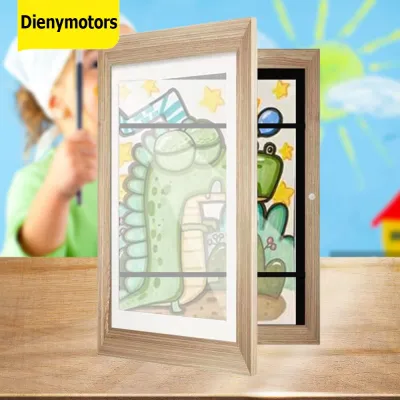
Front-loading frames, magnetic panels, and cabinet-style frames are the most efficient solutions for busy parents. These designs allow you to open the front cover or slide a new drawing in from the side without removing the frame from the wall. This convenience ensures your wall display stays as fresh and active as your child’s imagination.
Size Adaptability
Children rarely paint or draw on uniform paper sizes. While standard A4 (210 x 297 mm) and A3 (297 x 420 mm) sheets are common in Singaporean preschools and primary schools, many masterpieces are created on non-standard sketchbooks, construction paper, or torn sheets.
To accommodate these variations, look for frames equipped with flexible interior mats or floating designs. A floating frame sandwiches the artwork between two clear sheets, allowing odd-shaped, torn, or circular drawings to be displayed beautifully without trimming. Alternatively, frames with generous depth or spring-loaded backings can accommodate thicker materials like cardboard, felt collages, and light 3D crafts.
Durability and Climate Resistance
Singapore’s tropical climate, characterized by relative humidity levels that frequently exceed 80 percent, presents unique challenges for preserving paper and wood. High humidity causes paper fibers to expand and contract, leading to unsightly warping or cockling. It also creates an environment where mold, mildew, and foxing (brown spots on paper) can thrive.
To protect your child’s creations, avoid frames with cheap, unsealed corrugated cardboard backings, which absorb moisture like a sponge. Instead, opt for frames with moisture-resistant backboards made of treated medium-density fiberboard (MDF), solid plastics, or aluminum. Additionally, choosing frames with small ventilation gaps or using acid-free mounting tape helps prevent moisture from trapping behind the glazing, preserving the colors and integrity of the artwork.
Top Kids Art Frame Solutions Available in Singapore
Singapore offers a variety of retail and custom framing options tailored to different budgets, styles, and functional needs. Depending on whether you prefer a minimalist modern look, a high-capacity storage solution, or museum-grade preservation, you can find excellent choices across the island.

Magnetic and Acrylic Floating Frames
Magnetic acrylic frames consist of two clear acrylic or PET panels held securely together by strong neodymium magnets in each corner. To display a drawing, you simply separate the panels, center the artwork, and let the magnets snap back together. This design creates a sleek, borderless look where the wall color behind the frame serves as a natural border.
In Singapore, MUJI’s acrylic frames are a highly popular and accessible choice. Available in various sizes at major outlets such as Plaza Singapura, Jewel Changi, and Ion Orchard, these frames can be mounted on walls using dedicated metal stand-off screws or placed on tabletops. They provide exceptional optical clarity that rivals glass while remaining completely shatterproof.
While acrylic frames offer a stunning, minimalist aesthetic, they require specific care. Acrylic scratches much more easily than glass, so you must clean them with a soft microfiber cloth rather than paper towels or abrasive sponges. Additionally, avoid placing acrylic frames in direct, intense sunlight near large balcony windows, as prolonged exposure to ultraviolet (UV) light can cause some lower-grade acrylics to yellow or warp over time.
Front-Loading and Snap Frames
Front-loading cabinet frames are designed specifically for high-volume young artists. These frames feature a hinged front door that opens like a cabinet, containing a deep storage compartment behind the display window. This compartment can store up to 50 previous drawings, held in place by internal elastic straps, allowing you to archive past work while instantly showcasing the newest piece.
Brands like My Little DaVinci and Articulate Gallery are excellent examples of this design and are widely available through local children’s boutiques, specialty home stores like Spotlight (located at Plaza Singapura and Westgate), and verified sellers on major online marketplaces. For a more budget-friendly approach, IKEA offers lightweight plastic-front frames, such as the FISKBO or YLLEVAD series, which use safe polystyrene glazing and simple slide-in mechanisms.
While cabinet-style frames are incredibly convenient, they tend to have a bulkier profile on the wall to accommodate the storage compartment. Additionally, thin paper may curl at the edges if the internal spring clips or elastic straps do not apply even pressure. In Singapore, basic plastic front-loading frames generally range from S$10 to S$25, while premium wooden cabinet-style storage frames range from S$40 to S$75 depending on the size and wood finish.
Custom Framing and Gallery-Style Displays
For truly special milestones—such as a child’s first canvas painting, a detailed clay relief, or an award-winning school project—off-the-shelf frames may not suffice. Custom framing allows you to design a display with precise dimensions, deep shadow boxes for 3D art, and premium archival materials that prevent deterioration.
Singapore is home to several reputable custom framing establishments. Merlin Frame Maker, with long-standing outlets in Waterloo Street and River Valley, is highly regarded for professional preservation. For those seeking specialized design advice, Framing Angie at Holland Village offers tailored consultations. If you are looking for competitive rates and a wide selection of independent framing merchants, the historic Bras Basah Complex remains the go-to destination for art framing in Singapore.
When commissioning a custom frame for a child’s room, always specify child-friendly materials. Request lightweight, UV-protective acrylic glazing instead of heavy float glass. Ask the framer to use acid-free mat boards and backing papers to prevent the wood pulp in the artwork from yellowing over time. Finally, ensure they install heavy-duty D-rings and plastic-coated hanging wire to guarantee the frame remains securely anchored to the wall.
How to Safely Hang and Arrange Kids Art at Home
Once you have selected your frames, installing them securely and arranging them thoughtfully will create an engaging, safe environment that encourages your child’s artistic development.
Hanging Hardware
Most homes in Singapore—including Housing & Development Board (HDB) flats and private condominiums—feature reinforced concrete or solid brick walls. Drilling into these walls requires a rotary hammer drill, masonry drill bits, and plastic wall plugs (rawplugs) to ensure screws hold firmly. For heavy wooden frames, custom shadow boxes, or deep cabinet frames filled with stored paper, drilling is the safest and most reliable mounting method.
If you are renting or prefer not to drill holes, high-quality adhesive strips (such as 3M Command strips) are an excellent alternative for lightweight acrylic or plastic frames under 1.5 kg. To ensure a secure bond on painted concrete walls, you must clean the wall surface with rubbing alcohol, allow it to dry completely, and press the adhesive strip firmly for at least 30 seconds. Allow the adhesive to cure for 24 hours before hanging the frame, and always adhere strictly to the manufacturer’s weight limits.
Height and Layout
To foster your child’s confidence, design your gallery wall with their perspective in mind. Hanging a dedicated portion of the display at your child’s eye level—typically between 90 cm and 110 cm from the floor, depending on their age—allows them to appreciate their work and interact with the display.
When arranging multiple frames, a “salon-style” cluster or a structured grid works best. A grid layout provides a clean, organized appearance that prevents the colorful, chaotic nature of children’s art from overwhelming your room’s decor. You can maintain visual harmony by using frames of the same color or material, allowing the diverse colors of the artwork to stand out.
Safety Boundaries
Never hang heavy wooden frames, glass-glazed frames, or large-format acrylic displays directly above sleeping areas, such as baby cribs, toddler beds, or active play zones. Even when using professional wall anchors, accidental impacts from toys, balls, or active play can dislodge wall hangings. Keep the spaces directly above beds completely clear of heavy objects, opting instead for lightweight wall decals or unframed paper displays in those specific zones.
Frequently Asked Questions (FAQ)
Is it safe to use glass frames in a child's bedroom?
Using glass frames in a child’s bedroom or active play area is highly discouraged. Glass is heavy and can easily shatter into sharp, dangerous shards if a frame is knocked down during play. For children’s rooms, always choose shatterproof alternatives such as acrylic, PET, or polystyrene glazing. These materials are lightweight, impact-resistant, and offer comparable visual clarity without the safety risks associated with traditional glass.
How can I display odd-sized or bulky 3D artwork?
For bulky items like clay models, paper mache, or thick collages, shadow box frames are the best choice. These frames feature a deep recess between the glazing and the backing board, providing the necessary clearance for three-dimensional objects. For temporary or highly irregular paper sizes, you can mount wooden clipboards to the wall, or install a stainless steel wire display system with magnetic clips. This allows you to hang odd-shaped crafts easily without damaging the paper or requiring custom-sized frames.
Community discussion
Share your experience or ask a question. Comments are reviewed before publication.