
Choosing the perfect large ceramic table lamp involves balancing physical presence, artistic craftsmanship, and mechanical reliability. In Singapore’s diverse interior landscape—ranging from minimalist high-rise condominiums to spacious landed properties—a substantial ceramic lamp does more than illuminate a dark corner; it serves as a foundational design anchor. The ideal brand for your home depends on whether you view the lamp as a lifetime artisanal investment, a reliable and stylish everyday workhorse, or a flexible, trend-driven decor update.
To find the right fit, consider how you intend to use the fixture and your budget priorities:
- Choose Heritage and Designer Brands if you are looking for a singular statement piece. These brands excel in proprietary glaze chemistry, hand-thrown ceramic bodies, and heavy, solid-metal hardware that elevates a room's entire aesthetic.
- Choose Contemporary Mid-Range Brands if you want the optimal balance of refined modern design, structural durability, and consistent manufacturing quality without a bespoke price tag.
- Choose Accessible and Trend-Driven Brands if you enjoy updating your decor frequently or need to style low-traffic areas like guest rooms, where visual impact is desired but heavy daily wear is unlikely.
Ultimately, no single brand or category wins on every front. By understanding the structural, aesthetic, and mechanical differences across these market tiers, you can select a fixture that matches your space’s scale and your personal design priorities.
Products mentioned in this guide
![[Buy 1 Get 1 Free] Cute Pirate Ceramic Table Light](https://img.lazcdn.com/g/p/ef40291a313f25fde15ce9fea2053cec.jpg_400x400q80.jpg_.webp)
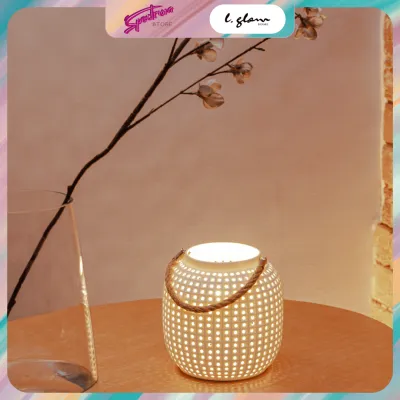
Prices are valid at publication and may change. Please refer to the product page for the latest price.
Core Comparison Dimensions: Evaluating Ceramic Quality and Design
When shopping for a large ceramic table lamp, it is easy to be swayed solely by its silhouette or color. However, evaluating the physical integrity of the ceramic and its accompanying hardware ensures your investment remains safe, stable, and beautiful for years to come.
Craftsmanship and Glaze Finish
The quality of a ceramic lamp begins with the clay body and the firing process. High-quality ceramics are typically made from stoneware or earthenware that has been fired at precise, high temperatures to ensure density and strength. When inspecting a lamp, look closely at the glaze distribution. Premium glazes exhibit depth, character, and consistency, even in reactive or crackle finishes where variation is intentional.
Cheaply manufactured ceramics often show unintended pitting, pinholes, or thin spots in the glaze where the raw clay peeks through. These imperfections can absorb moisture and dirt over time, particularly in Singapore’s humid climate, leading to discoloration.
Furthermore, the manufacturing method significantly impacts the final form. Hand-thrown ceramic lamps are shaped on a potter’s wheel, giving each piece subtle, organic variations in texture and contour. Slip-cast lamps, created by pouring liquid clay into plaster molds, offer highly uniform shapes. Because large-scale ceramic pieces are highly susceptible to warping, shrinking, or cracking in the kiln, reputable brands employ rigorous quality control to discard warped pieces, ensuring that the final lamp body is perfectly symmetrical and sits completely flat on flat surfaces.
Base Stability and Proportions
A large ceramic table lamp naturally carries significant visual and physical weight. Because these fixtures often stand between 60 to 80 centimeters tall, they have a higher center of gravity than smaller accent lights. This height makes physical stability a paramount safety consideration, especially in active households with children or pets.
To prevent accidental tipping, high-quality brands design their lamps with a wide, substantial base that distributes weight evenly. Many premium manufacturers go a step further by adding internal weights—such as steel plates or plaster fills—inside the bottom cavity of the ceramic vessel to lower the center of gravity.
Additionally, examine the material applied to the very bottom of the lamp base. Raw, unpolished ceramic is highly abrasive and can easily scratch polished marble, delicate wood veneers, or glass tabletops. Look for brands that seal the bottom with thick, high-density felt, natural cork, or durable EVA foam pads. In Singapore’s tropical environment, synthetic felt or treated foam is often preferred over low-grade cork, which can degrade or harbor moisture if exposed to high humidity over long periods.
Hardware and Design Coherence
While the ceramic body is the visual star, the mechanical and structural hardware determines the lamp’s longevity and ease of use. The metal fittings—including the saddle, harp, socket, finial, and neck—should feel robust and fit together seamlessly. High-quality brands utilize solid brass, heavy-duty steel, or anodized aluminum with clean, precision-machined threading.
In contrast, lower-tier fixtures frequently rely on lightweight plated plastics or thin, soft metals that easily cross-thread, strip, or bend. A loose or poorly threaded harp (the metal wire support that holds the shade) will cause the lampshade to sit crookedly, instantly disrupting the clean lines of your interior design.
Pay close attention to the socket assembly. Premium lamps often feature heavy porcelain or high-grade phenolic sockets that resist heat and wear, paired with smooth, positive-action switches (whether a rotary turn-knob, a push-through switch, or a premium inline cord switch). The cord exit is another indicator of quality; it should feature a rubber or plastic grommet where the wire leaves the ceramic body to prevent the sharp ceramic edges from fraying the electrical insulation over time.
Brand Tiers: What to Expect Across the Market
Navigating the market is much easier when you group brands into distinct tiers. Each tier operates with different manufacturing philosophies, material standards, and price points, allowing you to align your expectations with your budget.

Heritage and Designer Brands
At the pinnacle of the market are heritage design houses and artisan studios. These brands focus on limited-run production, often collaborating with renowned ceramicists or historical European and Asian potteries. Here, the emphasis is on proprietary glaze chemistry—such as multi-layered reduction glazes, hand-painted patterns, or complex crackle textures—that cannot be replicated by mass-production machinery.
The hardware in this tier is almost exclusively solid, heavy-gauge metal, often finished with hand-rubbed patinas that age gracefully. The included lampshades are equally premium, crafted from natural Belgian linen, raw silk, or hand-loomed cotton, featuring hand-rolled edges and sturdy, powder-coated steel frames.
In Singapore, these lamps are treated as functional art pieces, typically priced from S$600 to upwards of S$1,500. They are highly sought after for formal living rooms, grand entryways, or as focal points in high-end transitional and organic modern homes. The primary trade-off is the investment cost and, occasionally, longer lead times for delivery or custom shade options.
Contemporary Mid-Range Brands
Contemporary mid-range brands represent the sweet spot for the majority of design-conscious homeowners. These brands focus on modern, cohesive design languages—ranging from sleek Japandi minimalism to bold mid-century modern shapes—and utilize highly refined, standardized slip-cast manufacturing processes.
While they may not feature the one-of-a-kind variations of studio pottery, they offer exceptional consistency. When you buy a pair of mid-range ceramic lamps for a bedroom console or bedside tables, you can expect them to match perfectly in height, shape, and glaze color. The hardware is durable and reliable, usually consisting of brass-plated steel or brushed nickel, paired with high-quality linen-blend shades.
Typically priced between S$250 and S$600 in the local market, these brands offer excellent structural integrity and sophisticated aesthetics without the premium price tag of artisan provenance. They are highly durable, making them ideal for everyday use in busy family rooms, home offices, or dining room sideboards.
Accessible and Trend-Driven Brands
Accessible, trend-driven brands focus on speed-to-market, translating the latest interior design trends into affordable products. If you are looking for a highly specific, fashionable shape—such as a heavily textured, plaster-like organic vessel or a bold geometric silhouette—you will easily find it in this tier at a fraction of the cost.
To maintain lower price points (typically ranging from S$80 to S$200), these manufacturers optimize their production processes. The ceramic walls of the lamp body are often thinner, making the overall fixture lighter and more fragile. Glazes are usually simpler, single-layer applications or painted finishes rather than complex kiln-fired chemical glazes.
Additionally, the hardware is lightweight, often utilizing plastic sockets and thin metal harps. While these lamps look stylish from a distance, they require gentle handling. They are best suited for low-traffic areas, styling guest bedrooms, or for renters who want to personalize a space without committing to permanent, high-value furnishings. You can easily elevate these budget-friendly options by replacing the stock shade with a higher-quality linen shade and adding a non-slip silicone pad to the base to improve stability.
Pre-Purchase Verification: Safety and Compatibility in Singapore
Before finalizing your purchase, especially when browsing international brands online, it is critical to verify that the lamp is physically and electrically compatible with Singapore’s domestic standards.
Electrical Compliance
Singapore operates on a 230V, 50Hz electrical system, utilizing the Type G British standard 3-pin plug. When purchasing a large ceramic table lamp, always check the electrical specifications of the fixture:
- Voltage Rating: Ensure the socket and internal wiring are rated for 220V–240V. Lamps imported directly from countries with 110V systems (such as the United States or Japan) will require rewiring or a bulky step-down transformer to operate safely. Simply using a plug adapter on a 110V lamp can lead to electrical failure, socket damage, or fire hazards.
- Safety Certification: Look for products that carry recognized safety certifications. For local retail purchases, ensure the power cord and plug assembly carry the Enterprise Singapore Safety Mark. If importing a designer lamp, verify that it complies with international safety standards such as CE, BS, or UL listing.
- Wiring Integrity: If you are purchasing a vintage ceramic lamp or a custom-made piece, always have a qualified electrician inspect or replace the internal wiring and socket to ensure it meets modern safety standards before plugging it into your wall.
Bulb Compatibility and Heat
Always check the manufacturer’s label inside the lamp socket to identify the maximum allowable wattage (typically marked as Max 40W or Max 60W) and the required base interface (such as E27 screw or B22 bayonet). Exceeding the maximum wattage rating is a serious safety hazard that can melt the socket, degrade the internal wiring, or even ignite the lampshade.
For large ceramic table lamps, it is highly recommended to use premium LED bulbs rather than traditional incandescent bulbs. Large lampshades create a semi-enclosed chamber around the bulb. Traditional bulbs generate substantial heat, which accumulates inside the shade over hours of use. This constant heat exposure can dry out, yellow, or crack the plastic inner lining of the lampshade, causing it to deteriorate prematurely. LEDs run exceptionally cool, consume significantly less energy, and are available in a wide range of color temperatures to suit your ambiance preferences.
Spatial Planning
Because of their grand proportions, large ceramic lamps require careful spatial planning to ensure they harmonize with your furniture and layout. Before purchasing, measure the depth and width of the tabletop where the lamp will sit:
- Base Footprint: The ceramic base must sit entirely on the flat surface of your console, sideboard, or bedside table. If any part of the base overhangs the edge, the lamp is highly vulnerable to being knocked over.
- Shade Diameter: Remember that the lampshade is almost always wider than the ceramic base. Ensure there is adequate clearance between the outer edge of the shade and adjacent walls, curtains, or high-traffic walkways to prevent people from bumping into it.
- Visual Height: For comfortable reading and ambient lighting, the bottom of the lampshade should align roughly with your eye level when you are seated nearby. If the lamp is too tall, you will look directly up into the exposed bulb, creating harsh, uncomfortable glare.
Frequently Asked Questions (FAQ)
How do I clean a textured or unglazed ceramic lamp base?
Textured, matte, or unglazed ceramic finishes are highly porous and require delicate care to prevent permanent staining. Always turn off and unplug the lamp before cleaning. Use a clean, dry, soft-bristled brush—such as a soft paint brush or a clean makeup brush—to gently sweep away dust from the crevices and textured valleys of the ceramic body.
For general maintenance, a dry microfiber cloth is highly effective. Never use liquid chemical cleaners, household detergents, or damp cloths on unglazed ceramic, as the porous material will absorb the moisture and can leave permanent, unsightly water rings or dark stains. If a spot requires deeper cleaning, consult the manufacturer’s care instructions or contact a professional restoration specialist.
Can I change the lampshade on a large ceramic table lamp?
Yes, you can easily change the lampshade to update the style or replace a damaged shade, provided you maintain the correct physical proportions and hardware compatibility. To ensure a balanced look, measure the height of the ceramic base and choose a shade that is roughly two-thirds of that height. The width of the shade’s bottom opening should be approximately equal to the height of the ceramic base itself.
When buying a replacement shade, check the mounting style. Most large lamps use a spider fitter that rests on top of a metal harp and is secured by a screw-on finial. Ensure your replacement shade matches this system, or purchase a matching harp of the correct height to position the new shade perfectly, keeping the socket and bulb completely hidden from view.
Community discussion
Share your experience or ask a question. Comments are reviewed before publication.