
For a standard 2.6m HDB ceiling, the ideal LED ceiling light tube specification balances a compact physical profile (under 50mm depth), a moderate brightness output (typically 800 to 1,600 lumens per fixture, translating to roughly 9W to 18W), a wide beam angle of 120 degrees or more, and a highly diffused frosted cover. This combination prevents the harsh glare and visual oppression common with high-output commercial fixtures in low-clearance spaces.
Selecting lighting for a flat with lower ceilings requires a shift in how we evaluate brightness and fixture dimensions. Unlike high-ceiling properties where light has ample space to disperse, a 2.6m ceiling places the light source close to eye level, making optical comfort and physical clearance paramount.
By focusing on low-profile housings, diffused optics, and appropriate lumen outputs, you can create a bright, open atmosphere that makes your HDB flat feel more spacious without causing visual fatigue.
Products mentioned in this guide
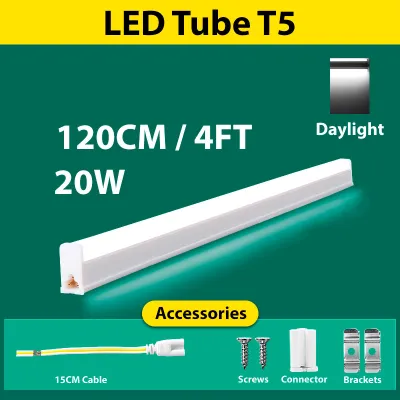
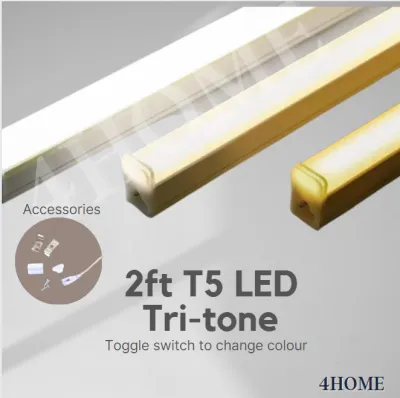
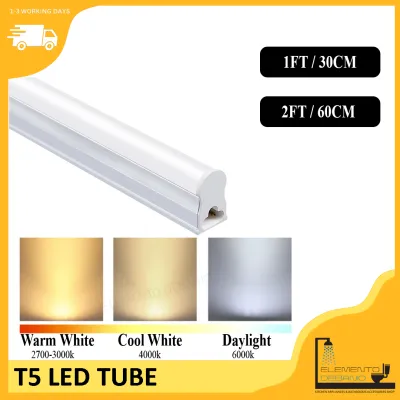
Prices are valid at publication and may change. Please refer to the product page for the latest price.
Understanding the 2.6m Ceiling Constraint in HDB Flats
Singapore HDB flats built in recent decades commonly feature a standard floor-to-ceiling height of approximately 2.6 meters. This structural baseline leaves very little vertical clearance once you factor in the height of standard furniture, doorways, and standing adults. When a lighting fixture is mounted directly to the concrete slab, it sits only about 0.8 to 1.0 meters above the average eye level, making direct visual contact with the light source a frequent occurrence during daily activities.
This close proximity fundamentally changes how light behaves within the room. In high-ceiling properties, light has ample distance to disperse, scatter, and soften before reaching the living plane. In a 2.6m HDB room, however, an overly bright or poorly shielded light source creates immediate hot spots, intense glare, and harsh, distracting shadows that can make the room feel cramped and uncomfortable.
Furthermore, low-clearance spaces are highly sensitive to visual clutter. If a light fixture is physically bulky or projects too far downward, it visually lowers the ceiling line, making the room feel claustrophobic. Selecting the correct LED ceiling light tube specs ensures your flat remains bright, visually expansive, and comfortable for daily tasks without overwhelming the compact vertical volume.
Choosing the Right Length and Profile for Low Clearances
The physical dimensions of your LED ceiling light tube directly influence both the visual volume of the room and the overall distribution of light. Standard LED tubes generally come in 2-foot (approx. 60cm) and 4-foot (approx. 120cm) variants. Matching these lengths to the specific proportions of your HDB rooms is crucial for maintaining spatial balance and preserving headroom.

For elongated spaces like corridors, kitchens, or utility yards, a 4-foot tube works exceptionally well. It aligns with the linear flow of the space and casts a continuous, unbroken line of light along the narrow path. However, placing a 4-foot tube in a compact, square bedroom can visually dominate the ceiling, making the walls feel as though they are closing in.
In compact bedrooms or study rooms, 2-foot LED tubes are much more proportionate. Rather than relying on a single, massive central fixture that draws the eye upward to a high-contrast bright spot, utilizing smaller, strategically placed fixtures helps distribute light more evenly. This approach softens the overall visual impact and preserves the illusion of height.
To maximize the remaining headroom in a 2.6m flat, prioritize slim-profile or low-clearance integrated LED batten designs. Standard traditional batten holders can protrude significantly from the ceiling. Modern integrated LED tubes, by contrast, often feature ultra-slim housings with depths of less than 30mm to 40mm, allowing them to sit nearly flush against the concrete slab.
Balancing Wattage and Lumens to Prevent Glare
When transitioning to LED technology, many homeowners mistakenly rely on wattage as a measure of brightness. Wattage simply indicates power consumption, whereas lumens measure the actual light output. Because LEDs are highly efficient, a low-wattage tube can emit a surprising amount of light, which can easily overwhelm a low-ceiling room if not carefully calibrated.
In a 2.6m HDB flat, the distance between the light source and the floor or work surfaces is relatively short. Consequently, you do not need the high-lumen output typical of commercial spaces or high-ceiling landed properties to achieve comfortable lux levels at floor or desk height. For general ambient lighting in a standard HDB bedroom, a target of roughly 100 to 150 lumens per square meter (lux) is usually sufficient, while task areas like kitchens may require 200 to 300 lumens per square meter.
Installing high-wattage commercial LED tubes—such as those emitting 2,400 lumens or more per single tube—in a small HDB room often results in blinding glare. The intense point-source brightness can cause eye strain and headaches, particularly when you are lying down in bed or looking up from a sofa. For most residential HDB applications, individual tubes emitting between 800 and 1,600 lumens (typically consuming 9W to 16W of power) offer a much more comfortable balance.
To enhance comfort, consider selecting fixtures that support multi-step switching or dimming capabilities. Multi-step switching allows you to toggle the wall switch to adjust the brightness levels (e.g., 100%, 50%, and 10%) without installing complex smart home wiring. This flexibility is invaluable in multi-purpose HDB spaces, allowing you to transition from bright task lighting during the day to soft, glare-free ambient light in the evening.
Selecting Diffusers and Beam Angles for Eye Comfort
The optical cover or diffuser of your LED ceiling light tube plays a pivotal role in shaping how light is distributed across your HDB flat. Because the light source is physically close to your eyes, direct exposure to the individual LED diodes can cause immediate visual discomfort and temporary blind spots.
When selecting a fixture, compare the available diffuser materials carefully. Clear or prismatic polycarbonate covers offer high light transmission but do very little to soften the light, often leaving the individual LED points highly visible and harsh. For a 2.6m ceiling, heavily frosted or opal acrylic (PMMA) diffusers are highly recommended. These covers scatter the light uniformly, hiding the individual diodes completely and transforming the tube into a soft, glowing plane of light.
Beam angle is another critical specification that dictates how effectively the light washes the room. A narrow beam angle concentrates light downward, creating intense pools of brightness on the floor while leaving the upper walls and ceiling in deep shadow. This high-contrast effect makes a low ceiling feel even lower and more oppressive.
To combat this, choose LED ceiling light tubes with wide beam angles of 120 degrees or more. A wide distribution allows the light to wash the upper portions of the walls and bounce off the ceiling surface. This indirect illumination reduces harsh shadows, evens out the contrast, and visually expands the boundaries of the room, making the 2.6m height feel significantly more open.
Using Color Temperature to Influence Spatial Perception
Color temperature, measured in Kelvin (K), does not alter the physical dimensions of your HDB flat, but it profoundly influences human spatial perception and mood. The choice between cool and warm tones can visually expand or contract the perceived volume of a room with a 2.6m ceiling.
Cool white light, typically rated around 4000K, is highly effective at creating a crisp, clean, and airy environment. This color temperature mimics natural daylight more closely than warmer tones, which helps stimulate alertness and makes small spaces feel more open and less restrictive. Utilizing 4000K LED tubes in communal areas, kitchens, and study rooms can make the low ceiling feel slightly higher and less imposing.
Conversely, warm white light (around 3000K) is excellent for creating a cozy, intimate, and relaxing atmosphere, making it a popular choice for bedrooms. However, because warm light tends to pull the visual boundaries inward, it can make a low ceiling feel lower and more enclosed if the room is small. If you prefer warm white, ensure you compensate by using a wider beam angle and highly diffused fixtures to keep the space from feeling cramped.
Regardless of your preference, maintaining color temperature consistency across adjacent, visible zones is essential in HDB flats. Because many HDB layouts feature open-plan living and dining areas or visible hallways, mixing drastically different color temperatures (such as a 3000K living room next to a 6500K kitchen) creates visual fragmentation. This disjointed flow draws attention to the physical boundaries of the flat, highlighting its compact size rather than masking it.
Mounting Methods and Electrical Safety Boundaries
The physical installation of your LED ceiling light tubes must prioritize both spatial preservation and structural safety. In an HDB flat with a 2.6m ceiling, suspended or pendant-mounted tube lights should be avoided. Hanging fixtures consume precious vertical clearance, creating physical hazards for taller occupants and visually dividing the room in a way that emphasizes the low ceiling height. Direct surface mounting is the most practical method to preserve every centimeter of headroom.
Installing surface-mounted fixtures directly onto HDB ceilings requires an understanding of their structural composition. HDB ceilings are constructed from solid, reinforced concrete. Standard drywall screws or light-duty plastic anchors will not hold a fixture securely over time. For a safe and permanent installation, you must use a masonry drill bit, a hammer drill, and appropriate concrete wall plugs or expansion anchors designed to grip the dense concrete.
Before undertaking any electrical work, safety boundaries must be strictly observed. Always isolate the power at the main consumer unit (DB box) before touching any wiring or removing existing fixtures. Verify that the new LED ceiling light tube is compatible with Singapore’s standard residential voltage of 230V at 50Hz, and check the condition of the existing ceiling rose and wiring insulation for signs of cracking or heat degradation.
While swapping an existing light fixture on a one-for-one basis is a task some homeowners handle themselves, certain scenarios require professional intervention. If your installation involves running new conduit, creating new power points, altering fixed electrical wiring, or dealing with damaged or exposed cables, you must stop and engage a licensed electrician. In Singapore, complex electrical works must be performed by an Energy Market Authority (EMA) licensed electrical worker to ensure compliance with local safety standards and prevent fire hazards.
Frequently Asked Questions (FAQ)
Can I use a standard 4-foot LED tube light in a small HDB bedroom?
While a standard 4-foot (120cm) LED tube can physically fit on a bedroom ceiling, it is often disproportionately large for a small HDB bedroom. A fixture of this size can dominate the visual field, draw unwanted attention to the low ceiling, and produce excessive, uneven light. For a balanced aesthetic and more comfortable light distribution, consider using shorter 2-foot (60cm) tubes or multiple smaller, distributed fixtures instead.
Do LED tube lights generate enough heat to damage a low HDB ceiling?
No, LED tube lights do not generate enough heat to damage a solid concrete HDB ceiling. However, while LEDs run much cooler than traditional fluorescent tubes, their internal drivers and heat sinks still produce localized heat. If a slim-profile fixture lacks adequate ventilation or a high-quality heat sink, this heat buildup can degrade the electronic components over time, reducing the lifespan of the LED tube.
Is it better to surface-mount or recess LED tube lights in HDB flats?
Direct surface mounting is the standard and most practical method for HDB flats. Recessing light fixtures requires cutting or hacking into the ceiling structure, which is strictly regulated and generally not permitted on structural reinforced concrete slabs in HDB flats due to safety and structural integrity concerns. Surface-mounted slim-profile LED tubes offer a safe, compliant, and highly effective alternative that preserves your ceiling’s integrity.

Community discussion
Share your experience or ask a question. Comments are reviewed before publication.