
The ideal LED desk lamp brand for a student in Singapore depends on a balance of budget, desk space, and specific eye-care needs. For premium, specialized eye-care and ultra-wide desk coverage, BenQ is the leading brand, though it requires a significant financial investment. Philips represents the most reliable mid-range option, offering highly consistent flicker-free performance and robust build quality. For budget-conscious students or those living in compact dormitories, Xiaomi provides excellent minimalist designs and smart integration at a highly competitive price point. Regardless of the brand selected, students must verify that the lamp complies with local electrical safety standards, specifically matching the local 230V grid and carrying appropriate safety certifications.
What Makes an LED Desk Lamp Ideal for Long Study Sessions?
To understand which brand fits best, you must first understand the technical metrics that prevent eye strain during long study sessions. A high-quality lamp does more than just throw light on a textbook; it manages contrast, shadows, and invisible light frequencies that fatigue the brain and eyes.
Eye Comfort and Flicker-Free Technology
Invisible flicker from low-quality LED drivers is a primary cause of headaches and eye strain during late-night study sessions. High-quality LED desk lamps utilize constant-current DC drivers to eliminate this high-frequency strobe effect entirely. Another critical factor is the Color Rendering Index (CRI, or Ra), which measures how accurately a light source reveals the true colors of objects compared to natural sunlight. Students should look for a CRI of Ra 90 or higher, which ensures that colored diagrams, text, and drawings are vivid and easy to distinguish, reducing cognitive fatigue. Furthermore, uniform light distribution is essential; a lamp must spread light evenly across the entire working area rather than creating a single, harsh hot spot. This uniform distribution minimizes the dramatic contrast between bright paper and dark desk surfaces, which forces the pupils to constantly dilate and constrict.
Products mentioned in this guide
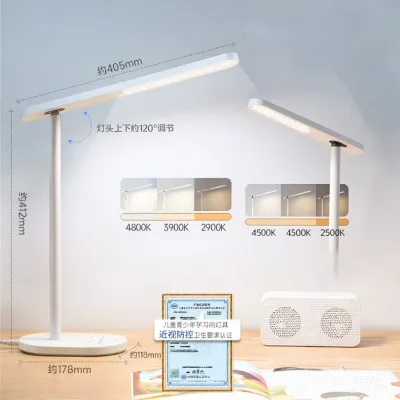
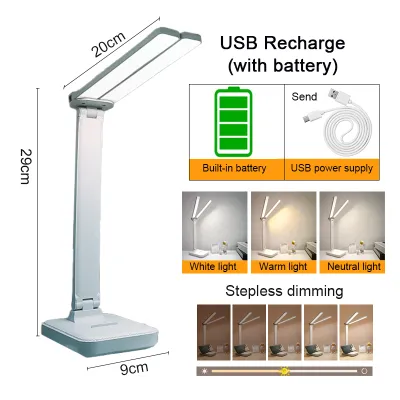
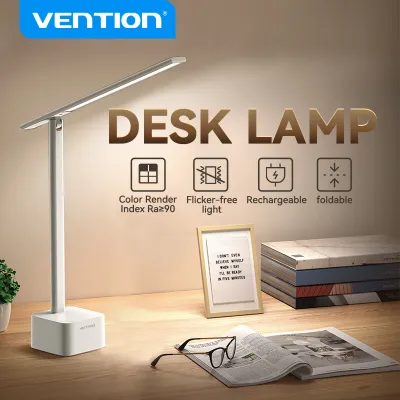
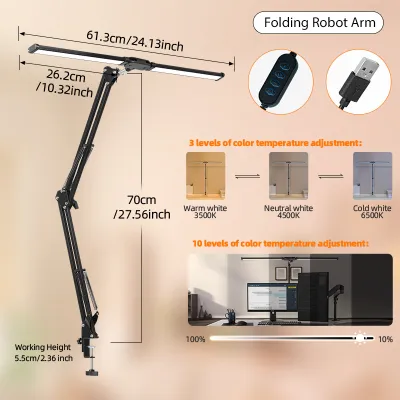
Prices are valid at publication and may change. Please refer to the product page for the latest price.
Adjustability and Ergonomics
Studying is rarely a single, uniform task; it ranges from reading physical textbooks to typing on reflective laptop screens. An ideal study lamp offers adjustable color temperatures, typically spanning from a warm 2700K to a cool 6500K. Cooler light (around 5000K) promotes alertness and focus by mimicking daylight, making it ideal for intense problem-solving or morning study sessions. Conversely, warmer light (around 3000K) is gentler on the eyes in the evening, minimizing blue-light exposure that can disrupt melatonin production and sleep cycles. Ergonomics also dictate how well a lamp fits onto a student’s desk, especially in space-constrained Singapore HDB flats or shared dormitory rooms. Multi-axis joints, adjustable heights, and rotatable lamp heads allow students to position the light source below eye level to prevent direct glare while fully illuminating the task area.
Durability and Build Quality
A desk lamp is a long-term academic companion that must withstand years of daily adjustments, accidental bumps, and relocations. Premium lamps utilize anodized aluminum alloys for their arms and joints, providing structural rigidity and efficient heat dissipation, which directly extends the lifespan of the internal LED chips. Cheaper models often rely heavily on plastic joints that can loosen over time, causing the lamp head to droop or sag under its own weight. When evaluating durability, look for heavy, weighted bases or robust clamp mechanisms that prevent the lamp from tipping over when the arm is fully extended. Additionally, the rated lifespan of the LED module—often specified as L70 lifetime (the point at which the LEDs retain 70% of their original brightness)—should ideally exceed 25,000 to 50,000 hours, ensuring the lamp lasts throughout a student’s entire academic journey.
Top LED Desk Lamp Brands for Students in Singapore Compared
With these criteria in mind, we can compare the leading LED desk lamp brands available in Singapore. Each brand targets a distinct segment of the student market, balancing advanced eye-care technologies against physical design and price.

BenQ (Premium Eye-Care and Smart Features)
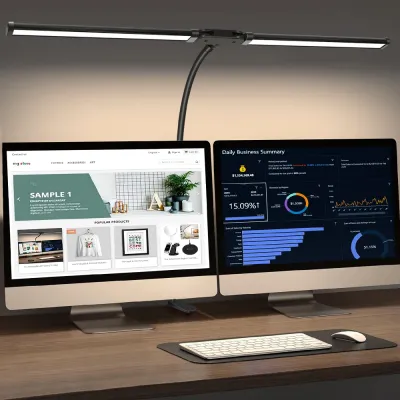
BenQ has established itself as the gold standard for dedicated eye-care lighting, particularly with its WiT and MindDuo series. Their signature curved lamp head is engineered to provide an ultra-wide illumination arc, covering up to 150% more desk area than standard linear lamps. This makes BenQ highly suitable for students who simultaneously reference physical textbooks, write on paper, and use dual monitors. Many BenQ models feature built-in ambient light sensors that automatically detect surrounding brightness and dynamically adjust the lamp’s output to maintain optimal lux levels. While their optical performance and build quality are exceptional, they occupy a premium price tier, often exceeding S$250. This represents a substantial upfront cost, but it is a highly justifiable long-term investment for students who experience chronic eye strain or spend over eight hours a day at their desks.
Philips (Reliable Illumination and Mid-Range Value)
Philips is a household name in lighting, offering a highly dependable middle ground for students who want professional-grade eye protection without a premium price tag. Their student-focused ranges, such as the Philips EyeCare or Hue series, focus heavily on their proprietary optical designs that reduce glare and distribute light evenly. Philips lamps are known for their consistent flicker-free drivers and excellent color rendering, ensuring comfortable reading over extended periods. The brand offers a diverse portfolio, from basic plug-and-play models to sophisticated lamps with slide-dimming interfaces and adjustable color temperatures. Typically priced between S$80 and S$180, Philips lamps deliver exceptional build quality, stable mechanical joints, and reliable local warranty support in Singapore, making them the most balanced choice for the average student.
Xiaomi / Mi (Budget-Friendly Smart Lighting)
Xiaomi has disrupted the lighting market by offering highly functional, minimalist smart lamps at budget-friendly prices, usually under S$80. Models like the Mi Smart LED Desk Lamp feature clean, white, space-saving profiles that appeal to modern aesthetic preferences. These lamps excel in smart integration, allowing students to adjust brightness, set pomodoro timers, and customize color temperatures via a smartphone app or voice assistants. Despite their low price, Xiaomi lamps offer respectable flicker-free performance and decent color rendering. However, the trade-offs lie in physical coverage and materials; they generally feature smaller light heads that illuminate a narrower desk area and rely more on plastic components in their joints. For a standard-sized study desk with a single laptop, Xiaomi provides outstanding value and smart utility.
Baseus and Taotronics (Portable and Compact Alternatives)
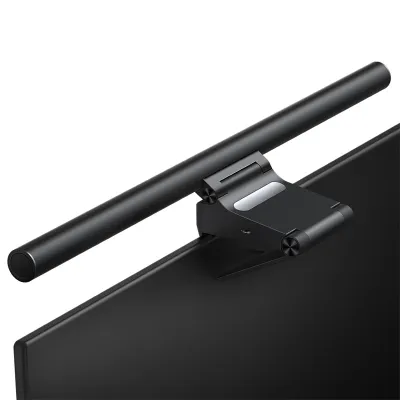
For students who frequently study in libraries, cafes, or shared dormitory rooms, portable brands like Baseus and Taotronics offer highly practical alternatives. Baseus specializes in space-saving clip-on monitor light bars and compact, rechargeable folding lamps that can be tucked into a backpack. Taotronics is well-regarded for its slim, foldable LED lamps that feature integrated wireless phone charging pads on the base. These brands typically operate in the budget to lower-mid price tier (S$30 to S$70). While highly convenient and space-efficient, these lamps generally have lower maximum lux outputs and smaller illumination footprints compared to heavy-duty desktop models. They are best suited as secondary light sources or for highly mobile study setups where desk space is at an absolute premium.
Specification and Feature Comparison Matrix
To help you quickly compare the primary options, the table below outlines how these brands stack up across key performance, usability, and price dimensions.
| Brand | Primary Strength | Estimated Price Tier | Smart Features | Best Suited For |
|---|---|---|---|---|
| BenQ | Ultra-wide illumination, advanced auto-dimming, premium eye-care | Premium (S$250+) | Auto-dimming sensors, smart ambient detection | Students with large desks, dual monitors, or severe eye strain |
| Philips | Consistent light quality, reliable eye-care, robust local warranty | Mid-Range (S$80 – S$180) | Basic touch controls, some smart ecosystem models | Students seeking balanced performance and long-term reliability |
| Xiaomi / Mi | Minimalist design, smart home app integration, high value | Budget (Under S$80) | Full app control, smart scheduling, voice assistant compatibility | Tech-savvy, budget-conscious students with standard-sized desks |
| Baseus | Portability, screenbar designs, space-saving form factors | Budget (Under S$60) | Touch dimming, rechargeable battery options | Students in small dorms, shared rooms, or mobile study setups |
| Taotronics | Foldable designs, integrated utility features (e.g., wireless charging) | Budget to Mid (S$40 – S$90) | Built-in USB/wireless chargers, timer functions | Students wanting multi-functional, compact desktop accessories |
Decision Framework: Choosing the Right LED Desk Lamp Brand
To make your final decision, evaluate your specific study habits, desk configuration, and budget against these targeted recommendations:
- Choose BenQ if you have a flexible budget, require a wide light distribution to cover multiple open textbooks and screens simultaneously, and want automated sensors to manage your room's changing light levels.
- Choose Philips if you prioritize a trusted brand with proven optical safety, want a durable lamp that will last through years of rigorous study, and prefer physical reliability over smart home app integrations.
- Choose Xiaomi if you are working within a strict budget, appreciate a sleek and modern minimalist aesthetic, and want to control your lighting schedules or timers directly from your smartphone.
- Choose Baseus or Taotronics if you study in a highly confined space, need a portable lamp that can easily move between a dormitory and a study hall, or want built-in conveniences like wireless device charging.
- Verify first if the specific lamp model you are purchasing is fully compatible with Singapore's standard 230V electrical grid and features a native Type G plug to avoid relying on unstable, non-compliant travel adapters.
Buying and Safety Checklist for Singapore Students
When purchasing an LED desk lamp in Singapore, safety must be your top priority, particularly when buying online. Because desk lamps are connected directly to mains power (either through an AC adapter or a direct plug), substandard electrical components can pose significant fire and shock hazards.
- Look for the Safety Mark: Always verify that the power adapter or the lamp itself carries the Enterprise Singapore Safety Mark. This certification ensures the device has been tested and approved for safe use in Singapore households.
- Check Voltage and Frequency: Ensure the product specification matches 230V and 50Hz. Avoid importing models designed solely for 110V grids (such as those from the US or Japan) unless they are explicitly rated as wide-voltage (100V-240V) devices.
- Confirm Plug Type: Verify that the lamp comes with a standard three-pin Type G plug. If a model comes with a flat two-pin plug, ensure it is supplied with an approved, fused adapter rather than a loose, non-compliant travel plug.
- Buy from Authorized Channels: Purchase your lamp from official brand flagship stores or authorized local distributors on major e-commerce platforms. Avoid third-party parallel importers or grey-market listings that offer unusually low prices but lack local warranties and safety certifications.
Frequently Asked Questions (FAQ)
How many lumens do I need for a study desk lamp?
While lumens measure the total light emitted by a source, illuminance (measured in lux) is the critical metric for a study desk. For comfortable reading and writing without eye strain, you should aim for an illuminance of 300 to 500 lux on your working surface. Most high-quality LED desk lamps achieve this by providing a total luminous flux of 400 to 800 lumens, combined with adjustable brightness levels that allow you to fine-tune the intensity based on the ambient light in your room.
Is warm or cool light better for studying at night?
The ideal color temperature depends entirely on the time of day and your study task. Cool white light (between 4000K and 5000K) is highly effective for daytime studying, as it enhances alertness, focus, and contrast for reading fine text. However, for late-night study sessions, you should switch to a warm light setting (around 2700K to 3000K). Warmer light reduces the emission of blue wavelengths, which helps prevent eye fatigue and avoids disrupting your body’s natural circadian rhythm before sleep.
Community discussion
Share your experience or ask a question. Comments are reviewed before publication.