
Finding the ideal LED digital clock for your bedroom requires balancing nighttime visibility with sleep hygiene. The best brands for bedroom use prioritize highly adjustable brightness settings—such as step-free dial dimming or smart ambient sensors—and offer warm display colors that do not disrupt your sleep cycle. While many generic options flood online marketplaces, selecting a reliable brand involves looking at specialized sleep wellness manufacturers, established consumer electronics brands, and design-focused minimalist labels that focus on user-centric interface design.
Why Adjustable Brightness Matters for Bedroom Clocks
Exposure to artificial light at night is one of the primary disruptors of the human circadian rhythm. Within the retina, specialized photoreceptors called intrinsically photosensitive retinal ganglion cells (ipRGCs) are highly sensitive to light, particularly blue wavelengths. When these cells detect light, they signal the brain’s master clock—the suprachiasmatic nucleus—to suppress the production of melatonin, the hormone responsible for signaling sleep. Even a brief glance at a bright blue or white LED clock display in the middle of the night can trigger an alerting response, making it difficult to fall back asleep.
In a pitch-black bedroom, the human pupil dilates significantly to let in more light, which dramatically increases visual sensitivity. A digital clock with a fixed, high-intensity display that seems perfectly clear during the day can easily illuminate an entire room like a nightlight once the main lights are turned off. This constant, ambient glare forces your eyes to adjust to an unnaturally bright environment, leading to lighter, more fragmented sleep stages and overall reduced sleep quality.
Products mentioned in this guide
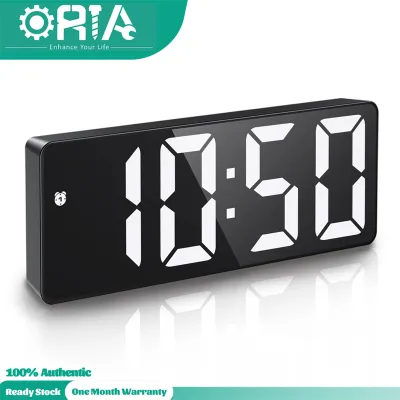
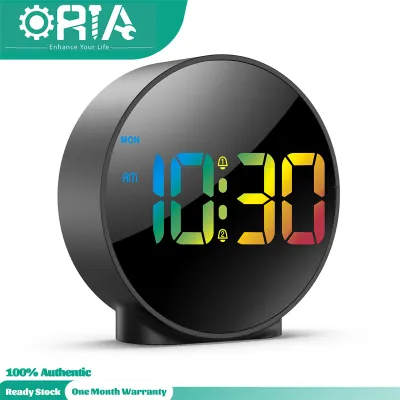
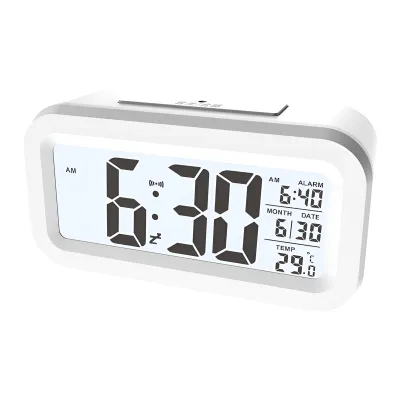
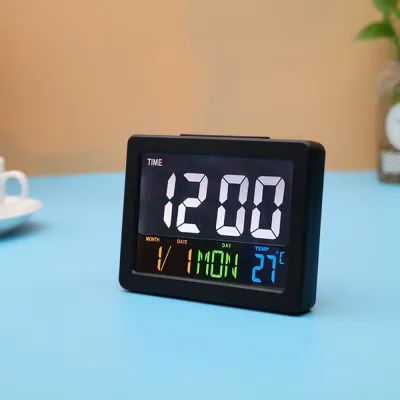
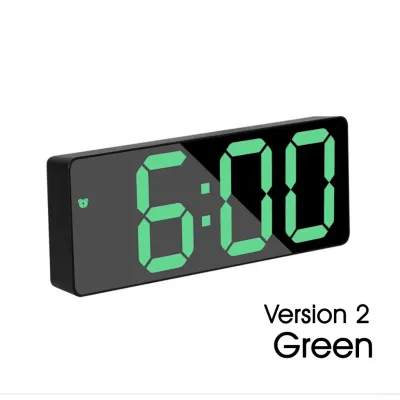
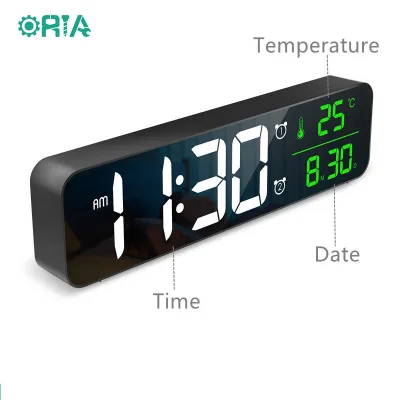
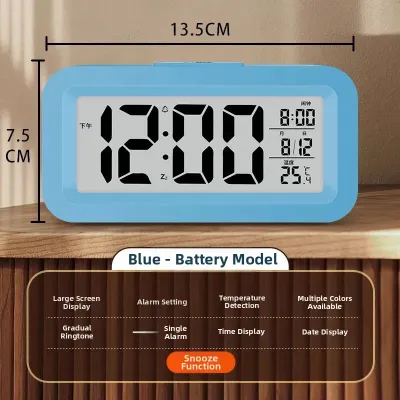
Prices are valid at publication and may change. Please refer to the product page for the latest price.
To solve this issue, quality bedroom clocks utilize either auto-dimming technology or manual dimming controls. Auto-dimming systems use integrated photo-sensors to measure the ambient lux levels in the room, automatically lowering the display’s output as the room darkens. Manual dimming controls, which range from multi-step buttons to continuous rotary dials, give you direct, absolute control over the light output. Understanding the functional differences between these two dimming methods is essential for selecting a clock that matches your personal sensitivity to light.
Core Selection Criteria for Sleep-Friendly LED Clocks
When evaluating an LED digital clock for bedroom use, focusing on specific engineering and design criteria will help you identify a model that supports healthy sleep patterns.

Brightness Control Mechanisms
To ensure a clock can be customized to your exact comfort level, look closely at how its dimming mechanism is designed. Many entry-level digital clocks only offer basic stepped dimming, typically featuring three levels: High, Medium, and Low. For highly light-sensitive individuals, even the “Low” setting on these models can remain too bright in a completely dark room.
Instead, seek out clocks that offer a wide dimming range, ideally down to 1% or 0% of maximum brightness. Models equipped with a continuous rotary dial (often utilizing a physical potentiometer) allow for “stepless” dimming, enabling you to fine-tune the display until it is barely visible. If you prefer a hands-off approach, ensure the clock features a responsive, high-quality ambient light sensor that transitions smoothly between brightness levels without sudden, distracting steps.
Display Color Temperature
The color of the LED display plays a critical role in how the light affects your sleep-wake cycle. Cool colors, such as blue, green, and bright white, carry high-energy visible (HEV) light that alerts the brain and suppresses melatonin production.
Conversely, warm colors—specifically red, orange, and deep amber—have much longer wavelengths that do not stimulate the ipRGCs in the retina to the same degree. Choosing an LED clock with a red or amber display, or one that allows you to change the display color, ensures that any light emitted has a minimal impact on your body’s natural sleep preparation.
Power Source Considerations
In Singapore, the standard mains electricity supply operates at 230V and 50Hz. When selecting a plug-in bedroom clock, always verify that the included power adapter is compatible with this voltage and holds appropriate local safety certifications. Many modern digital clocks now utilize USB-C or Micro-USB power inputs, allowing you to power the device using standard USB wall chargers.
Because a power disruption can cause you to miss alarms or lose your settings, a reliable bedroom clock should include a robust battery backup system. This is typically powered by a small CR2032 button cell or a set of AAA batteries. The backup power keeps the internal quartz crystal oscillator running during power cuts, ensuring the clock displays the correct time immediately once mains power is restored.
Secondary Features
Modern LED clocks often come packed with secondary features, but it is important to evaluate whether these additions aid sleep or simply introduce unnecessary distractions. Features like integrated white noise machines, dual alarms, and gradual sunrise wake-up lights can significantly improve your sleep environment and waking experience.
However, ensure that any secondary displays—such as temperature, humidity, or date indicators—can be turned off independently. A clock that displays multiple pieces of information simultaneously often requires a larger, brighter screen, which increases the overall light pollution in your bedroom.
Evaluating Clock Brands for Bedroom Environments
Rather than relying on generic “top ten” lists, it is more effective to evaluate clock brands based on their manufacturing category, design philosophy, and technical specifications.
Categories of Brands to Consider
- Established Home Appliance Brands: Well-known consumer electronics manufacturers, such as Philips or Braun, focus heavily on reliability, electrical safety compliance, and robust build quality. Their bedroom clocks typically feature highly accurate quartz movements, certified power adapters, and dependable auto-dimming sensors designed to operate consistently for years.
- Specialized Sleep and Wellness Brands: Brands like Hatch or Lumie design their products specifically to enhance sleep hygiene. These manufacturers prioritize circadian health, incorporating features such as dedicated red-light sleep modes, progressive sunrise alarms, and highly granular manual or app-based dimming controls that can be scheduled to match your daily routine.
- Minimalist and Design-Focused Brands: Design-centric brands, such as Gingko, Karlsson, or Mudita, focus on aesthetic integration and tactile user interfaces. They often use natural materials like wood or fabric to diffuse the LED light, creating a softer glow, and utilize physical dials or hidden touch panels that make manual dimming simple and satisfying.
Specification Verification
Before purchasing any LED digital clock, take the time to verify the technical specifications listed on the product label or in the user manual. Look specifically for the minimum brightness level, which should ideally be adjustable down to less than 5% of maximum output.
Check the responsiveness range of the ambient sensor to ensure it can detect subtle shifts in low-light environments. Additionally, verify the manufacturer’s warranty terms; a reliable brand will typically offer a minimum 12-month warranty, providing recourse if the LED elements or dimming sensors fail prematurely.
Marketing Red Flags
Be cautious of misleading marketing claims when browsing online marketplaces. Phrases like “100% zero light emission” are often used to describe clocks that do not actually feature a physical display-off button or a manual dimmer, but instead rely on motion activation that can be frustratingly insensitive or overly sensitive.
Avoid products that feature unclear power specifications, proprietary non-standard charging cables that are difficult to replace locally, or those that require a continuous, unverified cloud connection or subscription-based mobile application just to perform basic time-keeping and dimming functions.
Comparing Brightness Control Technologies
Selecting the right dimming technology depends heavily on your bedroom’s layout, external light sources, and personal sleep habits. The table below compares the three primary brightness control methods found in modern LED digital clocks.
| Control Type | Convenience | Precision of Control | Ideal Room Setup | Potential Limitations |
|---|---|---|---|---|
| Auto-Dimming (Light Sensor) | High: Automatically adjusts to changing light levels without manual intervention. | Moderate: Dependent on pre-programmed sensor curves; may not get dim enough for some. | Rooms with consistent ambient light changes and no direct external light interference. | Sensor can be confused by streetlights, passing car headlights, or TV glare, causing flickering. |
| Manual Multi-Level | Moderate: Requires pressing a button to cycle through preset brightness levels. | Moderate: Limited to a few pre-configured settings (e.g., High, Medium, Low). | Users who maintain a consistent sleep schedule and prefer predictable brightness steps. | The lowest preset level may still be too bright for highly sensitive sleepers. |
| Single Dimmer Switch (Rotary Dial) | Low: Requires manual adjustment when turning lights on or off. | High: Allows for infinite, stepless adjustments from 100% down to completely off. | Ultra-dark rooms where the user wants absolute control over the exact light output. | Requires physical interaction with the clock whenever a change in brightness is desired. |
If your bedroom is subject to variable external light—such as light pollution from streetlamps in urban areas or the glow from a hallway—an auto-dimming sensor may become confused, causing the display to flicker or remain too bright. In these environments, a clock with a manual multi-level button or a continuous rotary dial is often the superior choice, as it guarantees the display will remain at your chosen brightness level throughout the night.
Setup and Placement Tips for Light-Sensitive Sleepers
Once you have selected a high-quality LED clock, proper setup and placement are key to minimizing sleep disruption and maximizing the accuracy of the clock’s sensors.
- Optimal Placement: Position the clock below eye level, such as on a lower shelf of your bedside table, and angle the face slightly away from your direct line of sight. This placement allows you to easily read the time when actively looking for it, but prevents the LED display from shining directly into your eyes while you are lying down.
- Safe Cable Management: Route all power cables neatly behind furniture, securing them with cable clips to prevent tripping hazards in the dark. Ensure the power cord is not pulled taut, as tension can damage the clock's power port or the wall outlet over time.
- Sensor Calibration: If your clock features an auto-dimming sensor, test its performance in actual nighttime conditions. Turn off all bedroom lights and wait several minutes for your eyes to adjust to the darkness; this will allow you to accurately judge whether the sensor is lowering the brightness sufficiently.
- Managing Interference: Identify and mitigate any external light sources that might interfere with the clock's ambient sensor. For example, position the clock away from windows where streetlights might shine directly onto the sensor, or block the standby LEDs of other bedroom electronics, such as air conditioners or televisions, which can artificially trick the clock's sensor into thinking the room is brighter than it actually is.
- Utilizing Night Modes: If your clock supports a scheduled "night mode" or display-off timer, configure it to turn off the display entirely during your core sleeping hours, allowing you to wake the display with a simple tap on the top of the clock if you need to check the time.
Frequently Asked Questions (FAQ)
Do battery-operated LED clocks have adjustable brightness?
Purely battery-operated LED digital clocks face significant technical limitations regarding brightness output and continuous ambient light sensing due to power drain. LED displays consume a relatively high amount of electrical current compared to liquid crystal displays (LCDs). To conserve battery life, most battery-operated LED clocks do not offer continuous auto-dimming or high-brightness modes.
Instead, these models typically rely on manual dimming settings, scheduled display-off modes, or motion-activated displays that only illuminate for a few seconds when you tap the clock or make a sound. For continuous, highly adjustable LED brightness, a mains-powered or USB-powered clock with a battery backup is highly recommended.
Is red light better than white light for a bedroom clock?
From a circadian biology perspective, red light is significantly better than white light for a bedroom clock display. Red light has a longer wavelength (approximately 620 to 750 nanometers), which does not stimulate the melatonin-suppressing photoreceptors in the human eye to the same degree as the shorter wavelengths found in blue or white light.
While a dim red display is highly effective at preserving your natural sleep cycle, the overall brightness level remains the most critical factor. Even a red display can disrupt sleep if it is set to an excessively high brightness level. Therefore, the best approach is to choose a clock that offers a warm display color—such as red, orange, or amber—combined with highly granular brightness controls that allow you to lower the output to a faint, comfortable glow.
Community discussion
Share your experience or ask a question. Comments are reviewed before publication.