
A standard Housing & Development Board (HDB) flat in Singapore typically features a ceiling height of 2.6 metres. When planning a home renovation, selecting the right down light led fixtures is critical to avoid creating a visually uncomfortable, overly bright, or visually compressed living space. Standard lighting fixtures designed for higher ceilings can easily cause harsh glare and deep shadows when dropped to a 2.6-metre clearance. Understanding how to balance fixture depth, beam angles, and local installation regulations ensures a comfortable, well-lit home.
Why Standard 2.6m HDB Ceilings Need Special Lighting Considerations
At a height of 2.6 metres, the light source is physically closer to the eyes of the occupants than in private condominiums or landed properties with higher ceilings. Direct line-of-sight exposure to bare LED chips causes eye strain and discomfort. This proximity means that standard flat-faced downlights, which scatter light at wide, uncontrolled angles, can create a harsh “hot spot” on the ceiling and throw light directly into your peripheral vision as you walk across the room.
Visual compression is another major challenge in standard HDB clearances. High-output or narrow-beam downlights can produce sharp, high-contrast cones of light on the floor while leaving the upper portions of the walls in deep shadow. This stark contrast makes the ceiling feel lower than it actually is, creating a cave-like atmosphere. To counteract this effect, the light must be distributed evenly to wash the walls gently and soften transitions between light and shadow.
Products mentioned in this guide
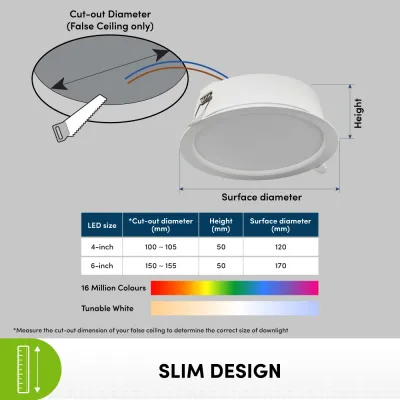
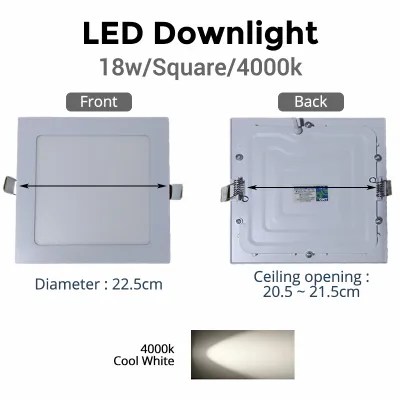
![[Buy 3 Free 1]BWL LED LIGHT Recessed Light/LED Downlight Square/ Round Downlight Tri-Tone/3000k/6000k/6W/8W/15W/20W](https://img.lazcdn.com/g/p/7d9f73556651ab07fb664d323cabc951.jpg_400x400q80.jpg_.webp)
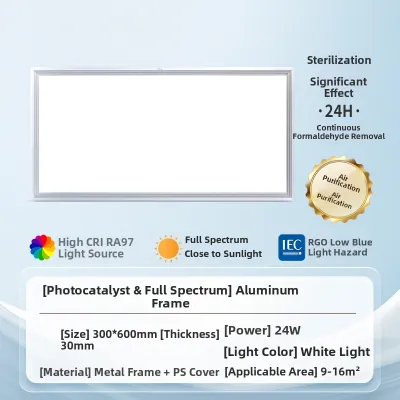
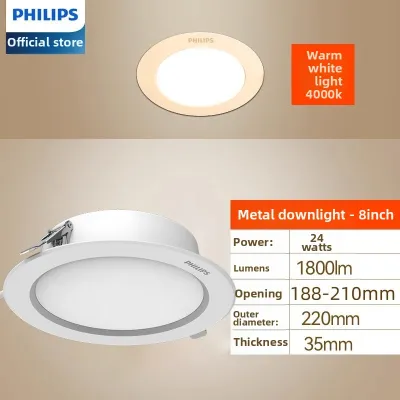
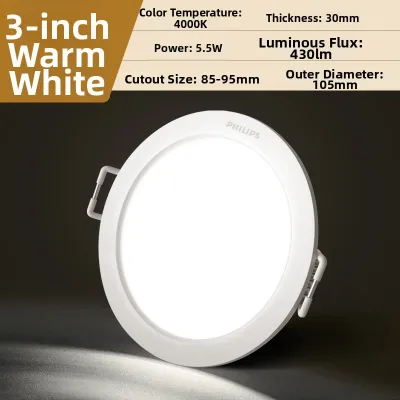
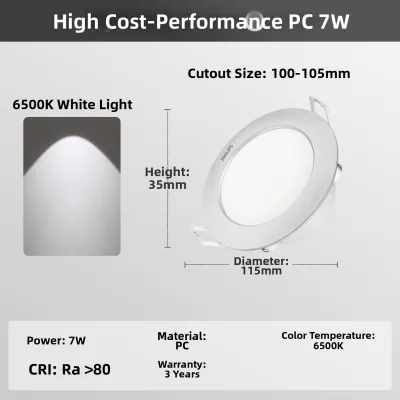
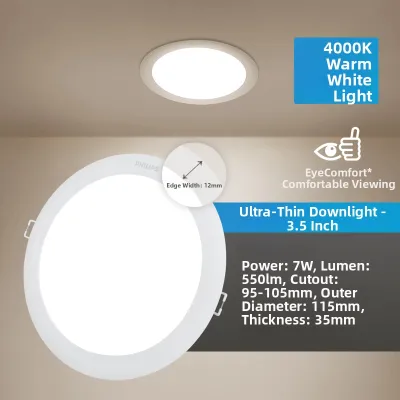
Prices are valid at publication and may change. Please refer to the product page for the latest price.
Furthermore, false ceiling spaces in HDB flats are highly confined. Homeowners typically drop the ceiling by only 75mm to 150mm to preserve as much headroom as possible. This restricted plenum space traps heat generated by the LED driver and the light engine. Without proper heat dissipation, the electronic components degrade rapidly, leading to premature flickering, color shifting, or total fixture failure. Selecting downlights with appropriate thermal management is essential for long-term reliability.
Essential Specifications to Evaluate Before Buying a Down Light LED
Evaluating technical specifications on product labels is the most reliable way to ensure your chosen fixtures will perform well in a low-ceiling environment. Relying solely on marketing claims can lead to purchasing inappropriate fixtures that cause visual fatigue.

Beam Angle and Light Distribution
Beam angle determines how wide the light cone spreads as it travels downward from the ceiling. For a 2.6m ceiling, a narrow beam angle of under 24 degrees acts as a sharp spotlight. This creates intense, localized pools of light and dark corners, which is ideal for highlighting artwork but highly unsuitable for general ambient illumination.
For general ambient lighting in a standard HDB flat, look for product packaging specifying medium to wide beam angles, typically between 36 and 60 degrees. This range provides a smooth overlap of light cones at standing eye level, preventing dark gaps between fixtures without spilling excessively onto the walls.
When reviewing technical data sheets, check the polar intensity diagrams. These diagrams show how light intensity drops off at the edges of the beam. A gradual drop-off ensures softer shadows and a more natural transition of light across the room, which helps visually expand the perceived volume of the space.
Anti-Glare Features and Recess Depth
To minimize visual discomfort, prioritize deep recess designs over flat-faced panels. In a deeply recessed fixture, the LED light source is set back 20mm to 50mm inside the housing. This physical barrier blocks direct horizontal light, keeping the light source hidden from view until you are standing almost directly underneath the fixture.
In addition to recess depth, look for physical anti-glare design elements such as dark-light reflectors or matte black and matte white inner cups. These specialized baffles absorb stray light rays instead of reflecting them into the room, significantly reducing secondary glare.
When comparing high-quality fixtures, check for a Unified Glare Rating (UGR) on the manufacturer’s technical sheets. A UGR of less than 19 is highly recommended for residential living spaces to prevent eye strain. If a brand does not print a UGR rating, you can physically inspect the fixture to verify that the light source is deeply inset and shielded by a non-reflective bezel.
Color Temperature and Brightness Levels
Color temperature is a conditional preference that should be selected based on the specific function of each room. Warm white (3000K) is highly recommended for living rooms and bedrooms, as it creates a cozy, relaxing atmosphere. Neutral white (4000K) works well for kitchens, study areas, and bathrooms where task clarity is essential. Cool white (6500K) should be used sparingly in low-ceiling residential spaces, as the high blue-light content can feel clinical and visually compress the room.
To determine the actual brightness of a fixture, evaluate the lumen output rather than the wattage. A 2.6m ceiling does not require high-lumen commercial fixtures. For general residential lighting in an HDB flat, downlights emitting between 400 and 700 lumens per fixture are usually sufficient. Over-illuminating a low space forces the eyes to adjust constantly to bright surfaces, leading to fatigue.
If you prefer adjustable lighting levels throughout the day, select dimmable downlights. However, you must verify that the LED driver is fully compatible with your wall dimmer switch. Incompatible components can cause persistent buzzing or flickering. Always check whether the manufacturer specifies leading-edge or trailing-edge phase dimming compatibility before finalizing your purchase.
Reliable LED Downlight Brands to Consider in Singapore
When shopping for downlights in Singapore, prioritizing brands that offer robust local support, clear technical specifications, and safety certifications is far more important than choosing the cheapest available option.
Established Global Brands
Major international brands like Philips and Panasonic have a strong, long-standing presence in Singapore. These manufacturers design specific residential product lines that address low-clearance constraints, offering ultra-thin integrated downlights and deeply recessed anti-glare spots. Their technical documentation is highly detailed, making it easy to verify beam angles, lumen outputs, and physical dimensions before purchasing.
When choosing an established global brand, verify the local warranty terms offered by authorized distributors. A standard residential warranty should cover both the LED chip and the external driver for at least one to two years. Local warranty support ensures you can easily obtain exact replacements if a component fails prematurely.
Additionally, check the availability of replacement drivers. Integrated fixtures where the driver is sealed inside the housing require replacing the entire unit if the driver fails. Opting for modular systems from global brands allows you to swap out only the external driver, saving money and reducing waste over time.
Regional and Specialist Lighting Brands
Regional brands like Opple and local specialist architectural lighting brands such as Sol Luminaire (known for their AEON series) or Near offer highly tailored solutions for HDB renovations. These brands often focus on high color rendering indexes (CRI 90+) and deep-recessed, minimalist trims that blend seamlessly into false ceilings, making them popular choices for modern interior designs.
Before committing to specialist brands, visit local showrooms to observe the light quality in person. Pay close attention to color consistency across multiple fixtures; lower-quality LEDs can show noticeable variations in color temperature even within the same batch. You can also perform a simple flicker test by viewing the illuminated fixture through your mobile phone camera screen.
Regardless of the brand’s origin, you must verify that all electrical components, especially the external LED drivers, carry the Enterprise Singapore SAFETY Mark. This certification ensures the product has been tested against local electrical safety standards and is safe for continuous use in Singapore’s tropical, humid climate. Never install uncertified electrical drivers sourced from overseas online marketplaces.
HDB Installation Rules and Safety Boundaries
Understanding the structural limitations of your HDB flat is critical before purchasing or installing any recessed downlights. Recessed fixtures require a false ceiling cavity to house the light body, wiring, and drivers. Concrete ceilings, which are standard in HDB construction, cannot be hacked or recessed into without violating structural guidelines.
Standard false ceilings in Singapore are constructed using gypsum boards suspended by a metal framework. When cutting holes for downlights, ensure your contractor avoids cutting through the main structural support channels of the false ceiling. Cutting these supports compromises the ceiling’s load-bearing capacity and can lead to sagging or collapse.
Keep the weight of the fixtures in mind. Heavy cast-aluminum downlights require additional reinforcement within the false ceiling framework to prevent sagging over time. Additionally, ensure there is a clearance of at least 10mm to 20mm between the top of the downlight heat sink and the concrete slab to allow for adequate air circulation and heat dissipation.
All electrical work in Singapore must comply with strict safety regulations. It is a mandatory requirement to engage a Licensed Electrical Worker (LEW) to perform any fixed wiring installation, driver connections, or circuit modifications. DIY electrical installations can void your home insurance and pose severe fire hazards.
Before performing any maintenance, cleaning, or driver replacement, always isolate the power by turning off the main circuit breaker at the distribution board (DB box). Never rely solely on the wall switch to cut power, as incorrect polarity in the wiring can leave the fixture live even when switched off. If you are installing downlights in damp areas like bathrooms, ensure the fixtures have an appropriate Ingress Protection (IP) rating, such as IP44 or higher, to prevent moisture penetration.
Frequently Asked Questions (FAQ)
Can I install recessed downlights in a concrete HDB ceiling?
No, you cannot install recessed downlights directly into a concrete HDB ceiling because hacking the concrete slab is strictly prohibited. If you do not want to install a false ceiling, you should opt for surface-mounted downlights, track lighting, or track-mounted spotlights. These options mount directly to the concrete surface while keeping all wiring safely enclosed in external casings or conduits.
What is the ideal spacing for downlights in a 2.6m ceiling?
For a standard 2.6m ceiling height, a general rule of thumb is to space downlights approximately 1.0 to 1.2 metres apart. This spacing ensures that the light cones overlap at standing eye level, preventing dark patches between fixtures. However, this depends heavily on the beam angle of your chosen fixture and the layout of your furniture. Always consult your interior designer or a qualified electrician to create a customized lighting plan.
Are smart LED downlights worth it for HDB flats?
Smart LED downlights offer excellent convenience, allowing you to adjust color temperatures and brightness levels via mobile apps or voice assistants. However, they come with higher upfront costs and potential connectivity challenges if your home Wi-Fi is weak. Additionally, smart lighting often requires a constant power supply, meaning you may need to install compatible smart wall switches or ensure your wiring includes a neutral wire to prevent the lights from flickering when turned off.

Community discussion
Share your experience or ask a question. Comments are reviewed before publication.