
When a sudden power trip plunges your Housing & Development Board (HDB) flat into complete darkness, finding your way around can be a sudden and disorienting challenge. While many people instinctively reach for their smartphones to use as temporary torches, holding a phone limits your physical capability and quickly drains a vital communication tool. A dedicated LED headlamp is a far more practical solution, providing reliable, hands-free illumination that allows you to address the root of the power failure safely.
Selecting the right headlamp for home emergencies requires looking past basic outdoor marketing claims. Inside a typical Singaporean apartment, factors like wall reflectivity, storage humidity, and close-up task management dictate which features are genuinely useful. By understanding the unique layout of HDB flats and the technical specifications of modern emergency lighting, you can ensure your household is prepared for any unexpected electrical outage.
Why HDB Layouts Demand Hands-Free Emergency Lighting
Modern HDB flats are designed to maximize space, which often results in compact layouts with narrow corridors, windowless common bathrooms, and reinforced household shelters. During a nighttime blackout, these interior spaces become completely devoid of ambient light from streetlamps or neighboring blocks. Navigating a tight hallway or searching through a cluttered household shelter with a handheld flashlight is not only awkward but increases the risk of tripping over stray items, toys, or furniture.
Products mentioned in this guide
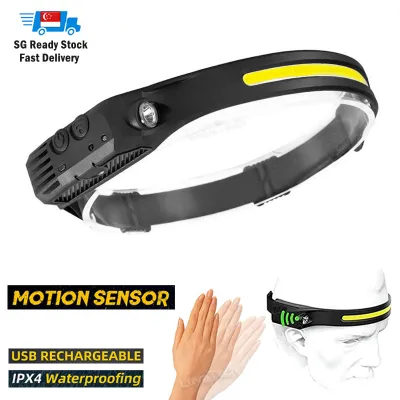
![[Local Ready Stock] 5W USB Rechargeable Flashlight LED Headlight Body Motion Sensor Head Flashlight Camping Torch Light Lampe For Camping Running Fishing Cycling Headlamp](https://img.lazcdn.com/g/p/56ddba2e927247303d9311273774ddf5.jpg_400x400q80.jpg_.webp)
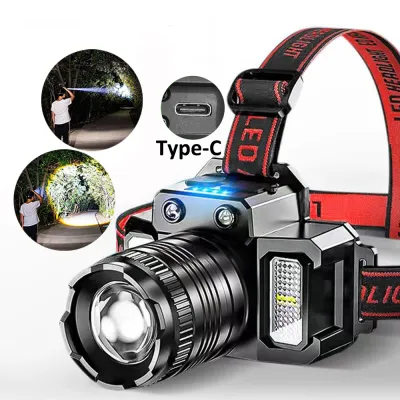
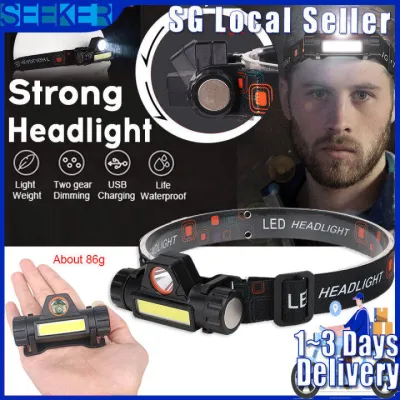
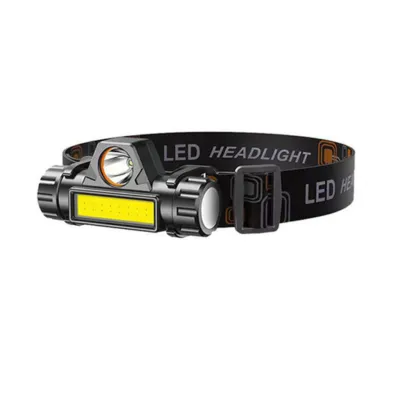
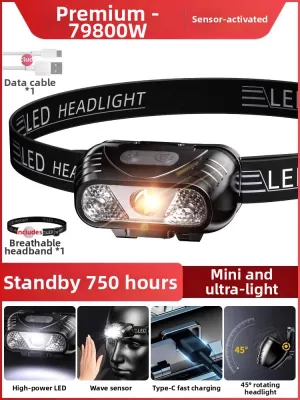
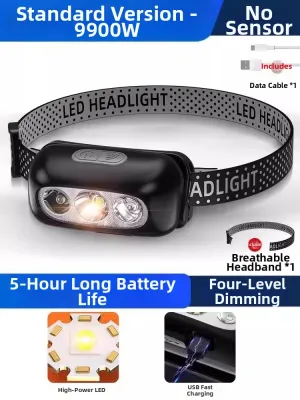
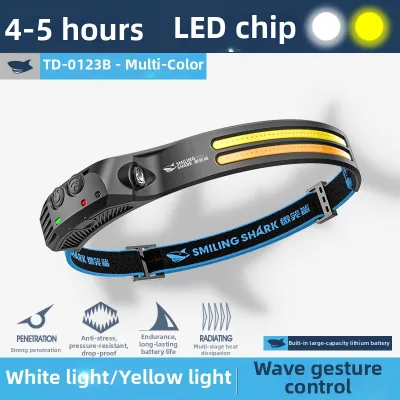
Prices are valid at publication and may change. Please refer to the product page for the latest price.
Managing a power outage almost always requires the use of both hands. Whether you need to carry buckets of water, guide young children or elderly family members to safety, retrieve emergency supplies from high shelves, or open stubborn bomb shelter doors, a handheld light source restricts your movement. Tucking a flashlight under your arm or holding it between your teeth is unstable, uncomfortable, and highly impractical for more than a few moments.
An LED headlamp solves these physical limitations by securing the light source directly to your forehead. The beam automatically aligns with your field of vision, illuminating whatever you look at without manual adjustment. This immediate, hands-free light significantly improves your spatial awareness, keeps your balance centered, and allows you to focus entirely on resolving the outage or keeping your family comfortable.
Essential Features for Blackout Headlamps
Not all headlamps are created equal, and models designed for outdoor trail running or night cycling are often poorly suited for indoor emergencies. When shopping for an emergency light source, evaluating specific technical features on the product label will help you avoid buying an impractical or overly complex device.

Lumens and Beam Pattern
Many consumers mistakenly believe that a higher lumen count always translates to a better headlamp. However, using an extremely bright light inside a residential flat can cause severe, blinding glare. High-output beams bouncing off light-colored HDB walls, polished homogeneous floor tiles, or bathroom mirrors will strain your eyes and impair your close-up vision.
For indoor emergency use, a headlamp with adjustable brightness levels is essential. A low mode of 5 to 15 lumens is perfect for reading or navigating without glare, while a moderate mode of 100 to 150 lumens is more than sufficient for inspecting household areas. Look for a headlamp that offers a wide flood or “spill” beam pattern rather than a narrow, focused spotlight. A wide beam illuminates your peripheral vision, making narrow corridors feel more open and helping you spot low-lying tripping hazards.
Power Source and Shelf Life
Choosing between rechargeable and disposable battery systems involves a clear trade-off regarding emergency readiness. Built-in lithium-ion rechargeable headlamps are highly convenient for regular use and save on battery costs, but they slowly lose their charge over months of idle storage. If a blackout occurs after a year of non-use, you may find your rechargeable headlamp completely dead when you need it most.
Standard disposable batteries, particularly lithium AAA or AA variants, offer an exceptionally long shelf life of up to 10 to 15 years and do not suffer from rapid self-discharge. They can be stockpiled easily and replaced instantly during an extended outage. To get the best of both worlds, consider a hybrid or “dual-fuel” headlamp. These models can run on a proprietary rechargeable battery pack or standard AAA batteries, offering maximum flexibility during a prolonged emergency.
Red Light and Low-Light Modes
A secondary red light mode is highly valuable when living in high-density housing. Red light does not disrupt your eyes’ natural adaptation to the dark, allowing you to switch the light off and still retain some night vision. This mode is also excellent for moving through shared bedrooms without waking sleeping family members.
Additionally, using a soft red light or a low-lumen white mode prevents casting harsh, distracting shadows through your windows. In close-proximity HDB estates, pointing a high-power white beam across the common corridor or directly into a neighboring block can cause unwanted disruption. A low-intensity mode keeps your emergency management private and localized.
Comfort and Adjustability
An emergency headlamp must be comfortable enough to wear for several hours if a localized blackout takes time to resolve. Look for lightweight models, ideally weighing under 100 grams including the batteries. Heavy headlamps tend to slip down your forehead, forcing you to tighten the band to uncomfortable levels.
Ensure the headband is made of a soft, adjustable, and slip-resistant elastic material that fits securely without pinching. A tilting hinge on the lamp housing is another mandatory feature. This hinge allows you to angle the light beam downward toward your hands or feet, preventing neck strain when you are reading, cooking, or examining electrical components.
Navigating and Checking Your DB Box Safely
The most critical immediate task during a home power outage is locating and inspecting your flat’s Distribution Board (DB box). This electrical panel is typically situated near the main entrance or inside the household shelter. Using your headlamp’s wide, low-glare flood beam, walk slowly toward the DB box, keeping an eye out for any items left on the floor.
Before touching the electrical panel, you must prioritize personal safety. Ensure your hands are completely dry, and verify that the floor space directly beneath the DB box is free of water or dampness. If there is any sign of water leakage near the panel, do not attempt to touch it; instead, contact a professional immediately.
Once you open the DB box door, use your headlamp to examine the switches. Look for the Residual Current Circuit Breaker (RCCB) or Earth Leakage Circuit Breaker (ELCB), as well as the individual Miniature Circuit Breakers (MCBs). A tripped switch will be pointing downward or resting in a middle position.
If you locate a tripped switch, you can attempt to reset it by flipping it back up to the “On” position. However, if the switch immediately snaps back down with a loud click or a visible spark, do not force it. Forcing a tripped breaker can cause severe electrical damage or spark a fire. This immediate re-tripping indicates an active short circuit or a faulty appliance that must be unplugged before resetting the breaker.
Stop immediately and seek professional assistance if you notice any of the following warning signs:
- The DB box or main switch feels unusually hot to the touch.
- There is a distinct smell of burning plastic or ozone near the panel.
- You hear a persistent buzzing, sizzling, or crackling sound from the breakers.
- The power trips repeatedly without any clear appliance pattern.
In these scenarios, leave the switches alone, keep your headlamp on, and contact a licensed electrical worker (LEW) or your town council’s emergency maintenance service to resolve the issue safely.
Storing and Maintaining Your Emergency Gear
An emergency tool is only useful if it works when called upon. Singapore’s tropical climate, characterized by high temperatures and high relative humidity, can be tough on stored electronics. Moisture can accelerate the corrosion of battery terminals, while heat can degrade elastic headbands and plastic casings over time.
To protect your gear, designate a specific, easily accessible “emergency drawer” or storage container in a central location of your HDB flat, such as the living room console or a hallway cabinet. Avoid storing emergency lighting in high-humidity zones like the kitchen, service yard, or bathrooms, where moisture levels fluctuate rapidly.
Implement a simple maintenance routine to ensure your headlamp remains in peak operating condition:
- Bi-Annual Inspections: Set a recurring calendar reminder every six months to test the headlamp and check its battery level.
- Prevent Corrosion: If you store your headlamp with disposable alkaline batteries inside, there is a high risk of chemical leakage over time. To prevent this, store disposable batteries in a small plastic case right next to the headlamp rather than inside the battery compartment.
- Rechargeable Maintenance: For rechargeable models, top up the battery to around 60% to 80% capacity during your bi-annual checks. Storing lithium-ion batteries completely empty or fully charged for years can permanently reduce their capacity.
- Keep Spares Handy: Store a spare set of fresh batteries or a dedicated, fully charged power bank with a compatible charging cable in the exact same emergency box.
By keeping your gear organized, dry, and regularly maintained, you can avoid the frustration of a dead light source when a power failure occurs.
Frequently Asked Questions (FAQ)
Is a headlamp better than a traditional flashlight for blackouts?
Yes, a headlamp is generally superior to a traditional flashlight for the immediate response to a home blackout. The primary advantage is hands-free operation, which allows you to safely check your DB box, carry emergency supplies, or manage household tasks without holding a light source. However, traditional flashlights still have a place in a complete emergency kit. Flashlights are often better for throwing a concentrated beam over longer distances or bouncing light off a white ceiling to illuminate an entire room. A practical approach is to keep a primary headlamp for active navigation and a simple flashlight as a secondary backup.
Should I keep my rechargeable headlamp plugged in all the time?
No, you should not leave a rechargeable headlamp permanently connected to a charger. Keeping a lithium-ion battery at 100% capacity continuously can degrade the battery cells over time, leading to reduced runtime and a shorter overall lifespan. Instead, refer to the manufacturer’s charging instructions. It is best to charge the device fully before storage, check it every six months, and perform a brief top-up charge if the battery level has dropped. Always use a charger that matches the manufacturer’s specified voltage and current limits to prevent overheating or damaging the internal circuitry.
Community discussion
Share your experience or ask a question. Comments are reviewed before publication.