
When a sudden power outage plunges your Housing & Development Board (HDB) flat into darkness, a reliable LED torch is the single most important tool in your emergency preparedness kit. While modern smartphones feature built-in flashlights, they are poor substitutes for a dedicated illumination tool during a prolonged blackout. The ideal emergency LED torch for an HDB household must balance compact storage, robust moisture resistance to withstand Singapore’s tropical humidity, and a practical beam pattern that illuminates windowless rooms without causing blinding glare.
Why HDB Residents Need a Dedicated Emergency LED Torch
HDB flats are designed with structural efficiency and safety in mind, but their concrete-heavy layouts present unique challenges during a power failure. Modern HDB units often feature windowless bathrooms, deep household shelters (bomb shelters) with thick reinforced concrete walls, and long internal hallways. When the main power grid fails or a localized circuit breaker trips, these interior spaces instantly become pitch black, making navigation hazardous. Attempting to find your way to the distribution board (DB) box or locating family members in total darkness increases the risk of trips, slips, and falls against heavy furniture or concrete door frames.
Furthermore, navigating the common areas of an HDB block during a broader utility outage requires dependable portable lighting. While emergency exit signs and stairwell lights are equipped with backup batteries, these systems have limited runtimes and may not fully illuminate every corner of a dark escape route or stairwell. A dedicated LED torch ensures you can safely descend multiple flights of stairs or guide neighbors through dark corridors if you need to evacuate.
Products mentioned in this guide
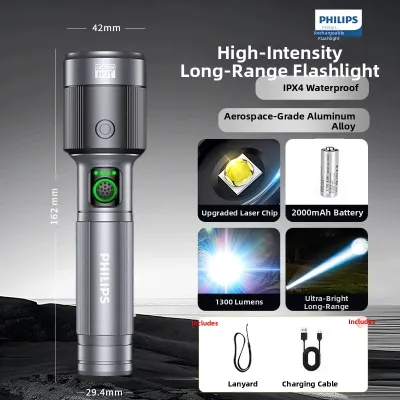
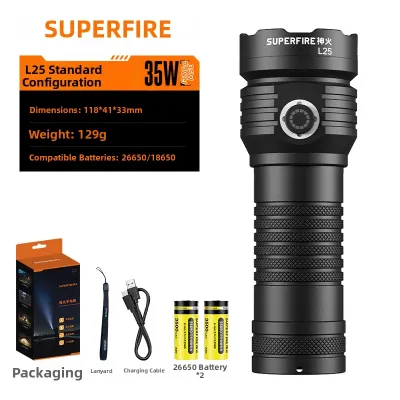
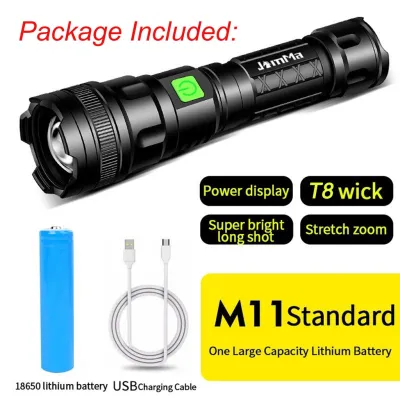
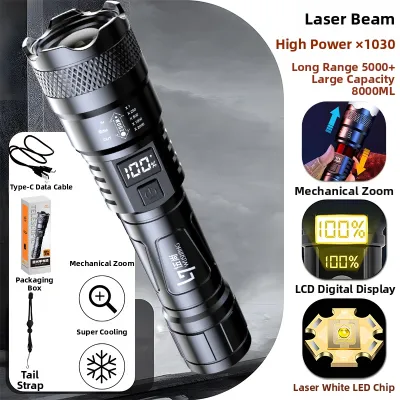
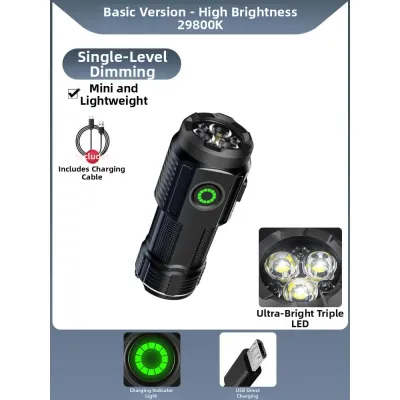
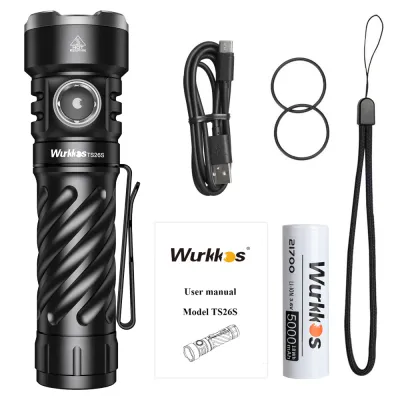
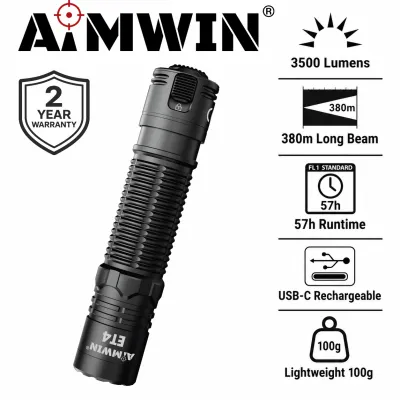
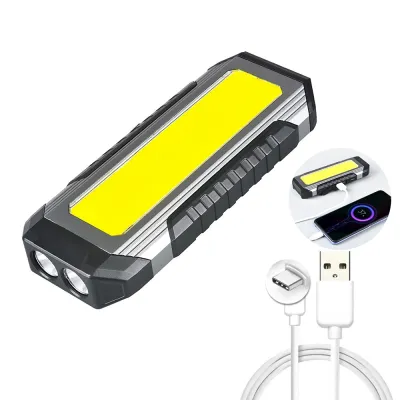
Prices are valid at publication and may change. Please refer to the product page for the latest price.
Space is a premium commodity in Singaporean apartments. Bulky, heavy-duty searchlights designed for outdoor search-and-rescue are impractical for HDB storage. They occupy valuable drawer space and are awkward to handle in tight indoor environments. A compact, high-efficiency LED torch can be easily tucked away in a DB box cupboard, a bedside drawer, or a dedicated emergency grab-bag, remaining instantly accessible when needed.
Relying on a smartphone flashlight during an emergency is a risky strategy. A phone’s primary function during a crisis is communication—allowing you to contact emergency services, receive updates from SP Group, or coordinate with family members. Running a smartphone’s high-intensity flash rapidly drains its battery and generates significant heat, potentially leaving you digitally isolated within a few hours. A dedicated torch preserves your phone’s battery for its critical communication role.
Essential Features to Evaluate When Buying an Emergency Torch
Brightness and Beam Type When evaluating an LED torch, do not fall into the trap of assuming that higher lumen counts are always better. Lumens measure the total amount of visible light emitted by a source. While a 2,000-lumen tactical torch sounds impressive, using it inside a white-walled HDB living room or a small bathroom will result in intense back-scatter and blinding glare, temporarily impairing your night vision. For indoor emergency use, a torch with adjustable brightness levels ranging from 10 to 300 lumens is highly optimal.

The beam profile is equally critical. Torches generally offer either a “throw” beam (a highly focused, narrow spotlight designed for long distances) or a “flood” beam (a wide, diffused wash of light). For navigating an HDB flat, a flood beam or a torch with a frosted diffuser is far superior. It illuminates your entire peripheral vision, helping you spot low-lying obstacles, toys, or furniture edges that a narrow spotlight would miss.
Build Materials Singapore’s tropical climate, characterized by high ambient temperatures and relative humidity levels often exceeding 80%, is exceptionally harsh on electronic hardware. Cheap plastic torches can degrade and become sticky over time, while low-grade steel or untreated alloys will rust rapidly in storage. Look for torches constructed from Type III hard-anodized aircraft-grade aluminum or high-impact, UV-stabilized polycarbonates. Hard-anodized aluminum offers excellent corrosion resistance, structural strength, and heat dissipation, ensuring the torch remains functional even after years of storage in a drawer.
Durability Ratings To guarantee reliability, check the product’s Ingress Protection (IP) rating. This standard classifies the degrees of protection provided against the intrusion of solid objects and liquids. An emergency torch should carry at least an IPX4 rating, which protects against splashing water from any direction. For superior protection against Singapore’s humid air and potential water pipe leaks, an IPX7 or IPX8 rating is highly recommended, indicating the device can withstand temporary immersion in water.
Size and Weight An emergency torch must be ergonomic and easy for all family members, including children and the elderly, to operate. A length of 10 to 15 centimeters and a weight of under 200 grams (including batteries) is the sweet spot. This form factor fits comfortably in the palm of a hand, can be held between the teeth if hands-free operation is briefly required, and does not weigh down an emergency grab-bag.
Recommended LED Torch Types for HDB Emergency Kits
Selecting the right torch involves understanding the specific roles different lighting tools play during an outage. A well-rounded HDB emergency kit often benefits from a combination of form factors to address immediate response, prolonged illumination, and long-term self-sufficiency.
Compact EDC Torches for Quick Blackout Response
Everyday Carry (EDC) style compact torches are designed for immediate, short-term deployment. These pocket-sized lights are highly portable and should be stored in easily accessible locations, such as the DB box cupboard or a bedside table drawer. Their primary role is to provide instant light the moment the power cuts out, allowing you to safely navigate to your main emergency kit or inspect your home’s electrical consumer unit.
These torches typically operate on a single AA or AAA battery, or a small rechargeable lithium-ion cell (such as a 14500 battery). Their simple user interfaces—often a single tail-cap switch—ensure that anyone can operate them without navigating complex programming modes.
The main limitation of compact EDC torches is their physical size, which limits battery capacity. While they can emit impressive brightness, running them on high modes will deplete the battery quickly, often within an hour. Furthermore, their narrow bodies are not designed to stand upright on a table to illuminate a whole room, making them less suitable for hands-free, long-term area lighting.
Multi-Function Lantern-Torches for Whole-Room Illumination
For extended power outages that last several hours, a multi-function lantern-torch is indispensable. These hybrid devices feature a directional beam on one end for standard torch use, alongside a secondary, diffused light source along the body that acts as an area lantern. This dual-purpose design allows you to transition from navigating dark corridors to lighting up an entire living room or kitchen.
Placing a lantern-torch on a central dining table or hanging it from a ceiling hook provides comfortable, 360-degree ambient light. This reduces trip hazards and helps maintain a sense of normalcy, which is particularly important for comforting young children or assisting elderly family members who may feel disoriented in the dark.
Many modern lantern-torches incorporate highly practical features for emergency scenarios. Magnetic tailcaps allow you to stick the torch securely to metal surfaces, such as the steel door of your HDB household shelter or the side of a refrigerator, providing instant hands-free overhead lighting. Additionally, some models feature a USB power-out port, transforming the torch’s high-capacity internal battery into an emergency power bank to trickle-charge your mobile phone. The primary trade-off is their larger physical footprint and heavier weight, meaning they require dedicated storage space in your emergency cabinet.
Hand-Crank and Solar Torches for Extended Outages
For ultimate preparedness, hand-crank and solar-powered torches offer a self-sustaining lighting solution that does not rely on a steady supply of disposable batteries or access to an active electrical grid for recharging. These devices utilize a manual dynamo crank or a small integrated solar panel to generate electricity, which is stored in an internal rechargeable battery or capacitor.
The primary advantage of these torches is their immunity to battery degradation and leakage during long-term storage. If you leave a hand-crank torch in an emergency kit for five years without touching it, you can still generate usable light within minutes of mechanical cranking. This makes them excellent secondary backup devices for extreme, prolonged emergency scenarios.
However, users must understand the physical limitations of these systems. Generating light via a hand-crank requires continuous physical effort; typically, one minute of vigorous cranking yields only 10 to 20 minutes of low-intensity light. The solar panels on these torches are also highly compact and inefficient compared to residential solar arrays. In an HDB flat, charging a solar torch through window glass is incredibly slow, as modern window glazes and solar films filter out the ultraviolet rays required for optimal photovoltaic conversion. Consequently, these torches should be viewed as a reliable last resort rather than your primary source of high-intensity illumination.
Battery Storage and Maintenance in Singapore's Humid Climate
Storing emergency electronics in Singapore’s hot and humid climate requires careful battery management. High humidity acts as an environmental catalyst, accelerating chemical reactions and galvanic corrosion on battery terminals. If left unchecked, battery failure can render your emergency torch completely useless when you need it most.
Understanding the distinct characteristics of different battery chemistry types is essential for maintaining a reliable emergency kit:
- Alkaline Batteries: While inexpensive and widely available, alkaline batteries are highly susceptible to leakage. As they discharge or age, chemical reactions produce hydrogen gas, which increases internal pressure until the safety seals rupture. This releases potassium hydroxide, a highly corrosive alkaline paste that destroys the torch's internal contacts and circuitry. If you choose to use alkaline batteries, never store them inside the torch; keep them in their original packaging and insert them only during an emergency.
- Lithium Primary Batteries: Unlike rechargeable lithium-ion batteries, lithium primary batteries (such as CR123A or AA-sized lithium cells) are disposable but offer an exceptional shelf life of up to 15 to 20 years. They are highly resistant to extreme temperatures and are structurally engineered to prevent leaks, making them the gold standard for long-term emergency storage. Although they carry a higher initial purchase price, their reliability and maintenance-free nature make them highly cost-effective for emergency kits.
- Rechargeable Lithium-Ion Batteries: Commonly found in high-performance torches (such as 18650 or 21700 cells), these batteries offer high energy density and excellent runtimes. However, they slowly self-discharge over time when left idle. If a lithium-ion battery is allowed to drain completely and remain flat for an extended period, its internal safety circuit may trip, rendering the battery permanently incapable of holding a charge.
To ensure your emergency lighting is always ready, establish a strict bi-annual maintenance routine. Mark your calendar every six months—coinciding with easily remembered dates like National Day or New Year’s Day—to inspect your emergency kit.
During this inspection, remove any disposable batteries to check for signs of white crust or corrosion. For torches with built-in rechargeable batteries, turn them on to verify functionality, run them for a few minutes, and recharge them to approximately 60% to 80% capacity, which is the optimal state of charge for long-term storage. If you detect minor corrosion on the metal contacts of your torch, you can safely clean it by wearing protective gloves and gently scrubbing the terminals with a cotton swab lightly dampened with white vinegar or lemon juice to neutralize the alkaline residue, followed by a thorough drying with a clean microfiber cloth. Always ensure the charging adapter you use for rechargeable models carries the Enterprise Singapore Safety Mark to prevent electrical hazards.
Quick Comparison: Matching Torch Types to Your Household Needs
The following table summarizes the key characteristics of the three primary LED torch types to help you select the best configuration for your HDB household’s specific needs.
| Torch Type | Primary Use Case | Storage Space Required | Power Source Management | Best Suited For |
|---|---|---|---|---|
| Compact EDC | Immediate navigation, fuse box inspection, short-term personal use | Minimal (fits in small drawers, pockets, or DB box) | Requires spare AA/AAA batteries or periodic USB charging | Singles, couples, and quick-access bedside placement |
| Multi-Function Lantern | Whole-room illumination, hands-free task lighting, phone charging | Moderate (requires shelf space or emergency grab-bag) | High-capacity rechargeable Li-ion; requires bi-annual top-ups | Families with children or elderly, and extended blackouts |
| Hand-Crank / Solar | Long-term backup, grid-independent emergency lighting | Moderate to high (due to folding cranks or solar panels) | Manual dynamo crank or solar trickle charge; no batteries needed | Long-term preppers and secondary backup kits |
Frequently Asked Questions (FAQ)
How many lumens do I need for an HDB flat blackout?
For indoor emergency use within an HDB flat, a torch emitting between 50 and 150 lumens is perfectly adequate. Because HDB interiors typically feature light-colored walls and ceilings that reflect light efficiently, excessively high lumens (such as 1,000 lumens or more) will bounce off surfaces and cause blinding glare, making it difficult to see clearly. Instead of chasing high maximum lumens, prioritize a torch with adjustable brightness modes. A low mode of 10 to 30 lumens is ideal for reading or navigating a small bathroom without straining your eyes, while a medium mode of 100 lumens can comfortably illuminate an entire bedroom when bounced off the ceiling.
Can I use my smartphone flashlight instead of a dedicated LED torch?
While a smartphone flashlight is highly convenient for a brief, two-minute search for a dropped item, it should not be relied upon as your primary light source during an extended HDB blackout. Smartphone flashes are designed for short bursts of light during photography; running them continuously generates significant heat and drains your phone’s battery rapidly. During a power outage or wider emergency, your smartphone is your vital link to the outside world—needed for receiving emergency broadcasts, checking utility restoration updates, and contacting loved ones. Preserving your phone’s battery is paramount, making a dedicated LED torch an essential separate investment.
How often should I check the batteries in my emergency torch?
You should inspect and test your emergency torch and its batteries at least once every six months. A practical way to remember this is to align the inspection with routine household tasks, such as testing your home’s smoke detectors or cleaning out your pantry. During your bi-annual check, turn the torch on to verify the bulb and switch function, inspect the battery compartment for any signs of swelling, leakage, or white powdery corrosion, and replace or recharge the batteries as necessary. If storing the torch with alkaline batteries, always store the batteries outside the device to prevent catastrophic leakage damage.
Community discussion
Share your experience or ask a question. Comments are reviewed before publication.