
Selecting the right LED wall light for your corridor in a Singapore home depends on your budget, design theme, and structural constraints. For most homeowners, Philips offers the best balance of smart integration and reliable utility, while Flos serves as the premier choice for high-end, minimalist architectural design. If you are pursuing a warm Japandi or Scandinavian aesthetic, design houses like Muuto and Louis Poulsen provide exceptional glare-free diffusion. For budget-conscious renovations or temporary rental updates, IKEA delivers highly accessible, straightforward fixtures. Selecting the right brand requires balancing these design philosophies with Singapore’s unique spatial constraints, such as narrow HDB hallways and concrete structural walls.
Key Features to Prioritize for HDB and Condo Corridors
Walkways in local apartments—whether a standard 3-room to 5-room HDB flat or a compact modern condominium—are notoriously tight. These transitional spaces typically feature narrow widths, often between 1.0 to 1.2 meters, alongside relatively low ceilings. High foot traffic means family members, pets, and guests frequently pass through, making bulky or protruding fixtures a physical hazard. A poorly placed light can easily be knocked by shoulders, bags, or moving furniture, which is why selecting low-profile fixtures is critical. Furthermore, because corridors lack natural light sources, they can easily feel claustrophobic if illuminated poorly, making the choice of lighting a key factor in spatial perception.
In confined corridors, the eyes are physically closer to the light source than in a spacious living room. Direct, unshielded LED chips can cause intense visual discomfort, temporary blindness, or harsh hot spots on the walls. Prioritizing fixtures with high-quality diffusers—such as frosted glass, acrylic covers, or indirect up-down light paths—is essential. These designs redirect light against the wall or ceiling, turning the surface itself into a soft reflector that distributes light evenly without blinding passersby. This indirect illumination also helps to smooth out wall imperfections, creating a softer, more luxurious texture on your paint or wallpaper.
Products mentioned in this guide
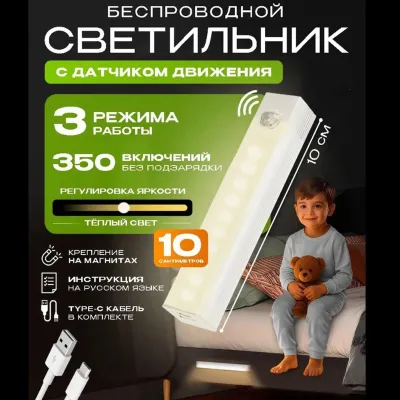
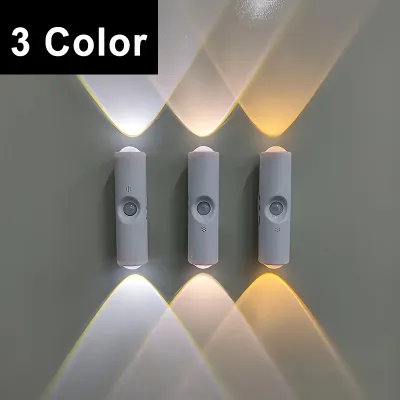
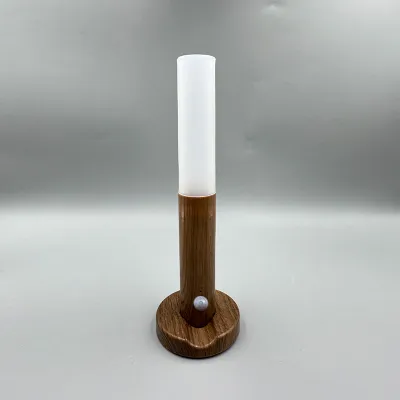
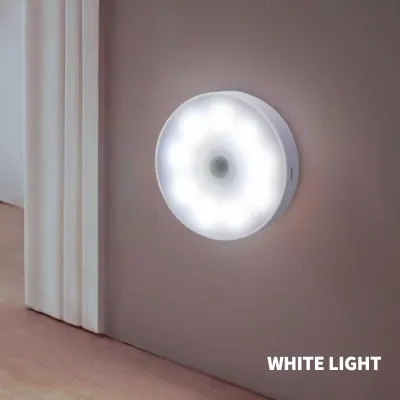
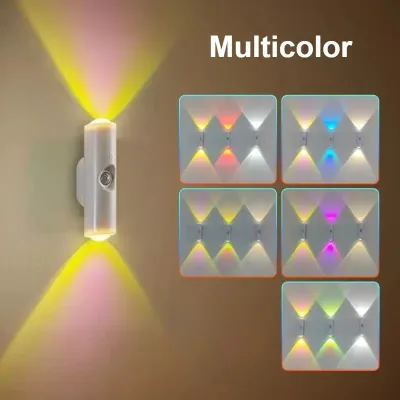
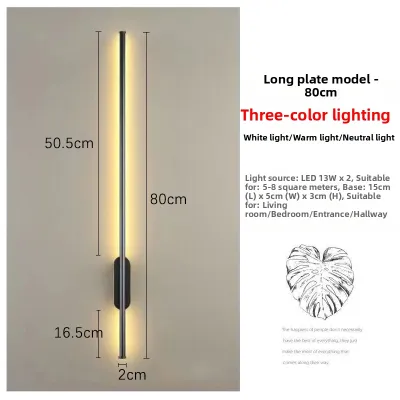
Prices are valid at publication and may change. Please refer to the product page for the latest price.
The color temperature of your LED wall light fundamentally alters how wide or narrow the corridor feels. A warm white light of approximately 3000K creates a cozy, welcoming transition from the bright outdoors into the private sanctuary of the bedrooms. It softens the environment and complements warm wood or vinyl flooring. Conversely, a cool white light of 4000K provides crisp, functional visibility, which is highly beneficial if the corridor also houses display shelves, family photos, or storage cabinets. Avoid daylight temperatures above 6000K in narrow hallways, as they can feel clinical and visually shrink the space. Some modern fixtures also offer switchable color temperatures, allowing you to toggle between warm and cool white during installation.
Because walkway clearance is limited, physical dimensions are critical. Homeowners should look for slim-profile or flush-mount LED wall lights. Ideally, a corridor wall light should not protrude more than 10 to 12 centimeters from the wall surface. Choosing flat, rectangular, or low-profile cylindrical shapes ensures that the physical path remains entirely unobstructed while still casting a beautiful wash of light. If you have extremely narrow corridors, recessed wall lights that sit flush within a drywall partition are the ultimate space-saving solution.
Wall lights are not merely functional; they serve as visual anchors that bridge the design language of your main living area with the private bedrooms. In modern Singaporean homes, where open-concept living often transitions abruptly into a dark hallway, a series of well-chosen wall lights creates a cohesive design narrative. Whether you are aiming for a sleek industrial look, a minimalist luxury vibe, or a cozy Scandinavian feel, the fixture’s material finish—be it matte black, brushed brass, or raw plaster—should complement your overall interior palette. Plaster fixtures are particularly versatile, as they can be painted the exact same color as your walls, allowing them to blend seamlessly into the background when turned off.
Recommended LED Wall Light Brands for Singapore Homes
Selecting the right brand involves evaluating how their design philosophies, material selections, and technological integrations align with your home’s layout and your renovation budget. The local Singapore market offers a spectrum of choices, from globally recognized mass-market manufacturers to high-end European design houses. Each brand brings distinct advantages and trade-offs to corridor applications.

Philips: Versatile and Smart-Ready Options
Philips is a household name in Singapore, highly regarded for its engineering standards, energy efficiency, and reliable product lifespans. Their LED wall light fixtures are designed with longevity in mind, utilizing high-quality drivers that resist the voltage fluctuations occasionally experienced in residential grids. The light output remains consistent over thousands of hours, preventing the premature flickering common in unbranded alternatives. This reliability is backed by robust local warranties, giving homeowners peace of mind.
For corridors, Philips shines brightest through its smart lighting ecosystems, particularly the Philips Hue range and WiZ connected lights. Hallways are transitional zones where lights are frequently left on unnecessarily. Integrating smart LED wall lights with motion sensors allows for automated illumination: the lights turn on softly as you step out of a bedroom at night and turn off automatically after you pass, saving substantial energy. The accompanying mobile applications also allow users to dim the lights or shift color temperatures dynamically, transitionally changing from a functional 4000K during the day to a dim, golden 2200K nightlight mode. This smart integration can be configured without complex rewiring, as the smart capabilities are built directly into the bulb or the fixture itself.
Finding these products in Singapore is exceptionally straightforward. They are widely stocked across physical lighting showrooms in areas like Balestier, Geylang, and Geylang Road, as well as on official brand stores on major local ecommerce platforms. This accessibility simplifies both the initial purchase and any future warranty claims or replacements. Visiting physical showrooms also allows you to view the fixtures in person, checking their physical size and verifying that the light output matches your expectations before committing to a purchase.
However, design-conscious homeowners should note that Philips’ standard consumer lines tend to prioritize utility and clean, simple geometry over avant-garde artistic expression. While they blend seamlessly into modern, minimalist, or transitional interiors, they are rarely designed to be dramatic, sculptural statement pieces. If your goal is to make a bold architectural statement in your hallway, you may find their designs somewhat predictable.
Flos: High-End Architectural and Minimalist Designs
For luxury condominiums, penthouses, or high-end HDB renovations, the Italian brand Flos represents the pinnacle of architectural lighting. Flos is renowned for collaborating with world-class designers to create fixtures that double as works of art. Their focus on innovative optics and precise beam control ensures that light is directed exactly where it is needed, creating dramatic plays of light and shadow on the corridor walls without any visible glare. This precise light steering prevents light from spilling into adjacent bedrooms where family members might be sleeping.
In narrow hallways where physical space is at an absolute premium, Flos offers ultra-minimalist, flush-to-wall, or even recessed wall lights that integrate directly into the drywall. These fixtures cast precise, clean washes of light upward, downward, or both, giving the illusion of a taller, wider corridor. The premium materials used—such as die-cast aluminum, hand-blown glass, and high-grade polymers—deliver a tactile and visual refinement that cheaper alternatives cannot replicate. Even when switched off, these fixtures act as subtle, elegant sculptures on your wall.
Sourcing Flos products in Singapore requires visiting specialized high-end lighting boutiques or authorized design dealers, often located in central design districts or premium showrooms. Because these fixtures are highly technical, they often require professional specification. It is crucial to work with your interior designer or lighting consultant to ensure the correct drivers and mounting accessories are ordered. Many of these fixtures use specialized low-voltage systems that require remote drivers, which must be planned for and hidden within your ceiling or distribution board during the renovation.
The primary trade-offs are the premium price point and the complexity of installation. Flos fixtures represent a significant financial investment, and because many of their minimalist designs require precise wall preparation, they demand careful spatial planning and expert installation during the early stages of your home renovation. If you are on a tight timeline or a modest budget, the long lead times for ordering and the high cost of both the fixtures and the specialized installation may be prohibitive.
Nordic and Scandinavian Design Brands (e.g., Muuto, Louis Poulsen)
Homeowners aiming for a warm, organic modern, or Japandi aesthetic should look toward established Nordic design houses. Brands like Muuto and Louis Poulsen are celebrated for their human-centric approach to illumination. Rather than focusing solely on brightness, these brands design fixtures that prioritize the quality of light, aiming to recreate the soft, comforting glow of natural northern light. This makes them ideal for creating a relaxing, stress-free environment in your home’s transitional spaces.
A key strength of these brands is their mastery of glare reduction. Louis Poulsen, for instance, famously designs fixtures where the light source is completely shielded, reflecting light off internal tiers to create an incredibly soft, glare-free ambiance. Muuto utilizes tactile materials like wood, pressed felt, and slip-cast ceramics, alongside soft, rounded organic shapes. This approach softens the hard, linear lines of a typical HDB corridor, turning a cold walkway into a warm, inviting passage that feels like an extension of your living room.
To purchase authentic Nordic lighting in Singapore, buyers should visit curated design showrooms and authorized local furniture and lighting distributors. Buying through official channels ensures that you receive genuine products with valid manufacturer warranties, which is vital given the premium cost of these designer items. It also protects you from low-quality counterfeits that often flood online marketplaces and lack safety certifications.
Before purchasing, carefully review the physical dimensions of these fixtures. Some Scandinavian designs are physically expressive and may have a larger footprint or protrude further from the wall than standard utility lights. It is essential to measure your corridor width to ensure the fixture does not obstruct the walkway, clash with adjacent doors, or get hit when you are carrying large items through the hallway.
IKEA: Accessible and Budget-Friendly Basics
When budget, simplicity, and immediate availability are the primary drivers, IKEA is an excellent, practical choice. This is especially true for first-time HDB homeowners, rental properties where permanent alterations are restricted, or budget-conscious renovations. IKEA’s design philosophy focuses on clean, democratic designs that fit easily into a wide variety of interior styles without overwhelming the space.
Many of IKEA’s modern wall lights feature integrated LED modules, meaning you do not have to worry about sourcing or replacing separate bulbs. These integrated solutions are highly energy-efficient and designed to last for years under normal household conditions. Their wall-mounted options range from simple, unobtrusive metal uplights to playful, soft-glowing decorative shapes that add character to a family-friendly hallway. The simplicity of their designs makes them highly versatile for basic lighting needs.
The ease of purchasing from local IKEA stores in Singapore—or ordering through their online portal with fast home delivery—makes them incredibly convenient. If a fixture needs to be replaced or if you decide to change your design theme after a few years, the low initial investment makes doing so painless. This makes IKEA particularly attractive for temporary living situations or transitional design phases.
However, these budget-friendly options come with clear limitations. IKEA wall lights rarely support advanced dimming protocols or integration with high-end smart home automation systems (though some are compatible with their proprietary smart ecosystem). The materials used—often lightweight plastics, thin sheet metals, or basic glass—lack the premium weight, flawless finishes, and architectural durability of specialized lighting brands. Additionally, some IKEA wall lights are designed as plug-in units with external cords; if you want a clean, hardwired look, your electrician will need to modify the fixture or wire it directly into a wall junction box, which must be verified before purchase. Ensure that any modifications to the fixture are discussed with a qualified professional to avoid compromising safety.
Pre-Purchase and Installation Checklist for Local Homes
Singapore’s domestic electrical grid operates on a standard voltage of 230V and a frequency of 50Hz. When sourcing LED wall lights—especially if you are importing designer fixtures directly from overseas online platforms—you must verify that the driver and integrated LED components are rated for 230V, 50Hz. Importing fixtures designed solely for 110V markets will result in immediate product failure, blown circuits, or serious electrical hazards. Always look for safety marks and local certifications when purchasing locally to ensure the product complies with Enterprise Singapore’s safety standards.
HDB flats are constructed using a mix of non-structural drywall partition walls and load-bearing structural concrete walls (often referred to as shear walls). HDB renovation guidelines strictly prohibit any hacking, deep drilling, or channeling into structural reinforced concrete walls, as this can compromise the building’s structural integrity. If your corridor wall is a structural shear wall, you cannot carve a recessed channel to hide electrical wiring. You must either utilize existing electrical points, build a false drywall partition in front of the structural wall to house the wiring, or accept the use of surface-mounted casing (trunking) to run the wires. Planning this with your contractor early prevents unexpected visual clutter.
Electrical safety is paramount. In Singapore, any fixed electrical wiring works, the installation of new electrical points, or the modification of existing circuits must be performed by a Licensed Electrical Worker (LEW) or a qualified electrician. Attempting to DIY hardwired LED wall lights is not only a violation of local safety regulations but also poses severe risks of short circuits, electrical fires, and voiding your home insurance policy. Always ensure the power supply is isolated at the main distribution board (DB box) before any installation or maintenance work begins, and verify that your electrician holds a valid license from the Energy Market Authority (EMA).
If you plan to dim your corridor lights to create a softer nighttime ambiance, you must verify the dimming technology. Integrated LED wall lights require compatible dimming drivers. Standard wall dimmers used for old incandescent bulbs (leading-edge dimmers) often cause modern LEDs to flicker, buzz, or fail prematurely. Ensure that both the LED wall light driver and your physical wall switch are designed for trailing-edge dimming, or consult the manufacturer’s official compatibility list before finalizing your purchase. Alternatively, smart bulbs and smart-enabled fixtures can be dimmed via software, bypassing the need for physical dimmer switches entirely.
Ingress Protection (IP) ratings classify the degree of protection a fixture has against solids (like dust) and liquids (like water). For standard, dry indoor corridors inside an HDB or condo, an IP20 rating is perfectly adequate. However, if your corridor light is positioned near the main entrance door, especially in an HDB flat facing an open-air common corridor or a condo unit with a semi-exposed entryway, it may be exposed to wind-blown rain, high humidity, or dust. In these specific zones, look for fixtures with at least an IP44 rating to ensure long-term safety and prevent moisture from corroding the internal electronics. Checking the installation environment before buying prevents premature fixture failure.
Frequently Asked Questions (FAQ)
Do I need a specific IP rating for indoor corridor lights?
For the vast majority of indoor corridors in Singapore homes, a standard IP20 rating is completely sufficient. These areas are fully sheltered and dry, meaning the light fixture does not require specialized protection against water ingress. However, if your wall light is installed near a main door that opens directly to an outdoor breezeway, common corridor, or semi-exposed balcony, it can be subjected to high humidity, dust, or occasional driving rain during heavy monsoons. In those specific transitional zones, selecting a fixture with an IP44 rating is highly recommended to protect the internal LED driver from moisture-induced short circuits.
Can I install wall lights in an HDB corridor without hacking the walls?
Yes, you can easily install wall lights without hacking structural walls. Since HDB regulations strictly prohibit cutting channels into reinforced concrete shear walls, homeowners have several practical workarounds. The most seamless option is to construct a slim drywall partition or a feature wall over the existing concrete, allowing wires to be run cleanly behind it. Alternatively, you can use neat, paintable surface-mounted plastic trunking to run the wires from an existing ceiling point down to the wall light. If you prefer to avoid wiring entirely, you can opt for plug-in LED wall sconces that connect directly to a nearby skirting-level power socket, using decorative cable clips or matching conduits to manage the exposed cord safely.
What is the ideal spacing for wall lights in a long hallway?
To achieve balanced, even illumination without dark spots or excessive glare, wall lights should generally be spaced approximately 1.5 to 2.5 meters apart. The exact distance depends on the fixture’s light output (lumens) and beam angle; narrow spotlight-style beams require closer spacing, while wide, diffused up-and-down lights can be placed further apart. When planning the layout, align the fixtures with architectural features like door frames or artwork, and ensure they are mounted at an average height of 1.5 to 1.8 meters above the finished floor level so the light source remains out of direct eye line. This height also ensures that the light is distributed effectively across both the floor and the ceiling, making the corridor feel more spacious.
Community discussion
Share your experience or ask a question. Comments are reviewed before publication.