
When designing a home with a standard Singapore Housing & Development Board (HDB) flat ceiling height of 2.6 meters, lighting decisions require careful spatial planning. A linear track light system offers an elegant, modular solution that provides high-quality illumination without sacrificing critical headroom. By selecting low-profile surface-mounted tracks or recessed magnetic track systems, you can achieve a clean, architectural look that enhances the spatial volume of your living areas.
This guide outlines how to select the right track light specifications, configurations, and reliable sourcing channels in Singapore. By focusing on technical compatibility and structural safety, you can ensure your lighting setup is both visually stunning and fully compliant with local housing guidelines.
Why 2.6m HDB Ceilings Demand Specific Track Light Designs
Standard HDB flats, particularly newer Build-To-Order (BTO) units, feature a floor-to-ceiling height of approximately 2.6 meters. When you introduce bulky, surface-mounted ceiling fixtures or heavily suspended pendant lights, you immediately compromise the vertical plane. This visual intrusion makes the room feel smaller, creating a cramped atmosphere that disrupts the flow of light and movement.
Products mentioned in this guide
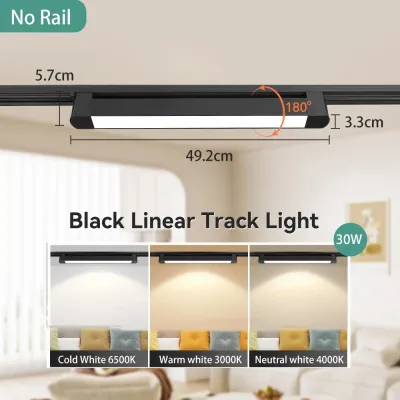
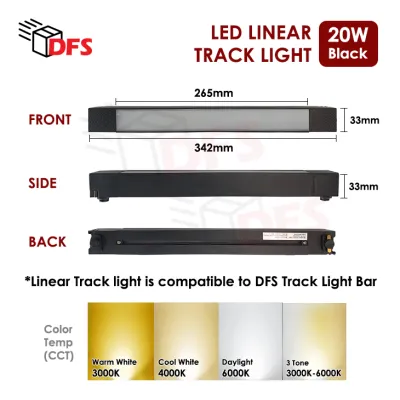
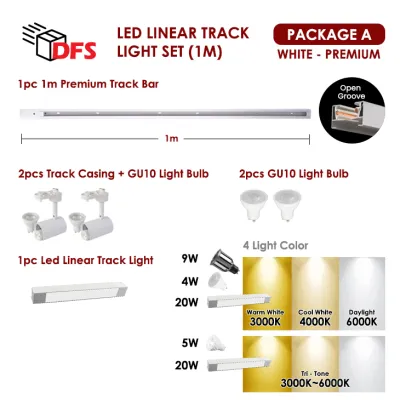
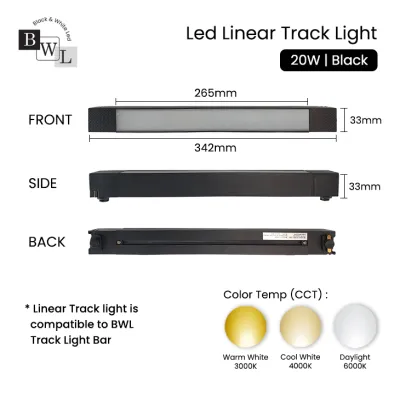
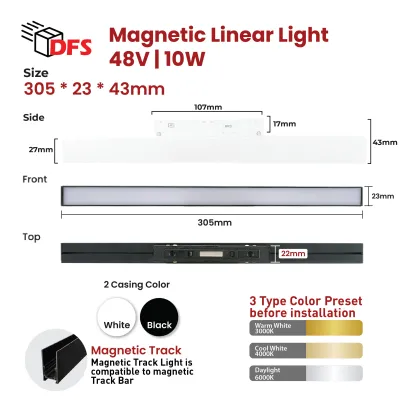
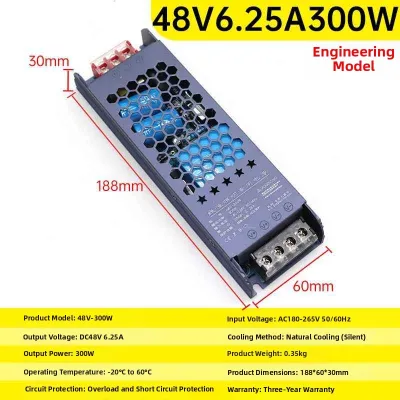
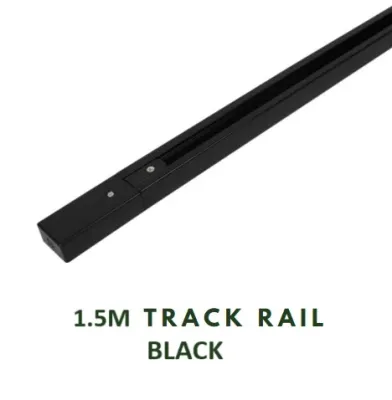
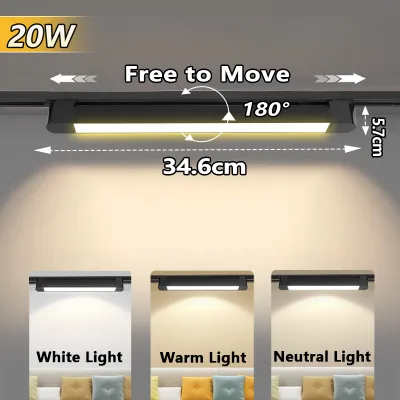
Prices are valid at publication and may change. Please refer to the product page for the latest price.
In low-ceiling environments, the distance between the light source and your eye level is significantly reduced. Standard wide-beam track heads or exposed LED chips direct light outward at wide angles, causing intense lateral glare that can strain your eyes during daily activities. To mitigate this, you must select linear track lights designed with precise beam angles and deep-set optics that shield the light source from your direct line of sight.
Compact HDB rooms can also trap heat if illuminated by inefficient, high-wattage fixtures. Low-profile linear track lights utilizing high-efficiency LEDs generate minimal heat, helping to maintain a comfortable indoor climate. Furthermore, the clean, continuous lines of a linear track system draw the eye horizontally across the ceiling rather than vertically, creating an optical illusion of greater width and open space.
Key Specifications to Demand from Lighting Brands
When browsing lighting brands, the physical dimensions of the track itself are paramount. Standard high-voltage track profiles can protrude up to 40mm from the ceiling surface, which is highly visible in a low-ceiling room. For a 2.6m ceiling, you should demand ultra-slim surface tracks with a profile thickness of 15mm to 20mm, or choose recessed magnetic tracks that sit completely flush with your false ceiling.

Do not compromise on visual comfort. Look for brands that offer linear modules with a Unified Glare Rating (UGR) of less than 19. This is achieved through design features like deep-recessed LED positioning, integrated honeycomb louvers, or dark-light reflectors. These physical barriers block stray light rays, directing the illumination downward onto your furniture and floors rather than outward into your eyes.
The quality of light significantly impacts how colors appear in your home. Insist on brands that specify a Color Rendering Index (CRI) of Ra 90 or higher. In compact HDB flats, where natural light may be limited in certain corners, high-CRI lighting ensures that your wooden carpentry, fabric sofas, and wall paint look vibrant and true to life, preventing a dull, washed-out aesthetic.
Creating the right ambiance requires flexible control. Verify whether the brand’s LED drivers are compatible with local dimming standards such as TRIAC (phase-cut) dimming, or modern smart home ecosystems like Zigbee, DALI, or Bluetooth-based protocols. Many generic drivers do not support smooth dimming, leading to annoying flickering or a high minimum brightness level. Ensure the brand explicitly guarantees compatibility with your preferred smart switches or dimmers before purchasing.
Because Singapore’s domestic electricity supply operates at 230V/50Hz, electrical safety is non-negotiable. Look for brands whose external LED drivers and track adapters carry the Singapore Safety Mark. This certification ensures the product has undergone rigorous testing against electrical short circuits, overheating, and fire hazards. Relying on uncertified components imported directly from overseas without local safety testing poses a genuine risk to your household electrical grid.
Best Track System Configurations for Low Ceilings
Recessed (Trimless) Magnetic Tracks
For homeowners planning a comprehensive renovation that includes a false ceiling, recessed magnetic tracks represent an excellent solution. By embedding the aluminum track channel directly into the plasterboard, the track sits entirely flush with the ceiling surface. This trimless integration eliminates all physical protrusions, maximizing your 2.6m headroom and providing a sleek, high-end architectural look.
However, executing this setup requires meticulous planning and coordination. Your interior designer, carpenter, and electrician must collaborate closely during the early stages of renovation. The false ceiling must be framed to accommodate the specific depth of the magnetic track channel, and sufficient space must be allocated within the ceiling cavity to house the external 48V low-voltage DC transformers, which must remain accessible for future maintenance.
Ultra-Slim Surface-Mounted Tracks
If you prefer not to install a false ceiling—or if your HDB flat’s structural layout makes hacking impossible—ultra-slim surface-mounted tracks are an exceptional alternative. These tracks are screwed directly into the concrete ceiling slab, preserving every inch of your original 2.6m height. Modern low-profile designs feature a depth of just 15mm to 20mm, making them barely noticeable when painted to match your ceiling color.
To achieve a clean aesthetic with surface-mounted systems, you must pay close attention to cable management. Ensure the brand you select offers dedicated end-feed connectors that allow wiring to enter the track seamlessly from your existing ceiling rose. Any exposed wiring should be routed through neat, paintable surface trunking that runs parallel to the track, minimizing visual clutter and keeping the ceiling plane as clean as possible.
Configurations to Avoid
When dealing with a 2.6m ceiling, certain configurations should be strictly avoided. Suspended or pendant track systems, which hang from cables or rods, are highly impractical for low-ceiling environments. They create immediate headroom hazards for taller occupants and visually cut the room in half, making your living spaces feel incredibly cramped. Additionally, avoid bulky, industrial-style track heads that protrude far below the track line; instead, opt for linear magnetic modules, folding accent lights, or compact spotlight heads that sit tight against the track profile.
How to Evaluate and Source Reliable Brands in Singapore
Navigating the lighting market in Singapore involves understanding the distinction between different brand tiers. International mass-market brands, commonly found in major home improvement centers, offer highly standardized, plug-and-play track light kits. These are generally budget-friendly and easy to install but may offer limited customization in terms of beam angles, track lengths, or modular light heads.
On the other hand, specialized local lighting boutiques focus on architectural lighting solutions. They provide highly customizable low-voltage (usually 48V) magnetic track systems, premium optical components, and a wider variety of linear modules, allowing you to tailor the lighting layout precisely to your HDB flat’s floor plan.
Before committing to a brand, visit physical showrooms in Singapore to evaluate the build quality of their track systems in person. Do not hesitate to ask the sales representatives detailed technical questions. Inquire about the warranty period for both the LED modules and the external drivers—reliable brands typically offer at least a two-to-three-year warranty. Ask whether the magnetic components are hot-swappable (allowing you to move light modules while the power is on) and confirm if they stock replacement parts locally. This ensures that if a single module fails years down the road, you can easily purchase a matching replacement without needing to tear down the entire track system.
To guarantee product authenticity and reliable after-sales support, always source your linear track lights from official brand websites, authorized local distributors, or established physical showrooms. While general online marketplaces and e-commerce platforms offer a vast array of cheap, unbranded track lights, purchasing from these sources carries significant risks. Many of these products lack local safety certifications, feature low-quality drivers prone to premature failure or flickering, and offer no recourse for warranty claims. Investing in a reputable, locally supported brand protects your renovation budget and ensures long-term peace of mind.
HDB Structural Limits and Electrical Safety Checks
The physical structure of your HDB ceiling dictates how your track light system must be installed. Mounting a surface track onto a bare concrete ceiling requires drilling anchor holes directly into the concrete slab. This process must be done carefully using appropriate masonry drill bits to avoid hitting internal rebar. Conversely, if you are installing a recessed or heavy magnetic track system into a false ceiling, the plasterboard structure must be reinforced. Magnetic tracks and their associated LED modules carry considerable weight; your contractor must install additional metal framing or plywood support backings behind the plasterboard to prevent the ceiling from sagging over time.
It is critical to understand that the Housing & Development Board (HDB) enforces strict structural safety guidelines. Hacking, chasing, or cutting into structural concrete ceiling beams and slabs to conceal electrical wiring is strictly prohibited. Doing so compromises the structural integrity of the entire building block. Therefore, if you do not have a false ceiling, your wiring must run along the surface of the concrete. You must plan your track layout to align with existing ceiling electrical points, or use approved surface-mounted PVC trunking to route cables safely and neatly across the ceiling.
Working with electrical wiring poses inherent safety risks. For all fixed wiring installations operating at 230V/50Hz, you must engage a licensed electrician registered with the Energy Market Authority (EMA) of Singapore. A professional electrician will ensure that your track light system is properly grounded, that the total wattage load does not exceed the circuit breaker’s capacity, and that all high-voltage connections are securely enclosed in safety junction boxes. Prior to any installation or maintenance work, always isolate the power supply at the main distribution board (DB box) to eliminate the risk of electrical shock.
Frequently Asked Questions (FAQ)
Can I install a linear track light without a false ceiling in my HDB?
Yes, you can easily install linear track lights without a false ceiling by opting for surface-mounted track profiles. Because you cannot hide wiring inside a bare concrete slab, the main challenge is managing the electrical cables. To achieve a clean look, position your track so that it connects directly to your existing ceiling rose point. For routing wires from other areas, use slim, paintable PVC surface trunking that can be painted the exact shade of your ceiling, or run the cables discreetly along existing ceiling cornices and structural corners.
Do magnetic track lights consume more electricity than standard LED battens?
No, magnetic track lights do not inherently consume more electricity than standard LED battens. The electricity consumption of any lighting fixture is determined entirely by the total wattage of the LED modules and the efficiency of their drivers, measured in lumens per watt, rather than the magnetic mounting mechanism itself. In fact, track systems can be more energy-efficient because they allow for highly targeted, zoned lighting. Instead of flooding an entire room with a broad, high-wattage wash from a standard LED batten, you can position low-wattage track modules exactly where light is needed—such as over a dining table or kitchen countertop—and turn off unnecessary modules when they are not in use.
Community discussion
Share your experience or ask a question. Comments are reviewed before publication.