
Quick Guide: Core Features of Space-Enhancing Mirror Cabinets
Long mirror cabinets are dual-purpose design elements that solve two of the most common challenges in compact modern homes: limited storage and tight spatial boundaries. In highly dense urban environments like Singapore, where apartment footprints require smart layout planning, choosing the right cabinetry can completely transform the feel of a room. Maximizing the illusion of space relies on three primary design pillars: uninterrupted reflections, full-length vertical coverage, and strategic ambient lighting.
Frameless designs and edge-to-edge mirror doors are the top priorities for compact apartments, as they eliminate visual clutter and allow the eye to travel freely. By selecting styles that blend hidden storage with seamless glass surfaces, you can double the perceived depth of a room while keeping daily essentials organized and out of sight. This guide explores the most effective long mirror cabinet styles, placement strategies, and critical technical checks to help you make an informed decision.
Why Specific Designs Make Small Rooms Feel Larger
The human brain perceives room size based on visual boundaries, light distribution, and vertical lines. Standard furniture often acts as a visual block, chopping up walls and making a room feel smaller than its actual dimensions. A strategically selected long mirror cabinet works by tricking the brain into perceiving a continuation of the physical space, effectively pushing the walls outward.
Products mentioned in this guide
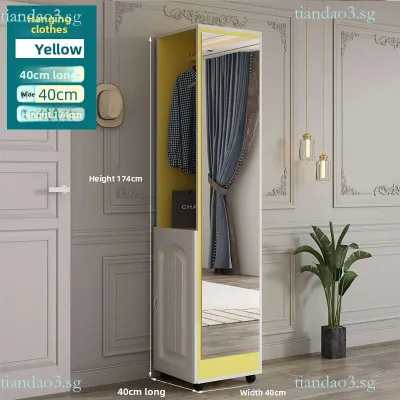
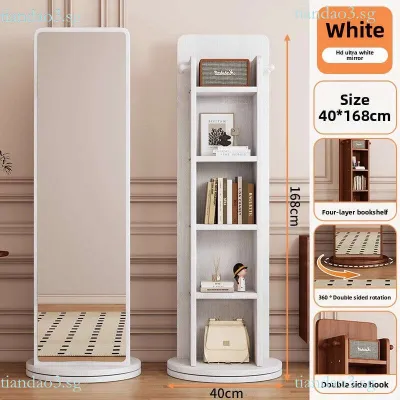
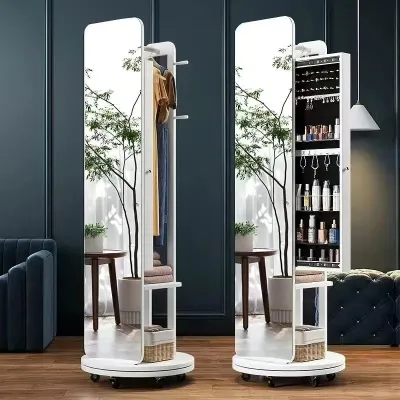
![[3S Furniture] Enhanced Wood Multi-Functional Dressing Cabinet with Full-Length Mirror and Movable Wheel* FREE DELIVERY&INSTALL *](https://img.lazcdn.com/g/p/a754cf39b53e89182cdfb8219da130d9.jpg_400x400q80.jpg_.webp)
Prices are valid at publication and may change. Please refer to the product page for the latest price.

Frameless and Beveled Edges Traditional frames, whether made of thick wood or dark metal, create distinct borders that define where a wall ends. When you look at a framed mirror, your brain immediately registers the object as a boundary. Eliminating these bulky frames allows the reflection to blend seamlessly with the surrounding wall. Beveled edges take this concept a step further by angling the glass at the perimeter. This angle catches and refracts light, softening the transition between the mirrored surface and the wall, which helps the cabinet virtually disappear into the room’s architecture.
Full-Length and Floor-to-Ceiling Coverage Vertical height is a powerful tool when designing for small spaces. A standard wall cabinet typically covers only the upper half of a wall, leaving a blank space below that emphasizes the room’s limits. A long, full-length mirror cabinet draws the eye upward, creating a strong vertical line that accentuates the height of the ceiling. By reflecting the floor and the ceiling simultaneously, the cabinet creates a continuous vertical plane. This continuity tricks the eye into believing the floor area extends much further than it actually does, making low ceilings feel significantly higher.
Strategic Reflective Surfaces The design of the cabinet door itself dictates the quality of the spatial illusion. Edge-to-edge mirrored doors offer a single, continuous sheet of glass that provides an unbroken reflection. In contrast, cabinets with heavy wooden mullions, thick frames, or partial mirror panels break the reflection into small, fragmented sections. This fragmentation reminds the viewer of the physical cabinet’s presence, destroying the optical trick of an “open wall.” For the most convincing illusion of depth, the front of the cabinet should consist entirely of reflective glass.
Top Long Mirror Cabinet Styles for Maximizing Space
Choosing the right style of long mirror cabinet involves balancing aesthetic goals with the physical layout of your room. Different designs solve specific spatial challenges, from narrow corridors to dark, windowless corners. Here are the most effective styles designed to maximize the illusion of space while providing practical storage.
Frameless Full-Length Mirror Cabinets
Frameless full-length mirror cabinets represent the pinnacle of minimalist design. These units feature doors covered entirely by a single sheet of glass, with no visible outer frame or hardware on the front. When mounted on a wall, they look like simple, elegant mirrors while hiding deep shelving behind the glass panels.
This style is exceptionally effective at expanding space because it offers zero visual resistance. The lack of a frame allows the reflection to merge directly with the adjacent walls, creating a clean, floating effect. It is an ideal choice for modern bedrooms, walk-in wardrobes, or minimalist living areas where clean lines are a priority.
However, frameless glass has exposed edges that are highly susceptible to chipping if bumped by vacuum cleaners, bags, or moving furniture. To mitigate this risk, avoid placing frameless cabinets in high-traffic transition zones or tight entryways. When purchasing, always verify that the manufacturer has applied a high-quality edge-polishing or tempering process to smooth and strengthen the glass borders.
Sliding-Door Cabinets with Edge-to-Edge Mirrors
Sliding-door mirror cabinets are highly functional options designed specifically for tight layouts where floor space is at a premium. Unlike traditional swing-out doors that require a clear path to open, sliding doors glide horizontally along an internal track system.
In narrow hallways, compact bedrooms, or walk-in closets, the “clearance zone” required for swinging doors can severely restrict your furniture layout. By utilizing sliding doors, you eliminate this clearance requirement entirely, allowing you to place other furniture closer to the cabinet without blocking access. The continuous sheet of glass across the sliding panels maintains a wide, uninterrupted reflective surface when the cabinet is closed.
The success of this style depends heavily on the quality of the track mechanism and the alignment of the doors. If the track system is poorly constructed, the mirror panels may sit unevenly, creating a disjointed, broken reflection that ruins the spatial illusion. Before purchasing, inspect the track hardware to ensure it is made of durable materials like stainless steel or anodized aluminum, and verify that it includes soft-close dampeners to prevent the glass doors from slamming.
Multi-Panel or Bi-Fold Mirror Cabinets
Multi-panel or bi-fold mirror cabinets are designed for wider walls where a single, massive glass panel is structurally impractical or difficult to install. These units feature multiple narrower mirrored doors that fold outward or open independently, providing access to wide, shallow storage compartments.
This style is excellent for creating a wide, panoramic reflection that catches light from multiple angles, making the entire wall feel open. It is particularly useful in master bedrooms or spacious bathrooms where you want to maximize both storage capacity and visual width.
The primary trade-off with multi-panel designs is the presence of seams. The hinges and gaps between the individual doors create vertical lines that break up the reflection, which slightly reduces the seamless illusion of space compared to a single-panel design. To minimize this effect, look for cabinets with ultra-thin gaps (ideally under 2mm) and fully adjustable hinges that allow you to align the doors perfectly during installation.
Mirrored Cabinets with Integrated LED Backlighting
Mirrored cabinets with integrated LED backlighting combine the spatial benefits of reflection with the airiness of ambient light. These cabinets feature built-in LED strips positioned behind the mirror edges or integrated directly into the glass face, casting a soft glow onto the surrounding wall.
Light is a crucial element in spatial perception; dark corners and harsh shadows make a room feel confined and small. The “halo effect” created by backlighting eliminates these dark zones, making the cabinet appear lighter and as if it is floating on the wall. This visual weight reduction makes the entire room feel brighter, more open, and airier.
Because these cabinets combine water, glass, and electricity, they require careful technical verification. In Singapore, ensure the integrated LED driver is compatible with the standard 230V electrical system. If you plan to install the cabinet in a bathroom or near a water source, verify that the unit has an appropriate Ingress Protection (IP) rating, with IP44 being the recommended minimum for damp environments. Always isolate the power supply at the main distribution board before installation, and hire a licensed electrical worker to handle the fixed hardwiring safely.
Placement and Lighting Strategies to Amplify the Illusion
Choosing the right mirror cabinet is only half the battle; where you place it and how you light it will ultimately determine how effectively it expands your room. Strategic positioning can turn a simple storage unit into a powerful architectural feature.
Placement for Maximum Depth To get the most out of your long mirror cabinet, position it directly opposite or adjacent to a natural light source, such as a window or balcony door. This placement allows the mirror to capture incoming daylight and bounce it deep into the darker corners of the room, instantly making the space feel larger and more inviting. If you are installing the cabinet in a windowless area like a hallway, place it at the far end of the corridor. This creates the optical illusion of an ongoing passageway, effectively doubling the perceived length of the hall.
What to Avoid Reflecting A mirror reflects everything in front of it, including visual clutter. Avoid placing your cabinet directly opposite open shelving units, laundry baskets, or high-traffic work desks. Reflecting clutter will only double the visual noise in the room, making it feel more cramped and chaotic than before. Similarly, avoid positioning the mirror so it reflects a completely blank, dark wall, as this does nothing to enhance the sense of depth or light.
Lighting Synergy and Glare Prevention To maintain a convincing illusion of space, pair your mirror cabinet with soft, diffused ambient lighting. Avoid pointing harsh, directional spotlights directly at the glass surface. Direct spotlights create intense glare, expose dust and fingerprints, and cause uncomfortable blind spots, all of which draw attention to the surface of the glass rather than the reflected space. Instead, use warm or neutral ceiling fixtures (between 2700K and 4000K) that distribute light evenly throughout the room, allowing the mirror to reflect a soft, natural glow.
Pre-Purchase Checklist: Dimensions, Safety, and Installation Limits
Before purchasing a long mirror cabinet, you must verify several physical, structural, and electrical requirements. Taking these steps ensures that your installation is safe, compliant with local standards, and visually balanced.
Dimensions and Proportions A long mirror cabinet requires adequate breathing room to look its best. Squeezing a massive cabinet into a tight space where it touches both the floor and the ceiling can make the wall look crowded. Measure your wall dimensions carefully and ensure the cabinet height leaves a comfortable margin of at least 15cm to 30cm at both the top and bottom. This gap maintains a balanced, intentional look and prevents the cabinet from overpowering the room.
Weight and Wall Compatibility Long mirror cabinets are exceptionally heavy, combining solid internal shelving with thick, high-density glass doors. In Singapore, residential walls are typically constructed of either solid concrete (common for structural walls and bomb shelters) or drywall partitions (often used for internal room dividers). Never attempt to mount a heavy mirror cabinet directly onto standard drywall using basic plastic plugs. For concrete walls, use heavy-duty masonry wall plugs and a rotary hammer drill. For drywall, you must locate the internal metal or timber studs using a stud finder, or use heavy-duty steel toggle bolts rated specifically for the cabinet’s weight. If you are unsure of your wall’s load-bearing capacity, consult a professional installer before proceeding.
Electrical and Safety Boundaries If your cabinet includes integrated LED lights, demister pads, or internal power sockets, you must adhere to strict safety protocols. Always isolate the electrical power at your home’s main distribution board before starting any installation work. Fixed wiring must be connected by a licensed electrical worker to ensure compliance with local electrical safety regulations. Never attempt to DIY complex electrical connections in damp areas like bathrooms, as improper wiring poses severe shock and fire hazards.
Delivery and Access The physical size of a long, single-piece mirror cabinet presents unique delivery challenges. Before finalizing your purchase, measure the height, width, and diagonal clearance of your building’s elevators, stairwells, corridors, and front door frames. Many high-rise apartments in Singapore have compact lifts that cannot accommodate oversized furniture pieces. Verifying these measurements beforehand prevents delivery failures and unexpected manual handling charges.
Frequently Asked Questions (FAQ)
How high should a wall-mounted long mirror cabinet be installed?
For wall-mounted variants, the bottom edge of the cabinet should typically sit between 10cm and 30cm off the floor, or align neatly with adjacent architectural features like baseboards or low console tables. This low placement is essential for maintaining the full-length illusion, allowing you to see your entire figure from head to toe without having to step back excessively. If you prefer a floating look higher up the wall, ensure the main viewing pane aligns comfortably with the eye level of all household members.
Is it safe to mount a heavy full-length mirror cabinet on drywall?
Mounting a heavy, fully loaded mirror cabinet directly onto standard drywall without structural reinforcement is highly unsafe. The combined weight of the glass, cabinet frame, and stored items can easily pull standard drywall anchors through the plasterboard, leading to a catastrophic collapse. Always secure the mounting brackets directly into the wall’s internal metal or timber studs. If the studs do not align with your desired cabinet position, you must use heavy-duty steel toggle bolts rated for the specific load, or hire a professional to reinforce the drywall partition with internal plywood backing.
Community discussion
Share your experience or ask a question. Comments are reviewed before publication.