
Selecting the right mirror for a compact Singapore Housing & Development Board (HDB) living room is one of the most effective ways to create the illusion of a larger, brighter home. In typical 3-room, 4-room, or 5-room BTO and resale layouts, limited square footage and rigid structural walls can sometimes make the main living area feel confined. By strategically choosing the correct mirror size, shape, and placement, you can visually double your space and maximize the reach of natural light.
To achieve this spatial transformation, the ideal setup is a large wall-mounted rectangular or arched mirror that spans roughly two-thirds to three-quarters the width of the furniture beneath it, or a sleek, frameless round mirror measuring at least 80 cm to 100 cm in diameter. These dimensions balance the room’s proportions without overwhelming the walls, while the absence of heavy framing prevents the glass from acting as a hard visual block.
Assessing Your HDB Living Room Space and Wall Proportions
Before purchasing a mirror, precise measurements of your target wall are essential to avoid buying a piece that is either dwarfed by the room or physically intrusive. Start by measuring both the total width and height of the wall space where you intend to mount or lean the mirror. In HDB flats, walls are rarely completely empty; you must account for architectural fixtures such as electrical trunking, light switches, power outlets, fiber terminal points, and air-conditioning ledges or trunking that run along the top or sides of the wall.
Products mentioned in this guide
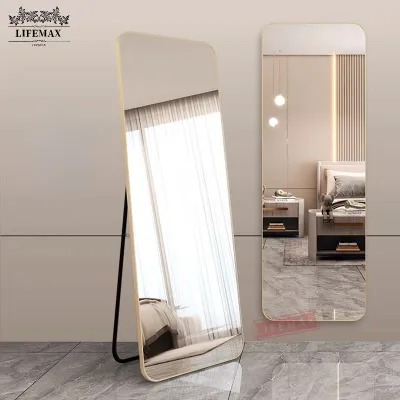
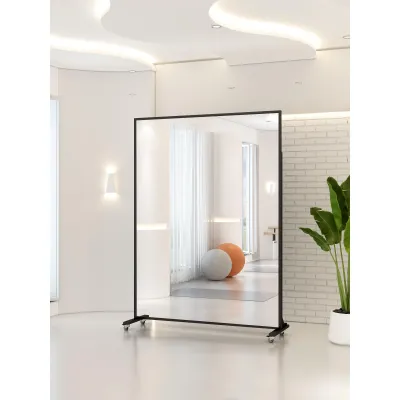
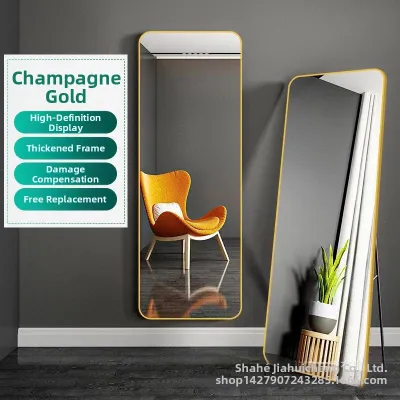
![SG [ READY STOCK ] HD Acrylic soft mirror attached to wall self-adhesive full body dressing mirror non perforated](https://img.lazcdn.com/g/p/10f5a09c2f952c5c8f6fe9a8d334827a.jpg_400x400q80.jpg_.webp)
Prices are valid at publication and may change. Please refer to the product page for the latest price.
Next, evaluate the physical scale of the furniture already resting against or near that wall. Whether it is a multi-seater sofa, a low-profile console table, or a dining sideboard, the mirror must visually relate to these pieces rather than float in isolation. A mirror that is wider than the furniture beneath it will create a top-heavy, unbalanced look that makes the ceiling feel lower and the floor area feel more cramped.
Finally, determine the visual boundaries and negative space of the room. In compact HDB layouts, walkways are often narrow, typically ranging from 90 cm to 120 cm in width. If you choose a thick, heavy-framed mirror or a leaning floor mirror that protrudes significantly into these high-traffic pathways, it will restrict physical movement and disrupt the visual flow. Leaving adequate empty wall space—or negative space—around the mirror allows the eye to rest and enhances the overall illusion of openness.
Ideal Mirror Sizes for Small Living Areas
To maintain visual harmony in a small living area, follow the proportion rule: a wall-mounted mirror should generally measure between two-thirds (66%) and three-quarters (75%) of the width of the furniture directly below it. For example, if your living room features a standard three-seater sofa that is 180 cm wide, the ideal width for a mirror hung above it is between 120 cm and 135 cm. This proportion ensures that the mirror feels integrated into the furniture arrangement rather than looking like an afterthought.

When deciding between floor mirrors and wall-mounted mirrors, consider the physical footprint each option requires. Leaning floor mirrors offer a relaxed, contemporary aesthetic and can make a room feel taller by drawing the eye from the floor upward. However, they do require dedicated floor space and must be angled slightly outward at the base, which can eat into precious floor area in tight HDB layouts. Wall-mounted mirrors, conversely, preserve 100% of your floor space while offering the same light-reflecting benefits, making them the more practical choice for highly compact living zones.
Balancing the visual weight of the mirror with the actual square footage of your living room is crucial to preventing a top-heavy or cluttered atmosphere. A massive, heavily framed mirror in a small 3-room flat can dominate the space to the point where the room feels like a mirror showroom rather than a cozy home. If you want to go large, opt for a thin-profile frame or a completely frameless design to keep the visual weight as light as possible.
Best Mirror Shapes and Types for Space Amplification
Different mirror shapes interact with the geometry of a room in unique ways, altering how height, width, and architectural lines are perceived.
Large Rectangular and Arched Mirrors
Vertical lines are highly effective at drawing the eye upward, which is particularly beneficial in standard HDB flats where ceiling heights typically range from 2.6 to 2.8 meters. Hanging a large rectangular mirror vertically instantly creates the illusion of loftiness, making the room feel taller than it actually is.
Arched mirrors offer a similar vertical lift but with the added benefit of a curved top. This gentle curve helps soften the rigid, boxy architectural lines, structural beams, and sharp corners common in modern BTO layouts. The arch mimics the shape of a traditional window, tricking the brain into perceiving an extra portal of depth and light on a solid concrete wall.
Round and Organic Shapes
Circular and organic-shaped mirrors are excellent design tools for breaking up the monotonous, angular lines of standard living rooms. Most furniture pieces—such as TV consoles, modular sofas, coffee tables, and bookshelves—are blocky and rectangular.
Introducing a large round mirror, ideally between 80 cm and 100 cm in diameter, creates a striking focal point that softens the surrounding space. This contrast establishes a more fluid visual flow, making the living area feel less rigid and more inviting. For an even softer look, organic or “pebble” shaped mirrors with asymmetrical curves can add a modern, artistic touch while performing the same space-expanding duties.
Grid, Panel, and Framed Options
Frames and divided panels can either enhance or detract from the spatial illusion depending on their design. Thin metal frames in matte black, brushed brass, or champagne gold provide a clean, minimalist border that defines the mirror without adding unnecessary visual weight.
Grid or panel mirrors, which feature multiple smaller panes of glass joined by thin frames to resemble a multi-pane window, are popular for creating a “fake window” effect. While they add architectural character and depth, they can introduce visual clutter if placed in an already busy or highly decorated room. In compact spaces, it is best to use grid mirrors with larger, simpler panels and ultra-thin frames to keep the reflection clear and uninterrupted.
Strategic Placement to Maximize Light and Depth
Where you place your mirror is just as important as its size and shape. To maximize light and depth, you must carefully consider what the mirror will reflect and how it will interact with the room’s natural light sources.
To bounce daylight deeper into a dark or narrow HDB living room, position your mirror opposite or adjacent to a window. In Singapore, where flats are oriented to manage tropical heat and sunlight (often facing North-South to avoid direct afternoon sun), ambient daylight can sometimes feel soft or uneven. Placing a mirror where it can capture this indirect daylight allows it to act as an additional light source, illuminating dim corners and making the entire living area feel brighter and more open.
However, you must be careful to curate what the mirror reflects. A mirror amplifies whatever is in its field of view; if it is positioned directly opposite a cluttered kitchen entrance, the household shelter (bomb shelter) door, utility pipes, or a blank, dark hallway, it will simply double the visual clutter or darkness. Instead, angle or position the mirror to reflect an attractive focal point, such as a well-styled indoor plant display, a piece of wall art, or an open, airy dining zone.
When it comes to installation height, the general rule of thumb is to hang wall mirrors so that their center point is at eye level, which is approximately 145 cm to 150 cm from the floor. If you are mounting the mirror above a sofa or console table, ensure there is a gap of about 15 cm to 20 cm between the bottom of the frame and the top of the furniture. This gap prevents the pieces from looking crowded and allows both the furniture and the mirror to stand out individually.
Safety and secure mounting are paramount when dealing with heavy glass in an HDB flat. HDB walls vary significantly by location and construction type:
- Structural and Bomb Shelter Walls: Made of reinforced concrete, these walls are incredibly tough and require a rotary hammer drill and specialized masonry wall plugs to penetrate.
- Internal Partition Walls: Often made of drywall, plasterboard, or lightweight concrete blocks in newer BTO flats. Drywall partitions cannot support heavy mirrors without the use of specialized toggle bolts, heavy-duty hollow-wall anchors, or securing the mounting brackets directly into the timber or metal wall studs.
Always check the manufacturer’s instructions for both the mirror and the mounting hardware before beginning installation. For exceptionally heavy, oversized, or custom floor-to-ceiling mirror panels, it is highly recommended to hire a qualified professional installer to ensure the piece is safely secured and to prevent any risk of structural damage or injury.
Common Sizing and Styling Mistakes to Avoid
One of the most frequent errors in small-space design is the “postage stamp” effect. This occurs when a homeowner chooses a mirror that is far too small for a large, blank wall. Instead of making the room look larger, a tiny mirror highlights the vastness of the empty wall around it, making the room feel disjointed, unbalanced, and visually smaller than it actually is. If you cannot afford a single large mirror, grouping a few smaller, matching mirrors together can achieve a similar space-expanding effect without the high cost of a single oversized piece.
Another common mistake is choosing mirrors with overly bulky, ornate, or heavy frames. Thick wooden, plaster, or heavily carved frames consume a significant amount of visual space. In a compact HDB living room, these frames act as a hard visual boundary, stopping the eye at the frame rather than allowing it to travel into the reflected depth of the mirror. Keep frames under 2 cm in thickness, or opt for frameless, polished-edge designs for the cleanest look.
Lastly, incorrect hanging height can completely ruin the spatial benefits of a mirror. Hanging a mirror too high—a common mistake where the mirror is tilted downward toward the room—disconnects it from the furniture below, making it look like it is floating aimlessly. Conversely, hanging it too low means it will only reflect the backs of furniture or cut off the heads of people standing in the room, defeating both its functional and aesthetic purposes.
Frequently Asked Questions (FAQ)
Can a mirror be too big for a small HDB living room?
Yes, a mirror can be too big if it lacks sufficient negative space around it or features an excessively heavy, thick frame that dominates the room. However, if you choose a frameless or ultra-thin framed design, it is very difficult to go too large. A massive, well-placed mirror that covers a significant portion of a wall can actually make a small living room feel twice its actual size by seamlessly extending the visual boundaries of the room.
Should I use a framed or frameless mirror to make the room look bigger?
Frameless mirrors are generally the superior choice for maximizing the illusion of space. Because they have no defined borders, the reflection blends seamlessly with the surrounding wall, creating a continuous visual flow that tricks the eye into seeing more depth. If you prefer the styled look of a frame, select an ultra-thin metal frame in a neutral tone, such as slim black or brass, to keep the visual weight as light as possible.
Community discussion
Share your experience or ask a question. Comments are reviewed before publication.