
Selecting the right lighting for your HDB flat or condominium is crucial to turning a functional living space into a comfortable home. With a wide range of options available, finding the ideal philips led downlight requires matching specific technical parameters to the distinct activities in each room. Rather than picking a single model for the entire apartment, a room-by-room approach ensures that functional areas receive adequate task lighting while relaxation zones remain comfortable and glare-free.
Understanding Your Room-by-Room Lighting Needs
Before purchasing any light fixtures, it is essential to understand the basic metrics that define lighting performance. Lighting is not merely about brightness; it is about how light behaves, renders colors, and influences the atmosphere of a room.
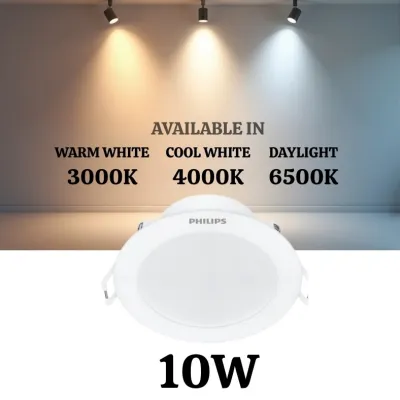
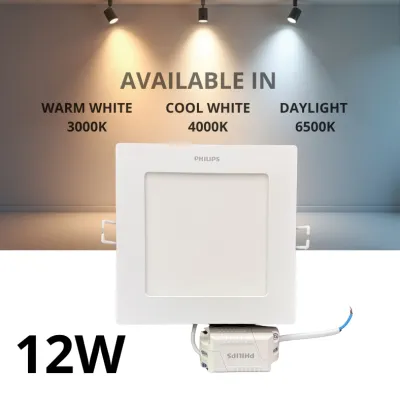
- Color Temperature (Kelvin): Measured in Kelvin (K), this metric determines the warmth or coolness of the light. Lower numbers (2700K to 3000K) produce a warm, yellowish glow ideal for relaxation. Mid-range values (4000K) offer a neutral white light that enhances alertness, while higher values (6500K) provide a crisp, cool white light suitable for detailed tasks.
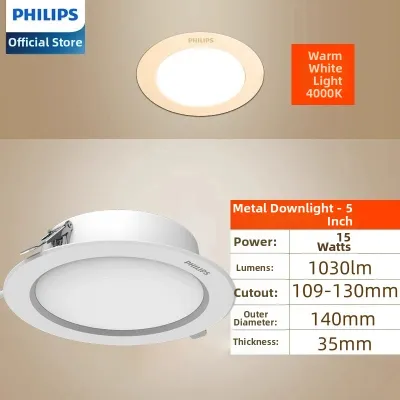
- Brightness (Lumens): Unlike traditional incandescent bulbs where wattage indicated brightness, modern LEDs use lumens (lm) to measure light output. A higher lumen rating means brighter light. Checking the lumen-to-wattage ratio helps identify energy-efficient models.
- Color Rendering Index (CRI): Rated on a scale up to 100, CRI indicates how accurately a light source reveals the true colors of objects compared to natural sunlight. For domestic spaces, a CRI of 80 or above is standard for clear, natural color representation.
In Singaporean homes, particularly those with false ceilings installed in BTO flats or private condos, downlights act as the primary ambient layer. By pairing downlights with secondary sources like pendant lights, track lights, or cove lighting, you can create a balanced, layered lighting scheme that adapts to different times of day.
Products mentioned in this guide
![[Climate Voucher] PHILIPS 3 Color Meson LED Downlight 5.5W 9W 13W 17W Tri Tone Scene Switch for False Ceiling Local Warranty](https://img.lazcdn.com/g/p/4f25f6fa6bf4fcf754b08b97b4102da3.jpg_400x400q80.jpg_.webp)
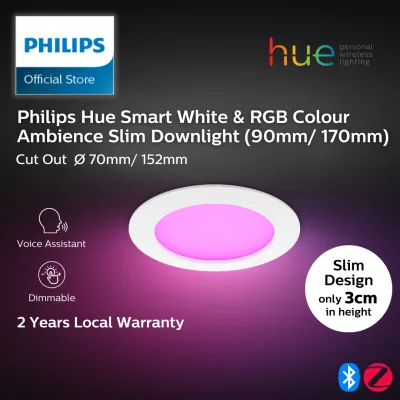
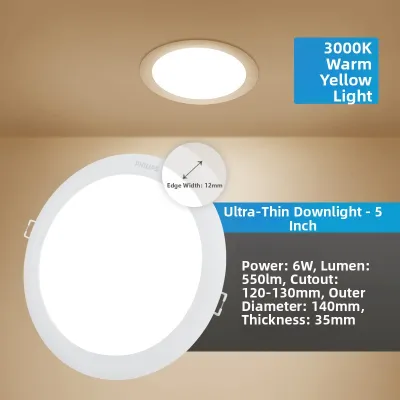
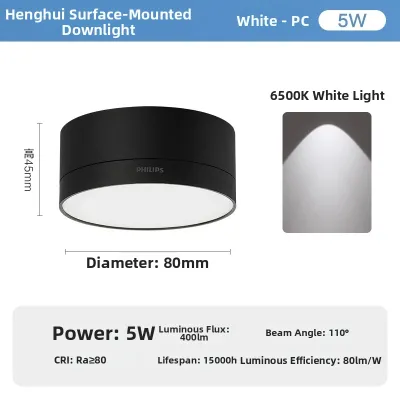
Prices are valid at publication and may change. Please refer to the product page for the latest price.
Recommended Philips Downlight Specifications by Room
Living Room & Dining Area
The living room and dining area serve as the social hubs of your home, hosting activities that range from hosting dinner parties to watching movies or working from home. Because these spaces are multi-functional, they require versatile lighting solutions that can transition seamlessly throughout the day.

For these areas, adjustable or dimmable downlights are highly recommended. Choosing a tunable white downlight allows you to shift from a bright, neutral white (4000K) during the day to a soft, warm white (3000K or lower) in the evening. If you prefer fixed color temperatures, a warm-to-neutral profile is generally preferred to maintain a welcoming atmosphere.
A wide beam angle (typically 100 degrees or more) is ideal for ambient lighting, as it distributes light evenly across the floor plan and minimizes dark corners. In open-concept HDB layouts where the living and dining areas merge, integrating smart ecosystems like Philips WiZ or Philips Hue allows you to group fixtures together. This enables you to control entire zones simultaneously or program specific scenes, such as dimming the dining lights while keeping the living area softly illuminated.
Bedrooms
Bedrooms are dedicated sanctuaries for rest, recovery, and sleep preparation. The lighting design here should prioritize visual comfort and support natural circadian rhythms by avoiding harsh, blue-enriched light sources before bedtime.
For general bedroom illumination, warm white light (2700K to 3000K) is the most suitable choice. This color temperature mimics the gentle glow of sunset, helping the body wind down. To prevent eye strain when lying in bed, look for Philips downlights featuring deep-recessed designs or low Unified Glare Rating (UGR) specifications. These designs tuck the light source deeper into the ceiling frame, shielding your eyes from direct glare.
Lower lumen outputs (around 350 to 600 lumens per fixture) are generally sufficient for bedrooms when spaced correctly. To enhance convenience, consider pairing these downlights with smart switches or dimmers near your bedside. This allows you to adjust or turn off the lights without needing to stand up, ensuring a seamless transition into sleep.
Kitchen & Workspaces
Kitchens and home offices demand high-performance task lighting where visibility, safety, and focus are paramount. In these environments, aesthetic ambiance takes a back seat to functional clarity.
When preparing food, accurate color representation is vital for safety and hygiene. Ensure the downlights you select have a CRI of 80 or higher, which helps you easily judge the freshness of ingredients and the doneness of meat. A neutral white light (4000K) is highly recommended for kitchens and study rooms, as it promotes alertness and provides a clean, shadow-free working environment without feeling overly clinical.
To ensure adequate brightness, select fixtures with higher lumen outputs (typically 600 to 800 lumens or more per point, depending on ceiling height). Position the downlights strategically directly over high-use work zones, such as countertops, kitchen islands, and desks. Placing fixtures directly above these areas prevents your body from casting shadows over your workspace while you chop, cook, or write.
Bathrooms & Wet Areas
Bathrooms present unique environmental challenges due to high humidity, steam, and the potential for direct water contact. Safety and durability must guide your product selection in these zones.
When installing downlights in wet areas, you must check the Ingress Protection (IP) rating of the fixture. The IP rating consists of two digits: the first indicates protection against solids, and the second indicates protection against liquids. For general bathroom ceilings outside the immediate shower zone, an IP44 rating is typically sufficient to protect against moisture and splashes. However, for fixtures installed directly inside a shower cubicle or directly above a bathtub, an IP65-rated downlight is necessary to withstand low-pressure water jets.
Never assume all LED downlights are waterproof. Always inspect the product packaging or manufacturer specifications for explicit wet-location certifications. For grooming tasks like shaving or applying makeup, a neutral white light (4000K) paired with a high CRI ensures accurate skin tones and clear visibility in the vanity mirror.
Smart vs. Standard: Choosing the Right Philips Ecosystem
Philips offers several product tiers to accommodate different budgets, existing wiring setups, and smart home aspirations. Understanding these ecosystems helps you make a cost-effective choice for your HDB or condo.
- Standard Philips LEDs: These are traditional, non-smart fixtures that operate via standard wall switches. They are highly cost-effective, reliable, and ideal for budget-conscious homeowners who want a straightforward, low-maintenance setup. While they do not offer color tuning or app control, they provide consistent light quality and long lifespans.
- Philips WiZ: Operating directly on your home's 2.4 GHz Wi-Fi network, the WiZ ecosystem requires no external hub or bridge. It is an excellent mid-range option for HDB flats, allowing you to control brightness, set schedules, and adjust color temperatures via a mobile app or compatible smart switches. It is particularly useful when retrofitting older homes where running new physical control wires is impractical.
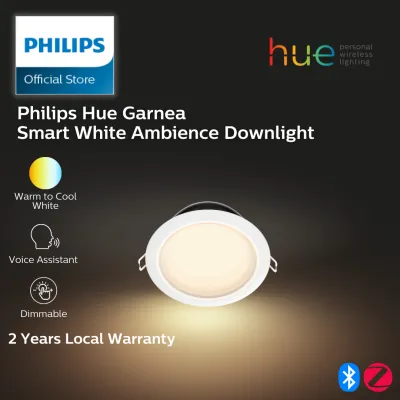
- Philips Hue: Representing the premium smart lighting tier, Philips Hue utilizes the Zigbee protocol and requires a dedicated Hue Bridge connected to your router. This system offers ultra-smooth dimming, instant response times, and a vast ecosystem of accessories. It is the ideal choice for tech enthusiasts and larger condominiums where a robust, highly customizable smart home network is desired.
Before committing to any smart downlight system, verify your existing wall switches. Smart LED bulbs and downlights require constant electrical power to remain connected to the network. Therefore, they should not be paired with traditional wall-mounted dimmer switches, as reducing the voltage at the switch can damage the internal driver of the smart light or cause persistent flickering.
Installation, Safety, and HDB/Condo Constraints
Installing downlights in Singaporean high-rise homes requires careful planning, strict adherence to safety standards, and compliance with local building guidelines.
Before purchasing, always verify the technical specifications of the fixture: check the operating voltage (typically 220V-240V for Singapore), the cutout dimensions to match your false ceiling holes, the wattage limits of your circuits, the dimming method (whether trailing-edge, leading-edge, or smart-controlled), and look for valid electrical certifications such as the local Safety Mark.
False ceilings must have adequate vertical clearance to accommodate the recess depth of the downlight. Additionally, ensure there is sufficient space around the fixture for heat dissipation. Although LEDs run much cooler than halogen bulbs, they still generate heat at the driver level. Restricting airflow can cause the driver to overheat, significantly reducing the lifespan of the LED or creating a potential fire hazard.
For fixed electrical wiring, cutting new holes in false ceilings, or upgrading your home’s electrical load, always engage an Energy Market Authority (EMA) licensed electrician. Professional installation ensures compliance with Singapore’s electrical standards and prevents voiding your product warranties. For fixed wiring, installation in damp areas, working at heights, or mounting suspended loads, always isolate the power at the distribution board (DB) and refer to the manufacturer’s installation instructions. If instructions conflict or are unclear, stop immediately and consult an EMA-licensed electrician or a qualified professional.
Before commencing any major ceiling modifications or structural drilling, check your HDB renovation guidelines or your condominium’s Management Corporation Strata Title (MCST) rules. Certain developments restrict modifications to structural slabs or have specific guidelines regarding external-facing balcony lighting.
Frequently Asked Questions (FAQ)
Can I use the same Philips downlight for the entire house?
While using a single model across your entire home might seem simple, it often leads to poor functional outcomes. A uniform approach fails to account for the unique demands of different spaces. For instance, installing a non-waterproof downlight in a humid bathroom poses safety and durability risks, while placing a high-brightness, cool-toned light in a bedroom can disrupt your sleep patterns. Tailoring your selections to the specific moisture, brightness, and color requirements of each room ensures a safer, more comfortable, and highly functional home.
What is the ideal color temperature for an HDB living room?
For a standard HDB living room, a color temperature between 3000K (warm white) and 4000K (neutral white) serves as an excellent baseline. If your living room is primarily used for relaxation and family gatherings in the evening, 3000K provides a cozy, inviting atmosphere. If the space also functions as a home office or study area during the day, 4000K offers better clarity and focus. To get the best of both worlds, consider installing tunable smart downlights, which allow you to adjust the color temperature dynamically to match your activities throughout the day.
Community discussion
Share your experience or ask a question. Comments are reviewed before publication.