
Selecting the ideal ceiling light for a standard Housing & Development Board (HDB) flat requires a careful balance of physical clearance, visual comfort, and functional brightness. With a standard ceiling height of 2.6 meters, Singapore homeowners face unique spatial constraints that do not apply to high-ceiling private properties or landed homes. A fixture that is too thick can make a room feel instantly cramped, while an overly bright or poorly diffused light source can cause uncomfortable glare because it sits closer to eye level. This guide provides a comprehensive framework for evaluating the PowerPac LED ceiling light range specifically for 2.6m HDB ceilings. By understanding how to analyze fixture profiles, verify critical electrical specifications, and match light characteristics to different room layouts, you can create a bright, welcoming, and visually spacious home.
Why 2.6m Ceilings Change Your Lighting Choices
The physical height of a 2.6-meter ceiling fundamentally alters how light behaves and how a room is perceived. In a space with limited vertical clearance, every centimeter of fixture depth matters. A bulky, protruding light fixture acts as a visual obstacle, drawing the eye upward and emphasizing the low ceiling. This visual weight can make a standard HDB living room or bedroom feel significantly smaller and more enclosed than it actually is. To maintain an open, airy atmosphere, you must prioritize low-profile, flush-mount LED fixtures that sit as close to the concrete ceiling as possible.
Beyond aesthetics, the proximity of the light source to the occupants is a major comfort factor. In a 2.6m room, the light source is positioned only a short distance above the average eye level of a standing adult. If the LED chips are not properly shielded or diffused, the resulting direct glare can cause rapid eye fatigue, headaches, and general discomfort. High-quality diffusion materials, such as frosted acrylic or polycarbonate covers, are essential to scatter the light rays evenly across the room, softening shadows and reducing harsh hotspots.
Products mentioned in this guide
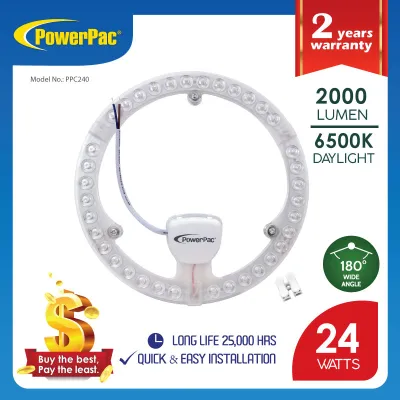
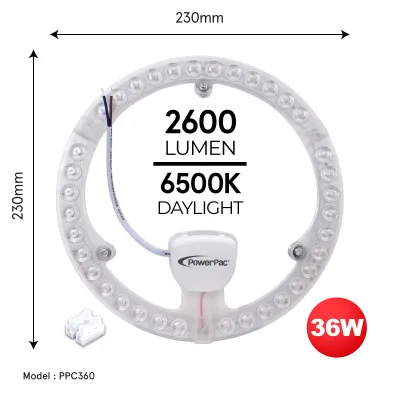
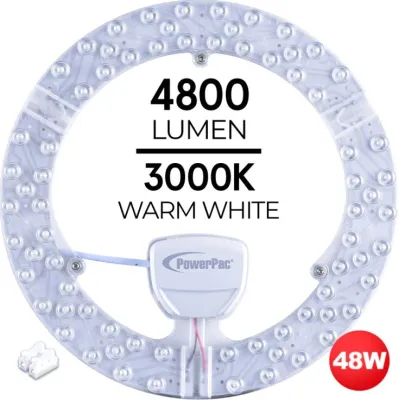
Prices are valid at publication and may change. Please refer to the product page for the latest price.
Thermal management is another critical consideration that is often overlooked in low-ceiling environments. Slim, enclosed LED ceiling lights pack their light-emitting diodes and electronic drivers into a very tight space. Because warm air rises and accumulates near the ceiling, these fixtures operate in a naturally warmer microclimate, which is further exacerbated by Singapore’s tropical humidity. Without adequate heat dissipation features built into the fixture’s chassis, heat can build up rapidly, degrading the LED chips and shortening the lifespan of the internal driver. When selecting a slim PowerPac model, verifying the materials used for heat sinking—such as aluminum backplates or thermal plastics—is vital for long-term reliability.
Essential Specifications to Verify on PowerPac Models
To make an informed decision, you must look past marketing descriptions and scrutinize the technical specifications of each PowerPac LED ceiling light. The first and most critical dimension to verify is the profile depth. For a standard 2.6m HDB ceiling, look for fixtures with a total thickness of 5 centimeters or less. This ultra-slim profile ensures the light blends seamlessly into the ceiling plane, preserving maximum vertical clearance. Always check the physical dimensions listed on the product packaging or the manufacturer’s official specification sheet, rather than relying on generic category names like “flush mount.”

Next, you must match the lumen output and wattage of the fixture to the specific square footage of your HDB rooms. Lumens measure the total amount of visible light emitted by a source, while wattage indicates the electrical power consumed. Because modern LEDs are highly efficient, a lower-wattage fixture can often produce a high lumen output. For a standard HDB bedroom of approximately 9 to 12 square meters, a light output of 1,200 to 1,600 lumens is generally sufficient for comfortable ambient lighting. For larger living rooms spanning 15 to 25 square meters, you may need a primary fixture emitting 2,400 to 3,200 lumens, or a combination of multiple low-profile light sources to ensure even coverage.
Color temperature and color rendering are equally important for visual comfort. Color temperature is measured in Kelvin (K) and determines the warmth or coolness of the light. Warm white (3000K) creates a cozy, relaxing ambiance suitable for bedrooms, while cool white (4000K) offers a balanced, neutral light ideal for living rooms and study areas. Daylight (6500K) provides a bright, bluish-white light that enhances alertness, making it highly functional for kitchens and utility yards. Alongside color temperature, check the Color Rendering Index (CRI) of the PowerPac model. A CRI of 80 or higher is recommended to ensure that colors, skin tones, and home decor appear natural and vibrant under artificial light.
Finally, pay close attention to the Ingress Protection (IP) ratings and material finishes, particularly for fixtures destined for service yards, kitchens, or bathrooms. Standard indoor ceiling lights typically carry an IP20 rating, which protects against solid objects but offers no resistance to moisture. For high-humidity zones like HDB bathrooms, you must select a fixture with at least an IP44 rating to prevent water vapor and splashing water from damaging the internal circuitry. Additionally, choose smooth, non-porous acrylic or powder-coated aluminum finishes that resist grease accumulation in the kitchen and are easy to wipe clean during routine maintenance.
Room-by-Room Selection Strategy for HDB Layouts
Every room in an HDB flat serves a distinct purpose, requiring a tailored approach to lighting design within the 2.6m height constraint. In the living and dining areas, which often serve as multi-functional spaces for relaxation, dining, and working, the goal is to achieve balanced ambient brightness. A large-diameter, ultra-slim circular or rectangular PowerPac ceiling light can distribute light across a wide area, minimizing dark corners and harsh shadows. To avoid a sterile atmosphere, consider models that offer three-tone color switching, allowing you to transition from bright daylight for daytime tasks to a warm, cozy glow for evening relaxation.
In HDB bedrooms, the priority shifts toward minimizing glare and creating a restful environment. Because you spend a significant amount of time lying down in a bedroom, looking directly up at the ceiling is common. A light fixture with a highly diffused, matte cover is essential to prevent direct eye strain. If you prefer adjustable brightness levels, you must verify the compatibility of the PowerPac light with dimmer switches before purchase. Many standard LED ceiling lights use non-dimmable drivers; attempting to use them with a wall dimmer can lead to persistent flickering, buzzing, or premature driver failure. If dimming is a priority, look for models explicitly labeled as dimmable or those featuring integrated smart control systems.
Kitchens and bathrooms present unique environmental challenges that dictate your lighting choices. In the kitchen, high-quality task lighting is essential for safe food preparation and cooking. A bright, high-CRI PowerPac light with a cool white or daylight color temperature will help you clearly see ingredients and spot cleanliness issues. Because kitchen ceilings accumulate airborne grease and moisture, the fixture should have a completely sealed design to prevent insects and grime from entering the diffuser. In the bathroom, where steam and condensation are constant, a moisture-resistant IP44-rated fixture is non-negotiable. Ensure the mounting base has a tight rubber gasket seal against the concrete ceiling to prevent moisture from seeping into the electrical junction box.
Installation Boundaries and Electrical Safety in Singapore
Installing a new ceiling light in an HDB flat involves working with solid concrete structures and fixed electrical wiring, both of which require strict adherence to safety standards. Standard HDB ceilings do not have hollow plasterboard cavities; instead, they feature solid concrete slabs with pre-cast conduit pipes leading to a central junction box or ceiling rose. When mounting a new PowerPac fixture, you must ensure that the mounting bracket can be securely anchored to the concrete. This requires drilling precise holes using a rotary hammer drill and inserting high-quality masonry wall plugs. Never attempt to mount a fixture using adhesive strips or standard drywall anchors, as the vibration and weight will eventually cause the light to fall.
Before undertaking any installation, it is crucial to understand the legal and safety boundaries of electrical work in Singapore. Under local regulations, any modification or extension of fixed electrical wiring—such as running new cables, installing new light points, or replacing a standard light switch with a dimmer—must be carried out by a Licensed Electrical Worker (LEW) registered with the Energy Market Authority (EMA). Homeowners are permitted to perform simple, like-for-like replacements of existing light fixtures, provided they possess the necessary competence and strictly isolate the electrical supply at the main distribution board (DB box) before touching any wires. If you are unsure of your electrical skills or if the existing wiring appears degraded, always engage a professional electrician.
Structural weight limits must also be respected. While most modern PowerPac LED ceiling lights are lightweight, heavier decorative fixtures can put significant stress on mounting screws. For standard concrete ceilings, ensure the mounting hardware is rated to support at least four times the weight of the fixture. Finally, always verify that the PowerPac light or its external LED driver bears the mandatory Safety Mark issued by Enterprise Singapore. This mark indicates that the product has undergone rigorous testing to ensure compliance with local electrical safety standards, protecting your home from potential electrical fires or short circuits.
Building Your Final PowerPac Shortlist
To finalize your selection and build a reliable shortlist of PowerPac LED ceiling lights, begin by taking precise measurements of each room in your HDB flat. Note down the length, width, and exact ceiling height of each space, taking into account any structural beams or built-in wardrobes that might block light distribution. Cross-reference these measurements with the manufacturer’s stated coverage guidelines and lumen outputs to ensure you do not under-light or over-light your rooms.
Next, investigate the warranty terms and after-sales support offered for your chosen models. PowerPac products generally come with a manufacturer’s warranty, but the duration and coverage details can vary between different LED models. Verify whether you need to register the warranty online within a specific timeframe after purchase, and ensure you keep the physical receipt in a safe place. Reliable after-sales support is invaluable if you encounter a premature driver failure or a manufacturing defect.
Finalizing your purchase also requires coordinating with your renovation timeline. Verify stock availability with authorized local retailers or official online brand stores to avoid delays in your installation schedule. If purchasing online, check the retailer’s return and exchange policies for defective or incompatible units. By systematically verifying dimensions, electrical compatibility, safety certifications, and warranty terms, you can confidently select the perfect PowerPac LED ceiling lights to keep your 2.6m HDB flat bright, safe, and comfortable for years to come.
Frequently Asked Questions (FAQ)
Can I install a PowerPac ceiling light myself in an HDB flat?
In Singapore, you are permitted to perform a direct, like-for-like replacement of an existing ceiling light fixture yourself, provided you have the necessary tools and competence to do so safely. However, you must completely isolate the power at the main distribution board (DB box) before starting. If your installation requires running new electrical wires, creating new light points, or modifying the existing circuit wiring, you are legally required to engage a Licensed Electrical Worker (LEW) registered with the Energy Market Authority (EMA) to perform the work.
How do I know if a PowerPac light is too bright for a small HDB bedroom?
To determine if a ceiling light will be too bright, compare the fixture’s lumen output against the square footage of your bedroom. For a standard HDB bedroom of 9 to 12 square meters, a light output between 1,200 and 1,600 lumens is typically ideal. You should also consider your room’s interior design; light-colored walls and minimalist furniture reflect more light, making a space feel brighter, whereas dark walls and heavy drapes absorb light. If you are concerned about excessive brightness, choose a PowerPac model with adjustable brightness levels or three-tone color switching to customize the light intensity.

Community discussion
Share your experience or ask a question. Comments are reviewed before publication.