
Selecting the right scented tealight candles in bulk requires balancing fragrance variety, wax quality, and consistent burn performance. When purchasing tealight candles 100pcs packs, the sheer volume means that minor inconsistencies in manufacturing can lead to significant waste or a subpar sensory experience. Whether you are sourcing candles for daily home aromatherapy, large-scale events, or professional spa environments, understanding the landscape of available brands helps ensure that every single piece in your bulk order performs reliably.
The market for bulk scented tealights is broadly divided into three categories: established commercial home fragrance brands, specialty aromatherapy and wellness brands, and independent artisan candle makers. Commercial brands excel at providing massive scent libraries and highly uniform burn times, making them the most convenient option for large-scale needs. Specialty wellness brands focus on natural waxes and pure essential oils, offering cleaner burns and therapeutic benefits, though often at a higher price point per piece. Artisan makers provide unique, hand-poured fragrance profiles and customization options, which are ideal for signature scents but require longer lead times. By evaluating these options against key performance criteria, you can identify the best bulk brand category for your specific space and budget.
Key Criteria for Choosing Bulk Tealight Candles 100pcs
Cost-Effectiveness vs. Fragrance Oil Concentration
When evaluating bulk purchases of 100-piece packs, the cost per unit is naturally a primary consideration. However, a low price point can sometimes be a false economy if the candles lack sufficient fragrance oil concentration. High-quality scented tealights typically feature a fragrance load of 6% to 10% of the total wax weight. Cheaper bulk options often reduce this concentration to cut costs, resulting in a candle that smells pleasant in the packaging (known as cold throw) but fails to distribute any noticeable aroma when lit (known as hot throw). To ensure a worthwhile investment, seek out brands that explicitly state their fragrance load or are well-regarded for maintaining consistent scent intensity throughout the entire burn cycle.
Products mentioned in this guide
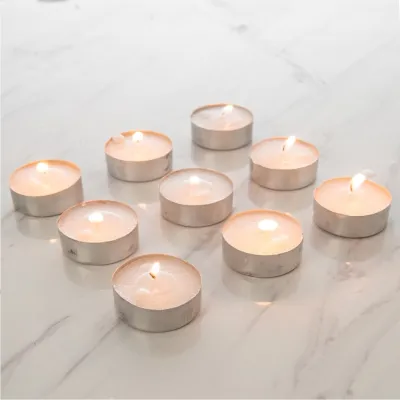
![[SG Stock] Premium Tealight Candle Buddha praying candle 100 pieces 4 hours](https://img.lazcdn.com/g/p/6b9bd993d86fafc4201d726c2f044079.jpg_400x400q80.jpg_.webp)
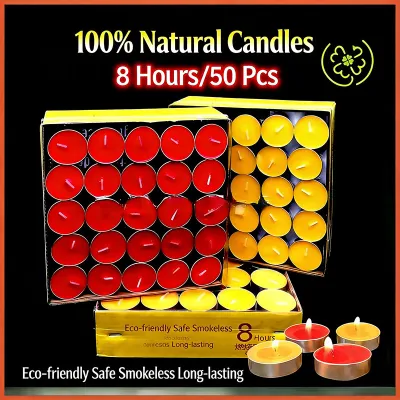
![[Wholesale] 100PCS Ghee Candle 4/8 hours Candle Fragrant Smokeless Ghee Lamp Premium Tealight Candle Buddha Praying Candle](https://img.lazcdn.com/g/p/959f50995aafe84bb80716d18891a71f.jpg_400x400q80.jpg_.webp)
Prices are valid at publication and may change. Please refer to the product page for the latest price.
Wax Type and Burn Quality
The composition of the wax directly dictates how a small-volume candle burns and releases its scent. Paraffin wax is highly favored by mass-market manufacturers because its crystalline structure allows it to hold and throw synthetic fragrances with exceptional intensity. However, paraffin is a petroleum byproduct and can produce black soot if the wick is not perfectly trimmed. Soy wax, derived from soybean oil, is a biodegradable alternative that burns at a lower temperature, resulting in a longer-lasting candle with a cleaner, soot-free profile. The trade-off is that soy wax has a naturally softer scent throw and can sometimes exhibit surface imperfections. Coconut wax and beeswax blends represent premium alternatives that offer excellent scent throw and clean burns, though they are less commonly found in standard, budget-friendly 100-piece bulk configurations.
Wick Quality and Sizing
For a bulk batch of 100 candles to perform consistently, the wicks must be of uniform quality and precisely centered in each metal or plastic cup. A wick that is too thin will fail to generate enough heat to melt the wax to the edges of the cup, causing a phenomenon known as tunneling, where a ring of unburned wax is left behind. Conversely, an oversized wick will produce a flame that is too large, leading to rapid burning, excessive soot, and potential safety hazards. Look for brands that utilize self-trimming cotton wicks or paper-core wicks. These materials are designed to curl slightly as they burn, allowing the tip to consume itself in the hottest part of the flame and reducing the need for manual trimming across dozens of candles.
Packaging and Scent Preservation
Burning through a 100-pack of tealights takes time, meaning a significant portion of your purchase will remain in storage for weeks or months. If the candles are packaged loosely in a single, unsealed cardboard box, the volatile fragrance oils will gradually evaporate or bleed into adjacent candles. This cross-contamination can result in a muddled, indistinct aroma when you finally light them. Premium bulk brands package their tealights in shrink-wrapped trays, individual compartments, or resealable foil-lined bags. This protective packaging not only preserves the chemical integrity of the fragrance oils but also prevents physical damage, such as dented aluminum cups or cracked wax, during transit and storage.
Recommended Brand Categories for Diverse Fragrance Profiles
Established Commercial Home Fragrance Brands
Commercial home fragrance giants are the most accessible source for bulk scented tealights. These manufacturers operate on a scale that allows for rigorous quality control, ensuring that the first candle in a 100-piece box performs identically to the last. Their primary advantage lies in their vast scent libraries, which are typically organized into clear olfactory families such as floral, woody, fresh, and gourmand. These brands frequently release seasonal collections, allowing bulk buyers to easily transition from light, citrusy summer notes to warm, spiced winter aromas. Furthermore, their products are widely distributed across major online marketplaces, making replenishment quick and straightforward.

Despite their convenience, commercial brands present certain limitations that may not suit every buyer. To maximize scent throw while keeping production costs low, these manufacturers heavily rely on paraffin wax or proprietary paraffin-soy blends. While this formulation delivers a powerful fragrance that can easily fill a medium-sized room, it may not appeal to consumers who prefer strictly natural, plant-based products. Additionally, because you are paying for brand recognition and extensive marketing campaigns, the price per piece for these commercial options is generally higher than that of unbranded white-label alternatives, even when purchased in 100-piece configurations.
Specialty Aromatherapy and Wellness Brands
For those who prioritize physical well-being and natural ingredients, specialty aromatherapy and wellness brands offer a compelling alternative. These manufacturers focus on creating clean-burning products made from 100% natural soy, coconut, or beeswax bases. Instead of synthetic fragrance oils, they utilize pure essential oils and botanical extracts. The resulting scent profiles are complex and therapeutic, designed to support specific moods or activities—such as lavender and chamomile for relaxation, or eucalyptus and peppermint for mental clarity. These candles are ideal for intimate spaces, yoga studios, and wellness clinics where a heavy, synthetic perfume would be overwhelming.
However, purchasing from specialty wellness brands in bulk requires navigating several trade-offs. Because pure essential oils are costly and highly volatile, these candles carry a significantly higher price tag per unit. Furthermore, true essential oil candles have a much softer hot throw compared to their synthetic counterparts; they are designed to scent the immediate personal space rather than disperse throughout a large, open-plan living area. Finally, these brands rarely offer pre-packaged 100-piece sets on standard retail shelves. Buyers looking for bulk quantities typically must purchase multiple smaller packs or contact the manufacturer directly to arrange a custom wholesale order, which can involve minimum spend thresholds.
Independent and Artisan Candle Makers
Turning to independent and artisan candle makers allows bulk buyers to access highly unique, niche fragrance profiles that are entirely absent from mass-market retail shelves. Artisan pourers often experiment with sophisticated, avant-garde scent combinations—such as smoked oud and vetiver, or sea salt and sage—offering a distinct sensory identity for your home or business. Many independent makers are highly flexible and willing to collaborate on custom bulk orders, allowing you to select specific wax types, wick materials, and custom container colors to match a particular decorative theme or event aesthetic.
While the bespoke nature of artisan candles is highly appealing, managing a bulk order of 100 pieces from a small studio requires careful planning. Because these products are hand-poured in small batches, lead times are naturally longer than those of commercial brands; you should expect to place your order several weeks in advance. It is also important to verify batch-to-batch consistency, as minor variations in ambient temperature or oil mixing during hand-pouring can slightly alter the color or scent intensity of the wax. Before finalizing a large order, communicate directly with the maker to clarify their shipping policies, ensuring they use adequate protective packaging to prevent the wax from cracking or melting during transit.
Comparing Scent Throw and Burn Performance Across Wax Types
Evaluating how different wax types perform when multiple tealights are burned simultaneously is essential for achieving the desired atmospheric effect. The term “cold throw” refers to the strength of the fragrance emitted by a candle when it is unlit at room temperature. This is an important indicator of quality, but the true test of a scented tealight is its “hot throw”—the rate and intensity at which the fragrance vaporizes into the air once the wax melts.
Because a standard tealight contains a relatively small volume of wax (typically 12 to 15 grams), the wax must melt quickly to establish a full, shallow pool. This rapid melting is necessary because the fragrance oils are released primarily from the liquid wax pool rather than the flame itself. If the wax has a melting point that is too high, the heat of the small flame may not be sufficient to create a wide pool, resulting in a weak scent throw. The table below outlines the general performance characteristics of the primary wax types used in bulk tealight manufacturing to help you select the ideal option for your space.
| Wax Type | Scent Throw Strength | Average Burn Time | Best Use Case |
|---|---|---|---|
| Paraffin Wax | High / Powerful | 3 to 4 hours | Large open-plan rooms, high-ceiling spaces, and outdoor events |
| Soy Wax | Medium / Subtle | 4 to 5 hours | Medium bedrooms, home offices, and daily aromatherapy |
| Beeswax | Low / Natural Honey Aroma | 4 to 5 hours | Dining tables, intimate spaces, and users sensitive to synthetic scents |
| Coconut-Soy Blend | Medium-High / Balanced | 4 to 5 hours | Spas, wellness centers, and premium home environments |
Storage and Safety Tips for Bulk Tealight Candles in Singapore
Managing the Tropical Climate Challenge
Storing a bulk supply of 100 tealights in Singapore’s tropical climate requires deliberate care due to the consistently high ambient temperatures and relative humidity levels. When exposed to temperatures exceeding 30°C, softer natural waxes—particularly soy and coconut blends—can undergo a process known as syneresis, or “sweating.” This occurs when the wax structure expands, forcing the fragrance oils to separate and pool on the surface of the candle. Sweating permanently diminishes the candle’s fragrance intensity and can make the wax difficult to light. Furthermore, high humidity can introduce moisture to the cotton wicks, causing them to sputter, burn unevenly, or fail to light entirely.
To preserve the quality of your bulk stash, store the candles in a cool, dry, and dark environment. An air-conditioned room or a dry pantry drawer away from direct sunlight is ideal. Keep the tealights sealed in their original packaging, or transfer them to airtight plastic containers. Adding a few silica gel packets to the container is a highly effective way to absorb excess moisture and protect the cotton wicks from humidity-induced damage. Additionally, ensure that different fragrance profiles are stored in separate containers to prevent the scents from blending and losing their distinct characteristics over time.
Safe Burning Practices for Multiple Tealights
Burning multiple scented tealights simultaneously is an excellent way to create a layered fragrance experience, but it demands strict adherence to safety protocols to prevent accidents in residential and commercial spaces. Scented tealights generate substantial heat, and because they are housed in thin aluminum, plastic, or glass cups, this heat is transferred directly to the surface beneath them.
- Surface Protection and Instructions: Always place tealights on flat, stable, and heat-resistant surfaces, such as ceramic tiles, slate coasters, or dedicated metal trays. Before lighting, check the manufacturer instructions for both the candles and any decorative holders, lanterns, or burners you plan to use. If instructions conflict, or if you are using suspended or wall-mounted candle fixtures, ensure they are securely anchored and rated for the heat output. If in doubt, consult a qualified professional or the manufacturer.
- Spacing and Flash Fire Prevention: When arranging multiple tealights, maintain a minimum distance of 5 to 10 centimeters between each candle. Placing tealights too close together can cause the heat from their flames to merge, raising the temperature of the adjacent wax cups to their flashpoint. This can lead to a dangerous situation where the entire surface of the wax ignites simultaneously, creating an uncontrollable flame.
- Draft and Ventilation Management: Ensure the room is well-ventilated to prevent the buildup of combustion byproducts, but keep the candles away from direct drafts, such as airflow from air conditioners, open windows, or ceiling fans. Drafts cause the flame to flicker violently, which leads to rapid, uneven burning, excessive soot production, and an increased risk of nearby lightweight materials blowing into the flame. Never leave burning candles unattended, and always extinguish them completely before leaving the room.
Frequently Asked Questions (FAQ)
How long do scented tealight candles typically burn?
Standard scented tealight candles containing approximately 12 to 15 grams of wax typically burn for 3 to 5 hours. The exact duration depends on the density of the wax and the concentration of the fragrance oils. Soy and beeswax formulations generally burn slower and last longer than pure paraffin wax. However, a high concentration of heavy fragrance oils can slightly decrease the overall burn time, as the oils alter the combustion dynamics of the wick.
Can I mix different scented tealights in the same room?
Yes, you can mix different scented tealights to create a custom fragrance profile, a practice known as scent layering. To achieve a harmonious blend, select candles from complementary fragrance families. For example, pairing citrus scents with herbal notes (such as lemon and rosemary) or woody scents with warm spices (such as cedarwood and vanilla) works exceptionally well. Avoid mixing heavy, clashing profiles, such as intense florals with strong gourmand scents, as this can cause olfactory fatigue and an unpleasant sensory environment.
Are soy wax tealights better for bulk purchases than paraffin?
Whether soy wax is better than paraffin for bulk purchases depends on your primary priorities. Soy wax is the superior choice if you prioritize a clean, soot-free burn, eco-friendly ingredients, and a longer burn time per piece. However, if your primary goal is to achieve the strongest possible scent throw in a large space at the lowest cost per unit, paraffin wax remains highly effective. For bulk buyers, a coconut-soy blend often represents the best compromise, offering the clean-burning benefits of soy alongside the excellent fragrance delivery of paraffin.
Community discussion
Share your experience or ask a question. Comments are reviewed before publication.