
Finding the perfect small bedside table lamp in Singapore requires balancing tight spatial constraints with functional lighting needs. In compact bedrooms, such as those found in modern HDB flats and condominiums, every square centimetre of a nightstand is premium real estate. A successful bedside lamp must feature a compact footprint—typically under 12 to 15 centimetres in base diameter—while delivering stable physical weight, easily accessible controls, and warm, glare-free illumination. By selecting a fixture scaled to your specific mattress height and table depth, you can preserve room for daily essentials like your phone, glasses, and a glass of water without sacrificing nighttime reading comfort.
Why Proportion Matters for Compact Nightstands in Singapore
In Singapore’s urban residential landscape, space optimization is a central design challenge. Standard HDB BTO master bedrooms and modern condominium layouts often allocate limited floor area to the sleeping quarters, frequently leaving a clearance of only 30 to 45 centimetres on either side of a queen- or king-sized bed. Consequently, homeowners must rely on highly compact nightstands to maintain clear walking paths and avoid blocking wardrobe doors. Placing a standard-sized table lamp on these narrow surfaces quickly creates physical and visual congestion.
The primary conflict on a small nightstand is the competition for surface area. A bedside table is not merely a pedestal for a light fixture; it must accommodate a variety of personal items, including smartphones, charging cables, spectacles, books, and water carafes. When a lamp base is too wide or the shade flares out excessively, it leaves virtually no room for these essentials. This lack of space often leads to cluttered surfaces where items are easily knocked over in the dark.
Products mentioned in this guide
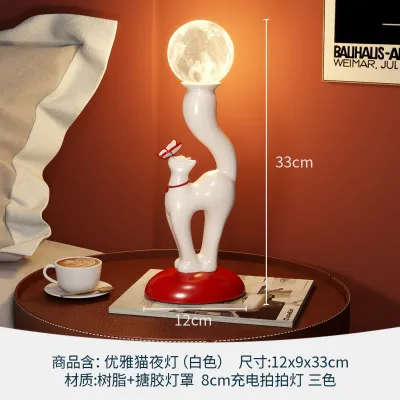
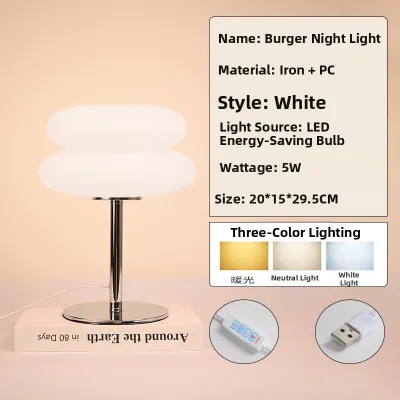
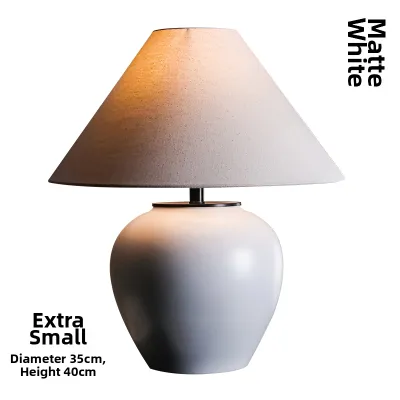
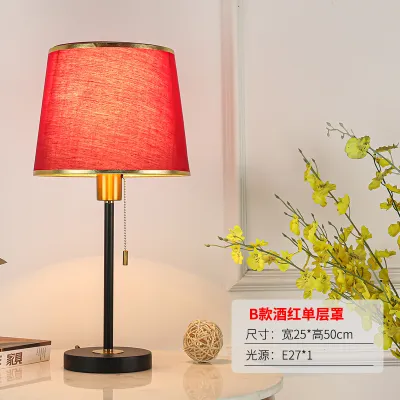
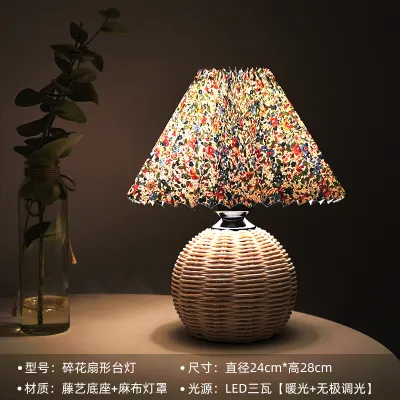
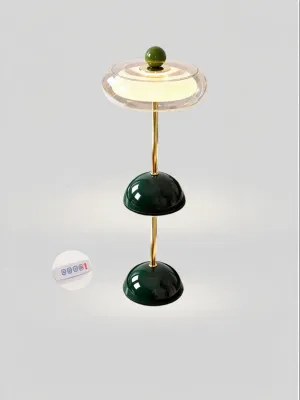
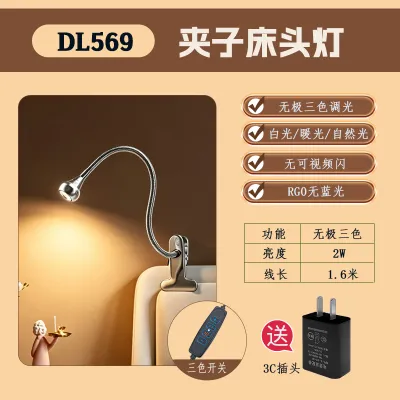
Prices are valid at publication and may change. Please refer to the product page for the latest price.
Furthermore, oversized lamps on narrow tables present distinct functional hazards. A top-heavy lamp with a wide shade is highly susceptible to tipping if brushed accidentally while reaching for an alarm or a phone. Wide shades can also physically block access to nightstand drawers or snag on curtains and bed linens. By understanding the spatial limitations of your bedroom, you can prioritize fixtures that offer a slender, vertical profile, ensuring your bedside remains organized, safe, and highly functional.
Key Specifications to Evaluate Before Buying
Selecting a small bedside table lamp involves evaluating several physical and technical specifications to ensure it performs reliably within a restricted space.

Base Footprint and Stability The physical base of the lamp is its structural foundation. On a narrow nightstand, you should look for a base diameter that does not exceed 10 to 13 centimetres. However, a small footprint must not compromise stability. Lightweight plastic bases are easily tipped over by a gentle nudge. Instead, prioritize lamps with heavily weighted bases made of solid metal, marble, or dense ceramic. A low center of gravity ensures the lamp remains anchored even if you fumble for it in the middle of the night.
Height and Shade Proportion The overall height of the lamp must align with your bed’s height. If the lamp is too tall, the bulb will expose your eyes to direct glare while you are lying down; if it is too short, the light cast will be blocked by your mattress or bedside edge. Look for a total height where the bottom of the shade sits roughly level with your chin or eyes when sitting up in bed. Additionally, select a drum or cylindrical shade rather than a flared cone shape, as straight-sided shades keep the physical footprint uniform from top to bottom.
Switch Accessibility The placement of the power switch is a critical usability factor that is often overlooked. Inline cord switches, which sit along the power cable, frequently slip behind the nightstand, forcing you to reach into tight, dusty gaps between the wall and the bed frame. Tiny rotary switches located directly under the bulb socket can also be difficult to operate in a cramped space. For maximum convenience, seek out lamps with touch-sensitive bases, push-buttons integrated directly into the front of the base, or top-mounted tap switches.
Light Quality and Adjustability Bedside lighting should support your body’s circadian rhythm. Look for lamps that utilize warm color temperatures, specifically between 2700K and 3000K, which emit a soft, amber glow that promotes relaxation before sleep. Avoid cool white or daylight bulbs (above 4000K) in the bedroom, as blue-rich light can disrupt sleep patterns. Additionally, opt for fixtures that offer dimming capabilities—either step-dimming or stepless dimming—allowing you to transition from bright reading light to a soft nightlight without waking a sleeping partner.
Top Lamp Designs and Types for Tight Spaces
Different lamp designs offer distinct structural solutions to the challenge of limited bedside space. Understanding these categories helps you filter options based on your specific bedroom layout and aesthetic preferences.
Slim-Profile and Integrated LED Lamps
Integrated LED technology has revolutionized lighting design by removing the need for a traditional, bulky E27 screw bulb socket. Because LEDs are incredibly compact, manufacturers can design lamps with ultra-thin, pencil-slim stems and highly minimalist bases. These fixtures take up minimal visual and physical space, making them ideal for ultra-narrow nightstands.
Furthermore, many integrated LED lamps feature adjustable, low-profile heads or articulated arms. This allows you to direct a focused beam of light precisely onto your book or tablet, preventing light spill across the bed. Because the light source is highly directional, you can enjoy excellent reading illumination without requiring a wide, space-consuming fabric shade.
Touch-Control and Base-Switch Models
In a cramped bedroom where the nightstand is wedged tightly between the bed and a wardrobe or wall, physical access to the lamp is restricted. Touch-control models eliminate the need to locate and grasp a physical switch. By simply tapping any metal portion of the lamp’s base or body, you can turn the light on, off, or cycle through brightness levels.
This capacitive touch technology is highly intuitive and enhances safety, particularly for children or elderly family members who may struggle with small, stiff mechanical switches in the dark. It also ensures that the lamp does not slide or shift across the table surface when you operate it, as a gentle tap requires far less physical force than pulling a cord or turning a knob.
Cordless and Rechargeable Portable Lamps
Cable clutter is a major contributor to visual chaos on small surfaces. Cordless, rechargeable bedside lamps have become increasingly popular in Singapore due to their clean aesthetic and high portability. Powered by internal lithium-ion batteries and charged via standard USB-C cables, these lamps can be placed anywhere on your nightstand without regard to the nearest wall outlet.
When evaluating cordless options, pay close attention to battery capacity and runtimes. Look for models with at least a 2000mAh to 4000mAh battery, which typically provides between 8 and 40 hours of continuous illumination depending on the brightness setting. Keep in mind that while cordless lamps are excellent for ambient light, they may require regular charging routines if used nightly at maximum brightness for reading. Ensure the model you choose offers a clear charging indicator and can operate normally while plugged in.
Electrical Compatibility and Safety Checks
When sourcing a small bedside table lamp, particularly from online marketplaces or international retailers, verifying electrical safety and local compatibility is paramount.
Voltage and Plug Type Singapore operates on a 230V, 50Hz electrical system. You must ensure that any plug-in lamp you purchase is rated for this voltage. Lamps designed strictly for 110V systems (such as those from North America) will overheat or fail catastrophically if plugged directly into a Singaporean outlet without a step-down transformer. Additionally, the standard plug type in Singapore is the Type G three-pin plug. Always choose appliances fitted with a fused Type G plug to ensure a secure, grounded connection.
Adapters and Converters Avoid relying on cheap, unbranded multi-way travel adapters for permanent, long-term bedside lighting. These adapters often lack adequate internal fusing, have loose contacts that cause electrical arcing, and are prone to overheating, presenting a serious fire hazard right next to your bed. If a lamp comes with a foreign plug, the safest approach is to replace the plug entirely with a certified local three-pin plug or use a high-quality, fused adapter from a reputable manufacturer.
Safety Marks and Certifications For absolute peace of mind, look for electrical products that carry the Enterprise Singapore Safety Mark. This certification indicates that the product, especially its AC power adapter or LED driver, has been tested and declared safe for use under local electrical conditions. Certified LED drivers manage heat dissipation effectively within the small, enclosed bodies of compact lamps, preventing the outer housing from becoming hot to the touch and reducing the risk of thermal damage to nearby wooden furniture or fabrics.
A Step-by-Step Measuring and Matching Guide
To avoid the hassle of returns, take precise measurements of your bedside area before purchasing a new lamp. Follow this step-by-step guide to find the perfect fit.
Surface Area Calculation Begin by clearing your nightstand and measuring its total width and depth. Multiply these figures to find the total surface area. As a rule of thumb, a bedside lamp’s base should occupy no more than 20% to 30% of this total area. For example, if your nightstand is 35 cm wide and 35 cm deep (1,225 square centimetres), your lamp base should ideally have a diameter of 12 cm or less (occupying roughly 113 square centimetres). This leaves ample room for your phone, a glass of water, and other nighttime essentials.
The Height Rule of Thumb To prevent harsh light from shining directly into your eyes, you must match the lamp’s height to your bed’s profile. Sit comfortably in your bed, propped up against your pillows as you would when reading. Have someone measure the vertical distance from the top of your mattress to your eye level. The ideal bedside lamp should have a total height where the bottom edge of the shade aligns within 5 centimetres of your eye level. This geometry ensures that the light bulb remains shielded from direct view, casting its light downward onto your reading material.
Cord Management Before finalizing your lamp placement, locate your nearest electrical outlet. Measure the distance from the outlet to the top of your nightstand to ensure the lamp’s power cord has sufficient slack. Avoid stretching cords tightly across open spaces, as this creates a dangerous tripping hazard. Use small, adhesive cord clips along the back edge of your nightstand to route the cable neatly out of sight. If your nightstand has a built-in cable grommet, utilize it to keep the tabletop completely free of wire clutter.
Frequently Asked Questions (FAQ)
What is the ideal height for a bedside table lamp?
The ideal height for a bedside lamp typically ranges from 58 to 70 centimetres from the floor, depending on the height of your nightstand. However, the most accurate way to measure is relative to your mattress. When sitting up in bed, the bottom edge of the lamp’s shade should align roughly with your chin or eye level. This placement ensures the bulb is shielded to prevent glare while casting sufficient light downward for reading.
Can I use a smart bulb in a small bedside lamp?
Yes, you can easily use a smart bulb in a small bedside lamp, provided the lamp features a standard screw or bayonet socket, such as an E27 or E14 base. Smart bulbs are highly beneficial for compact nightstands because they allow you to adjust brightness, change color temperatures, and set sleep timers directly via a smartphone app or voice commands. This completely eliminates the need to reach for physical switches in tight, hard-to-reach spaces.
Are cordless lamps bright enough for reading in bed?
While many cordless lamps are designed primarily for low-level ambient lighting or mood lighting (typically producing 100 to 200 lumens), there are high-performance models suitable for reading. If you plan to use a cordless lamp for reading, look for a model that delivers at least 300 to 400 lumens and features a focused beam angle. Additionally, ensure the battery can sustain this output for your typical reading duration before requiring a recharge.
Community discussion
Share your experience or ask a question. Comments are reviewed before publication.