
Living in a compact Singapore apartment, whether a cozy three-room HDB flat or a modern boutique condominium, often requires creative design strategies to maximize the perception of space. When square footage is limited, structural renovations to knock down walls are not always feasible or budget-friendly. This is where the strategic use of a standing mirror becomes one of the most effective, non-invasive design tools available. By choosing the right style, frame, and placement, you can instantly alter how your home is perceived, transforming tight, shadow-filled corners into bright, open spaces.
The most effective standing mirrors for small Singaporean homes are those that prioritize a high glass-to-frame ratio, such as slim-frame leaner mirrors, or those that introduce architectural interest, like arched floor mirrors. These designs expand visual boundaries by reflecting light and elongating vertical lines, all while occupying a minimal physical footprint on your floor. Selecting the ideal piece requires balancing aesthetics with practical considerations, including base design, glass quality, and local installation requirements.
How Standing Mirrors Create the Illusion of Space in Compact Homes
The human brain relies heavily on visual cues to determine the boundaries of a room. When you place a large reflective surface in a compact space, it tricks the eye into perceiving depth where a solid wall actually exists. This optical expansion relies on several physical and psychological principles that work together to make a small apartment feel significantly more open.
Products mentioned in this guide
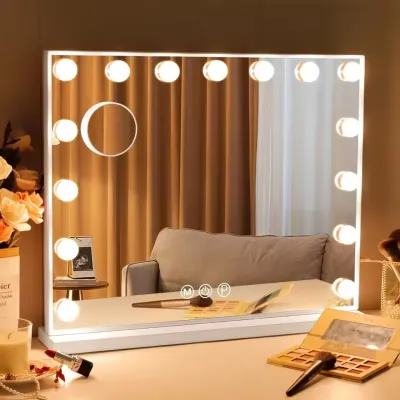
![[Delivered in 1 days]Standing Mirror Full length Mirror Floor Mirror Home Bedroom Large Mirror Hanging Wall Hanging Fitting](https://img.lazcdn.com/g/p/2b3c0b3d64e68bf2de2ea1ee27ce44e1.jpg_400x400q80.jpg_.webp)
![[Delivered in 1 days] Standing mirror floor mirror full-body mirror aluminum frame Nordic minimalist style](https://img.lazcdn.com/g/p/436b5aa2d2380af220dcbd8c1fe7f255.jpg_400x400q80.jpg_.webp)
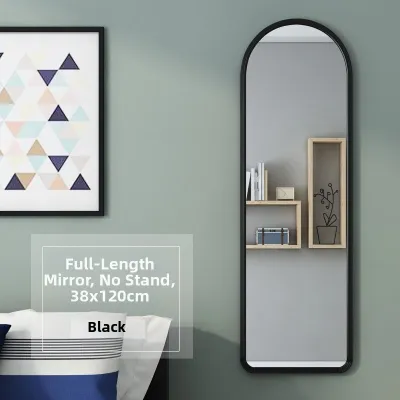
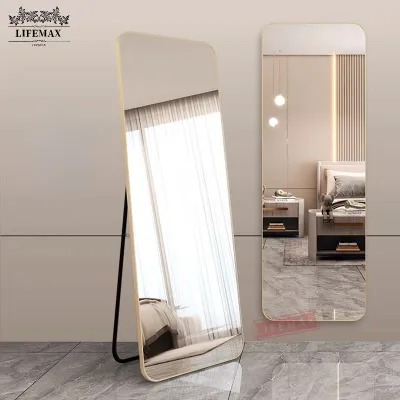
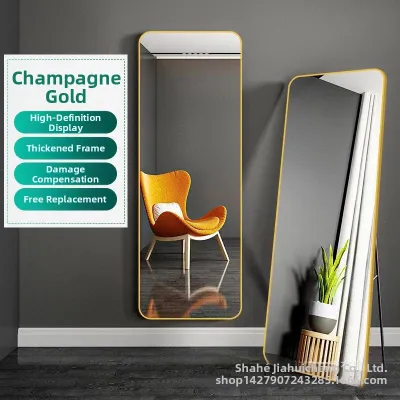
![[Delivered in 1 days]Standing mirror whole body floor mirror bedroom mirror wall hanging household solid wood makeup mirror](https://img.lazcdn.com/g/p/f6edcc5605a526ddbd63a88d307a342b.jpg_400x400q80.jpg_.webp)
Prices are valid at publication and may change. Please refer to the product page for the latest price.
First, mirrors act as passive light amplifiers. In many Singaporean apartments, deep layouts or single-aspect windows can leave areas like entryways, dining nooks, and corridors shrouded in shadow. A strategically positioned standing mirror catches incoming natural light from windows or artificial light from ceiling fixtures and bounces it deep into these darker zones. This increased brightness reduces the need for additional floor lamps, which would otherwise consume precious floor space, while making the entire room feel airy and welcoming.
Second, a large mirror creates visual depth by reflecting the room’s longest axis or an open-plan layout. When a mirror reflects a continuous floor line or an adjacent room, it creates the illusion that the space extends far beyond its physical limits. This is particularly effective in open-concept HDB living-dining areas, where a mirror can make the transition between zones feel seamless and double the perceived length of the shared space.
Finally, standing mirrors break up the oppressive, solid nature of concrete walls. Standard HDB household shelters, structural columns, and narrow corridors can feel visually heavy and enclosing. Placing a tall, elegant mirror against these surfaces disrupts the flat monotony of the drywall or concrete, replacing a hard boundary with a dynamic, moving picture of your living environment. This psychological relief is essential for turning a cramped room into a relaxing sanctuary.
Essential Selection Criteria for Small-Space Standing Mirrors
To ensure a standing mirror enhances your home rather than adding to the visual clutter, you must evaluate several physical and structural parameters before making a purchase.

Size and Proportions When it comes to expanding a small room, size is critical. A mirror that is too small will look like an afterthought and fail to create the desired spatial illusion, while an excessively bulky piece can physically overwhelm a tight floor plan. As a general rule, look for a standing mirror that is at least half to two-thirds the height of your wall, or at least 1.5 to 1.8 meters tall. This height ensures that when you stand in front of it, you see a full-length reflection with plenty of headroom, which naturally draws the eye upward. The width should be proportional, typically between 50 to 80 centimeters, to provide a wide field of view without blockading walkways.
Frame Thickness and Material The design of the frame dictates how much visual weight the mirror carries. For small apartments, minimalist frames are highly recommended. Ultra-thin metal frames, such as anodized aluminum or powder-coated steel in matte black, brass, or champagne gold, maximize the reflective surface area. Light wood frames, like oak or ash, also work well in Scandinavian or Japandi-style interiors without feeling heavy. Avoid thick, ornate, or heavily carved wooden frames; these draw attention to the frame itself rather than the reflection, creating a visual roadblock that shrinks the room.
Base Footprint vs. Leaning Design How the mirror stands on your floor directly impacts your usable square footage. Traditional freestanding easel mirrors feature a fold-out back leg that requires a significant depth of floor space, often extending 40 to 60 centimeters away from the wall. In a narrow bedroom or corridor, this footprint is highly inefficient. In contrast, a wall-leaning design rests almost flat against the wall, requiring only a few centimeters of floor clearance at the base. This makes leaning mirrors exceptionally space-efficient, allowing them to slip easily behind a door, next to a wardrobe, or into a tight corner.
Glass Quality and Distortion A high-quality reflection is crucial for maintaining the illusion of space. Cheap, thin glass (often under 3mm thick) is highly flexible and prone to warping over time, resulting in “funhouse” distortions that make reflections look bent or wavy. This distortion ruins the spatial illusion and can cause visual fatigue. Opt for mirrors made from high-quality float glass with a thickness of at least 4mm to 6mm, backed by a silver coating. Copper-free silver mirrors are particularly well-suited for Singapore’s humid tropical climate, as they resist edge oxidation and black spots over years of use.
Top Standing Mirror Designs to Maximize Your Floor Plan
The structural design and shape of a mirror dictate its spatial effect in a compact room. Different styles offer unique functional and aesthetic advantages, allowing you to tailor the visual expansion to your apartment’s specific layout.
Slim-Frame Leaner Mirrors
Slim-frame leaner mirrors are the quintessential choice for modern, minimalist HDB interiors. Because they lean directly against the wall, they eliminate the need for bulky support stands, preserving valuable floor space in high-traffic areas.
The primary benefit of a leaner mirror is its maximal glass-to-frame ratio. With a frame that is often only a few millimeters wide, the mirror presents an almost uninterrupted pane of reflective glass. When positioned near a window, it acts as an additional virtual window, capturing the outdoor view and bringing the natural greenery or sky of Singapore’s urban landscape indoors. This seamless integration of the outdoors makes the interior boundaries of your home feel far less restrictive.
Arched Floor Mirrors
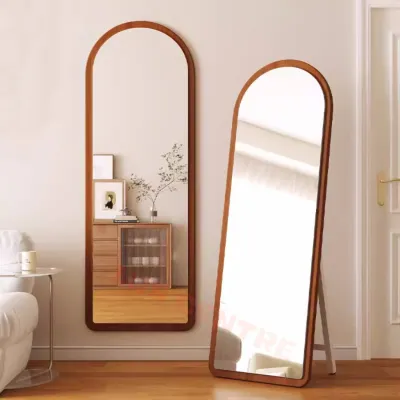
Arched floor mirrors feature a flat bottom and a gracefully curved top, offering a distinct architectural solution for boxy, modern apartments.
Most HDB flats and contemporary condominiums are characterized by rigid, straight lines, sharp corners, and low-clearance ceilings. The arched silhouette introduces a soft, organic curve that contrasts beautifully with these stark architectural lines. Visually, the curve of the arch acts as a pointer, naturally drawing the observer’s gaze upward toward the ceiling. This vertical movement of the eye creates the illusion of loftier ceilings, making compact living rooms or bedrooms feel taller and more grand.
Mirrors with Hidden Storage or Shelving
In exceptionally tight apartments, furniture must often perform double duty to justify its presence on the floor plan. Mirrors with integrated storage solve the dual need for a full-length reflective surface and organized storage.
These designs typically feature a full-length mirror on the front, with a shallow cabinet, jewelry hooks, or shelving tucked neatly behind the glass. Some models are mounted on a heavy, low-profile rotating base, allowing you to easily spin the mirror to access your accessories, bags, or daily wear. While these mirrors have a slightly deeper floor footprint than a simple leaner mirror, they eliminate the need for a separate vanity table, jewelry box, or coat rack, freeing up significant floor space elsewhere in the room. If selecting a model with integrated LED backlighting, verify the voltage compatibility (220-240V for Singapore), safety certifications, and proximity to an electrical outlet.
Grid or Multi-Panel Standing Mirrors
Grid or multi-panel standing mirrors, often referred to as windowpane or Crittall-style mirrors, consist of multiple smaller mirror panes separated by a thin metal grid.
This style is ideal for industrial, rustic, or Scandinavian-themed homes. While a single massive sheet of glass can sometimes create a harsh, blinding glare if it directly reflects intense afternoon sunlight, the grid lines break up the reflection. This diffusion reduces glare while still successfully expanding the visual depth of the room. Furthermore, the windowpane design mimics the look of an actual window looking out into another space, adding architectural character and a sense of mystery to blank, windowless walls.
Where to Find Quality Standing Mirrors in Singapore
Purchasing a large, fragile item like a standing mirror in Singapore requires careful planning to ensure the product arrives intact, fits your space, and meets your quality expectations.
First, consider visiting local furniture showrooms and home decor boutiques, particularly those clustered in design hubs like the Tan Boon Liat Building or various industrial estates around Ubi and Toa Payoh. Physically inspecting a mirror allows you to check for glass flatness from different angles, verify the sturdiness of the frame, and assess how the proportions feel in person. It also gives you a chance to feel the weight of the piece, which is a good indicator of material quality and stability.
For convenience and peace of mind, ordering from established home decor brands with local Singaporean operations is highly recommended. Local retailers often provide dedicated delivery teams trained in handling fragile goods, reducing the risk of transit damage. Furthermore, buying locally simplifies the process of returning or exchanging a mirror if you discover defects, glass distortion, or if the style does not fit your interior design as expected.
If you decide to utilize online marketplaces or cross-border e-commerce platforms, extra diligence is required. Always check seller ratings and read customer reviews thoroughly, specifically searching for keywords like “packaging damage,” “shattered glass,” or “warped reflection.” Verify the packaged dimensions of the mirror before completing your purchase. Singapore’s HDB lifts and common corridors have strict height and width limitations; a mirror that is too tall to fit into a standard passenger lift may require manual carrying up the stairs, which often incurs hefty additional handling fees from delivery personnel.
Finally, remember to factor in the total cost of ownership. When comparing options, look closely at local delivery fees, assembly charges (if the mirror requires base attachment), and the prevailing Goods and Services Tax (GST). A seemingly low-cost mirror from an overseas seller can quickly become expensive once international shipping, fragile handling surcharges, and import taxes are added to your SGD total.
Strategic Placement Tips for HDBs and Condos
Simply buying a standing mirror is not enough; its effectiveness in expanding your home depends entirely on where and how you position it.
The Window Reflection Rule To maximize brightness, position your standing mirror perpendicular or opposite to your main living room or balcony window. This placement allows the mirror to capture the incoming natural light and throw it deep into the apartment. In Singapore’s tropical climate, where daylight is abundant but can sometimes be harsh, placing the mirror perpendicular to the window is often preferred, as it diffuses the light gently across the room rather than reflecting a direct, blinding glare back at your seating area.
Avoiding Clutter Reflection A mirror will double whatever is in its field of view. If you place a standing mirror directly opposite a cluttered kitchen counter, a pile of shoes in the entryway, a blank household shelter door, or an open bathroom, you will double the visual noise and make your apartment feel more chaotic. Always position the mirror so that it reflects a pleasing view, such as a well-styled dining area, a piece of indoor greenery, or an open pathway.
Corridor and Foyer Tricks Many HDB layouts feature a long, narrow entrance foyer or a dark corridor leading to the bedrooms. These spaces can feel restrictive and tunnel-like. Placing a slim leaner mirror at the end of a corridor visually extends the hallway, making the passage feel twice as long and much wider. In a tight entryway, a standing mirror placed adjacent to the front door provides a convenient spot for last-minute outfit checks while instantly opening up the foyer the moment you step inside.
Dining Area Expansion Compact dining nooks can easily feel cramped, especially when hosting guests. Placing a tall standing mirror flat against the wall adjacent to your dining table is a classic design trick. It reflects the dining setup, making the eating area feel like a spacious, bustling bistro and creating a more inviting, social atmosphere during dinner parties.
Safety and Anchoring Guidelines for Tall Mirrors
Because standing mirrors are tall, heavy, and rest on the floor, safety must be a primary consideration, especially in active households.
Heavy leaning mirrors present a significant tipping hazard if they are knocked, bumped, or subjected to vibrations. This risk is particularly acute in homes with young children, curious pets, or high foot traffic. To prevent accidents, never leave a tall leaner mirror completely unanchored.
Most quality leaner mirrors come equipped with anti-tip wall anchors, safety straps, or pre-drilled brackets on the back of the frame. When installing these anchors, you must identify your wall type. In Singapore, HDB flats and older condos typically feature solid concrete structural walls, which require a masonry drill bit, sturdy wall plugs (anchors), and heavy-duty screws to secure the safety strap. Newer condominiums may utilize drywall or partition walls for internal rooms; these require specialized hollow-wall anchors, toggle bolts, or locating a wall stud to ensure a secure hold. If you are uncomfortable drilling into your walls or are unsure of the wall material, it is highly recommended to hire a qualified local handyman or professional installer to secure the mirror safely.
To prevent the base of a leaning mirror from sliding outward on smooth Singaporean flooring—such as polished porcelain tiles, vinyl planks, or laminate wood—always apply non-slip rubber pads, silicone grips, or heavy-duty museum wax to the bottom of the frame. This simple step adds crucial friction and stability.
Finally, avoid placing large standing mirrors in areas that receive direct, intense afternoon sunlight, such as facing west-facing windows. The concentrated heat buildup can degrade the mirror’s protective backing over time, leading to premature clouding or peeling, and the intense reflected glare can damage nearby wooden furniture, fabrics, or house plants.
Community discussion
Share your experience or ask a question. Comments are reviewed before publication.