
In compact Singapore apartments, from cosy Build-To-Order (BTO) HDB flats to modern condominiums, maximizing floor space is a constant design priority. A high-quality stick on mirror is one of the most practical and budget-friendly tools to visually double your square footage without the need for heavy drilling or permanent structural modifications. By strategically reflecting light and extending sightlines, these adhesive-backed panels instantly transform cramped entryways, narrow corridors, and dim bedrooms into bright, airy spaces.
To achieve the most convincing illusion of depth, the best stick-on mirrors are those that offer high optical clarity, secure adhesive systems, and seamless configurations. Large frameless glass sheets provide the most flawless, distortion-free reflection for main living areas, while lightweight acrylic panels offer a shatterproof alternative for high-traffic zones and doors. For renters seeking damage-free walls or homeowners looking for custom accent features, selecting the right material, thickness, and mounting system is essential to prevent visual warping and ensure long-term safety.
How Stick-On Mirrors Expand Small Spaces
The ability of a stick on mirror to enlarge a room relies on fundamental optical principles. When light hits a reflective surface, it bounces back into the room rather than being absorbed by dark, matte wall finishes. This simple bounce effect increases the overall ambient brightness of compact spaces, making dim corners feel open and integrated into the main living area.
Products mentioned in this guide
![SG [ READY STOCK ] HD Acrylic soft mirror attached to wall self-adhesive full body dressing mirror non perforated](https://img.lazcdn.com/g/p/10f5a09c2f952c5c8f6fe9a8d334827a.jpg_400x400q80.jpg_.webp)
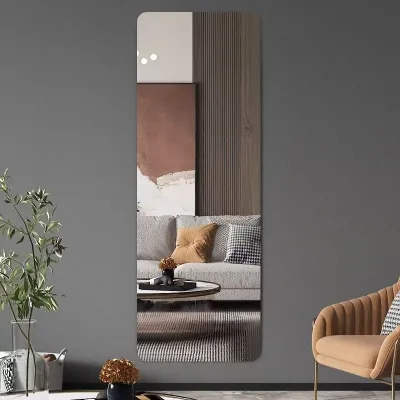
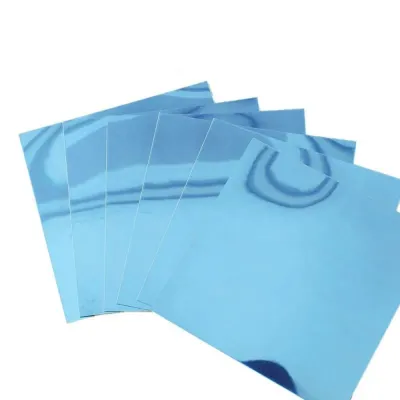
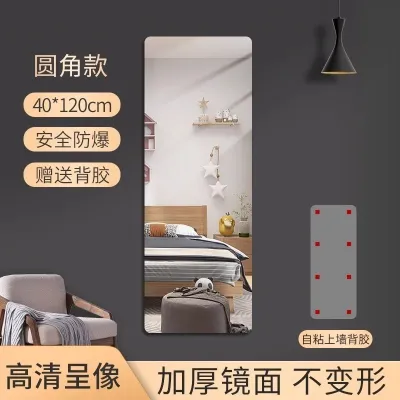
Prices are valid at publication and may change. Please refer to the product page for the latest price.
One of the most effective techniques is creating a “false window” effect. By mounting a mirror opposite a window or a wide doorway, you capture the outdoor scenery or the adjacent room’s depth. This tricks the brain into perceiving an additional opening in the wall, effectively extending the visual boundaries of your home and reducing the feeling of confinement.
Placement strategy is critical when working with limited layout options. Positioning a mirror at the end of a narrow hallway draws the eye forward, making a tight passage feel significantly longer than its physical dimensions. Alternatively, placing reflective panels perpendicular to a primary light source—such as a balcony sliding door—disperses natural light deep into the center of your apartment.
Key Features to Look for in Space-Enhancing Stick-On Mirrors
Selecting an adhesive mirror requires balancing aesthetic impact with structural safety. Not all reflective sheets are created equal, and choosing the wrong type can lead to a cheap, distorted appearance or damaged plaster.

- Material and Reflective Quality: You will primarily choose between real glass and synthetic materials like acrylic or PET. Glass delivers a perfectly flat, high-fidelity reflection but is heavy and fragile, requiring robust mounting solutions. Acrylic is exceptionally lightweight, impact-resistant, and safer for overhead or door installations, but it is flexible. To avoid a distorted "funhouse" effect, always check the product specifications and select acrylic sheets that are at least 3mm thick.
- Size and Proportions: To maximize the illusion of depth, larger, continuous surfaces are far superior to fragmented designs. A single, unbroken reflection allows the eye to travel smoothly across the simulated space. While small, decorative mirror stickers have their place, they tend to clutter the wall visually rather than expand it.
- Adhesive Type and Wall Safety: Many budget mirrors come with pre-applied double-sided foam tape. While highly adhesive, these tapes often cure permanently, tearing away drywall paper or paint during removal. For rental properties, it is safer to bypass the default tape and use specialized, damage-free removable mounting strips rated for the specific weight of your mirror.
- Edge Finishing: The way a mirror's edges are cut significantly impacts how it interacts with light. Polished or beveled edges refract light along the perimeter, creating a subtle, premium border that mimics custom built-in carpentry. Raw, flat-cut edges can look unfinished and pose a minor safety hazard during handling.
Best Stick-On Mirror Styles for Small Rooms
Different areas of your home demand different mirror configurations to maximize their spatial potential. Understanding the strengths and limits of each style helps you choose the right fit for your specific walls.
Large Frameless Mirror Sheets
Large-format frameless sheets offer the most powerful visual expansion because they mimic architectural elements like floor-to-ceiling windows. By eliminating frames, the boundary between the real room and the reflection disappears, creating a seamless transition that makes the living space feel twice its actual size.
These sheets are ideal for living room feature walls, compact dining areas, or directly above low-profile console tables. When placed in a dining zone, they reflect the dining table and lighting fixtures, creating a grander, banquet-like atmosphere.
However, glass sheets of this size are heavy and carry a risk of falling if improperly secured. For safety, verify that the wall surface is clean, flat, and capable of supporting the load. If you opt for lightweight acrylic sheets to cover a large area, ensure they are mounted on a perfectly flat backing board first; even minor wall imperfections will cause the flexible acrylic to bend, distorting the reflection.
Geometric Mosaic Mirror Tiles
Modular shapes—such as hexagons, diamonds, or small squares—allow you to customize the layout to match the exact proportions of your wall. Arranging these tiles in a vertical or diagonal pattern guides the viewer’s eye upward and outward, distracting from the narrowness of the room.
These tiles are best for narrow entryways, small accent walls, or awkward architectural niches where standard rectangular mirrors will not fit. They add a decorative touch while still serving the practical purpose of bouncing light around the space.
Every seam between tiles breaks the continuity of the reflection, which slightly reduces the depth illusion compared to a single large sheet. When purchasing mosaic tiles, check if they include precise alignment templates or spacers. Ensure your wall is completely smooth, as any tilt in individual tiles will result in misaligned reflections across the pattern.
Full-Length Door-Mounted Adhesive Mirrors
Vertical, full-length mirrors draw the eye upward, creating the illusion of higher ceilings. By mounting them directly to existing doors, you gain a highly functional dressing mirror without sacrificing a single square centimeter of valuable floor space.
This style is highly suited for wardrobe doors, bedroom doors, or the interior panels of walk-in closets. They provide a practical daily utility while making a small bedroom feel significantly less enclosed.
Doors are active, high-vibration surfaces. You must verify that the door is made of a solid, flat material rather than highly textured or hollow-core panels that offer poor adhesive grip. Ensure there is adequate clearance between the door frame and the mirror edge when the door swings open, and use vibration-resistant adhesive strips to prevent the mirror from shifting over time.
Safe Installation and Removal for Rented Apartments
Installing a stick on mirror in a rental property requires a careful approach to protect both the mirror and the landlord’s walls. Following a systematic process ensures a secure hold and a clean, damage-free removal when it is time to move out.
- Surface Preparation: Start by cleaning the target wall surface thoroughly. Use isopropyl alcohol to wipe down the area, removing invisible oils, dust, and grime that can compromise the adhesive bond. Avoid standard household spray cleaners, as they often leave behind a thin residue that prevents proper adhesion. Allow the wall to dry completely for at least 10 minutes before proceeding.
- Application Strategy: Do not rely blindly on the basic double-sided tape included in the box, especially for heavier glass panels. Instead, purchase reputable, weight-rated removable picture-hanging strips. Apply the strips evenly across the back of the mirror, paying close attention to the top edge where the tension is greatest. Press the mirror firmly against the wall for the manufacturer-recommended duration (usually 30 seconds) to activate the pressure-sensitive adhesive.
- Safe Removal Techniques: When you need to remove the mirror, never pry it off directly, as this will tear the paint or shatter the glass. Use a hairdryer on a medium-heat setting to gently warm the mirror surface, which softens the underlying adhesive. Next, take a long piece of dental floss or high-test fishing line, slide it behind the mirror, and use a sawing motion from top to bottom to slice through the softened adhesive pads. Once the mirror is free, gently peel away any remaining adhesive residue from the wall.
- Safety Boundaries: If your walls feature textured plaster, flaky paint, or wallpaper, adhesive strips may not hold securely or will inevitably cause damage. If the mirror is exceptionally heavy—such as a solid glass sheet weighing over 5 kilograms—stop and consult a qualified professional. In such cases, mechanical mounting clips or professional-grade wall anchors are required to ensure the installation is safe for daily use.
Frequently Asked Questions (FAQ)
Do acrylic stick-on mirrors distort reflections?
Yes, thin acrylic mirrors are highly susceptible to visual distortion. Because acrylic is a flexible polymer, any slight curve, bump, or uneven adhesive application on the wall behind it will cause the mirror to bend, creating a warped reflection. To achieve a clear, true reflection, select acrylic sheets that are at least 3mm thick, or mount them onto a perfectly flat intermediate substrate like a plywood or MDF board before adhering them to the wall.
Can I use stick-on mirrors in humid areas like bathrooms?
Standard stick-on mirrors and basic adhesives are not designed to withstand the high humidity and temperature fluctuations of a typical bathroom. Over time, moisture can penetrate the adhesive backing, causing the mirror to fall, and can degrade the reflective silver backing, leading to unsightly black edges (desilvering). If you plan to install a mirror in a damp area, verify that both the mirror backing and the adhesive strips are explicitly rated as waterproof or moisture-resistant.
How do I clean stick-on mirrors without damaging the adhesive?
To maintain your mirrors without weakening their wall bond, use a soft microfiber cloth and a gentle, ammonia-free glass cleaner. Never spray the cleaning liquid directly onto the mirror, as the run-off can seep behind the edges and dissolve the adhesive over time. Instead, spray a small amount of cleaner onto the microfiber cloth first, then gently wipe the reflective surface in circular motions, keeping the damp cloth away from the outer adhesive edges.
Community discussion
Share your experience or ask a question. Comments are reviewed before publication.