
A standard Housing & Development Board (HDB) flat with a 2.6-metre ceiling height presents a distinct spatial challenge. Homeowners must balance the desire for bright, modern, and even illumination with the physical reality of limited vertical headroom. Opting for a false ceiling to accommodate recessed downlights typically lowers the ceiling by 10 to 15 centimetres, resulting in a clearance of 2.45 to 2.5 metres that can feel cramped and visually oppressive.
The most practical, cost-effective, and visually clean alternative is the surface downlight. These fixtures mount directly onto the existing concrete slab, preserving the full 2.6-metre ceiling height while delivering the clean, architectural aesthetic associated with modern recessed lighting. Selecting the right surface downlight involves evaluating physical dimensions, thermal management, glare control, and local Singapore safety standards to ensure long-term performance.
Why Surface Downlights Are Ideal for Standard HDB Ceilings
HDB flats built with standard 2.6-metre concrete ceilings leave little room for bulky, low-hanging light fixtures. Pendant lights, chandeliers, and thick surface-mounted flush lights can visually segment a room, drawing the eye downward and making standard spaces feel significantly smaller. Because these fixtures occupy valuable vertical space, they can also interfere with tall furniture, ceiling fans, or the general flow of movement throughout the home.
Products mentioned in this guide
![[OKLIFE. SG]Kitchen Light Room Light LED Panel Light Ultra-Thin Round Surface Mount Downlight Ceiling Light](https://img.lazcdn.com/g/p/e894ab7091549161189ec70869039292.jpg_400x400q80.jpg_.webp)
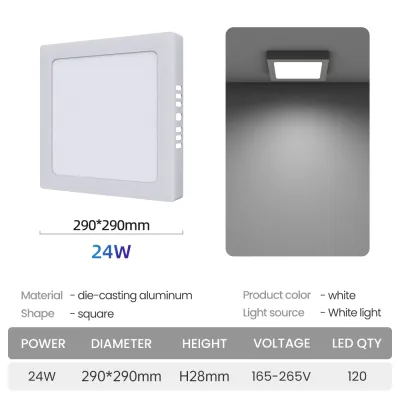
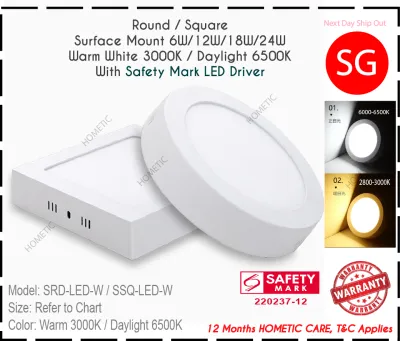
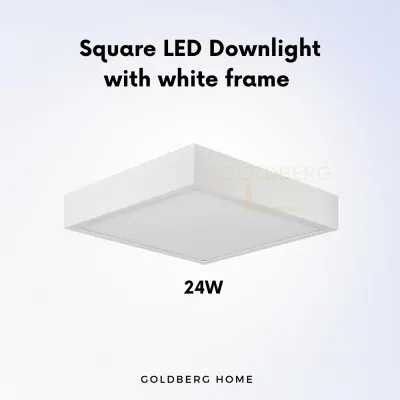
![[Local Seller] LED Ceiling Surface Mounted Downlight LED Panel Light Square Round](https://img.lazcdn.com/g/ff/kf/S9e533f090ee14a7985bc0936a4a65a6bB.jpg_400x400q80.jpg_.webp)
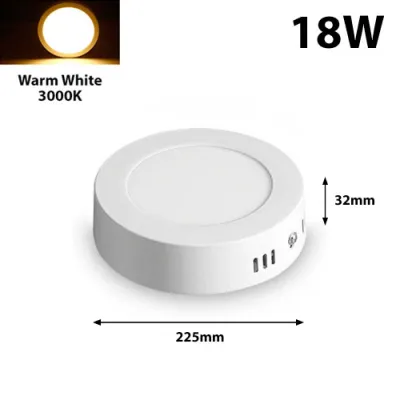
Prices are valid at publication and may change. Please refer to the product page for the latest price.
From a structural perspective, standard HDB ceilings are solid, precast concrete slabs. Installing recessed downlights requires the construction of a plasterboard false ceiling to conceal the drivers, wiring, and the recessed canisters. Building a false ceiling across an entire flat is not only a significant financial investment, running into thousands of Singapore dollars, but it also permanently reduces the vertical volume of your living spaces. For many homeowners, sacrificing up to 15 centimetres of headroom is an unacceptable trade-off.
Slim surface downlights solve this dilemma by mounting directly flush against the concrete slab. Modern low-profile designs often measure less than 35 millimetres in thickness, meaning they project minimally into the room. This tight profile preserves the maximum possible clearance, keeping the visual plane of the ceiling clean and uninterrupted. By distributing light downward from the highest possible point, surface-mounted downlights make rooms feel taller, more open, and thoroughly contemporary.
Essential Design and Performance Features to Prioritize
To achieve the best lighting outcome in a standard HDB flat, you must look beyond the external appearance of a fixture. Technical specifications dictate how well a light performs, how comfortable it is for your eyes, and how long it will last before requiring replacement.

Ultra-Slim Profiles and Heat Dissipation
When shopping for a surface downlight, physical thickness is often the first feature homeowners consider. A profile between 20 and 35 millimetres is generally ideal for 2.6-metre ceilings. However, reducing the physical volume of a light fixture introduces a major engineering hurdle: heat management. LEDs are highly efficient, but they still generate heat. In an ultra-slim surface housing, there is very little air space to naturally dissipate this thermal energy. If heat is trapped within the fixture, the LED chips and the integrated driver will degrade rapidly, leading to flickering, color shifting, or total premature failure.
To mitigate this risk, prioritize fixtures constructed from materials with high thermal conductivity. Die-cast aluminum is the industry standard for premium downlights, as it conducts heat away from the LED chips far more effectively than cheap plastics. Some modern fixtures utilize advanced, heat-resistant thermoplastics engineered with conductive ceramic additives, which offer a lightweight alternative without sacrificing thermal performance.
Before purchasing, examine the product’s technical specification sheets. Look for the manufacturer’s rated operating temperature threshold, which should ideally be rated up to 40°C or 45°C ambient temperature. Additionally, check the rated lifespan of the LED module, typically expressed as an L70/B50 metric. A reliable, well-engineered slim downlight should offer a lifespan of at least 25,000 to 50,000 operating hours under normal residential conditions, backed by a robust, integrated aluminum heat sink design.
Anti-Glare and Beam Angle Considerations
Because a 2.6-metre ceiling brings the light source closer to your eye level, glare control is paramount. Direct exposure to the bright, pinpoint light sources of poorly designed LEDs can cause eye strain, headaches, and a harsh, clinical atmosphere.
To prevent glare, look for surface downlights that feature deep-set LED chips, where the actual light source is recessed slightly within the outer collar of the fixture. Alternatively, select models equipped with high-quality frosted PMMA (polymethyl methacrylate) or polycarbonate diffusers. These diffusers scatter the light evenly across the surface of the lens, eliminating harsh hotspots. Some premium brands also utilize matte or specular internal reflectors that shape the light beam while shielding the eye from direct glare.
Beam angles play a crucial role in how light is distributed across your HDB flat. For general ambient lighting in living rooms, bedrooms, and kitchens, a wide flood beam angle between 90 degrees and 120 degrees is highly recommended. This wide spread ensures that light overlaps across the floor plan, minimizing dark corners and creating a bright, open feel. Conversely, if you want to highlight specific zones, such as a gallery wall, a dining table, or a decorative sideboard, opt for a narrower spot beam angle between 24 degrees and 45 degrees to create localized contrast.
Color temperature is a subjective choice that alters the perceived atmosphere of your home. Warm white (2700K to 3000K) is excellent for creating a cozy, relaxing environment in bedrooms and living areas. Neutral white (4000K) provides a clean, balanced light that mimics natural daylight, making it highly suitable for kitchens, study rooms, and bathrooms. Cool white (6500K) offers high-contrast illumination best reserved for utility yards, storage areas, or task-heavy workspaces. Many modern LED downlights feature “3-CCT” switching, allowing you to toggle between these three temperatures via a physical switch on the back of the fixture before installation.
How to Identify Reliable Lighting Brands in Singapore
The Singapore lighting market is flooded with options, ranging from established global manufacturers to unbranded, direct-to-consumer imports. Navigating these choices requires a clear framework based on safety compliance and long-term support.
Safety Marks and Electrical Compliance
Electrical safety must never be compromised. In Singapore, household electrical appliances, including LED drivers and integrated luminaires, are classified as Controlled Goods under the Consumer Protection (Safety Requirements) Registration Scheme. This means they must be tested to meet strict international safety standards and carry the Enterprise Singapore Safety Mark before they can be legally sold or installed.
[ Safety Mark ] --> Indicates independent laboratory testing for insulation,
                    fire resistance, and electrical shock prevention.
The Safety Mark is your assurance that the fixture’s integrated driver has been tested to handle Singapore’s standard 230V, 50Hz electrical supply without overheating or posing a fire risk. Uncertified, ultra-cheap imports purchased from overseas online marketplaces often lack proper thermal insulation, short-circuit protection, or adequate grounding. Using uncertified fixtures can lead to tripped circuit breakers, damage to your home’s electrical wiring, or electrical fires.
When evaluating brands, always verify that the specific model or its integrated driver carries a valid Safety Mark. You can cross-reference the unique registration number printed on the label with the official database maintained by Enterprise Singapore. Ensure the product specifications explicitly state compatibility with 230V mains voltage and comply with local electrical wiring standards.
Warranty and Local After-Sales Support
A warranty is only as good as the brand’s ability to honor it. When comparing lighting brands, look closely at the terms of the warranty. It is common for low-end brands to advertise a long warranty period, only for the fine print to reveal that it only covers the LED chip itself, while the internal driver—the component most susceptible to failure from electrical surges and heat—is excluded or covered for a much shorter duration. A comprehensive warranty should cover both the LED module and the driver.
Opting for brands with an established local presence in Singapore, such as physical showrooms, authorized local distributors, or dedicated service centers, provides immense peace of mind. Brands like Philips (Signify), Megaman, Opple, and Panasonic have long-standing distribution networks in Singapore. If a fixture fails within the warranty period, obtaining a replacement from a local distributor is straightforward and fast.
In contrast, purchasing from direct-to-consumer cross-border brands that lack local representation can turn a simple warranty claim into a logistical headache. Homeowners are often expected to pay for international return shipping, communicate across time zones, and wait weeks for a replacement, leaving their rooms in darkness in the interim.
Installation Realities for HDB Concrete Ceilings
Installing surface downlights on an HDB concrete ceiling requires careful planning, as you do not have the luxury of hiding cables inside a hollow ceiling cavity. Understanding the installation process helps set realistic expectations for both the timeline and the final visual result.
First, consider how the electrical wiring will reach each fixture. If your HDB flat already has existing ceiling light points, you can easily mount a surface downlight directly over each point. However, if you want to install multiple downlights to create a grid pattern, the wiring must be routed from the central point to each individual fixture. Without a false ceiling, you have two primary options:
- Ceiling Chasing (Hacking): This involves cutting shallow grooves into the concrete ceiling slab to bury the electrical conduits, which are then plastered over and painted. HDB has strict structural guidelines regarding this process. You must obtain permission, and the depth of the chase is strictly limited (typically to no more than 16 millimetres) to prevent damaging the structural steel reinforcement bars (rebar) embedded within the concrete. Hacking structural beams or columns is strictly prohibited.
- Surface-Mounted Trunking: This is the most common, non-invasive, and cost-effective method. Electrical wires are run along the surface of the ceiling inside slim, protective PVC casing.
Regardless of the routing method chosen, always hire a licensed electrical worker (LEW) registered with the Energy Market Authority (EMA) of Singapore to perform the installation. Working with 230V electrical wiring is highly dangerous and requires professional expertise to ensure proper connections, load balancing, and compliance with local electrical codes.
Before mounting any fixtures, ensure that the power supply is completely isolated at the main distribution board (DB box). The installer must use a reliable wall scanner to identify any pre-existing embedded conduits or structural steel rebars before drilling mounting holes into the concrete slab. Drilling into an active conduit can cause catastrophic electrical failure, while damaging structural rebar compromises the building’s integrity.
For surface downlights with metal housings, proper grounding (earthing) is mandatory under Singapore electrical standards. The earth wire must be securely bonded to the fixture’s chassis to prevent the metal casing from becoming live in the event of an internal wiring fault.
To achieve a clean, professional finish when using surface-mounted trunking, select slim, paintable PVC trunking. Once installed, paint the trunking with the exact same matte white paint used on your ceiling to make it blend seamlessly into the background. Additionally, select surface downlights that feature integrated cable management compartments or side-entry knockouts. These design elements allow the surface trunking to connect directly to the side of the fixture’s housing, eliminating any exposed, dangling wires and maintaining a neat, minimalist appearance.
Frequently Asked Questions (FAQ)
Can I install surface downlights without hacking the ceiling?
Yes, you can easily install surface downlights without any concrete hacking by using surface-mounted PVC trunking. The electrical wires are routed from your existing ceiling point through slim, protective plastic casings that run flat against the concrete ceiling directly to each downlight. By using paintable trunking and matching it to your ceiling color, the installation remains neat, cost-effective, and entirely non-destructive to the HDB structural slab.
Do slim surface downlights overheat faster than recessed ones?
Not necessarily. While ultra-slim surface downlights have less physical air volume inside their housings than recessed fixtures, reputable brands compensate for this by engineering advanced thermal management systems. They pair high-efficiency LED chips—which produce less heat per lumen—with robust die-cast aluminum casings that act as highly effective external heat sinks. To ensure long-term reliability, always choose certified brands that provide clear operating temperature thresholds and rated lifespans, rather than relying on unbranded alternatives.

Community discussion
Share your experience or ask a question. Comments are reviewed before publication.