
Quick Answer: Which Throw Pillow Insert Fill Is Right for You?
Choosing the perfect throw pillow insert depends on how you use your living space, your aesthetic preferences, and your willingness to maintain the cushion’s shape over time. The ideal filling material varies significantly depending on whether you prioritize visual styling, ease of cleaning, or physical lumbar support.
- Choose natural down or down alternative if you want a luxurious, highly moldable cushion that holds the classic "karate-chop" look and offers soft, sink-in comfort.
- Choose polyester fiberfill if you prefer an affordable, low-maintenance, and bouncy cushion that can handle daily family use and frequent machine washing.
- Choose memory foam if you require firm, contoured support that resists flattening and keeps its shape under heavy structural use.
To make the best decision for your home, you must evaluate four core standards: comfort profile, loft retention, maintenance effort, and compatibility with different cushion covers. In warm, humid environments like Singapore, factors such as moisture retention and breathability also play a critical role in how well these materials perform over time.
Down and Down Alternative: Luxurious Loft and Softness
Natural down represents the gold standard of luxury in home styling, offering an unparalleled, cloud-like softness. Harvested from the soft undercoating of geese or ducks, down fill is highly moldable, allowing you to shape the pillow easily to support your neck or back, and then gently pat it back into a plump, rounded form. This exceptional moldability is why down is the preferred choice for interior designers who favor the elegant, relaxed “karate-chop” aesthetic on sofas and beds.
Products mentioned in this guide
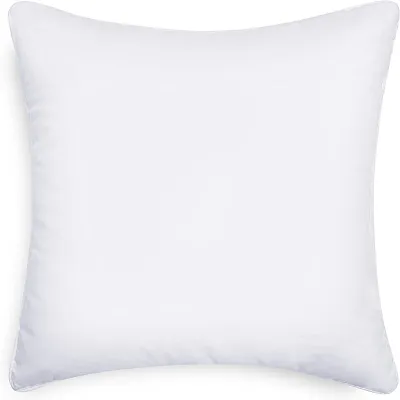
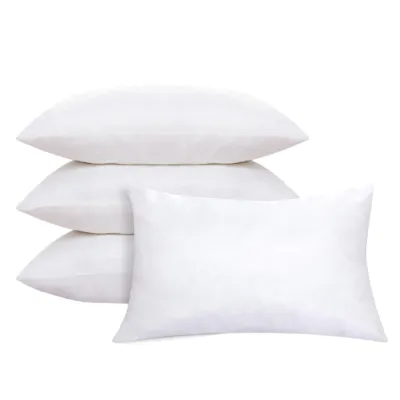
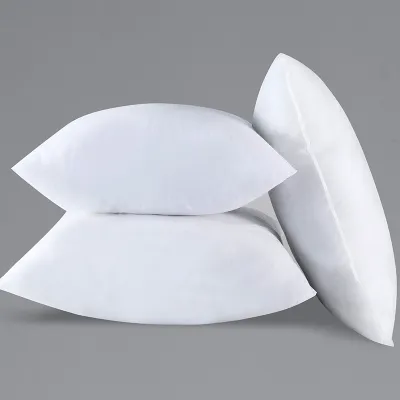
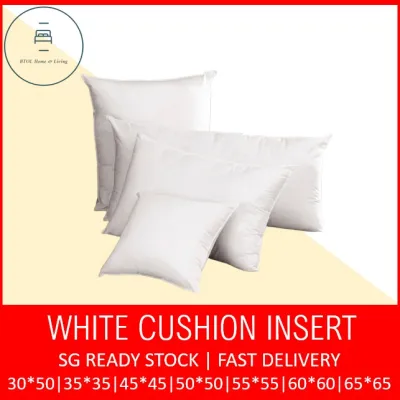
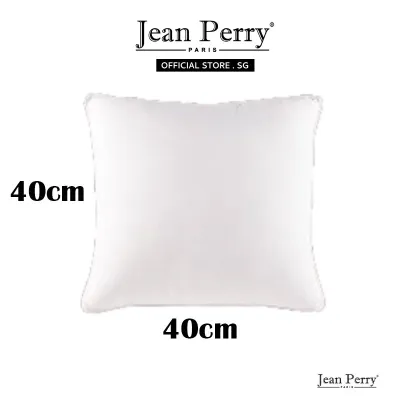
Prices are valid at publication and may change. Please refer to the product page for the latest price.

However, natural down is highly sensitive to moisture, which is a major consideration in Singapore’s humid climate. Down can absorb ambient moisture from the air, which may lead to clumping, a loss of loft, and the development of musty, unpleasant odors over time. To combat this, homeowners must commit to regular maintenance, including frequent fluffing and airing out in well-ventilated, air-conditioned rooms or indirect sunlight.
For those who love the plush feel of down but suffer from allergies or want a more budget-friendly option, down alternative is an excellent substitute. Usually made from ultra-fine polyester microfiber, down alternative mimics the light, airy feel of natural feathers without the risk of triggering respiratory issues. Verify specific hypoallergenic and allergy-safe claims on the product label before purchasing.
Caring for these inserts requires strict adherence to manufacturer instructions to preserve their delicate structure. While some synthetic down alternatives can be machine washed on a gentle cycle, natural down inserts often require professional cleaning or highly specific home laundering. If you do wash them at home, they must be dried completely on a low-heat setting with clean tennis balls or dryer balls to break up clumps and restore the loft, as any residual moisture can ruin the feathers and encourage mold growth.
Down and down alternative inserts are best suited for formal living rooms, master bedrooms, and low-traffic decorative zones. Because they lack structural firmness, they are not designed for heavy-duty lumbar support or high-impact areas like children’s play corners, but they excel at adding a touch of sophisticated comfort to your home.
Polyester Fiberfill: The Versatile and Budget-Friendly Standard
Polyester fiberfill, often referred to as poly-fill, is the workhorse of the home decor industry. This synthetic material consists of combed polyester fibers twisted into light, springy clusters that provide a balanced level of firmness and a lightweight feel. It offers a distinct “bounce-back” sensation rather than the sink-in softness of down, meaning it naturally springs back to its original shape after being compressed, keeping your sofa looking neat and tidy with minimal effort.
One of the primary advantages of polyester fiberfill is its widespread availability and affordability. Poly-fill inserts fit comfortably into broad budget bands, typically costing between S$5 and S$20 per piece, making them highly accessible for those who like to update their seasonal decor frequently or need to purchase multiple inserts at once.
Despite its practical benefits, polyester fiberfill does have limitations regarding long-term loft retention. Over months of daily use, the individual synthetic fibers can tangle, friction-bond, and flatten, leading to a lumpy or deflated appearance. Unlike down, which can be fluffed indefinitely, lower-quality poly-fill will eventually reach a point of permanent compression where manual fluffing no longer restores its volume, signaling that the insert has reached the end of its usable lifespan.
To extend the life of a polyester insert, regular manual maintenance is key. You can restore some of its bounce by vigorously massaging the cushion from the corners inward, or by tumbling it in a clothes dryer on a no-heat or low-heat cycle with dryer balls. Always check the manufacturer’s care label before attempting this, as excessive heat can melt or fuse the delicate synthetic fibers, permanently ruining the insert’s texture.
The machine-washable nature of most polyester inserts makes them incredibly popular for active households with pets or young children. They can easily withstand regular washing to remove dust mites, sweat, and spills. However, always verify the specific product’s care instructions first, as some budget inserts feature non-woven outer covers that can tear or disintegrate in a washing machine’s agitator.
Memory Foam: Contoured Support and Heavy-Duty Durability
Memory foam represents a complete departure from traditional fibrous fills, offering a dense, pressure-relieving support system. Originally developed for aerospace applications, memory foam contours closely to the body in response to heat and pressure, distributing weight evenly. This substantial weight and high density prevent the throw pillow from sliding, slipping, or collapsing, ensuring it stays exactly where you place it on your armchair or sofa.
In the market, you will find memory foam inserts in two primary forms: solid foam blocks and shredded memory foam. Solid blocks offer rigid, clean-lined structures that are perfect for maintaining a crisp, geometric look in modern interiors. Shredded memory foam, on the other hand, consists of thousands of tiny foam clusters, providing a slightly more pliable feel that combines the contouring support of foam with a small degree of moldability.
The exceptional durability of memory foam makes it virtually immune to the flattening that plagues polyester and down. It is the ultimate choice for high-use areas such as home offices, reading nooks, or deep-seated lounge chairs where physical lumbar back support is a daily necessity. A memory foam throw pillow can provide the structured alignment that softer fills cannot match.
However, these benefits come with specific maintenance and environmental trade-offs. Memory foam is inherently dense and can trap body heat, which can feel uncomfortably warm in Singapore’s tropical climate if used without air conditioning. Furthermore, memory foam cannot be submerged in water or machine washed, as the moisture will break down the cellular structure of the polyurethane, causing it to crumble. Homeowners must rely on spot-cleaning spills immediately and using high-quality, removable, and washable outer covers.
When pairing a memory foam insert with a decorative cover, pay close attention to the cover’s material and construction. Because memory foam is heavy and unyielding, putting it into a cover made of delicate silk or thin cotton can put immense pressure on the seams. Ensure your cushion covers feature heavy-duty zippers and sturdy fabrics, such as thick canvas, velvet, or upholstery-grade polyester, to prevent tearing during installation and daily use.
Head-to-Head Comparison: Comfort, Care, and Cover Compatibility
To help you visualize how these three popular materials compare, the table below breaks down their performance across key decision-making dimensions.
| Fill Material | Firmness & Feel | Loft Retention | Washability & Care | Weight & Density | Best Visual Style | Singapore Climate Suitability |
|---|---|---|---|---|---|---|
| Natural Down | Soft, moldable, sink-in | Moderate (requires regular fluffing) | Dry clean or delicate wash (dryer balls required) | Lightweight | Relaxed, "karate-chop" look | Moderate (needs air-con to prevent moisture buildup) |
| Down Alternative | Soft, plush, hypoallergenic | Moderate to High (resists clumping better than down) | Machine washable (gentle cycle, low heat) | Lightweight to Medium | Soft, full, rounded look | High (hypoallergenic, handles humidity well) |
| Polyester Fiberfill | Balanced, springy bounce-back | Moderate (can flatten over time) | Machine washable (verify care label) | Lightweight | Plump, neat, everyday look | High (breathable, easy to wash and dry) |
| Memory Foam | Firm, dense, body-contouring | High (does not flatten) | Spot-clean only (never machine wash) | Heavy | Structured, geometric, modern | Moderate (retains heat, best in air-conditioned spaces) |
The fill material you choose directly dictates how your decorative cover will look on display. For down and polyester fiberfill inserts, a standard industry practice is the “size-up” rule. To achieve a plump, professional-looking cushion with fully stuffed corners, you should choose an insert that is 1 to 2 inches (approximately 2.5 to 5 centimeters) larger than your cushion cover. For example, if you have a standard 45×45 cm cover, pairing it with a 50×50 cm down or polyester insert will eliminate empty fabric corners and prevent a saggy appearance.
Conversely, this sizing rule does not apply to memory foam. Because memory foam is dense and does not compress easily, trying to stuff a larger memory foam insert into a smaller cover will strain the seams, potentially breaking the zipper or distorting the pillow’s shape. For memory foam, always select an insert that matches the exact physical dimensions of your cushion cover to ensure a clean, tailored fit without risking structural damage to your decorative textiles.
How to Match the Insert to Your Space and Cushion Cover
To make a final decision, consider the specific function of the room where the throw pillows will live. In a formal living room or a master bedroom suite, natural down or high-quality down alternative inserts are unmatched in their ability to create an inviting, luxurious atmosphere. These are spaces where aesthetics take center stage, and the occasional fluffing required to maintain their gorgeous loft is a worthwhile trade-off for their elegant appearance.
For high-traffic family rooms, kids’ play areas, or covered outdoor balconies, polyester fiberfill is the clear winner. These spaces demand durable, budget-friendly materials that can survive spills, pet dander, and rough handling. The ease of tossing a polyester insert into the washing machine ensures that your high-use spaces remain clean, hygienic, and fresh, even in Singapore’s humid air which can trap household odors.
For dedicated workspaces, study rooms, or ergonomic reading chairs, memory foam is the most logical choice. It transitions the throw pillow from a purely decorative accent into a functional wellness tool, providing essential support for your spine during long hours of sitting. By matching the insert’s physical properties to the room’s primary activity, you maximize both comfort and utility.
Additionally, evaluate the fabric weight and closure style of your cushion covers. Delicate, lightweight fabrics like silk, satin, or fine linen pair beautifully with the soft, gentle loft of down or down alternative, as these fills do not stretch or stress the delicate fibers. Heavier fabrics like denim, wool, canvas, or thick jacquard can easily handle the firm structure of memory foam or the bouncy pressure of high-density polyester. Always check the closure: envelope closures work best with soft, highly compressible down or polyester, whereas heavy-duty, reinforced zippers are mandatory for dense memory foam.
Before purchasing from online marketplaces, conduct a final verification. Double-check the exact dimensions of both your cover and the insert, read the customer reviews regarding firmness and density, and review the seller’s return policy. Verifying these details beforehand prevents the hassle of dealing with ill-fitting, uncomfortable, or non-returnable inserts that fail to meet your home decor expectations.
Frequently Asked Questions (FAQ)
How Do I Know When It Is Time to Replace My Throw Pillow Insert?
Throw pillow inserts do not last forever, and recognizing the signs of structural failure is key to maintaining a beautiful and comfortable home. The most obvious visual signal is a flat, deflated profile that refuses to bounce back even after vigorous manual fluffing or a gentle tumble in the dryer. Tactile signs include permanent clumping, where the internal fibers or feathers have fused into hard, uncomfortable lumps that cannot be separated.
Another critical indicator, particularly in humid environments like Singapore, is the presence of lingering, musty odors or persistent staining that survives a thorough, manufacturer-approved washing cycle. This often points to mold, mildew, or deep-seated sweat and oils that have penetrated the core of the fill material. Continuing to use a compromised insert can trigger allergies and ruin your expensive decorative covers.
While you can temporarily revive compressed polyester or down inserts by tumbling them on low heat with clean dryer balls, this is only a temporary fix for normal wear. Once the structural integrity of the synthetic fibers or natural feathers has broken down, no amount of heat or manipulation will restore their original loft. When these signs appear, it is time to invest in a high-quality replacement insert to keep your living space looking and feeling its best.
Community discussion
Share your experience or ask a question. Comments are reviewed before publication.