
Standard Housing & Development Board (HDB) flats in Singapore typically feature a floor-to-ceiling height of approximately 2.6 meters. In these compact vertical spaces, selecting the right lighting setup is a delicate balancing act between achieving functional illumination and maintaining an open, airy atmosphere. For a 2.6m ceiling, the most effective track light configurations are slim, low-profile surface-mounted tracks—such as mini-tracks or low-voltage magnetic systems—paired with compact, flush-mounted light heads. These setups keep the fixtures as close to the ceiling plane as possible, minimizing visual clutter and preserving precious headroom. By understanding how track dimensions, mounting styles, and layout strategies interact with your spatial proportions, you can design a lighting system that enhances your home’s interior without making the rooms feel cramped.
The 2.6m Ceiling Challenge: How Track Lights Affect Spatial Proportions
Standard HDB flats are built with concrete structural slabs that establish a fixed vertical limit of 2.6 meters. While this height is perfectly comfortable for daily living, it leaves very little margin for bulky overhead fixtures. When you introduce oversized lighting components into this environment, you risk physically and visually lowering the ceiling plane, which can make a standard living room or bedroom feel unexpectedly restrictive.
In interior design, “visual weight” refers to how much attention an object demands within a space. Dark, thick track profiles or large, cylindrical spotlights carry substantial visual weight. When these elements are suspended overhead in a room with a 2.6m ceiling, they draw the eye upward and create a heavy, dominant boundary that visually compresses the living space below.
Products mentioned in this guide
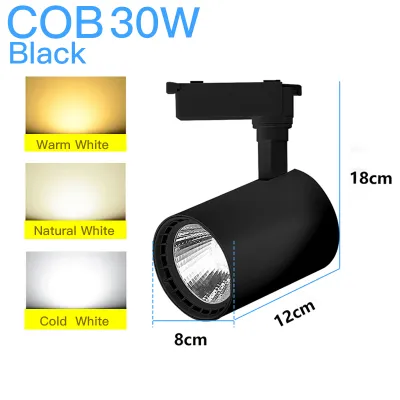
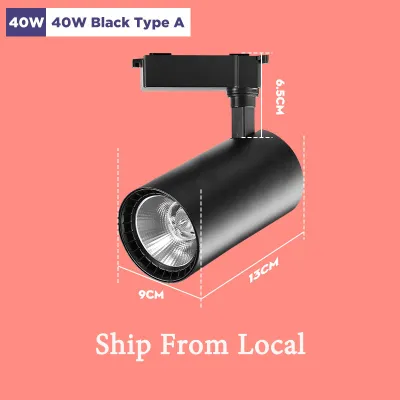
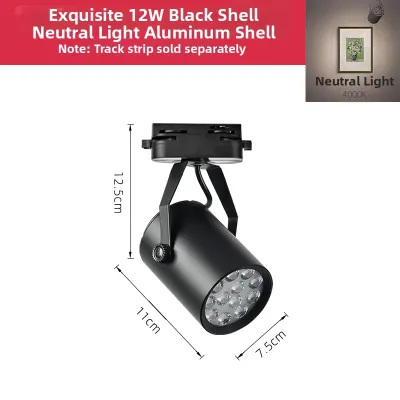
Prices are valid at publication and may change. Please refer to the product page for the latest price.
To counter this effect, the primary design goal must be maintaining a clean, uninterrupted ceiling line. By selecting track lighting profiles that blend into the ceiling surface rather than standing out as heavy architectural features, you preserve the natural perception of height. This approach ensures that the lighting system serves its functional purpose of illuminating your home without imposing an oppressive overhead presence.
Surface-Mounted vs. Recessed Tracks: Which Mounting Style Fits Best?
Surface-Mounted Tracks
Surface-mounted tracks are secured directly onto the concrete ceiling slab or onto an existing false ceiling. This installation method is highly practical for standard HDB flats because it requires no structural demolition or height reduction. By mounting the track directly to the concrete slab, you retain the full 2.6-meter physical clearance from floor to ceiling, which is crucial for maintaining an open feel.

When opting for surface mounting, selecting an ultra-low-profile track is essential. Many modern track systems feature profiles with a height of only 15mm to 20mm. These slim tracks sit almost flush against the ceiling surface, providing a clean, streamlined appearance that mimics the look of a recessed system without the associated structural complications.
A common mistake among homeowners is choosing bulky, commercial-grade three-phase tracks. These heavy-duty systems often feature deep profiles exceeding 35mm in height and require large, prominent power connectors. In a standard HDB living room, such thick tracks draw immediate attention to the ceiling’s physical limits and can make the entire room feel visually crowded.
Recessed Tracks
Recessed track systems, particularly trimless magnetic tracks, offer an exceptionally clean and modern aesthetic because the track channel is embedded entirely within the ceiling plane. This flush integration eliminates any protruding profiles, creating a seamless surface where only the light modules themselves are visible.
However, achieving this seamless look comes with a significant structural trade-off: it requires the installation of a plasterboard false ceiling. Building a false ceiling to house recessed tracks typically requires a drop of at least 50mm to 100mm, depending on the depth of the track housing and the space needed for electrical wiring and drivers. In a standard HDB flat, dropping the ceiling to 2.5 meters or lower across the entire room can make the space feel noticeably lower and more restrictive.
To balance this trade-off, consider localized false ceiling drops rather than a full-room installation. For instance, you can construct a perimeter false ceiling or a dedicated drop zone over a dining area, entryway, or kitchen island. This zoning approach allows you to enjoy the flush, modern look of recessed tracks in specific functional areas while keeping the main living room ceiling at its maximum physical height of 2.6 meters.
Scaling Your Track Dimensions and Light Heads
Track Profile Thickness and Width
The physical dimensions of the track channel play a critical role in the overall scale of your ceiling. Standard high-voltage (230V AC) tracks are generally wider and deeper to accommodate thicker copper conductors and robust internal insulation. In contrast, low-voltage (48V DC) magnetic tracks are often designed with much slimmer profiles, making them highly suitable for residential spaces with limited headroom.
Before purchasing any track system, always review the manufacturer’s precise technical drawings and dimension sheets. Look for tracks with a width of 25mm or less and a visible depth of under 20mm for surface-mounted options. These compact dimensions ensure the track remains a subtle architectural line on your ceiling rather than a dominant visual element.
Do not assume that all magnetic track systems are inherently slim. Some heavy-duty magnetic tracks are designed for commercial spaces and require deep, wide channels that are difficult to integrate into residential HDB ceilings without extensive plastering or deep false ceilings. Always verify the specific profile dimensions before committing to a system.
Managing Fixture Drop Lengths
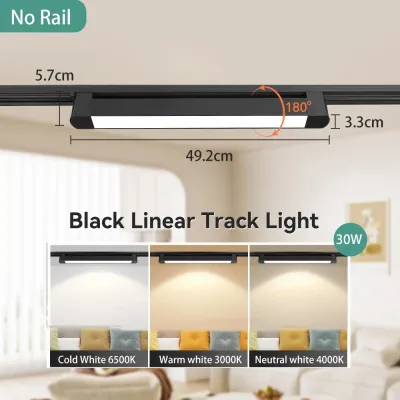
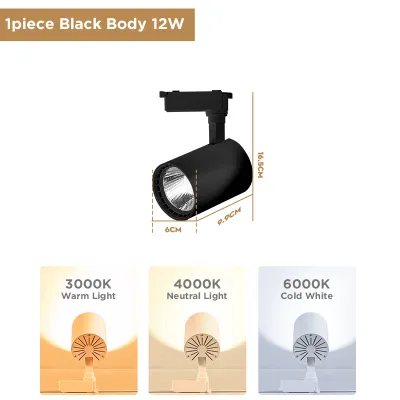
The choice of light fixtures attached to the track is just as important as the track itself. Large, protruding spotlights that hang far below the track plane physically reduce the clearance in high-traffic walkways. For a 2.6m ceiling, prioritize compact spotlights, linear floodlights, or adjustable folding modules that sit tight against the track.
Suspended track pendants should be used with extreme caution in standard HDB flats. As a general safety and design rule, any suspended fixture should maintain a minimum clearance of 2.1 meters from the finished floor to prevent taller occupants or guests from accidentally bumping into them. This leaves a maximum allowable drop length of 50cm from a 2.6m ceiling.
To ensure both safety and visual balance, reserve suspended track pendants exclusively for placement over permanent furniture zones, such as dining tables or kitchen islands. For open walkways and general living areas, stick to adjustable track heads that can be folded or angled parallel to the ceiling plane when not in use.
Layout Strategies to Make Your HDB Ceiling Feel Higher
The way you position your tracks and direct the light beams can dramatically alter how height is perceived in an HDB flat. One of the most effective layout strategies is wall-washing. By placing your track parallel to a prominent wall—typically at a distance of 40cm to 60cm— and angling the light heads downward, you create a smooth gradient of light that draws the eye vertically, making the walls appear taller and the room more spacious.
Beam angles also play a vital role in managing shadows and visual volume. Narrow beam angles (ranging from 15 to 24 degrees) create focused pools of light, which are excellent for highlighting artwork or specific furniture pieces without spilling excess light onto the ceiling. Wider beam angles (36 to 60 degrees) provide general, diffused illumination but must be positioned carefully to avoid creating harsh, distracting shadows near the top of the walls.
Color temperature should be treated as a functional and atmospheric choice rather than a tool for manipulating height. While cooler color temperatures (such as 4000K cool white) are highly suited for task-oriented areas like kitchens and study corners, warmer tones (such as 3000K warm white) create a cozy, inviting ambiance in living rooms and bedrooms. Ensure your color temperature choices align with the room’s primary activities and coordinate with your overall interior color palette.
A common design error in low-ceiling spaces is over-lighting the ceiling plane itself. Directing powerful floodlights upward or placing tracks too close to the ceiling corners can highlight minor plastering imperfections and structural unevenness. Instead, keep the light focused downward and outward onto living zones, keeping the ceiling relatively understated to maximize the illusion of vertical space.
Installation Clearances, Heat, and Electrical Safety
Installing track lighting in an HDB flat requires careful attention to physical, thermal, and electrical safety standards. LED track lights and their associated drivers generate heat during operation. If you are installing recessed tracks or placing external transformers inside a false ceiling cavity, you must ensure there is adequate ventilation and clearance around these components to prevent overheating and premature component failure.
Electrical compatibility is another critical verification step before purchasing your equipment. You must verify whether your chosen system runs on mains voltage (230V AC) or low voltage (typically 48V DC). Low-voltage magnetic systems require a dedicated step-down transformer (LED driver). Additionally, verify that the total wattage of all light heads connected to a single track segment does not exceed the maximum rated power limit of the track or the driver, and ensure that your dimming switches are fully compatible with the specific driver type (such as Triac, 0-10V, or DALI).
Because track lighting involves permanent electrical connections and structural mounting, all fixed wiring, ceiling anchoring, and electrical installations must comply with Singapore’s local electrical safety standards. These works must be carried out by a licensed electrical worker (LEW) or a qualified professional electrician to ensure safe operation and prevent electrical hazards or structural failures.
If at any point during planning or installation you discover that your HDB ceiling slab or false ceiling structure cannot safely support the weight of the track system, or if the manufacturer’s installation instructions conflict with your specific site conditions, you must stop immediately. Consult the track manufacturer or a qualified structural professional to evaluate the site before proceeding with any modifications.
Frequently Asked Questions (FAQ)
Can I install a heavy magnetic track on an existing HDB false ceiling?
Standard HDB plasterboard false ceilings are typically designed to support lightweight, localized fixtures and may not have the structural capacity to bear the continuous weight of heavy magnetic tracks and multiple light modules without bowing or cracking. Before proceeding with an installation, you must verify the ceiling’s load-bearing capacity. If the existing framework is insufficient, a qualified contractor must install additional timber or metal support runners behind the plasterboard to anchor the track securely.
Do I need a specific transformer for a 48V magnetic track in an HDB?
Yes, 48V magnetic track systems cannot be connected directly to your home’s 230V AC mains supply and require a compatible 48V DC LED driver or transformer. This transformer must be sized correctly to match or exceed the total wattage of all the light heads you plan to install on the track segment. For safety and convenience, always install the transformer in an accessible, well-ventilated location—such as a dedicated service hatch or an adjacent cabinet—to allow for adequate heat dissipation and easy maintenance access.
Community discussion
Share your experience or ask a question. Comments are reviewed before publication.