
USB fairy lights offer a highly flexible, energy-efficient way to transform the mood of any room in Singapore, from cozy HDB bedrooms to spacious condominium living areas. To find the best options, you must match the technical specifications of different brand categories to your specific room layout, focusing on wire durability, power stability, and control methods. While budget-friendly generic brands are widely accessible on online marketplaces, premium smart lighting brands and task-focused specialty manufacturers offer distinct advantages in safety, dimming smoothness, and longevity. Choosing the right option involves evaluating how the lights will be powered, controlled, and positioned to suit your daily routines.
How to Evaluate USB Fairy Light Brands for Your Space
Before purchasing any USB fairy lights, understanding the underlying hardware specifications will help you avoid premature product failure, flickering, or safety hazards. The first critical factor is the wire material, which directly dictates the product’s flexibility, aesthetics, and heat dissipation.
- Bare Copper Wire: These ultra-thin, highly flexible wires are virtually invisible when wrapped around objects. They are ideal for delicate, intricate shapes. However, because they lack a protective outer jacket, they are more susceptible to physical damage if repeatedly bent or pulled.
- PVC-Coated Wire: PVC jackets provide a robust protective layer, making the strand highly resistant to tension and moisture. This is the preferred choice for long runs or areas where the lights might be handled frequently. The trade-off is a thicker, more visible profile that is harder to shape tightly.
- Silicone-Coated Wire: Representing the premium end of the market, silicone offers exceptional flexibility combined with high durability and excellent heat dissipation. It resists environmental degradation better than PVC, making it highly suitable for long-term installations.
Next, consider LED density and brightness. Decorative accent strands typically feature LEDs spaced 5cm to 10cm apart, emitting low-lumen ambient glows. If you require functional illumination or want a highly saturated color effect, look for brands offering high-density configurations (such as 2cm to 3cm spacing). Keep in mind that higher density increases power consumption.
Products mentioned in this guide
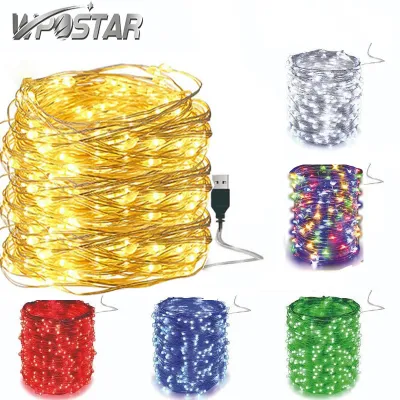
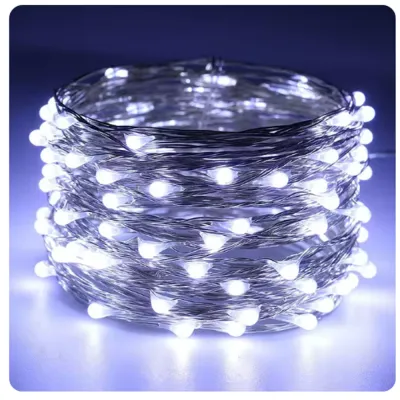
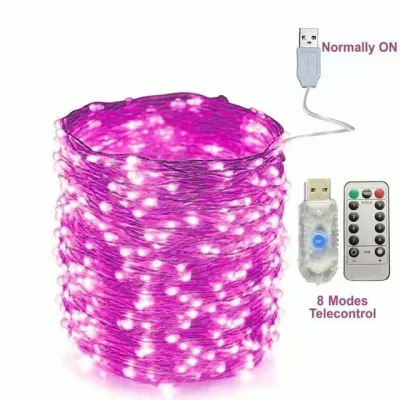
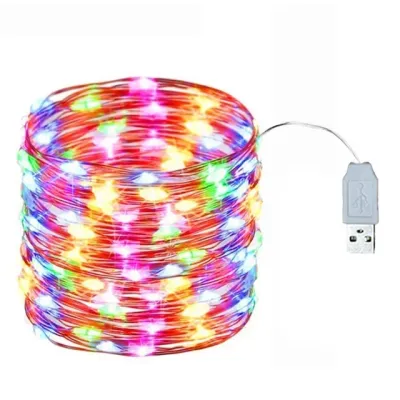
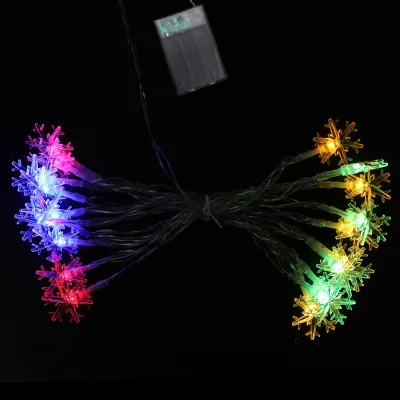
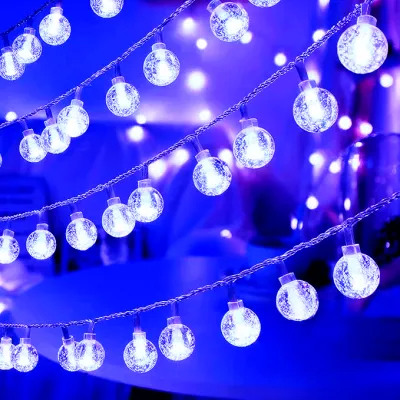
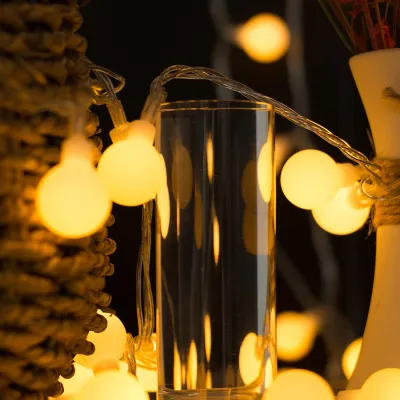
Prices are valid at publication and may change. Please refer to the product page for the latest price.
This leads directly to USB power requirements. Standard USB fairy lights operate on a 5V direct current (DC) system, but the required current (amperage) varies. Short, low-density strands typically run safely on 5V/1A (5W) power sources. However, longer strands (exceeding 10 meters) or high-density RGBIC smart lights often demand 5V/2A (10W) or higher. If you plug a high-draw strand into an underpowered 5V/1A adapter, you will likely experience severe flickering, dimming at the far end of the strand, or excessive heat buildup in the adapter. Always verify the manufacturer’s power specification before connecting the lights to a USB port.
Finally, pay close attention to Ingress Protection (IP) ratings. Singapore’s tropical climate features high indoor humidity, often exacerbated by the use of ultrasonic cool-mist humidifiers or open windows during sudden downpours. For indoor areas exposed to ambient moisture, look for brands offering at least an IP44 rating, which protects against splashing water. For setups near indoor plants that require regular misting, or close to open balcony doors, upgrading to IP65-rated (dust-tight and water-jet protected) strands is highly recommended to prevent moisture from corroding the internal circuitry.
Bedroom Setups: Brands for Cozy and Dimmable Ambiance
The bedroom is a sanctuary where lighting must support relaxation and sleep hygiene. When selecting USB fairy lights for this space, the primary goal is creating a warm, glare-free environment that does not disrupt your body’s natural circadian rhythms.

Look for brands that offer warm white color temperatures, specifically in the 2700K to 3000K range. This golden-yellow hue mimics candlelight, helping your eyes adjust to the evening and promoting melatonin production. Avoid brands that only specify “white” without a Kelvin rating, as these often lean toward a cooler, blue-toned white (5000K or higher) that can increase alertness and cause eye strain before bedtime.
To achieve the perfect evening ambiance, dimming capability is essential. High-quality bedroom-focused lighting brands feature built-in physical inline dimmers or dedicated wireless remotes that allow you to adjust brightness down to 10% or lower. Furthermore, look for brands with integrated auto-off timers (typically 2-hour, 4-hour, or 8-hour intervals) and memory functions. A memory function ensures that when the lights are turned off and on again, they return to your last-used brightness level rather than resetting to full brightness.
When comparing brand categories, those specializing in sleep-friendly, nursery, or premium smart home lighting generally utilize superior driver technology. They employ high-frequency pulse-width modulation (PWM) or analog dimming, which ensures the light remains completely flicker-free even at ultra-low brightness levels.
Conversely, budget-friendly decor brands often cut corners on internal components. While they may advertise dimming features, their low-frequency PWM can produce invisible flickering. Although you might not see this flicker with the naked eye, it can cause subtle eye strain, headaches, and general discomfort during extended evening use. Additionally, check that the wire is thin enough (such as triple-strand bare copper) to wrap smoothly around bed frames or headboards without creating bulky, unsightly lumps.
Living Room Accents: Brands for Long Strands and Smart Controls
Living rooms demand a different approach, requiring longer strands to cover expansive features like TV backlights, curtain rods, shelving units, or ceiling perimeters.
When installing strands longer than 5 to 10 meters, cheap or generic brands frequently suffer from voltage drop. Because low-grade copper or thin wires have higher electrical resistance, the electrical current weakens as it travels down the line. This results in the LEDs at the far end of the strand appearing noticeably dimmer or shifting in color compared to those closest to the USB plug. Premium smart lighting brands mitigate this by using thicker, high-purity copper cores and optimized circuit designs to maintain uniform brightness across the entire length.
For dynamic living room setups, smart features add significant value. Look for brands that offer color-changing capabilities, specifically RGBIC (Red, Green, Blue Independent Control) technology. Unlike standard RGB lights where the entire strand must be the same color, RGBIC allows different segments of the same strand to display multiple colors simultaneously, enabling smooth gradients and dynamic motion effects. Many smart brands also include built-in microphones for music synchronization, allowing the lights to pulse in time with your home theater system or music playlist.
Dedicated smart lighting brands offer robust app control via Bluetooth or Wi-Fi, allowing you to integrate the fairy lights into your existing smart home ecosystem (such as Apple Home, Google Home, or Amazon Alexa). These apps provide precise color tuning, custom scene creation, and reliable scheduling. In contrast, generic remote-controlled options from online marketplaces rely on basic infrared (IR) remotes that require a direct line of sight to the USB receiver and offer limited, often harsh, pre-programmed color patterns.
For installation in the living room, avoid draping long strands over sharp edges or relying solely on the wire’s physical tension to hold them in place. The weight of a long strand can strain the delicate solder joints connecting the LEDs. Instead, use dedicated adhesive cable clips or plastic curtain clips to distribute the weight evenly and protect the integrity of the wire.
Study Corners: Brands for Focused and Eye-Friendly Desk Lighting
In a study corner or home office, USB fairy lights should serve as functional task lighting or gentle backlighting to reduce screen glare, rather than acting as a distraction.
For productivity, cooler or neutral white light is highly preferred. Look for brands that provide a 4000K color temperature or, ideally, adjustable color temperature controls (tunable white) that let you switch from a crisp 4000K during daytime work to a softer 3000K for evening reading. This versatility helps maintain focus while preventing eye fatigue during long sessions at your desk.
The physical form factor of the lights is equally important in a compact workspace. Micro-LED copper strands (1 to 2 meters in length) are highly versatile for weaving through pegboards, wrapping around desk shelves, or lining the back of a computer monitor. When used as a monitor backlight (bias lighting), the fairy lights raise the ambient light level around your screen, significantly reducing the eye strain caused by staring at a bright display in a dark room.
When choosing a brand for a study corner, look for those that design desk accessories or eye-care lighting. These brands often incorporate specialized diffusers or frosted dome caps over the individual LEDs. This design softens the light output, preventing harsh, pinpoint reflections (hotspots) from bouncing off glossy computer screens, desk surfaces, or framed artwork.
Cable management is another critical consideration. A messy desk can hinder productivity and pose safety risks. Select brands that feature flat, tangle-resistant USB cables, or those that integrate the USB controller directly into a compact, easily concealable housing. This allows you to route the cable neatly behind monitor arms or desk legs, keeping it clear of rolling office chairs that could crush and damage the wire.
Quick Comparison of USB Fairy Light Brand Categories
To help you navigate the market, the following table summarizes the three primary brand categories of USB fairy lights, mapping them to their ideal room setups, control methods, and relative value.
| Brand Category | Best Room Setup | Key Features | Wire Type | Control Method | Relative Value |
|---|---|---|---|---|---|
| Smart/App-Controlled Brands | Living Rooms, Home Theaters | RGBIC multi-color gradients, music sync, smart home integration, high color accuracy | PVC-coated or thick copper | Mobile App, Voice Control, Wi-Fi/Bluetooth | Premium (S$30 – S$80+) |
| Budget Decor Brands | Bedrooms, Temporary Displays | Single-color warmth, simple flash modes, lightweight construction, highly flexible | Thin bare copper | Inline switch, basic Infrared (IR) remote | Budget-friendly (S$5 – S$15) |
| Specialty/Task Lighting Brands | Study Corners, Reading Nooks | Tunable white (3000K-4000K), flicker-free drivers, frosted diffusers, high LED density | Silicone-coated or flat wire | Physical dimmers, touch controllers | Mid-range (S$15 – S$35) |
Disclaimer: Because manufacturers frequently update their product lines, specifications, and accessory bundles, readers must verify exact specifications, strand lengths, power requirements, and current availability on the product packaging or official brand stores before purchasing.
Safety and Power Limits for USB Lighting in Singapore
While USB fairy lights operate on low voltage (typically 5V), they are still electrical devices that require proper handling to prevent hazards such as short circuits, overheating, or electrical fires.
One of the most common mistakes is overloading power sources. Plugging a long, high-density fairy light strand into a standard 5V/1A smartphone charger, a laptop USB port, or an unpowered USB hub can draw more current than the port is designed to supply. This can lead to excessive heat generation within the power source, slow down other connected devices, or cause the lights to flicker and dim. Always match the amperage demand of your light strand with a power source that meets or exceeds that rating (e.g., using a 5V/2A wall adapter for a 10W light strand).
In Singapore, it is critical to use USB power adapters that carry the Enterprise Singapore Safety Mark. This certification ensures the adapter has undergone rigorous testing for electrical safety, insulation resistance, and short-circuit protection. Avoid using unbranded, extremely cheap, or physically damaged wall plugs sourced from unverified online sellers, as these often lack proper thermal cut-offs and present a significant fire hazard.
To ensure your setup is operating safely, perform a simple heat check routine. After the fairy lights have been running for approximately one hour, gently touch the USB connector plug, the inline controller (if applicable), and the first few LEDs closest to the power source. They should feel cool or only slightly warm to the touch.
Define clear stop conditions for your household. Immediately unplug the lights from the power source if you observe any of the following:
- The USB connector, adapter, or wire feels hot to the touch.
- The LEDs begin to flicker erratically or dim spontaneously.
- The USB port, wall adapter, or wire emits a melting plastic or electrical odor.
- The wire insulation becomes cracked, frayed, or exposes the internal metal conductors.
Frequently Asked Questions (FAQ)
Can I connect multiple USB fairy light strands together?
Attempting to daisy-chain multiple USB fairy light strands together (connecting the end of one strand to the start of another) is highly discouraged unless the manufacturer explicitly states the product is expandable and provides a dedicated connector. Standard USB fairy lights are engineered for a specific length and electrical resistance. Forcing current through multiple joined strands leads to severe voltage drop, causing the later sections to be extremely dim or non-functional. More importantly, it can overload the single USB power port, drawing excess current that can melt the USB connector or damage your power adapter. To safely illuminate a larger area, use a multi-port USB hub with a sufficient total amperage rating (such as a hub rated for 5V/2.4A per port) or plug each individual strand into its own certified USB power adapter.
Are USB fairy lights safe to leave on overnight?
Modern LED USB fairy lights generate very little heat compared to traditional incandescent bulbs, making them significantly safer for extended use. However, leaving any electrical device running unattended overnight carries minor inherent risks, particularly if there is an undetected fault in the power adapter or the cable. To minimize risk and conserve electricity, it is highly recommended to choose brands that feature built-in auto-off timers or connect the USB adapter to a smart plug. Setting a timer to automatically turn the lights off after you fall asleep reduces cumulative wear on both the LEDs and the USB power adapter, extending the overall lifespan of your decorative lighting.
Community discussion
Share your experience or ask a question. Comments are reviewed before publication.