
In Singapore’s fast-paced living environments, managing time efficiently is a daily necessity. Whether placed on a bedside table in a compact HDB flat or on an office desk in the Central Business District, a reliable lcd clock serves as a functional anchor. Finding the best value does not simply mean choosing the cheapest option available on an online marketplace. Instead, true value lies in balancing display legibility, power efficiency, physical durability, and aesthetic alignment with your living space.
For Singaporean consumers, three brands consistently stand out for delivering exceptional value across different price points and design preferences: Casio, Seiko, and Braun. Casio dominates the market for those seeking rugged, multi-functional utility at an accessible price. Seiko offers unmatched display clarity and reliable environmental sensors, making it ideal for families and elderly users. Braun caters to design enthusiasts who prioritize minimalist aesthetics, clean typography, and premium tactile controls. By understanding the specific strengths and limitations of these brands, you can select a timepiece that perfectly fits your daily routine and home decor.
How to Evaluate Value in an LCD Clock
Screen Quality and Viewing Legibility
The primary function of any digital timepiece is readability at a glance. Screen quality in an LCD panel is determined by its contrast ratio and viewing angles. Standard Twisted Nematic (TN) LCD screens, which are common in budget models, can suffer from dramatic contrast loss or color inversion when viewed from sharp angles. If you place your clock on a high shelf or a low bedside table, a narrow viewing angle can make the digits virtually invisible from your bed or desk.
Products mentioned in this guide
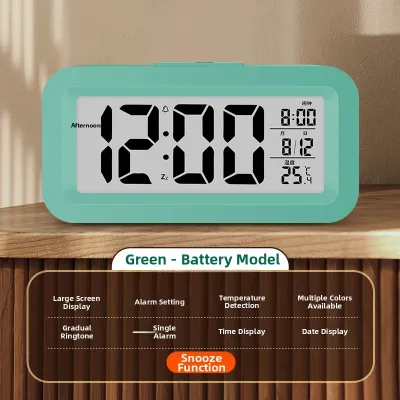
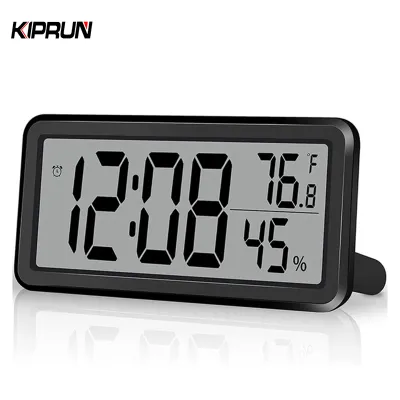
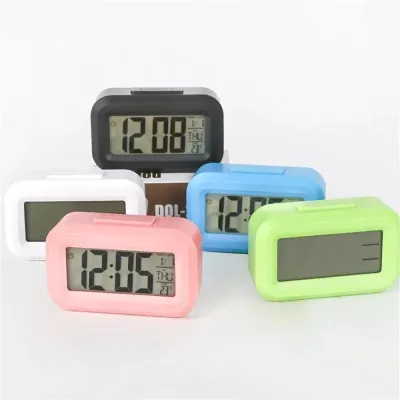
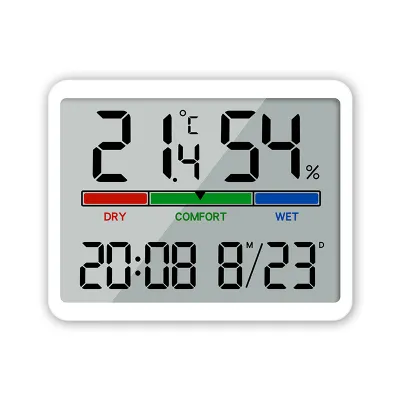
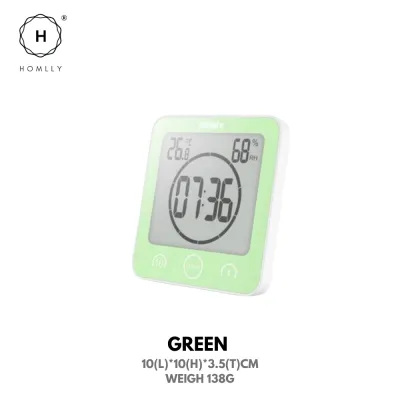
Prices are valid at publication and may change. Please refer to the product page for the latest price.
Backlighting is another critical component of screen quality. For bedroom environments, an always-on, harsh blue backlight can disrupt sleep cycles by emitting excessive ambient light. High-value models feature adjustable brightness settings or smart ambient light sensors that automatically dim the backlight to a soft, warm glow in dark conditions. When evaluating a clock, check whether the backlight can be completely deactivated or if it features a temporary snooze-activated light that illuminates the screen for only a few seconds.
Feature Set vs. Visual Clutter
It is tempting to assume that an LCD clock with more features offers better value, but excessive data can compromise usability. Many mid-range clocks pack the screen with indoor temperature, outdoor humidity, calendar dates, moon phases, and multiple alarm indicators. While these sensors are useful, they often crowd the screen, reducing the size of the primary time digits and making the clock difficult to read from a distance.
For most users, a clean layout that prioritizes the current time, with secondary information relegated to smaller, well-spaced segments, offers the best daily experience. Consider your actual needs before buying. If you require a dedicated alarm with a snooze function, ensure those controls are physically intuitive and easy to locate in the dark. If you require environmental monitoring due to Singapore’s humid climate, look for models where the temperature and humidity readings are clearly separated from the time display.
Power Options and Operating Costs
Power configuration directly affects both the convenience and the long-term operating cost of your clock. Purely battery-operated models offer excellent portability, allowing you to place the clock anywhere without worrying about cable management or locating an available wall socket. However, relying solely on batteries means that continuous backlighting is usually unavailable, as keeping an LED or EL backlight constantly illuminated will drain standard AA or AAA batteries within a matter of weeks.
Mains-powered models, which typically connect via a USB cable or a dedicated AC adapter, allow for continuous, bright displays and always-on backlighting. These models should ideally include a battery backup system (often using a button cell battery like a CR2032). This backup ensures that if a power outage occurs or if you temporarily unplug the clock to move it, your time settings and programmed alarms are preserved. For Singapore homes, calculating the cost of frequent battery replacements versus the convenience of a plug-in model is a vital step in determining true long-term value.
Top LCD Table Clock Brands for Reliable Daily Use
To identify the best value in the Singapore market, we must look beyond generic, unbranded digital clocks that often suffer from poor build quality, inaccurate quartz crystals, and fragile battery compartments. Established brands offer a level of manufacturing consistency, component quality, and after-sales support that generic alternatives cannot match. The following brands have built global reputations for reliability, display engineering, and user-centric design, making them the top choices for Singaporean households.

Casio: Best for Multi-Functionality and Durability
Casio has long been a household name in Singapore, recognized for producing virtually indestructible timepieces. Their LCD table clocks inherit this legacy of durability, featuring robust resin cases that can withstand accidental drops from bedside tables. Casio models are highly favored by students, professionals, and military personnel who require precise, dependable alarms and rugged construction.
- Ideal User Profile: These clocks are best suited for individuals who want a highly functional tool. If you need integrated features such as dual alarms (useful for partners with different wake-up times), built-in stopwatches, automatic calendars, or quick-access world time functions for international business, Casio offers these capabilities at a highly competitive price point.
- Display Characteristics: Casio utilizes high-contrast LCD segments with reliable internal circuitry that maintains precise timekeeping within a few seconds per month. The digits are sharp and easy to read under direct light. However, some of their more utilitarian, budget-friendly models feature standard TN panels, which have narrower vertical viewing angles, meaning the display may fade slightly when viewed from directly above.
- Limitations: The primary trade-off with Casio is aesthetic. Their designs lean heavily toward industrial, sporty, or highly functional layouts. The cases are predominantly made of matte plastics in neutral shades of grey, black, or silver. If you are looking for a clock that blends seamlessly into a minimalist, Scandinavian-style bedroom or a luxurious living room, Casio’s utilitarian appearance may feel out of place.
Seiko: Best for Clear Displays and Classic Reliability
Seiko brings its rich heritage of horological precision to the digital table clock market. Known for exceptional engineering, Seiko’s LCD clocks focus on delivering a highly legible, stable, and user-friendly experience. They are highly popular in Singaporean family homes, particularly for living rooms, study desks, and bedrooms where clear visibility is the top priority.
- Ideal User Profile: Seiko is the ideal brand for users who prioritize effortless readability and simple, dependable operation. It is an excellent choice for elderly family members who may struggle with small, cluttered digital screens, as well as for anyone who wants a reliable way to monitor indoor climate conditions alongside the time.
- Display Characteristics: Seiko excels in display ergonomics. Their LCD panels feature exceptionally large, bold digits with generous spacing between the time, date, and environmental readings. They often incorporate high-quality polarizers that minimize glare from overhead lights. Many Seiko models also include built-in thermometers and hygrometers that provide highly accurate readings of Singapore's indoor humidity and temperature levels.
- Limitations: Seiko clocks generally avoid complex digital features. You will rarely find smart app connectivity, programmable multi-day alarms, or advanced countdown timers on their standard models. The brand focuses on doing the basics exceptionally well, which may disappoint tech-focused users seeking smart home integration or highly customizable digital interfaces.
Braun: Best for Minimalist Aesthetics and Build Quality
Braun represents the pinnacle of modern industrial design, heavily influenced by legendary minimalist design principles. Their LCD table clocks are designed to be both highly functional tools and elegant decor pieces. Braun clocks are a popular choice among design professionals, urbanites, and those living in modern condominiums or renovated HDB flats who appreciate clean lines and premium materials.
- Ideal User Profile: This brand is perfect for design-conscious buyers who believe that home appliances should contribute to the visual harmony of a room. If you appreciate minimalist aesthetics, smooth tactile feedback, and intuitive physical controls (such as their signature slide-up alarm switches), Braun offers an unmatched user experience.
- Display Characteristics: Braun displays are masterclasses in visual restraint. They feature custom, clean typography with high-contrast screens that eliminate unnecessary icons and decorative borders. The backlighting is carefully engineered to be soft, warm, and even, avoiding the harsh glare associated with cheaper digital clocks. This makes them exceptionally comfortable to read in pitch-black bedrooms.
- Limitations: The premium design and build quality of Braun clocks come at a higher financial cost. They generally command a higher price point in Singapore compared to equivalent models from Casio or Seiko. Additionally, in pursuit of a clean interface, Braun often omits secondary features like temperature and humidity sensors, meaning you pay more for a device that performs fewer functions but does so with superior style.
Buying Locally: Channels and Pre-Purchase Checks
When purchasing an LCD table clock in Singapore, sourcing from reputable channels is crucial to avoid counterfeit products or grey-market items with no warranty. Official brand storefronts on major e-commerce platforms, established local department stores, and authorized watch retailers offer the safest purchasing experience. Buying from verified sellers ensures that you receive genuine components, which is particularly important for quartz movement accuracy and LCD panel longevity.
If you select a mains-powered LCD clock, you must verify its electrical specifications before finalizing your purchase. Singapore operates on a 230V supply voltage at a 50Hz frequency. Ensure that the clock’s power adapter is rated for this voltage range to prevent overheating or electrical failure. Furthermore, the adapter should feature a standard UK-style 3-pin (Type G) plug. Purchasing a model designed for foreign markets may leave you with a flat 2-pin plug, forcing you to use bulky travel adapters that clutter your wall outlets. Always prioritize models that carry the local Safety Mark, indicating they have been tested and certified for safe home use.
Before checking out, carefully review the warranty terms provided by the seller or distributor. While table clocks are generally low-maintenance devices, LCD screens are sensitive components that can occasionally suffer from manufacturing defects. Issues such as dead pixels, uneven backlight bleed, or faded segments can sometimes be present straight out of the box. A valid local distributor warranty (typically covering 12 months) allows you to secure a hassle-free replacement or repair, protecting your investment and ensuring long-term value.
Frequently Asked Questions (FAQ)
Here are answers to some of the most common questions regarding the power consumption, placement, and maintenance of LCD table clocks in Singapore.
Do LCD table clocks consume a lot of electricity?
No, standard LCD table clocks are incredibly energy-efficient. The liquid crystal display itself requires a minuscule amount of electrical current to align the crystals and show the digits, meaning a standard battery can power the screen for up to a year or more. The primary source of power consumption is the backlight. If your clock features an always-on backlight or a smart light sensor that keeps the screen illuminated throughout the night, the power draw increases significantly. For models with continuous illumination, utilizing a mains power adapter or high-quality rechargeable NiMH batteries is highly recommended to avoid the frequent cost and environmental waste of replacing standard alkaline batteries.
Why does my LCD clock display fade or lose contrast over time?
The most common cause of a fading LCD screen is low battery voltage. As batteries discharge, their voltage drops below the threshold required to fully align the liquid crystals, causing the segments to appear faint or patchy. Replacing the batteries with fresh, high-quality alkaline cells will usually restore full contrast immediately. If the fading persists after changing the batteries, the cause may be environmental. Prolonged exposure to direct sunlight or extreme heat can permanently degrade the organic compounds in the liquid crystal layer and the polarizing filters. To prevent this permanent damage, avoid placing your clock on window sills or in areas of your home that receive intense, direct afternoon sun.
Community discussion
Share your experience or ask a question. Comments are reviewed before publication.